


War, Ebola, and extreme heat: The challenges facing Hajj this year
Hajj 2026 has begun amid unprecedented challenges, including the West Asia conflict, extreme temperatures of nearly 48°C, and fears of infectious diseases such as Ebola. As more than 1.5 million pilgrims gather in Saudi Arabia, authorities are deploying AI surveillance, advanced security systems and massive health infrastructure to manage risks

The annual Hajj pilgrimage officially began on Monday, bringing more than 1.5 million Muslims to Saudi Arabia for one of the largest religious gatherings in the world.
For believers, the journey to Mecca is a deeply personal milestone that many spend years preparing for physically and financially.
Yet the pilgrimage this year is taking place as Iran and the United States practise a fragile ceasefire, extreme heat conditions, and fears surrounding infectious diseases, including Ebola outbreaks in parts of Africa.
The pilgrimage, which runs between May 25 and May 29 this year, has historically represented a logistical undertaking of enormous scale.
Why is this year’s Hajj unusually challenging?
Hajj has always involved careful planning because of the sheer number of pilgrims who gather in a confined area over a short period.
Millions of people from different linguistic, ethnic and economic backgrounds perform the same rituals within days, requiring vast coordination related to transport, accommodation, food distribution, healthcare and crowd movement.
 More from Explainers
The first complication this year stems from regional instability in West Asia. The conflict that erupted in late February after the United States and Israel launched attacks on Iran.
Iran responded with retaliatory strikes, and tensions rapidly spread across the Gulf region before a temporary ceasefire was brokered in April.
Although open hostilities have eased compared to the early weeks of the conflict, airspace disruptions, maritime tensions and fears of escalation have complicated regional travel arrangements.
This year’s pilgrimage also falls during a period of intense late-May heat, exposing pilgrims to temperatures reaching between 45°C and 48°C during some of the most physically demanding outdoor rituals.
The third concern involves infectious disease monitoring. Saudi authorities are overseeing one of the world’s largest mass gatherings while global health agencies continue to monitor Ebola outbreaks in parts of East and Central Africa alongside concerns about other emerging pathogens.
How many pilgrims have arrived for Hajj this year?
Saudi Arabia’s Hajj Passport Forces confirmed that more than 1,518,153 international pilgrims from over 180 countries had already entered the kingdom before the formal commencement of Hajj, with the final number expected to move close to two million.
The total number is expected to approach two million by the end of the Hajj period. In recent years, attendance has generally fluctuated between 1.7 million and 1.8 million pilgrims annually following the lifting of pandemic-era restrictions.
Hajj remains one of the largest recurring human gatherings on Earth. Historians note that over more than 14 centuries, the pilgrimage has only been cancelled or significantly restricted around 40 times.
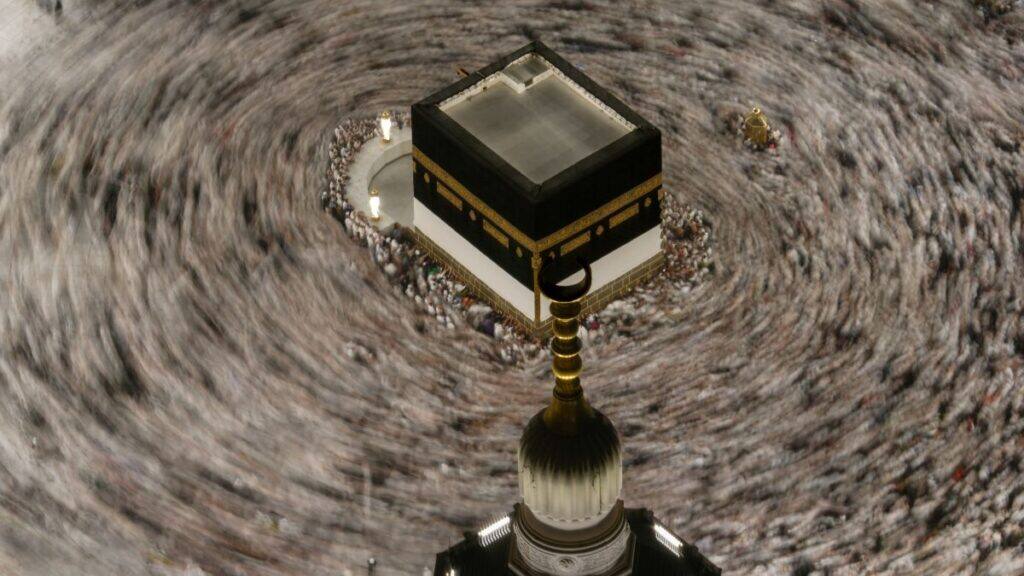
The most recent major disruption occurred during the Covid-19 pandemic in 2020, when participation was severely limited.
Authorities in several Muslim-majority countries have spent months preparing contingency measures ahead of the pilgrimage season.
Indonesia, home to the world’s largest Muslim population, instructed officials to ensure additional travel-related costs would not be transferred onto pilgrims amid concerns over rising transport expenses.
In India, where a large Muslim minority participates in Hajj each year, pilgrimage arrangements continued mostly as scheduled despite increasing fuel costs linked to broader energy market disruptions.
Will Iran strike Saudi during Hajj?
United States President Donald Trump said over the weekend that a deal involving Iran and the reopening of the Strait of Hormuz had been “largely negotiated” following conversations with Israel and regional allies.
Trump described the proposal as a “Memorandum of Understanding pertaining to PEACE,” though he added that final approval from all parties was still pending. He also said the US blockade of Iran would remain operational until a formal agreement was completed and certified.
Airlines operating across Gulf airspace have faced disruptions and rerouting concerns, while governments sending pilgrims to Saudi Arabia have had to prepare contingency strategies in case of further escalation.
Riyadh, itself, urged Trump to delay any potential new military strikes against Iran until after the annual pilgrimage.
Despite those concerns, experts say it is highly unlikely Iran would intentionally target pilgrimage sites because of their religious significance.
Iran itself has sent approximately 30,000 pilgrims to Saudi Arabia this year, although that number remains far below the roughly 87,000 Iranian pilgrims who typically participate in Hajj during normal years.
Security concerns linked to Hajj this year are focused largely on unintended fallout rather than deliberate attacks.
Saudi Arabia has strengthened air defence systems around Mecca and nearby pilgrimage zones. Images released by Saudi authorities recently showed Patriot missile batteries deployed around holy sites, alongside references to layered defence systems incorporating anti-drone technology and laser weaponry.
However, analysts monitoring the conflict have warned that interception systems themselves can create secondary dangers in densely populated pilgrimage areas. In an analysis published in April, the House of Saud media outlet highlighted concerns about debris from intercepted missiles falling into areas crowded with pilgrims.
“A successful Patriot intercept scatters debris across an area of several square kilometers,” the outlet stated. “During Hajj, every square kilometre within 20 kilometers of the Grand Mosque will contain pilgrims.”
Analysts also raised the possibility of drones veering off course unintentionally during regional military exchanges.
Another concern mentioned by analysts involves Iran’s Bushehr nuclear reactor, located across the Persian Gulf. They warned that any strike or accident involving the facility could potentially create radioactive fallout risks affecting Saudi Arabia and nearby regions.
“None of these scenarios require Iranian intent to strike the holy sites,” the House of Saud analysts warned.
Why are Gaza’s pilgrims missing from Hajj again?
For the third consecutive year, thousands of Muslims from the Gaza Strip have been unable to travel to Saudi Arabia for Hajj because of continued border restrictions and the closure of the Rafah crossing between Gaza and Egypt.
Under international quota arrangements, Palestine receives 6,600 Hajj slots annually, with approximately 38 per cent usually allocated to Gaza residents.
However, Gaza’s Ministry of Awqaf says 2,402 individuals who successfully passed the official Hajj lottery system remain trapped inside the enclave and unable to leave.
The ministry also reported that 71 selected pilgrims died while waiting to undertake the pilgrimage due to war-related conditions or inadequate access to medical treatment.
How is extreme heat becoming a growing threat during Hajj?
Because the Islamic lunar calendar shifts by approximately 10 to 11 days every year, Hajj moves gradually through different seasons over time.
This year’s pilgrimage falls during the transition from late May into early June, placing pilgrims in some of the hottest conditions experienced during the pilgrimage cycle.
Temperatures in Mecca and surrounding holy sites have repeatedly climbed between 45°C and 48°C during daytime hours.
The physical demands of Hajj increase those risks. Around 70 per cent of the rituals take place outdoors, often requiring prolonged walking under direct sunlight. During the 10th day of Dhul Hijjah, some pilgrims may walk distances approaching 20 kilometres while moving between ritual locations.
Pilgrims have attempted to shield themselves using umbrellas, handheld fans and cooling towels. Volunteers stationed around pilgrimage sites have distributed bottled water to reduce dehydration risks, while large mist-spraying fans have been installed in crowded areas.
Still, scientists warn that the danger extends beyond ordinary heat discomfort.
A climate study published this month by researchers working between Islamabad and Berlin examined conditions recorded during the severe 2024 Hajj heatwave and combined them with predictive climate modelling.
The researchers concluded that peak afternoon conditions in some pilgrimage zones are beginning to approach the limits of human physiological survivability.
According to the study, the combination of high temperatures and localized humidity can prevent the body from effectively cooling itself through sweating. Elderly pilgrims — who make up a substantial portion of international arrivals — face particular risk.
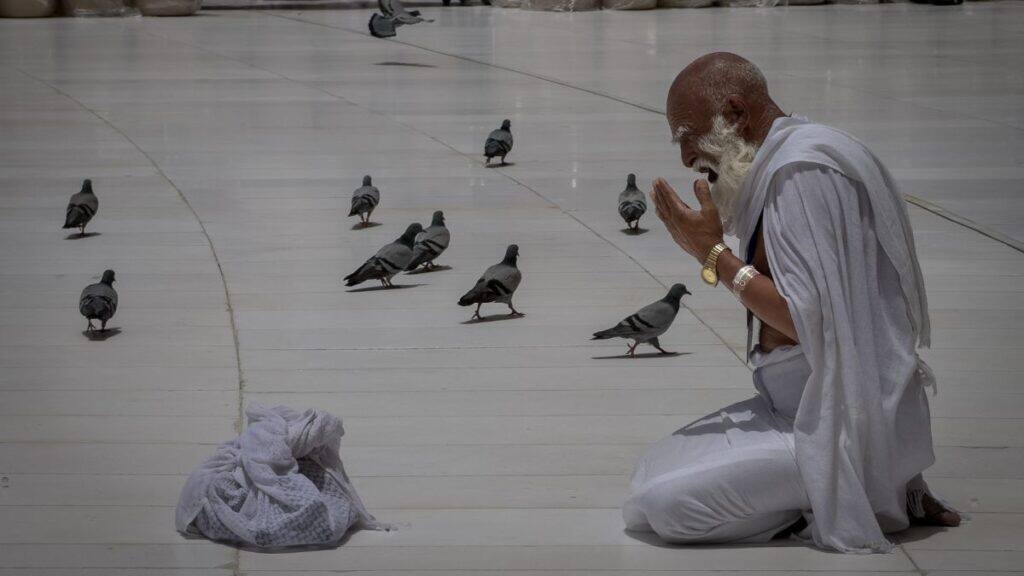
Researchers warned that prolonged exposure without shade can rapidly escalate from heat exhaustion to life-threatening heatstroke.
What precautions are pilgrims taking against the heat?
Many pilgrims now carry umbrellas throughout outdoor rituals to protect themselves from direct sunlight. Handheld fans and cooling devices are also common across pilgrimage routes.
Saudi authorities have expanded water distribution systems throughout Mecca, Mina and Mount Arafat. Volunteers continuously provide bottled water to worshippers moving between ritual sites.
Cooling infrastructure has also been significantly enhanced. Authorities have installed extensive mist-spraying fan systems and expanded shaded walkways in several pilgrimage zones.
The plain of Arafat and the tent city of Mina — both critical ritual sites — have received additional cooling infrastructure ahead of this year’s pilgrimage.
At least 34 specialised medical units and hundreds of mobile health carts have been stationed near major ritual zones this year. These units provide emergency cooling, intravenous hydration and rapid treatment for pilgrims experiencing heat stress or exhaustion.
Despite these preparations, officials continue urging pilgrims to maintain personal precautions, including staying hydrated, limiting unnecessary sun exposure and following organised movement schedules.
Why are global health officials monitoring Hajj closely?
Mass gatherings involving millions of people from different countries inevitably create public health challenges, and this year’s Hajj comes amid heightened concerns over infectious disease outbreaks.
The World Health Organization recently designated the Ebola outbreak affecting parts of Uganda and the Democratic Republic of Congo as a Public Health Emergency of International Concern (PHEIC).
At the same time, international monitoring systems have identified localised increases in other pathogens, including hantaviruses.
Saudi Arabia’s public health authorities have responded by strengthening medical screening systems at airports, border crossings and sea ports. Pilgrims arriving from affected African nations are subject to additional health declarations and enhanced medical checks.
Officials are particularly concerned about respiratory illnesses because of the density of crowds during Hajj rituals.
When millions of pilgrims gather inside enclosed transport systems, accommodation facilities or highly crowded ritual areas such as the Grand Mosque, the risk of airborne viral transmission increases substantially.
Health officials say respiratory infections have historically represented the most common medical issue during Hajj seasons.
To reduce transmission risks, Saudi authorities have strongly encouraged pilgrims to wear high-filtration masks during periods of peak crowding, particularly during Tawaf — the ritual involving repeated circumambulation around the Kaaba.
The kingdom’s public health strategy also includes rapid-response medical teams positioned near high-density sites to isolate and treat suspected infectious disease cases quickly if necessary.
How is Saudi Arabia using AI-tech to manage Hajj this year?
One of the most important measures introduced this year is the mandatory Nusuk Smart Card system. Every registered pilgrim is required to carry the digital identification card, which contains personal identification details, medical information, accommodation access permissions and transport authorisations.
Authorities say the cards improve emergency response capabilities while helping officials track movement patterns more effectively.
Saudi officials have also deployed AI-powered crowd management systems throughout Mecca and Mina. Drone fleets and surveillance systems monitor crowd density and pedestrian flow in real time.
The technology analyses movement patterns and alerts ground teams if congestion begins approaching dangerous levels.
Officials hope these systems will help prevent stampedes and crowd surges, which have historically represented one of the most serious risks associated with Hajj.
Saudi authorities say the measures represent one of the most technologically advanced Hajj operations ever conducted.
Also Watch:
For millions of pilgrims now gathering in Mecca, Mina and Arafat, Hajj remains an act of faith undertaken despite extraordinary challenges.
Over the coming days, pilgrims will continue performing rituals that include circling the Kaaba, gathering in Mina’s vast tent city and standing in prayer on the plain of Arafat — considered the spiritual climax of the pilgrimage.
With inputs from agencies
Inhaling global affairs on a daily basis, Anmol likes to cover stories that intrigue him, especially around history, climate change and polo. He has far too many disparate interests with a constant itch for travel. You can follow him on X (_anmol_singla), and please feel free to reach out to him at anmol.singla@nw18.com for tips, feedback or travel recommendations

Military drones & police check-ups: How Sri Lanka is fighting against worst dengue outbreak in a decade
How Facebook job ad lured 2 Karnataka men into Myanmar cyber scam camp
Why is India seeing 95% cloud cover despite a Super El Niño?
What is CJP’s fourth demand to the government as protests in Delhi intensify?
The new geography of war: Why the Houthis can no longer be ignored