


How one man survived under tonnes of rubble for 8 days after Venezuela earthquake
Rescue officials have called it a miracle. After eight days of being trapped under 140 tonnes of rubble after the devastating Venezuela earthquake, a 43-year-old security guard, Hernán Alberto Gil Flores, has been pulled out alive. An air pocket and a whole lot of positivity helped him to stay alive when almost all hope was lost

Almost a week ago, on June 24, Venezuela was jolted by two back-to-back earthquakes — 7.2 and 7.5 — causing buildings to collapse and a death toll that continues to climb. According to the latest figures, the casualties have been pegged at 2,595.
The earthquakes and their resulting destruction have cast a pall of gloom across the Latin American country. But amid this sense of desperation, a ray of hope and joy emerged on Thursday (July 2) when a 43-year-old man was pulled out alive from the rubble of a collapsed basement.
The man, identified as Hernán Alberto Gil Flores, had been trapped for eight days under the rubble of the Galerías Playa Grande in the hard-hit coastal port city of La Guaira since the back-to-back quakes struck.
And when authorities pulled him out, Minyar Collado, a member of the Costa Rican Red Cross (CRRC) team, said that Flores’ first words were: “When we found him, he asked us not to tell his wife that he was alive, just in case he wouldn’t make it.”
 More from Explainers
But how did Hernán Alberto Gil Flores survive under the heaps of rubble for eight days? And how was he brought out by rescue teams?
A tale of survival and endurance after Venezuela quakes
- Flores worked as a nightshift security guard at the Galerías Playa Grande, a shopping centre in the port city of La Guaira.
- When the first violent earthquake struck the city in Venezuela, he had been on duty and was sitting in a small concrete booth in the basement of the parking lot.
- While the surrounding concrete structure collapsed around him, his cabin held ground, shielding him from crushing debris and creating a vital pocket of air. As experts note, his cabin made a protective cover around him, shielding him from the 140 tonnes of rubble that had collapsed around and on top of him.
- One Costa Rican Red Cross worker even told the BBC that Flores told them that he hadn’t even suffered a crushed nail.
- According to José Rivero, a co-worker at the building, one of the reasons behind Flores’ survival was the nearby water tanks that protected him from the pancaked building, giving him space to move.
- Besides this, the hope that the rescue teams would reach him after they identified his cries for help on Sunday kept him going. The rescue authorities noted that Flores was upbeat throughout the rescue operation. “He himself drove us on, telling us to carry on. He recognised our team members, saying ‘how nice that you came back and that you’re with me again’,” said Marco Antonio Franco from the Mexican Red Cross to BBC, noting that his cheeriness may have helped in his survival.
A miraculous rescue operation
- The powerful earthquakes last Wednesday and their resulting damage prompted a massive search and rescue operation, with officials from foreign countries also rushing to Venezuela to help.
- After hearing Flores’ cries for help on Sunday, rescuers stepped in and began planning his extraction.
- A day later, the rescuers established contact with Flores using radar, sonar, and acoustic detection equipment. They confirmed his location visually 12 hours later using a search camera, determining that he was trapped beneath the second basement level of the building.
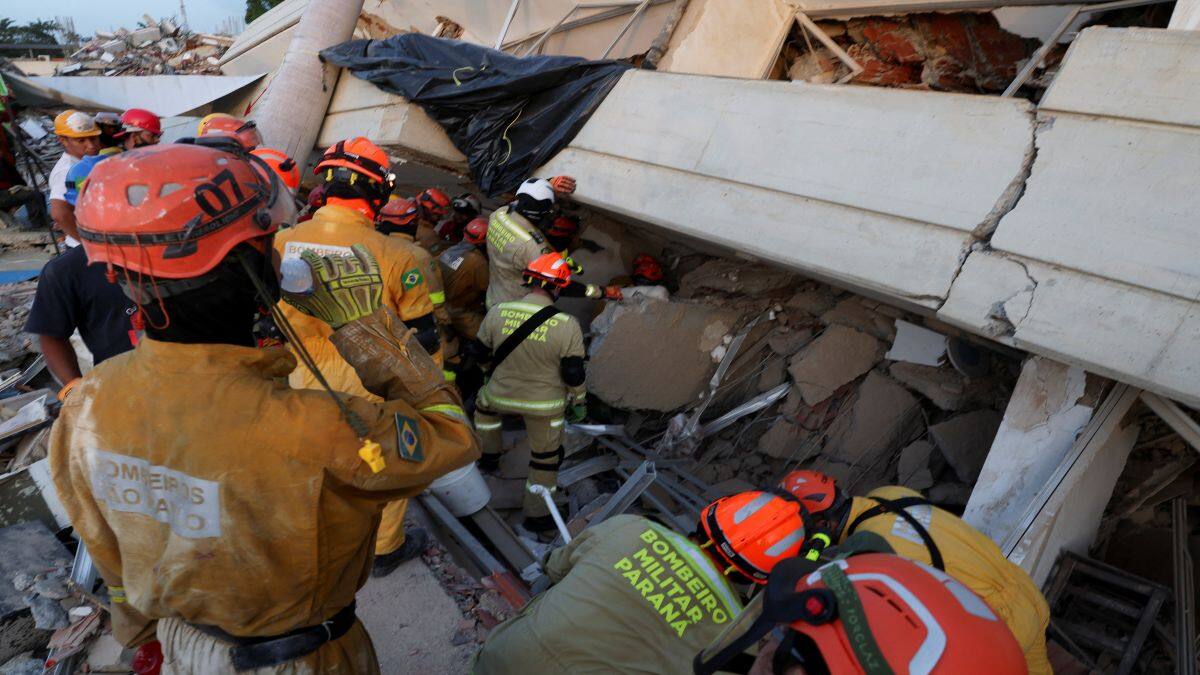
- Then began the hard work. For the next 100 hours, the rescuers navigated a highly unstable structure, torrential rain, and persistent aftershocks to tunnel down to the survivor. As Trey Espy, who headed a search-and-rescue crew from the Los Angeles County Fire Department that travelled to Venezuela after the quakes, told the New York Times, “One wrong move, one thing moved the wrong way, and all that debris would have fallen down on him and killed him. And if there was another aftershock, the rest of the building could have come down — and all of our rescuers were there.”
- He added, “We got to the point where it was moving just one rock at a time to make sure we didn’t pull out the wrong rock and bring the whole thing down on top of him.”
- Another reason for Flores being able to survive past the 48- to 72-hour threshold most operations give to find survivors in disasters was that rescuers were able to provide him with food and water while they excavated the concrete.
- Franco from the Mexican Red Cross team even told BBC that the survivor “even asked for hydration drinks of specific flavours he liked”, adding that “of course we indulged him”.
- Finally, on Wednesday, the rescue teams, which had been picking at the rubble and trying to tunnel their way closer to Flores, knew they were close. The Chilean rescuers even gave him safety goggles to protect him from falling particles as he looked at the camera with a bloodshot eye.
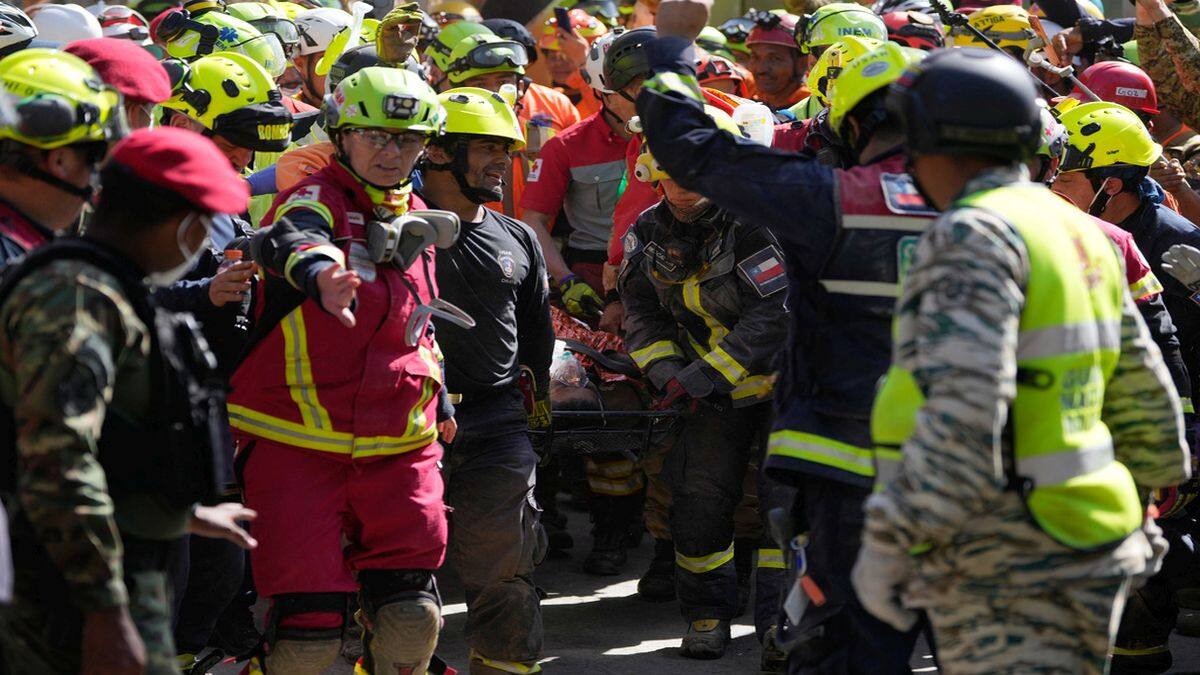
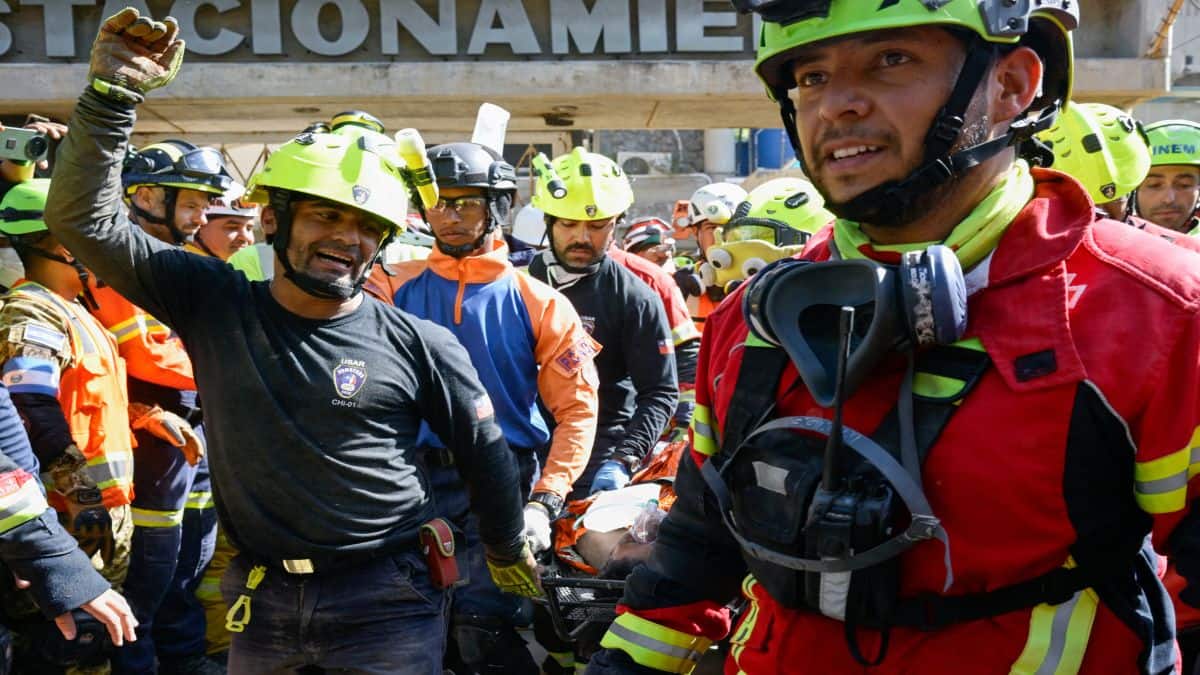
- Then on Thursday came the miraculous moment as Flores was brought out of the rubble. Teams carrying flags from across the world cheered as rescuers carried Flores on a stretcher covered in an orange tarp through throngs of people into a Red Cross ambulance. A group of men in red CRRC uniforms embraced and laughed in relief.
- Flores has now been moved to a hospital where he is believed to be stable. “This is truly a miracle,” said Flores’ wife, Gusbimar Gonzalez, to news agency AFP.
Factors that affect earthquake survival
- The phenomenal survival of Flores has also evoked memories of the Haitian man who was pulled out alive from rubble in Port-au-Prince 27 days after an earthquake hit the region in 2010.
- Evan Muncie, a 28-year-old rice vendor, was discovered in the ruins of the marketplace, which collapsed in the January 12 quake. He was malnourished, delirious, and dehydrated but had no serious injuries, prompting astonishment at what could be the most remarkable survival story from the earthquake.
- Similar tales of survival have also been reported from other parts of the world. In 2023, two Turkish brothers were pulled out of the rubble after eight days following a quake that struck on the border between Syria and Turkey. After the 2011 earthquake and tsunami in Japan, a teenager and his 80-year-old grandmother were found alive after nine days trapped in their flattened home.
- These stories then prompt the question: how long can people survive under rubble after a quake?
- The answer, according to experts, depends on a number of factors. Having air to breathe and water to drink are the most crucial elements in staying alive.
- Additionally, trapped victims are more likely to survive if they are in a debris-free pocket that prevents major injury while they await rescue, said geophysicist Victor Tsai from Brown University, to AP. Experts call this a survivable void space.
- Emergency response expert Dr Joseph Barbera noted that fire, smoke or hazardous chemicals would decrease a person’s survival odds.
- Temperatures where someone is trapped can also affect survival, and temperatures outside the rubble can affect rescue missions. Ilan Kelman, a professor who studies disasters and health at University College London, told the New York Times that Venezuela has a relatively warm climate, so cold-related deaths are not as much of a concern for people trapped in the rubble.
- Dr Kelman noted, “Earthquakes do not kill people, collapsing infrastructure does,” he said, emphasising the importance of creating and enforcing building safety standards, and ensuring a prepared public.
With inputs from agencies
Tags

Military drones & police check-ups: How Sri Lanka is fighting against worst dengue outbreak in a decade
How Facebook job ad lured 2 Karnataka men into Myanmar cyber scam camp
Why is India seeing 95% cloud cover despite a Super El Niño?
What is CJP’s fourth demand to the government as protests in Delhi intensify?
The new geography of war: Why the Houthis can no longer be ignored