
Advertisement


Sections
Uttarkashi tunnel collapse: Will vertical drilling help in rescuing the 41 labourers?
Officials at the Uttarkashi tunnel site have opted for the vertical drilling method. Officials say they have completed nearly 20 metres of drilling and have predicted that this stage of the operation will be completed by Thursday if there are no further hurdles. So how long before the men are out?

The long wait continues. The 41 workers trapped inside the collapsed Silkyara-Barkot tunnel are still to be retrieved. After the auger machine drilling through the debris broke on Saturday, pushing back rescue operations, authorities have now opted for vertical drilling. Moreover, the Indian Army has also been called in and has been tasked with the operations.While hope of an immediate rescue has dimmed, officials are more optimistic with the vertical drilling plan. Authorities have said that they need to dig to 86 metres to reach the trapped workers and make an escape passage. And as of Monday morning, the rescue teams had already drilled 20 metres.And how long before the workers will be rescued? National Highways and Infrastructure Development Corporation Limited (NHIDCL) managing director Mahmood Ahmed said vertical boring would be over by Thursday if there are no hurdles.What is vertical drilling?After the auger machine brought in from the United States broke on Saturday, authorities at the tunnel site opted for vertical drilling, calling it the second best approach to retrieve the trapped labourers.But what exactly is it? In this process, boreholes are drilled from above, creating earth shafts. If the borehole is wide enough then the trapped persons can be evacuate from there.How far have rescuers come along?At the collapsed tunnel site, officials began vertical drilling from the tunnel’s Silkyara-end on Sunday afternoon after a series of unfortunate events, including the breaking down of the auger machine, hampered the operations.The plan will see rescuers drilling until 86 metres to create a 1.2 metres diameter vertical escape passage. For this purpose, two machines have been brought in and the authorities will swap out for the second machine after reaching the first 45 metres.[caption id="attachment_13433422" align="alignnone" width="640"]![]() The 41 labourers have been trapped inside the tunnel since 12 November. A series of unfortunate events have delayed the rescue ops. PTI[/caption]And as of Monday morning, the rescue teams had bored 19.5 metres of the tunnel, raising the hopes of families and the trapped labourers, who have been stuck there since 12 November. NHIDCL’s Ahmed earlier told the media present at the spot that they were expecting a total of 45 metres of vertical drilling to be completed by Monday.Additionally, a unit of the Madras Sappers, from the Corps of Engineers of the Indian Army, arrived at the site on Sunday to assist in the rescue operations.And while vertical drilling continues, efforts are also on to remove from the rubble parts of the American auger machine engaged in horizontal drilling that broke down earlier. For this, a plasma machine has been called in from Hyderabad. Officials said that on Sunday evening, only 8.15 metres of the 47 metres of the auger shaft that had been pushed into the debris remained to be cut and removed. Uttarakhand government’s nodal officer Neeraj Khairwal was quoted as telling news agency PTI that the exercise would be completed latest by Monday.Once the auger is completely removed, rescuers will adopt another fresh approach - manual drilling to clear the remaining 10 or 12 metre stretch of rubble.Earlier, international tunnelling expert Arnold Dix had promised that the workers would be extracted from the tunnel by Christmas – which is still a month away.[caption id="attachment_13433432" align="alignnone" width="640"]
The 41 labourers have been trapped inside the tunnel since 12 November. A series of unfortunate events have delayed the rescue ops. PTI[/caption]And as of Monday morning, the rescue teams had bored 19.5 metres of the tunnel, raising the hopes of families and the trapped labourers, who have been stuck there since 12 November. NHIDCL’s Ahmed earlier told the media present at the spot that they were expecting a total of 45 metres of vertical drilling to be completed by Monday.Additionally, a unit of the Madras Sappers, from the Corps of Engineers of the Indian Army, arrived at the site on Sunday to assist in the rescue operations.And while vertical drilling continues, efforts are also on to remove from the rubble parts of the American auger machine engaged in horizontal drilling that broke down earlier. For this, a plasma machine has been called in from Hyderabad. Officials said that on Sunday evening, only 8.15 metres of the 47 metres of the auger shaft that had been pushed into the debris remained to be cut and removed. Uttarakhand government’s nodal officer Neeraj Khairwal was quoted as telling news agency PTI that the exercise would be completed latest by Monday.Once the auger is completely removed, rescuers will adopt another fresh approach - manual drilling to clear the remaining 10 or 12 metre stretch of rubble.Earlier, international tunnelling expert Arnold Dix had promised that the workers would be extracted from the tunnel by Christmas – which is still a month away.[caption id="attachment_13433432" align="alignnone" width="640"]![]() After the auger machine broke down on Saturday, officials began vertical drilling at the tunnel, with an official predicting that it may be completed by Thursday. PTI[/caption]Are there any risks to vertical drilling? However, even though vertical drilling is being touted as the second-best approach to getting the workers out, there are some experts who have flagged concerns about it.Former director of the Geological Survey of India, PC Nawani told The Print, “Vertical drilling will shake the mountain, which will cause vibration and debris can also fall on the (trapped) workers.”Harsh Vats, another geologist concurred. Speaking to The Print, he said, “Vertical drilling could pose a huge threat to the mountains.”Assistant Professor Vivek Padmanabha, Civil Engineering IIT Guwahati told India Today, “When soil and rocks are subjected to a tremendous amount of pressure, also called geo stress when we try to make a tunnel and this disturbs the equilibrium. Some rocks adapt well and some do not. Rocks at Uttarkashi tunnel have not been adapted well.”Do officials have a back-up plan in case things go awry?Officials have said that they have also now come out with more alternative plans. One plan is to horizontally drill perpendicular to the tunnel from the left side of the hill. This would require drilling of 180 metres to reach the part of the tunnel where the workers are stuck. Work on this will start on Tuesday and could take around 14 days, officials saidThe Tehri Hydro Development Corporation (THDC) has also started horizontal drilling from the Barkot end of the tunnel. However, this is expected to take 35-40 days to reach the place where the workers are trapped.There’s also another plan – sideways drilling – which is being considered. However, the necessary machinery has yet to arrive at the site. Alternatively, there’s also a plan which includes scrapping the tunnel’s sides and using drift technology. Engineers from the Army will be taking care of it.As a last resort, the rescue workers will likely commence the manual drilling of the tunnel the remove the pieces of the broken drill from the rubble.[caption id="attachment_13433442" align="alignnone" width="640"]
After the auger machine broke down on Saturday, officials began vertical drilling at the tunnel, with an official predicting that it may be completed by Thursday. PTI[/caption]Are there any risks to vertical drilling? However, even though vertical drilling is being touted as the second-best approach to getting the workers out, there are some experts who have flagged concerns about it.Former director of the Geological Survey of India, PC Nawani told The Print, “Vertical drilling will shake the mountain, which will cause vibration and debris can also fall on the (trapped) workers.”Harsh Vats, another geologist concurred. Speaking to The Print, he said, “Vertical drilling could pose a huge threat to the mountains.”Assistant Professor Vivek Padmanabha, Civil Engineering IIT Guwahati told India Today, “When soil and rocks are subjected to a tremendous amount of pressure, also called geo stress when we try to make a tunnel and this disturbs the equilibrium. Some rocks adapt well and some do not. Rocks at Uttarkashi tunnel have not been adapted well.”Do officials have a back-up plan in case things go awry?Officials have said that they have also now come out with more alternative plans. One plan is to horizontally drill perpendicular to the tunnel from the left side of the hill. This would require drilling of 180 metres to reach the part of the tunnel where the workers are stuck. Work on this will start on Tuesday and could take around 14 days, officials saidThe Tehri Hydro Development Corporation (THDC) has also started horizontal drilling from the Barkot end of the tunnel. However, this is expected to take 35-40 days to reach the place where the workers are trapped.There’s also another plan – sideways drilling – which is being considered. However, the necessary machinery has yet to arrive at the site. Alternatively, there’s also a plan which includes scrapping the tunnel’s sides and using drift technology. Engineers from the Army will be taking care of it.As a last resort, the rescue workers will likely commence the manual drilling of the tunnel the remove the pieces of the broken drill from the rubble.[caption id="attachment_13433442" align="alignnone" width="640"]![]() Food being packed for 41 workers trapped inside the under-construction Silkyara tunnel. PTI[/caption]How are the workers faring inside the tunnel?And while rescue teams race to get the labourers out, the trapped labourers continue to maintain morale. Officials have been sending home-cooked food, medicines and other essentials through a six-inch wide pipe.A communication system has also been set up and families occasionally talk to them.There are concerns that being trapped in a small space with no light will affect the condition of the labourers, with doctors fearing that they could suffer from insomnia, hypoxia and even post-traumatic stress disorder. Earlier, the officials had sent down anti-depressants to the workers, in order to maintain their mental well-being.And on Saturday, officials also said that they were planning to offer board games and playing cards to the 41 workers confined within the Silkyara tunnel. Dr Rohit Gondwal, a psychiatrist present at the rescue site, said the intention of providing diversions like board games, along with playing cards, is to help alleviate stress among the trapped labourers. He emphasised the prolonged nature of the operation and the likelihood of further delays.With inputs from agencies
Food being packed for 41 workers trapped inside the under-construction Silkyara tunnel. PTI[/caption]How are the workers faring inside the tunnel?And while rescue teams race to get the labourers out, the trapped labourers continue to maintain morale. Officials have been sending home-cooked food, medicines and other essentials through a six-inch wide pipe.A communication system has also been set up and families occasionally talk to them.There are concerns that being trapped in a small space with no light will affect the condition of the labourers, with doctors fearing that they could suffer from insomnia, hypoxia and even post-traumatic stress disorder. Earlier, the officials had sent down anti-depressants to the workers, in order to maintain their mental well-being.And on Saturday, officials also said that they were planning to offer board games and playing cards to the 41 workers confined within the Silkyara tunnel. Dr Rohit Gondwal, a psychiatrist present at the rescue site, said the intention of providing diversions like board games, along with playing cards, is to help alleviate stress among the trapped labourers. He emphasised the prolonged nature of the operation and the likelihood of further delays.With inputs from agencies
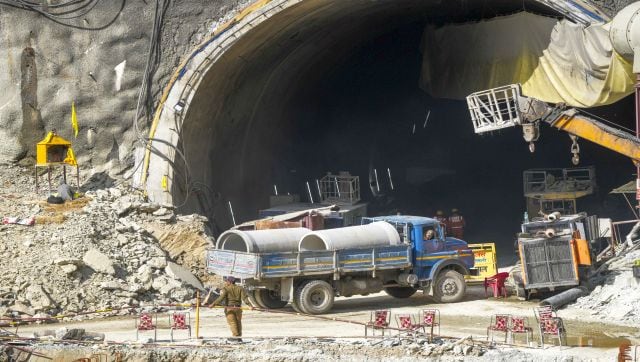 The 41 labourers have been trapped inside the tunnel since 12 November. A series of unfortunate events have delayed the rescue ops. PTI[/caption]And as of Monday morning, the rescue teams had bored 19.5 metres of the tunnel, raising the hopes of families and the trapped labourers, who have been stuck there since 12 November. NHIDCL’s Ahmed earlier told the media present at the spot that they were expecting a total of 45 metres of vertical drilling to be completed by Monday.Additionally, a unit of the Madras Sappers, from the Corps of Engineers of the Indian Army, arrived at the site on Sunday to assist in the rescue operations.And while vertical drilling continues, efforts are also on to remove from the rubble parts of the American auger machine engaged in horizontal drilling that broke down earlier. For this, a plasma machine has been called in from Hyderabad. Officials said that on Sunday evening, only 8.15 metres of the 47 metres of the auger shaft that had been pushed into the debris remained to be cut and removed. Uttarakhand government’s nodal officer Neeraj Khairwal was quoted as telling news agency PTI that the exercise would be completed latest by Monday.Once the auger is completely removed, rescuers will adopt another fresh approach - manual drilling to clear the remaining 10 or 12 metre stretch of rubble.Earlier, international tunnelling expert Arnold Dix had promised that the workers would be extracted from the tunnel by Christmas – which is still a month away.[caption id="attachment_13433432" align="alignnone" width="640"]
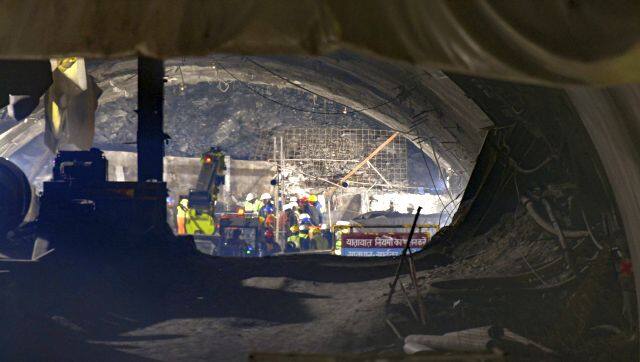 After the auger machine broke down on Saturday, officials began vertical drilling at the tunnel, with an official predicting that it may be completed by Thursday. PTI[/caption]Are there any risks to vertical drilling? However, even though vertical drilling is being touted as the second-best approach to getting the workers out, there are some experts who have flagged concerns about it.Former director of the Geological Survey of India, PC Nawani told The Print, “Vertical drilling will shake the mountain, which will cause vibration and debris can also fall on the (trapped) workers.”Harsh Vats, another geologist concurred. Speaking to The Print, he said, “Vertical drilling could pose a huge threat to the mountains.”Assistant Professor Vivek Padmanabha, Civil Engineering IIT Guwahati told India Today, “When soil and rocks are subjected to a tremendous amount of pressure, also called geo stress when we try to make a tunnel and this disturbs the equilibrium. Some rocks adapt well and some do not. Rocks at Uttarkashi tunnel have not been adapted well.”Do officials have a back-up plan in case things go awry?Officials have said that they have also now come out with more alternative plans. One plan is to horizontally drill perpendicular to the tunnel from the left side of the hill. This would require drilling of 180 metres to reach the part of the tunnel where the workers are stuck. Work on this will start on Tuesday and could take around 14 days, officials saidThe Tehri Hydro Development Corporation (THDC) has also started horizontal drilling from the Barkot end of the tunnel. However, this is expected to take 35-40 days to reach the place where the workers are trapped.There’s also another plan – sideways drilling – which is being considered. However, the necessary machinery has yet to arrive at the site. Alternatively, there’s also a plan which includes scrapping the tunnel’s sides and using drift technology. Engineers from the Army will be taking care of it.As a last resort, the rescue workers will likely commence the manual drilling of the tunnel the remove the pieces of the broken drill from the rubble.[caption id="attachment_13433442" align="alignnone" width="640"]
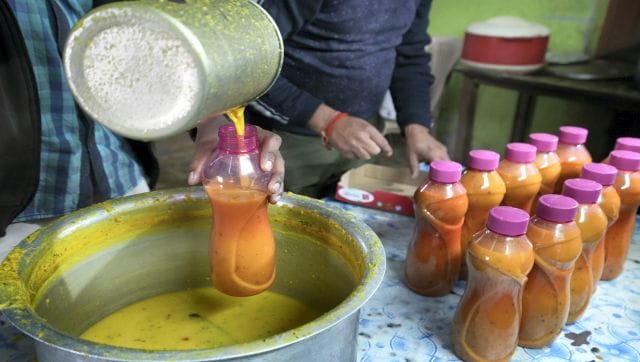 Food being packed for 41 workers trapped inside the under-construction Silkyara tunnel. PTI[/caption]How are the workers faring inside the tunnel?And while rescue teams race to get the labourers out, the trapped labourers continue to maintain morale. Officials have been sending home-cooked food, medicines and other essentials through a six-inch wide pipe.A communication system has also been set up and families occasionally talk to them.There are concerns that being trapped in a small space with no light will affect the condition of the labourers, with doctors fearing that they could suffer from insomnia, hypoxia and even post-traumatic stress disorder. Earlier, the officials had sent down anti-depressants to the workers, in order to maintain their mental well-being.And on Saturday, officials also said that they were planning to offer board games and playing cards to the 41 workers confined within the Silkyara tunnel. Dr Rohit Gondwal, a psychiatrist present at the rescue site, said the intention of providing diversions like board games, along with playing cards, is to help alleviate stress among the trapped labourers. He emphasised the prolonged nature of the operation and the likelihood of further delays.With inputs from agencies
First Published:Nov 27, 2023, 09:52:48 IST
Advertisement
Advertisement

Military drones & police check-ups: How Sri Lanka is fighting against worst dengue outbreak in a decade
Sri Lanka is fighting its most severe dengue outbreak in nearly a decade, with infections rising sharply across the nation. Military drones have been deployed to tackle the outbreak, which has claimed 56 lives. Health officials said the outbreak is being driven primarily by the DENV-2 variant of the virus
3 min read
How Facebook job ad lured 2 Karnataka men into Myanmar cyber scam camp
The Karnataka Cyber Command has rescued two youths from a scam compound in Myanmar operated by Chinese fraudsters. The duo from Karnataka were lured on the pretext of data-entry jobs. They were asked to work for 16 hours a day and were expected to sleep for six hours daily
4 min read
Why is India seeing 95% cloud cover despite a Super El Niño?
India is witnessing nearly 95 per cent cloud cover despite a Super El Niño, a climate event usually linked to weaker monsoons. Regional weather systems, cyclonic circulations, the monsoon trough and moisture from two seas are temporarily overpowering one of the world's strongest climate phenomena
5 min read
What is CJP’s fourth demand to the government as protests in Delhi intensify?
The protest by the Cockroach Janta Party at Delhi’s Jantar Mantar refuses to die down. The group have made a fourth demand to the Centre, asking that no FIRs are filed against the agitators and that no legal action be taken. The government has expressed willingness to speak to the protesters, but refused to accede on the resignation of Education Minister Dharmandra Pradhan
5 min read
The new geography of war: Why the Houthis can no longer be ignored
The rise of the Houthis marks the emergence of a new geography of war — one in which influence flows not only from capitals and conventional armies, but also from rugged mountains overlooking vital sea lanes
6 min read
Advertisement
Advertisement