


USA is the Word of the Week: The 250-year-old journey from British colony to a superpower
At first, it was a motley group of colonies that barely held itself together. But on July 4, 1776, with the adoption of the Declaration of Independence, the United States of America was born. In the years to follow, the country has grown into something even the Founding Fathers could never have imagined — an undeniable global power

Two hundred and fifty years ago, the United States of America was born when 13 American colonies declared independence from Great Britain on July 4, 1776. It was on this day that the Declaration of Independence was adopted, marking the formal birth of the nation.
At the time, it was unclear if the new nation would survive, let alone endure for another two-and-a-half centuries. But the US has not just survived but thrived; it has grown from a ragtag group of colonies to a global superpower that sets the standards for the entire world.
In this week’s Word of the Week series, we trace the growth story of the United States of America from day one to year 250, as it celebrates the big birthday.
The discovery of America
Way before the birth of the USA, America existed.
According to records, the name of the lands came to be known as America as a tribute to Amerigo Vespucci, the Italian explorer who set forth the then revolutionary concept that the lands that Christopher Columbus sailed to in 1492 were part of a separate continent. A map created in 1507 by Martin Waldseemüller was the first to depict this new continent with the name “America,” a Latinised version of “Amerigo.”
 More from Explainers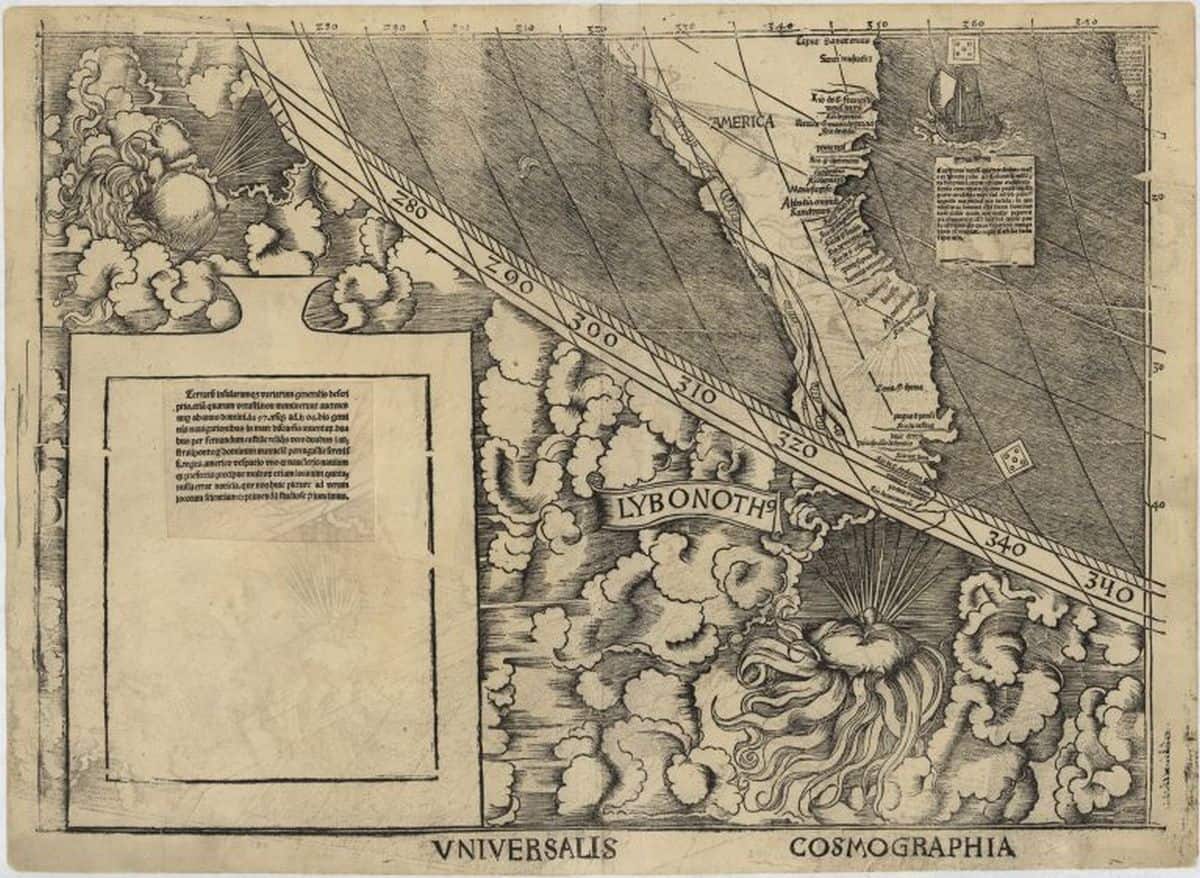
In Waldseemüller’s large world map, he included data gathered by Vespucci during his voyages of 1501-1502 to the New World. He then named the new lands “America” on his 1507 map in recognition of Vespucci’s understanding that a new continent had been uncovered following Columbus’ and subsequent voyages in the late 15th century.
The birth of the United States of America
In the late 1500s, Europeans began to settle in these lands, and by 1763, Great Britain had gained control of territory up to the Mississippi River following victory over France in the Seven Years' War.
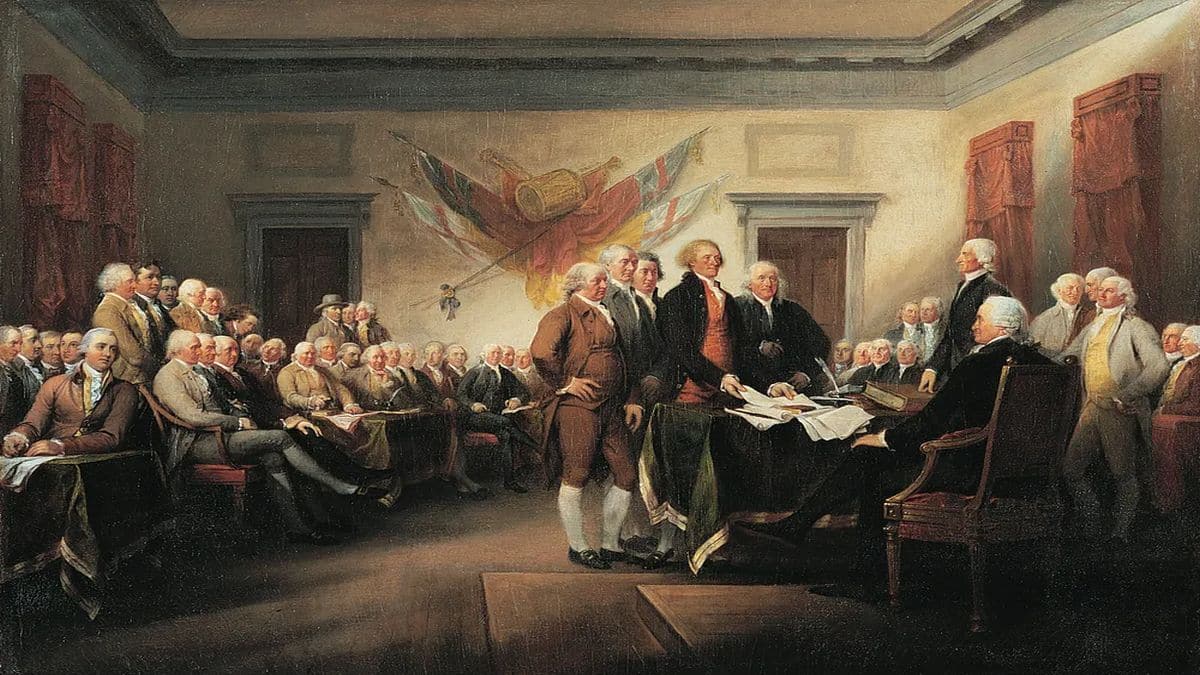
In 1775, the American Revolution began when George Washington led the Continental Army to fight against British rule. And the following July, the Second Continental Congress adopted the Declaration of Independence, written by the Founding Fathers, marking the birth of the United States of America.
This document, which states, “We hold these truths to be self-evident, that all men are created equal, that they are endowed by their creator with certain unalienable rights, that among these are life, liberty and the pursuit of happiness” has been the guiding light of the country since then.
The difference between USA and America
The birth of the USA also gave rise to confusion between the USA and America. While it is used by many interchangeably, the term America is a bit broader, as it refers to the Americas – North America and South America combined. Meanwhile, the United States of America, or USA, is a country in North America.
Today, many within the United States of America also refer to the nation as America, ignoring the 600 million other people living in this same region but outside that one country. Explaining how this came about, Daniel Immerwahr, an associate professor at Northwestern University, explains the historical development of how and why the name “America” gained relevance in the US.
After the country was officially named the United States of America, physician and naturalist Samuel Latham Mitchill complained about the struggles of using the name to refer to its nationals: “United States men?” He proposed Fredonia as a more universal term, while poet Philip Freneau proposed Columbia.
In later years, as the US pursued an expansionist policy, the need arose for the country to find a new name that illustrated the union of states and colonies more effectively. The name “America” gained popularity and was first legitimised by Theodore Roosevelt while giving a speech about their victory against the Spanish.
The rise and rise of the USA
In the immediate years after independence, the United States grew. Through negotiation, purchase, conflict, and conquest, the country more than tripled in size between 1783 and 1853.
Its economy took off after the American Civil War. Between 1865 and 1898, coal production rose by 800 per cent and railway track mileage by 567 per cent. By the middle of the 1880s, the United States had surpassed Britain as the world’s leading producer of manufactured goods and steel.
Slowly and steadily, the US progressed despite World War I and the destruction that it brought with it.

It also weathered the Great Depression as well as World War II.
As the war smoke cleared, it became apparent: the US was an unprecedented global power. In addition to its military strength, the US also boasted the most valuable currency — the dollar — to which all other currencies became fixed.
Data also shows that the US economy took off during the war, nearly doubling in size between 1939 and 1945. In stark contrast, Western Europe’s economy contracted by 18 per cent, and Japan’s was cut in half. In fact, when World War II ended, British Prime Minister Winston Churchill declared that the United States stood “at the summit of the world.”
Since then, the US has become the country we all know today. Its economy and military strength remain at the top, with only China being able to compete. Population-wise, too, the US has grown from strength to strength.
But there are challenges too — internally as well as externally — that the US has to grapple with today. A recent poll reflected this dissatisfaction; three-quarters of respondents said they were dissatisfied with the way things are going, and only a third believe that the American dream still exists.

Military drones & police check-ups: How Sri Lanka is fighting against worst dengue outbreak in a decade
How Facebook job ad lured 2 Karnataka men into Myanmar cyber scam camp
Why is India seeing 95% cloud cover despite a Super El Niño?
What is CJP’s fourth demand to the government as protests in Delhi intensify?
The new geography of war: Why the Houthis can no longer be ignored