


US turns 250: Who were America's Founding Fathers?
As the United States celebrates its 250th anniversary, we revisit the story of America's Founding Fathers. From their fierce political rivalries and roles in drafting the Declaration of Independence and Constitution, to the Hamilton-Jefferson ideological divide and the contradictions that shaped the early republic

The United States commemorates the 250th anniversary of its independence on July 4, 2026.
The Semiquincentennial is not only a celebration of the Declaration of Independence and the birth of the United States, but also an opportunity to revisit the achievements, disagreements and contradictions of the generation commonly known as the Founding Fathers.
The architects of the United States came from varied backgrounds and frequently disagreed over politics, economics and constitutional principles. Their debates shaped the institutions that continue to define the country today.
The anniversary also serves as a reminder that while the Founders produced revolutionary political ideas centred on liberty and representative government, they were also products of their own era.
 More from Explainers
Who were the Founding Fathers of the United States?
Although the phrase "Founding Fathers" has become inseparable from the American Revolution, it was not widely used during the eighteenth century itself.
The expression only entered mainstream political language more than a century later after Senator Warren G Harding — who later became US President — used it repeatedly in speeches during the late 1910s and early 1920s.
Historians generally use the term to describe the political leaders who guided the colonies through independence and established the constitutional framework of the United States. Within this broad group, two categories are commonly recognised.
The first comprises the 56 men who signed the Declaration of Independence in 1776, accepting the possibility that they could be prosecuted for treason by the British Crown.
Another closely related group includes the 39 delegates who signed the United States Constitution in 1787, creating the framework of the federal government that continues to operate today.
Beyond these larger groups, historian Richard B Morris identified seven individuals in 1973 whom he regarded as the central architects of the American republic.
Applying what he described as a "triple test" of leadership, longevity and statesmanship, Morris highlighted George Washington, Thomas Jefferson, Benjamin Franklin, John Adams, Alexander Hamilton, James Madison and John Jay as the most influential members of the founding generation.
Together, they did not simply lead a revolution against Britain. They also constructed institutions capable of governing an entirely new republic based not upon hereditary monarchy or imperial conquest, but upon constitutional government and political philosophy inspired by Enlightenment thought.
The image most closely associated with America's birth is a painting that depicts the Committee of Five (John Adams, Benjamin Franklin, Thomas Jefferson, Robert R Livingston, and Roger Sherman) presenting the Declaration of Independence to John Hancock in 1776.
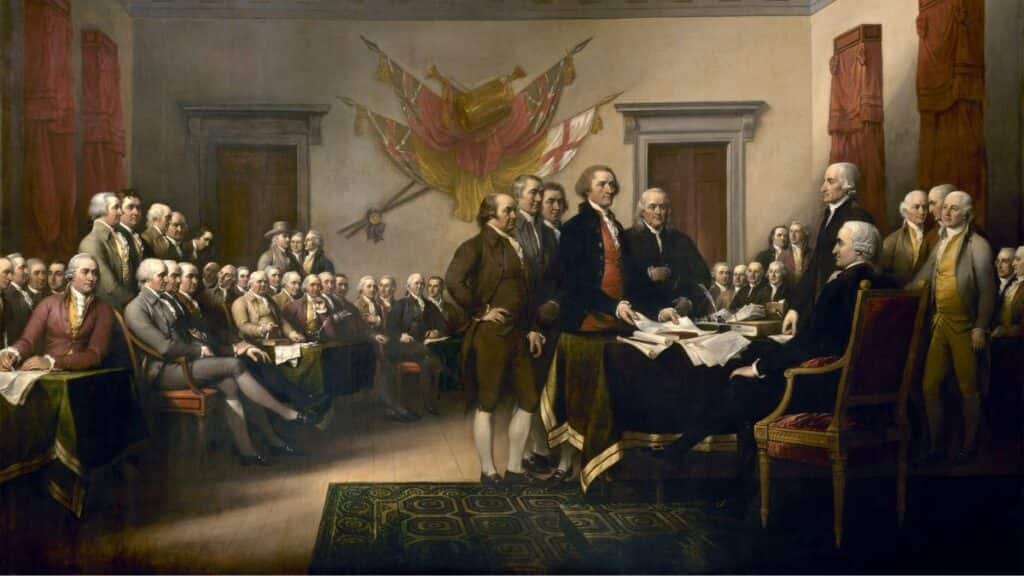
The committee included Thomas Jefferson, John Adams and Benjamin Franklin among its members, symbolising one of the defining moments in the country's political history. That document initiated an unprecedented experiment in self-government whose institutions have endured for two and a half centuries.
Why is George Washington indispensable to America's founding?
Among the principal founders, George Washington occupies a unique place in American history. Often referred to as the "Father of His Country," his importance stemmed less from philosophical writing than from leadership during the nation's most vulnerable moments.
As Commander-in-Chief of the Continental Army during the Revolutionary War, Washington directed the military campaign against Great Britain, then regarded as one of the world's dominant powers.
His leadership helped transform a collection of colonies into an independent nation capable of defending itself.
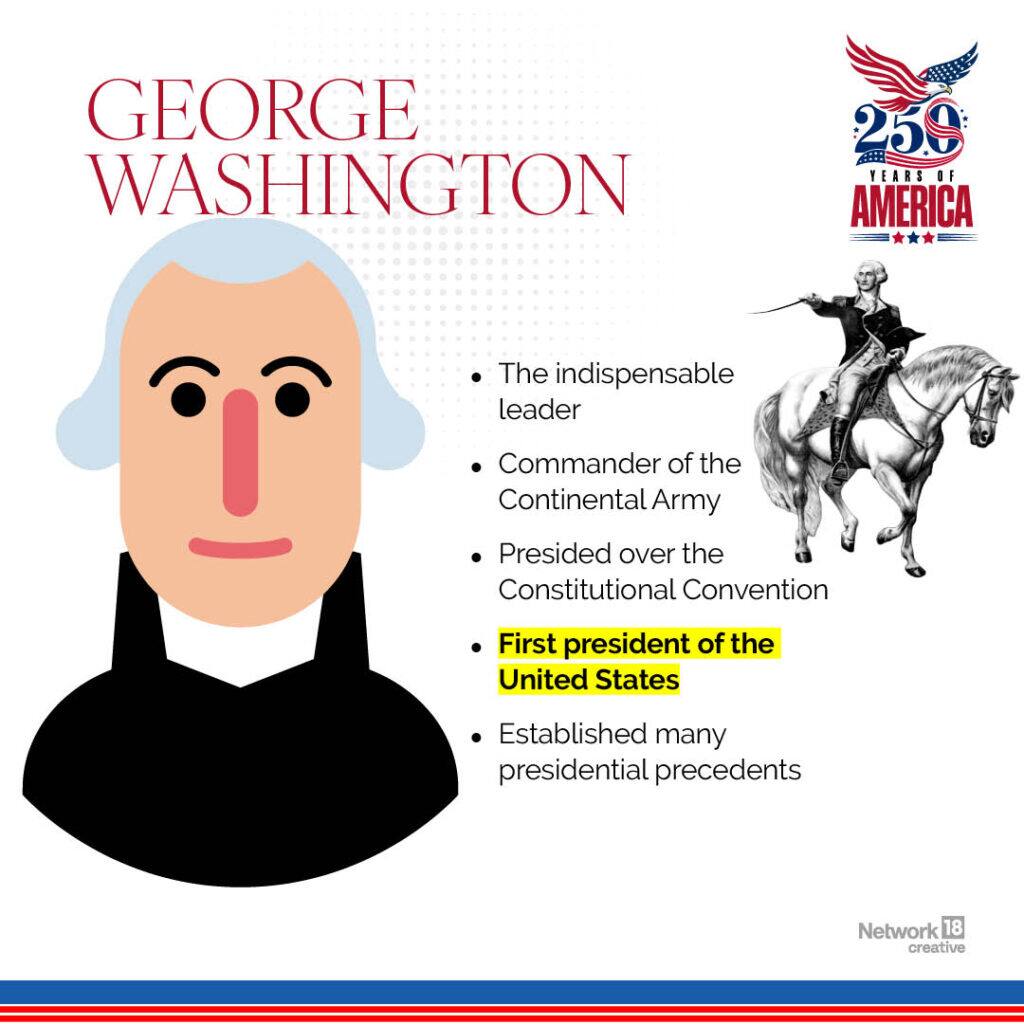
His influence did not end with military victory. Washington became the first president of the United States and established numerous conventions that later administrations would follow. Perhaps the most significant was his decision to leave office voluntarily after serving two terms.
At a time when many newly independent countries struggled with authoritarian rule or military strongmen, his peaceful departure reinforced the principle that elected leaders should relinquish power rather than retain it indefinitely.
Washington also attempted to keep his administration above the growing political rivalries that emerged during the republic's earliest years.
Despite these efforts, divisions within his Cabinet — particularly between Alexander Hamilton and Thomas Jefferson — became impossible to contain and ultimately gave rise to America's first organised political parties.
How did the remaining six founders shape America?
While Washington provided stability and leadership, the remaining members of Morris' "Big Seven" each contributed in distinct ways to the formation of the United States.
Thomas Jefferson
Thomas Jefferson occupies a central place in American political history because he drafted most of the Declaration of Independence.
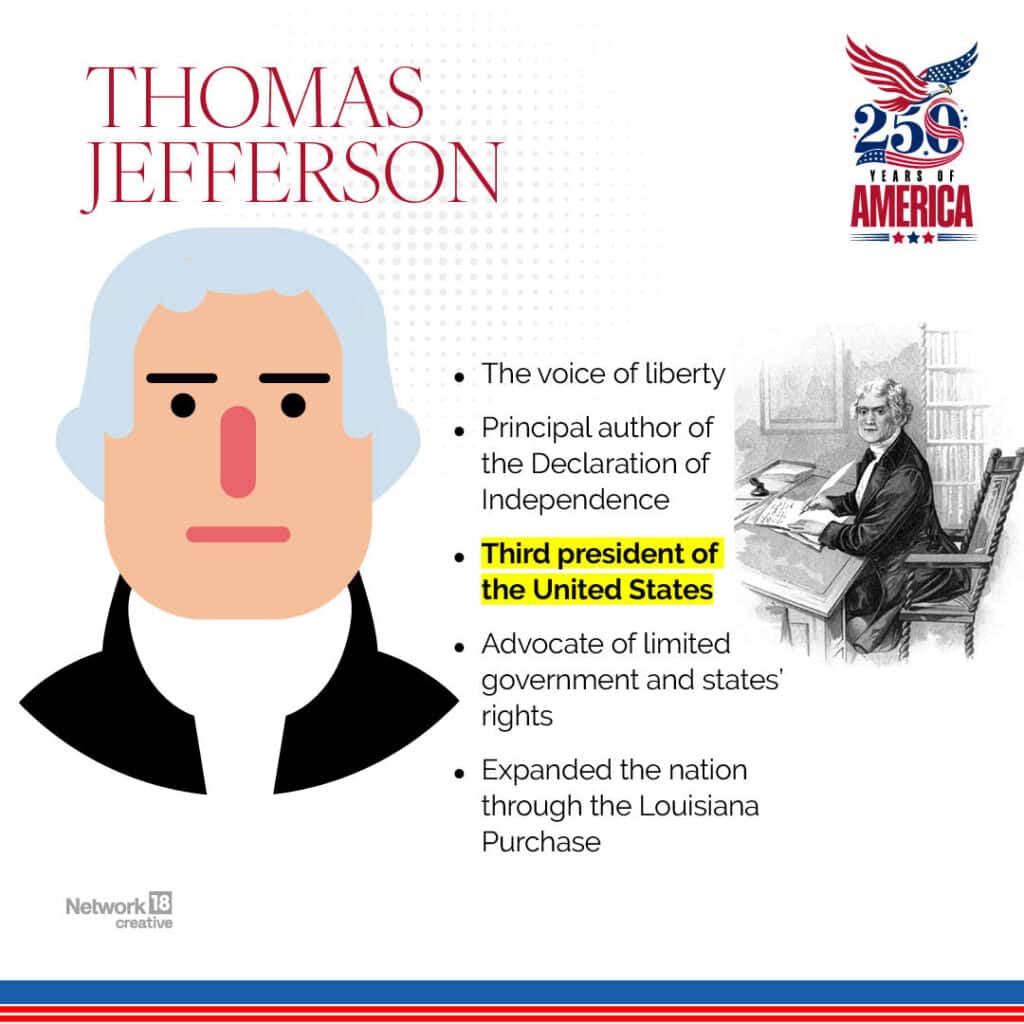
Drawing heavily upon Enlightenment philosophy, he transformed complex political theories into language that would become synonymous with the American national identity, including the declaration that people possess the rights to "Life, Liberty and the pursuit of Happiness."
Jefferson's public career extended well beyond 1776. He later served as America's first Secretary of State, became the nation's second Vice President and eventually its third President.
During his presidency, the Louisiana Purchase dramatically expanded the country's territory and altered its future trajectory.
Benjamin Franklin
Benjamin Franklin brought an entirely different set of strengths to the revolutionary movement. By the time of independence, Franklin had already achieved international recognition as a scientist, inventor, printer and public intellectual.
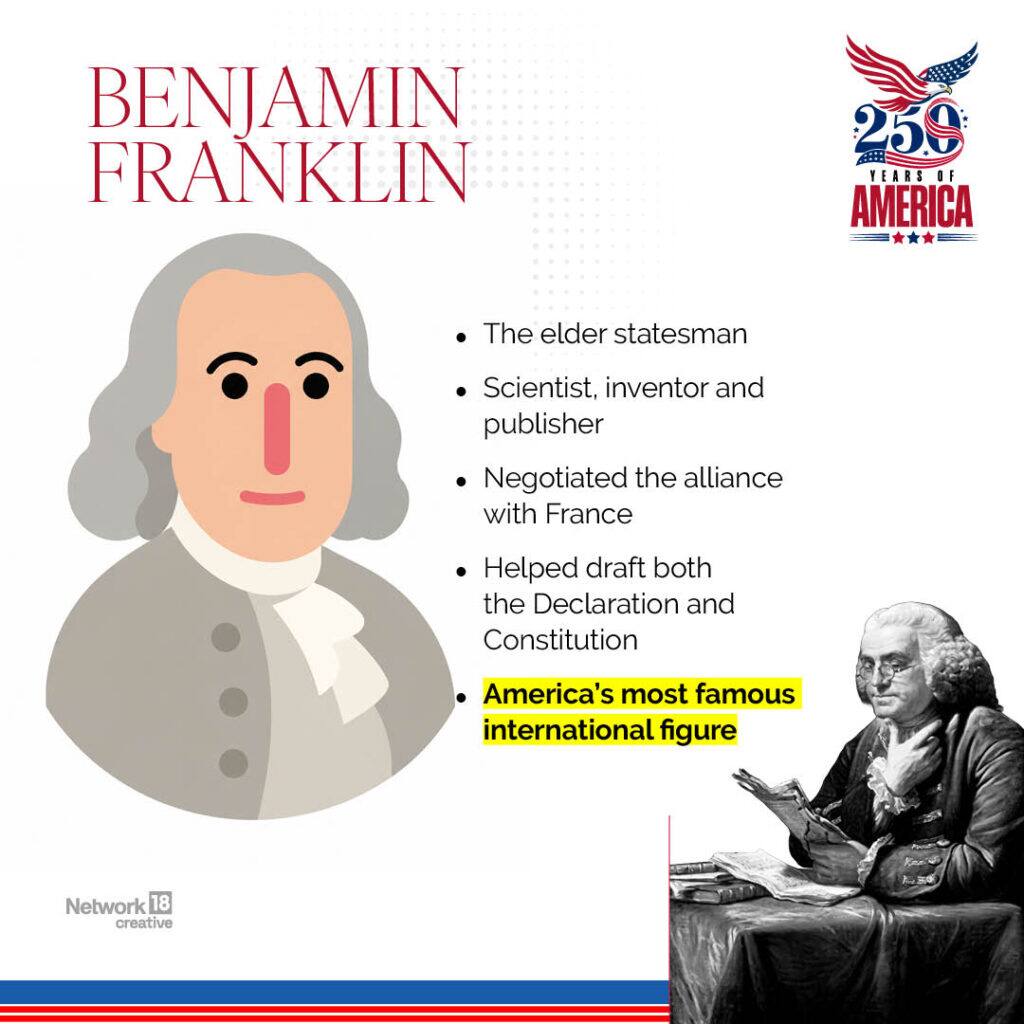
His diplomatic skills proved invaluable during the Revolutionary War, particularly in securing French support for the American cause. That alliance provided military assistance that greatly strengthened the colonies' position against Britain.
Franklin also occupies a unique place in American constitutional history because he remains the only individual to have signed the four principal founding documents associated with the revolutionary era.
John Adams
John Adams emerged as one of independence's strongest advocates when many delegates remained uncertain about breaking ties with Britain.
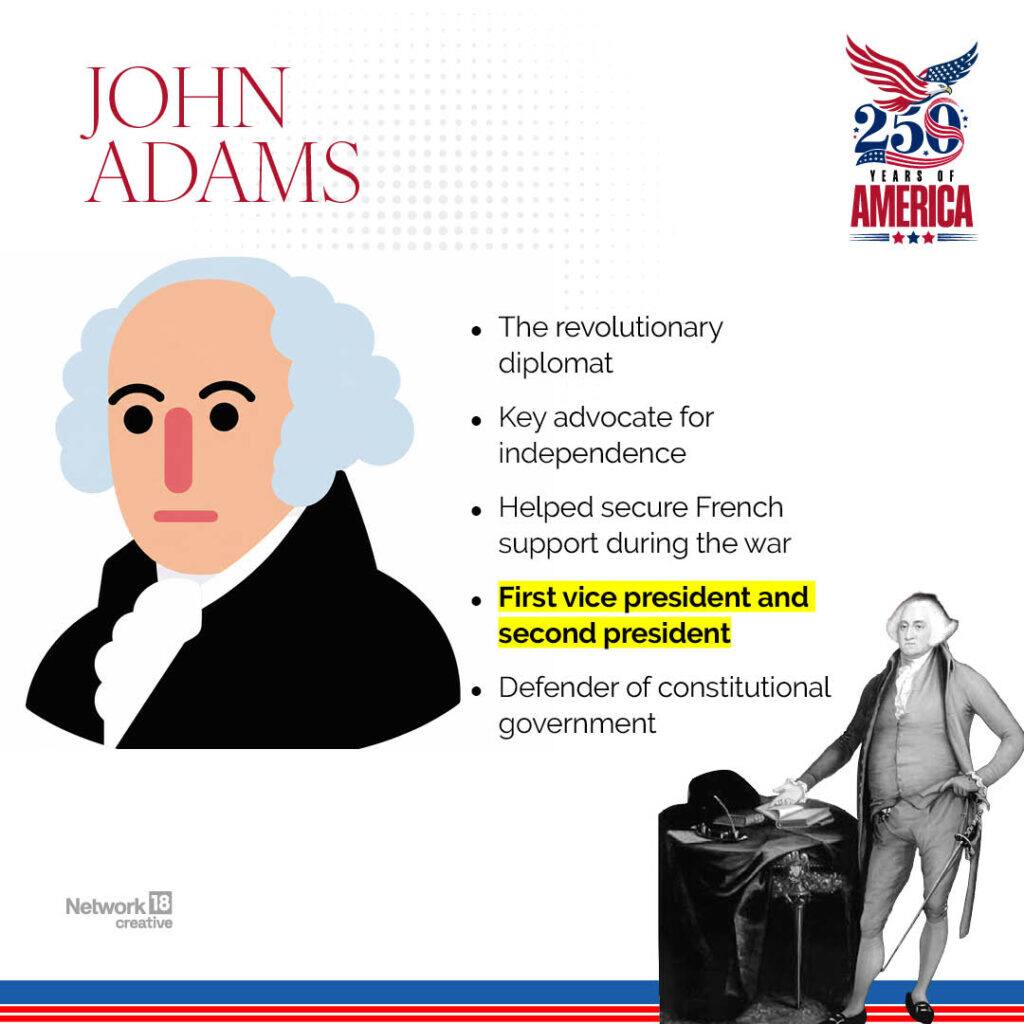
His legal knowledge and political arguments played a major role in persuading the Continental Congress to move towards independence.
Adams also authored the Massachusetts Constitution, widely regarded as the oldest written constitution still in operation.
After serving as Washington's Vice President, he became the second President of the United States, steering the country during a tense undeclared naval conflict with France.
Alexander Hamilton
Alexander Hamilton's story differed considerably from many of his contemporaries. Born in the West Indies, he rose from modest beginnings through military service and exceptional intellectual ability.
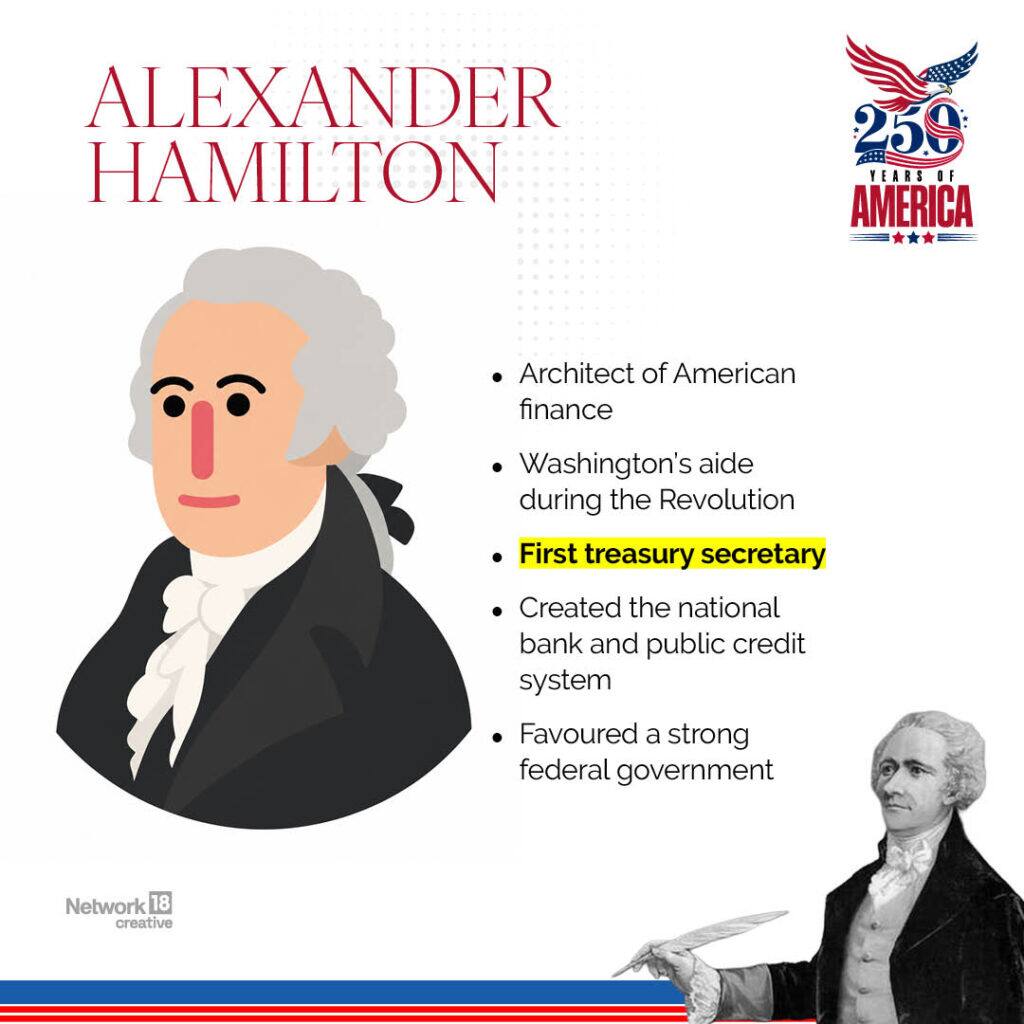
As the first Secretary of the Treasury, Hamilton created many of the financial institutions necessary for the survival of the new federal government.
His economic programme included establishing public credit, creating a national banking system and laying the foundations for an economy based increasingly upon commerce and manufacturing.
Hamilton also played a leading role in writing The Federalist Papers, which defended the proposed Constitution during the ratification process.
James Madison
James Madison earned lasting recognition as the "Father of the Constitution." Arriving at the Constitutional Convention with extensive research and carefully prepared proposals, Madison significantly influenced the governmental structure ultimately adopted in Philadelphia.
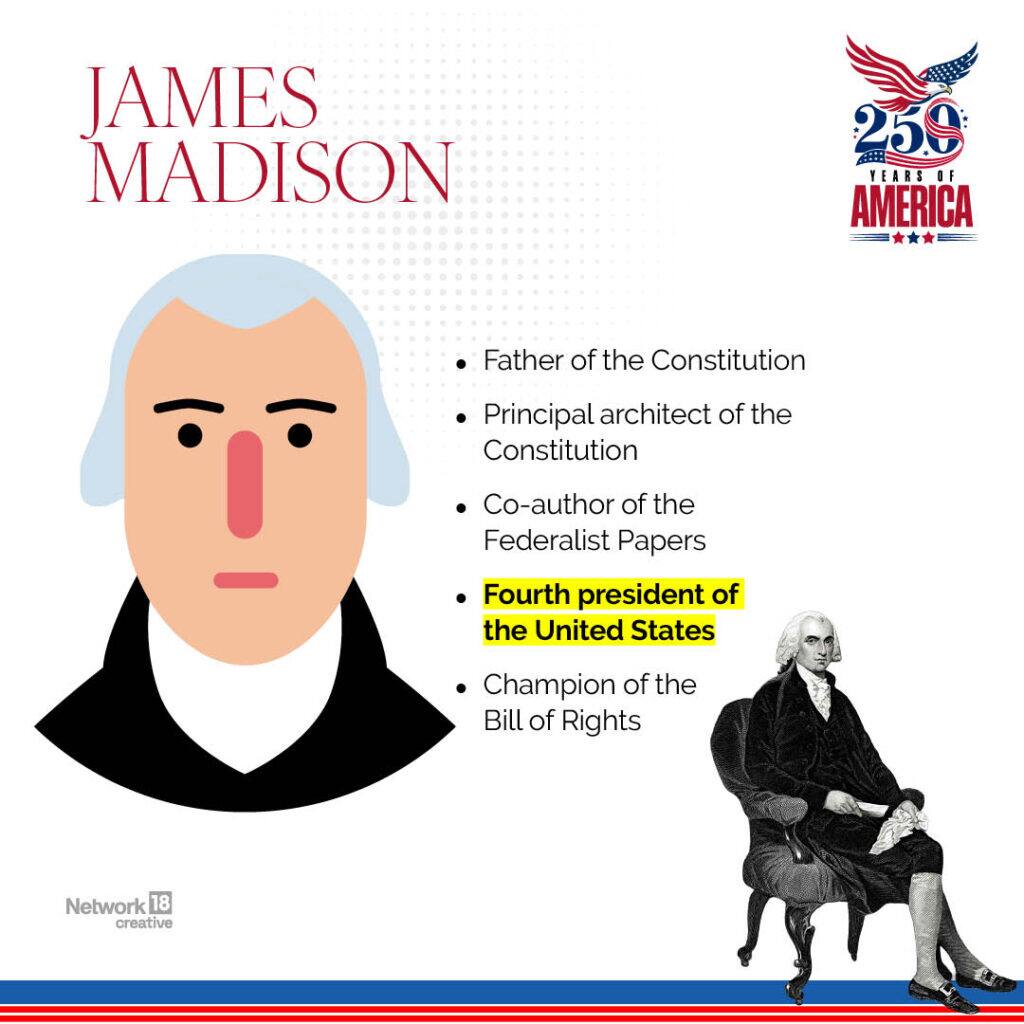
His vision helped establish the separation of powers among the executive, legislative and judicial branches while embedding checks and balances within the constitutional framework. Responding to concerns raised during ratification, Madison later drafted the Bill of Rights, adding explicit protections for individual freedoms.
John Jay
John Jay may receive less public attention today than some of his contemporaries, yet his contributions were equally significant.
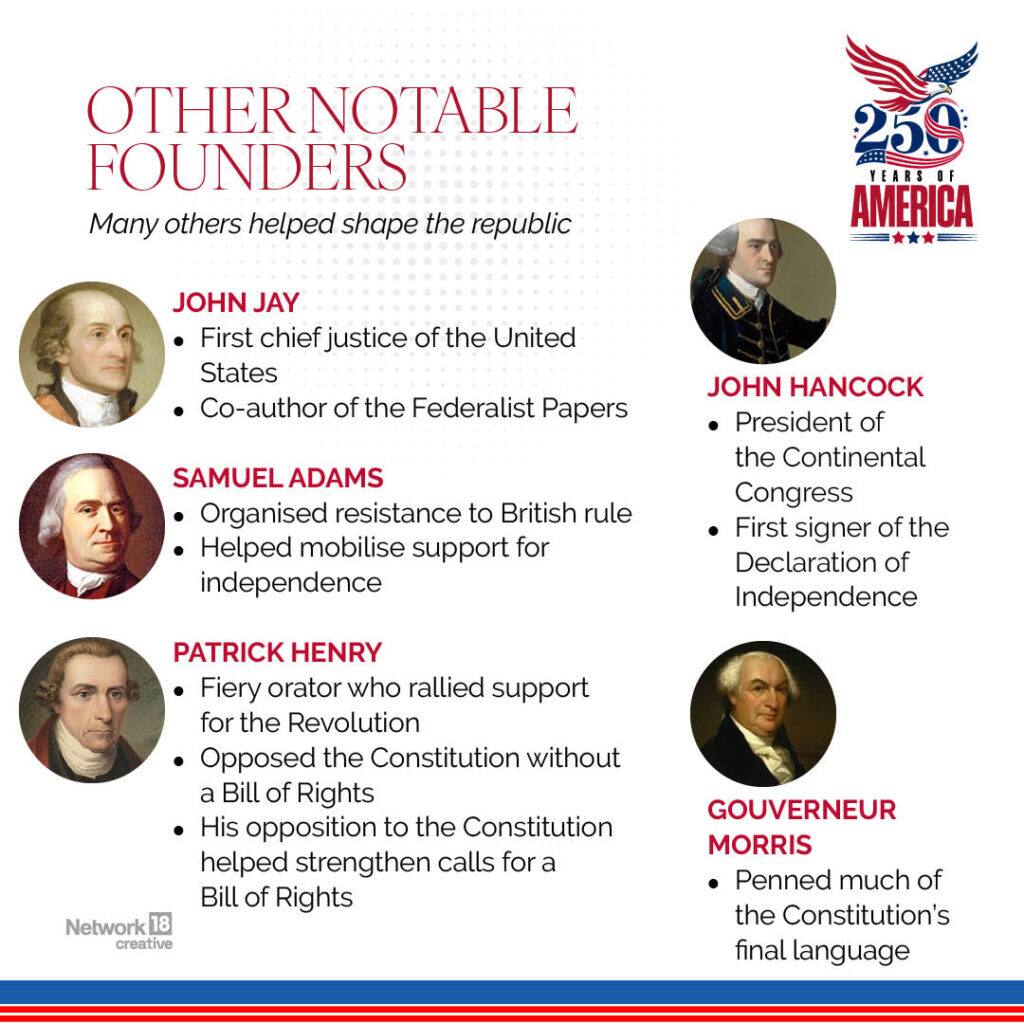
Jay participated in negotiating the Treaty of Paris in 1783, which formally ended the Revolutionary War and secured British recognition of American independence.
Alongside Hamilton and Madison, Jay contributed to The Federalist Papers before becoming the first Chief Justice of the United States Supreme Court, helping establish the judiciary's early institutional foundations.
Collectively, these seven men influenced nearly every major institution created during America's formative years — from military leadership and diplomacy to constitutional law, financial policy and judicial independence.
Why did the Founding Fathers disagree so deeply about America's future?
Popular narratives frequently portray the founders as sharing identical political beliefs. In reality, profound disagreements emerged almost immediately after independence.
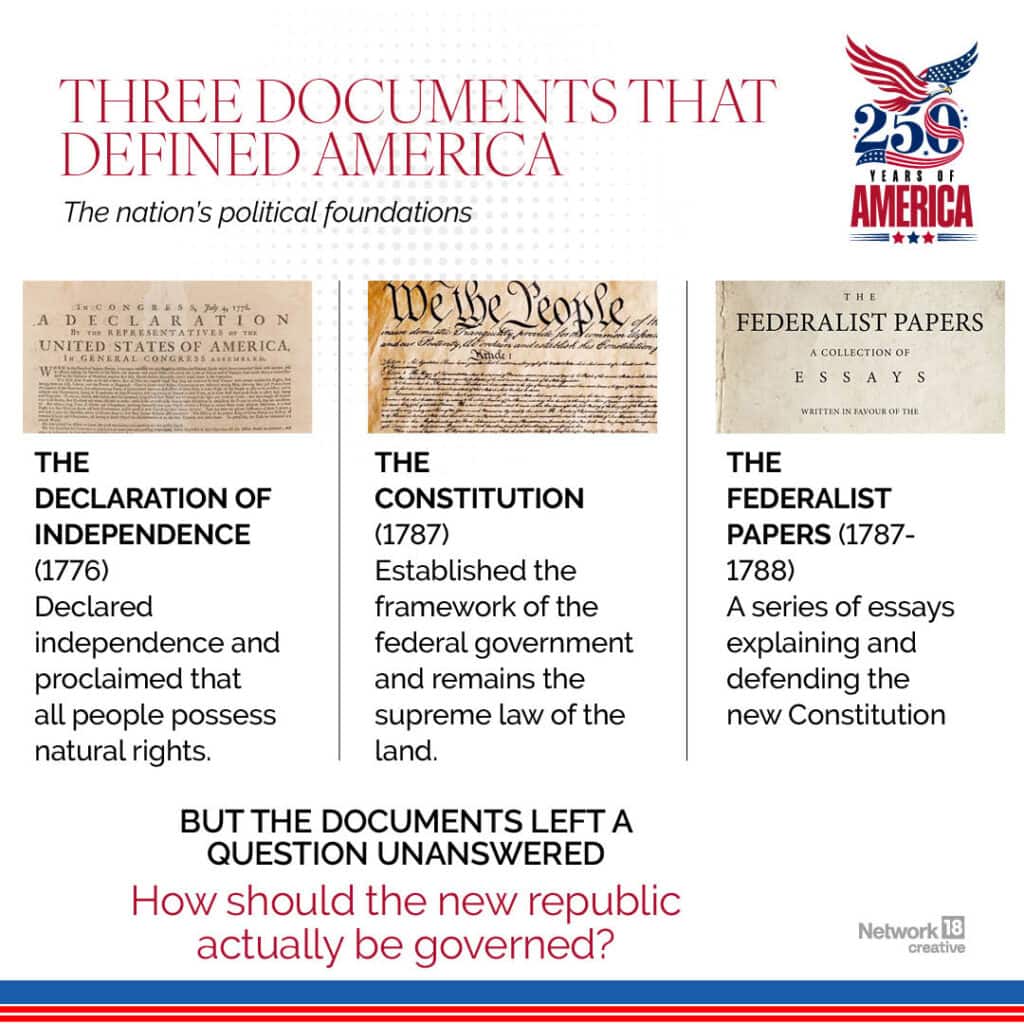
These divisions were not minor policy disputes but competing visions regarding the nature of government, economic development and constitutional authority. Over time, these competing ideas evolved into the country's first political parties.
The principal rivalry developed between Alexander Hamilton and Thomas Jefferson, whose disagreements extended far beyond personal dislike. Their competing philosophies became the foundation of a debate that continues to influence American politics more than two centuries later.
Washington sought to remain above partisan conflict, yet his Cabinet increasingly became the arena in which these opposing perspectives confronted one another. At the heart of the dispute lay fundamentally different assumptions about human nature and political power.
Hamilton viewed human behaviour with considerable scepticism. He believed individuals were often driven by ambition, emotion and self-interest.
In his view, stable government required leadership by educated and economically secure elites capable of preventing instability and disorder.
Jefferson reached almost the opposite conclusion. He placed greater confidence in ordinary citizens, especially farmers and labourers, believing they possessed the civic virtue necessary for republican government.
By contrast, he regarded concentrations of wealth and political authority with suspicion, fearing they could gradually evolve into tyranny.
These opposing assumptions influenced nearly every important policy question facing the early republic.
How did Hamilton and Jefferson influence American politics?
Hamilton envisioned the United States becoming a commercial and industrial nation comparable to Great Britain. To achieve this objective, he proposed that the federal government assume state debts accumulated during the Revolutionary War and establish the Bank of the United States.
The institution would manage public finances, provide a stable currency and facilitate lending that could encourage manufacturing, infrastructure and commercial expansion.
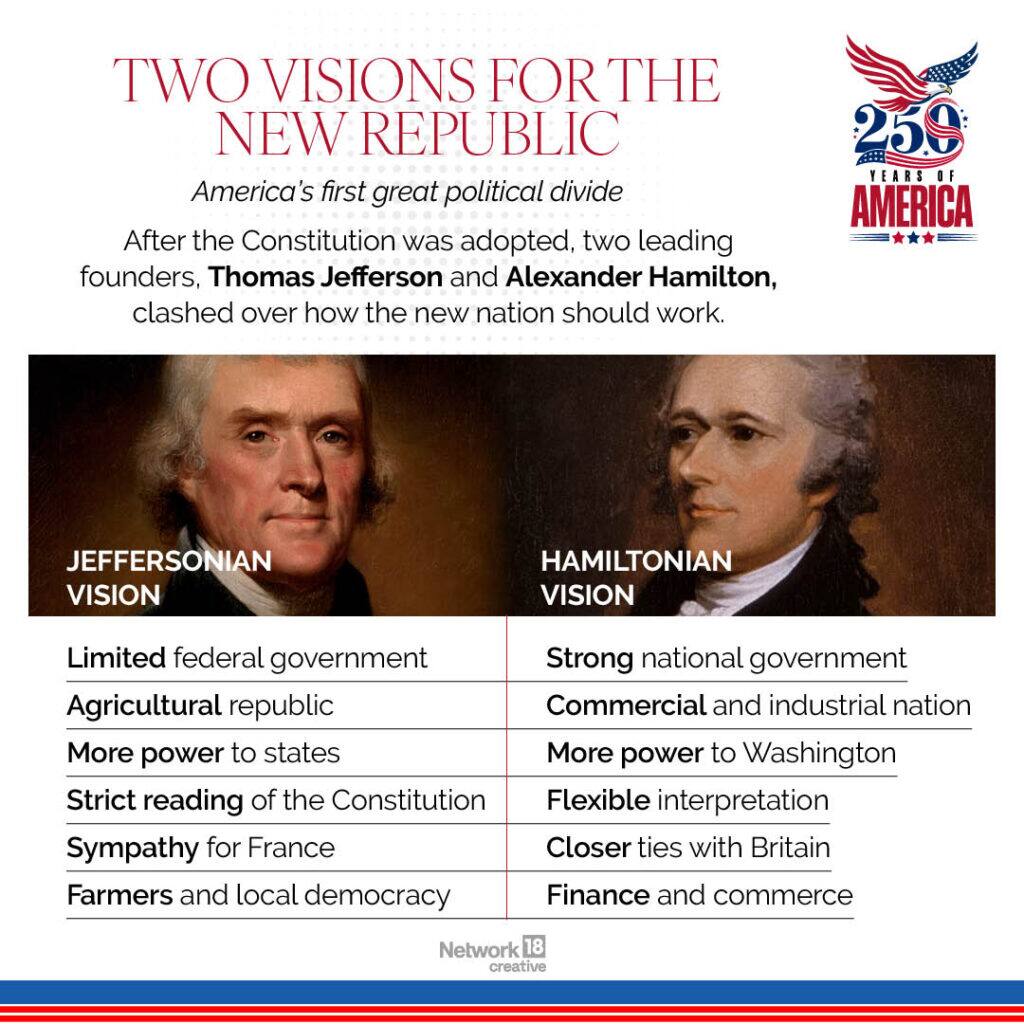
Jefferson preferred a markedly different future. He believed the country's long-term strength rested with independent agricultural producers rather than urban financial institutions.
From his perspective, Hamilton's financial programme disproportionately benefited merchants and speculators while concentrating excessive economic influence within the federal government.
The disagreement over the national bank soon expanded into a broader constitutional debate. Hamilton argued that Congress possessed implied powers under the Necessary and Proper Clause contained in Article I, Section 8 of the Constitution.
If the Constitution authorised a legitimate objective, he believed Congress could adopt reasonable measures necessary to accomplish it — even if those measures were not explicitly listed within the document.
Jefferson rejected this interpretation. Referring to the Tenth Amendment, he maintained that powers not specifically delegated to the federal government remained with the states or the people.
Since the Constitution made no direct reference to establishing a national bank, Jefferson concluded that such an institution exceeded federal authority.
Foreign affairs deepened the divide. The outbreak of the French Revolution in 1789 forced the United States to determine its position amid escalating conflict between France and Great Britain.
Hamilton considered Britain America's most important commercial partner despite the recent struggle for independence. He admired Britain's financial institutions and political stability while viewing the increasingly violent French Revolution as evidence of the dangers associated with weakening central authority.
Jefferson reached a different conclusion. He regarded the French Revolution as an extension of the struggle against monarchy that had inspired American independence.
Remembering France's military assistance during the Revolutionary War, Jefferson believed the United States owed its ally continued political sympathy despite the violence accompanying the Revolution's radical phase.
These ideological battles eventually produced America's first party system. Hamilton, together with John Adams and John Jay, emerged as leading figures within the Federalist movement.
Their support came primarily from merchants, financiers, urban workers and property owners concentrated in New England and New York. Federalists favoured a strong national government, commercial expansion and institutions capable of supporting economic growth.
Jefferson and James Madison led the Democratic-Republicans. Their political base included many farmers, artisans and plantation owners, particularly across the South and western frontier.
They advocated greater authority for state governments, emphasised agriculture and supported a narrower interpretation of federal constitutional powers.

The rivalry extended well beyond formal politics. Hamilton and Jefferson's disagreements became so intense that they effectively divided Washington's administration.
Meanwhile, the once-close friendship between John Adams and Thomas Jefferson deteriorated amid political conflict before the two eventually reconciled in later life.
In one of history's most remarkable coincidences, both men died on July 4, 1826, exactly fifty years after adoption of the Declaration of Independence.
How should US' Founding Fathers be remembered 250 years later?
Modern historians increasingly present a fuller account of the founding generation, recognising both its extraordinary political achievements and its moral shortcomings.
One of the most significant contradictions concerns slavery. Nearly half of the delegates who attended the Constitutional Convention — including Washington, Jefferson and Madison — owned enslaved people.
At the same time that the Declaration of Independence proclaimed universal equality, slavery remained embedded within American society, and legislation continued to protect and expand the transatlantic slave trade.
Political participation was similarly limited during the republic's earliest decades. Women, Indigenous communities and many citizens without property remained excluded from meaningful participation in the political process established under the original constitutional framework.
Consequently, many historians argue that the story of the United States over the past 250 years has involved successive generations attempting to reconcile the ideals articulated during the Revolution with the realities that existed at the nation's founding.
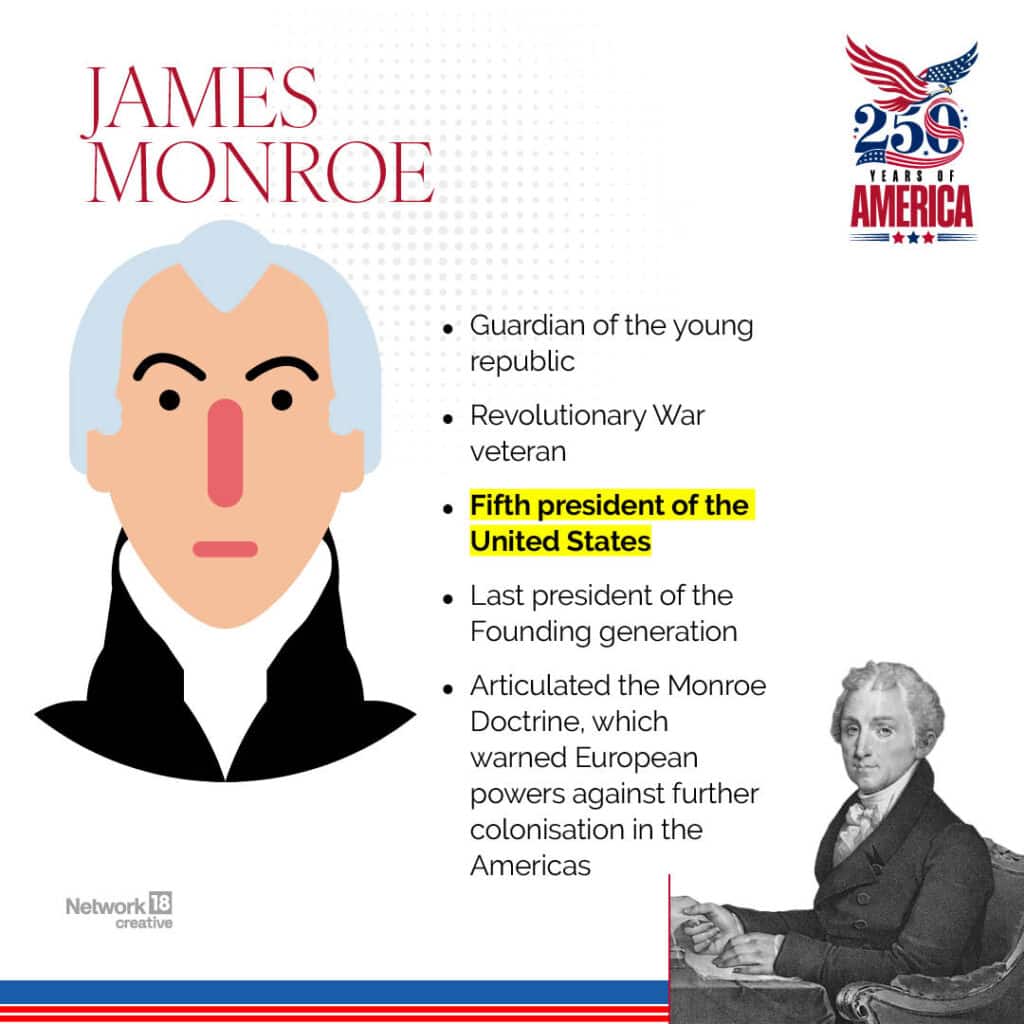
James Monroe has also time and again been recognised as the last of the "Founding Father" presidents.
Scholarship has also expanded beyond the traditional group of founders to include other influential figures such as Samuel Adams, Patrick Henry and George Mason.
Greater attention has likewise been devoted to women whose political writings and advocacy contributed to the revolutionary era, including Abigail Adams and Mercy Otis Warren.
Over the following two centuries, the United States developed into a powerful industrial and financial nation with a robust federal government — an outcome reflecting many elements of Hamilton's vision.
At the same time, Jefferson's emphasis on democracy, individual liberty and scepticism towards concentrated political authority continued to influence American political culture and national identity.
Two hundred and fifty years after the Declaration of Independence launched an unprecedented political experiment, the legacy of the Founding Fathers is neither a simple tale of unanimous agreement nor one of flawless leadership.
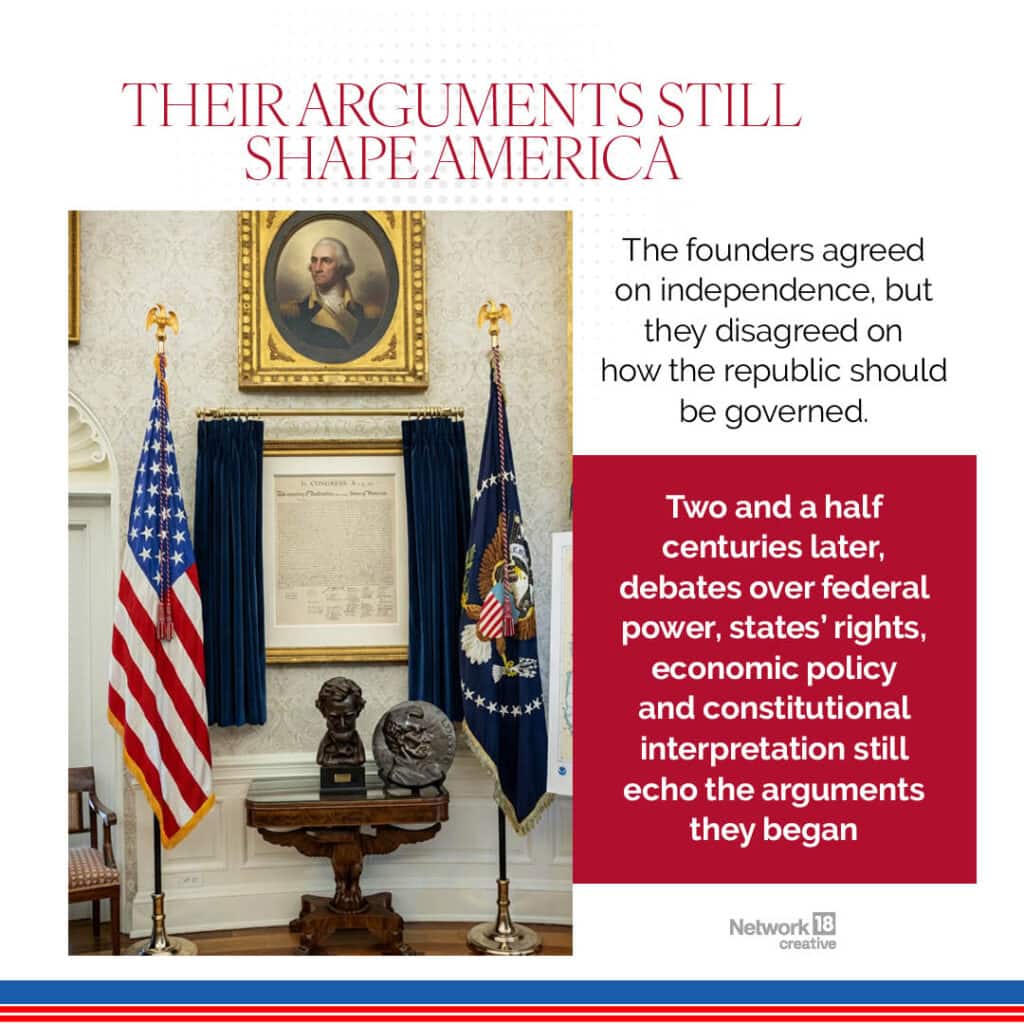
Instead, it is the story of individuals with competing ideas who collectively built a constitutional system that has endured through centuries of change while continuing to challenge each generation to reconcile the nation's founding ideals with its evolving reality.
Inhaling global affairs daily, Anmol covers foreign policy & defence with the occasional piece in lifestyle and the thrilling sport of polo, to keep things light when they get too tense. He has far too many disparate interests with a constant itch for travel. You can follow him on X (AnmolSingla001); and please feel free to reach out to him at anmol.singla@nw18.com for interviews, tips, feedback or travel recommendations.

Military drones & police check-ups: How Sri Lanka is fighting against worst dengue outbreak in a decade
How Facebook job ad lured 2 Karnataka men into Myanmar cyber scam camp
Why is India seeing 95% cloud cover despite a Super El Niño?
What is CJP’s fourth demand to the government as protests in Delhi intensify?
The new geography of war: Why the Houthis can no longer be ignored