


Why US Supreme Court’s ruling on birthright citizenship is a huge relief to Indians
The US Supreme Court has ruled against Donald Trump’s attempt to end birthright citizenship, delivering a major blow to the president. The decision provides much-needed relief to Indians, as it protects US-born children of temporary visa holders

After extending his presidential powers on Monday, the US Supreme Court delivered a major blow to Donald Trump’s immigration agenda by upholding the constitutional guarantee of birthright citizenship.
The court ruled 6-3 to maintain the right to American citizenship for nearly everyone born on US soil.
On the first day of his second term, US President Donald Trump signed an executive order that stated that children born to parents in the United States illegally or on temporary visas would not automatically become US citizens.
However, in Tuesday’s decision, the US Supreme Court said this order violated the 14th Amendment of the US constitution. “Citizenship, then and now, was the right to have rights – to freely participate in our political community,” wrote US Chief Justice John Roberts. “The Framers of the Fourteenth Amendment extended that promise to ‘every free-born person in this land.’ We keep that promise today.”
 More from Explainers
The ruling isn’t just a rejection of Trump’s immigration agenda. It also provides relief to many, many Indians living and working in the United States on temporary visas.
What is birthright citizenship?
Before diving into the US Supreme Court’s ruling, let’s understand birthright citizenship. As the name suggests, the concept is the granting of citizenship to anyone born in the United States, with only a handful of very narrow exceptions.
It was formalised in the 14th Amendment of the US Constitution, which was added after the US Civil War.
Birthright citizenship has been granted to most children born in the US, except for those born to foreign diplomats, hostile military members, and on foreign public vessels. Native American children were excluded from birthright citizenship until the Indian Citizenship Act of 1924 established that right.
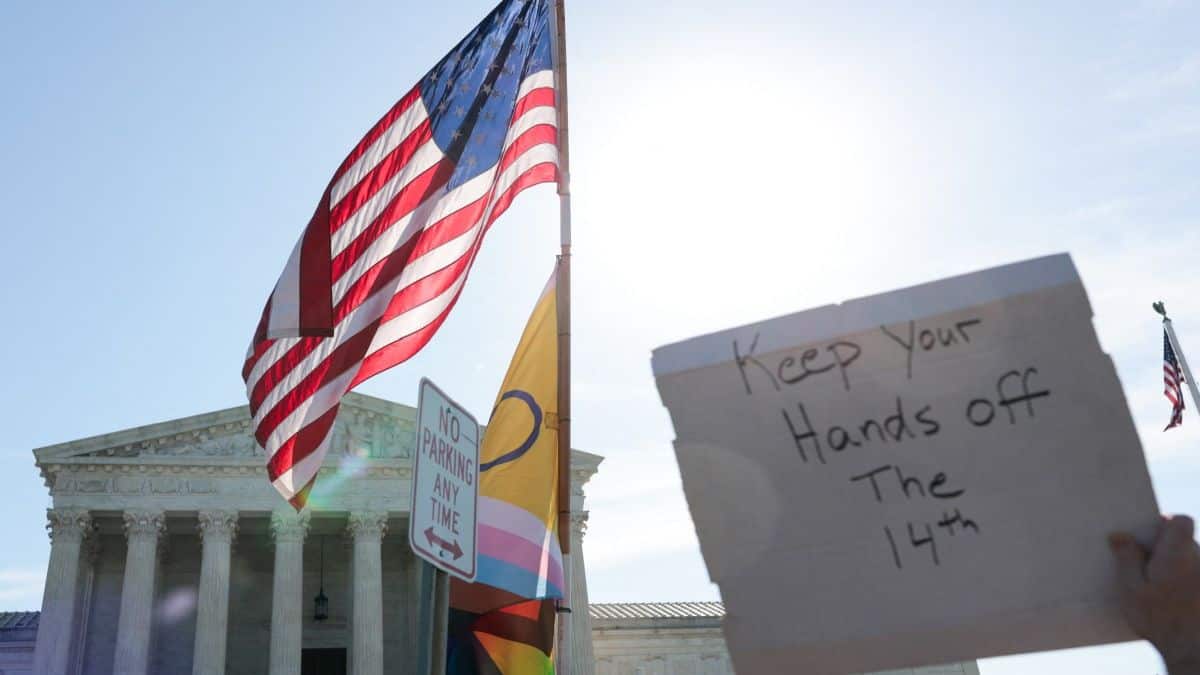
What did the US Supreme Court rule on birthright citizenship?
The matter in the court stems from the executive order that Trump signed on the first day of his second term. This order barred certain children from receiving birthright citizenship. For instance, children born to undocumented immigrants and those whose parents were not permanent residents at the time of their birth, even if they were otherwise in the country legally, would not be granted birthright citizenship.
Critics, however, immediately challenged the order in court, arguing it would render some infants essentially stateless.
In rejecting Trump’s criticism of birthright citizenship, the US Supreme Court on Tuesday (June 30) in a 6-3 ruling struck down the US president’s executive order. Chief Justice John Roberts was joined by justices Sonia Sotomayor, Elena Kagan, Ketanji Brown Jackson, and Amy Coney Barrett.
In the ruling, the court noted that the 14th Amendment didn’t support Trump’s view of limiting birthright citizenship. “If Congress intended to limit American citizenship to the children of those domiciled in the United States, nothing in the succinct language of the Citizenship Clause conveyed that design,” Roberts wrote.
“Children born in the United States to parents unlawfully or temporarily present are ‘subject to the jurisdiction’ of the United States and are citizens at birth under the Fourteenth Amendment's Citizenship Clause,” the ruling by Roberts read.
However, Justice Samuel Alito, who dissented with the ruling, warned that the court majority has made “a serious mistake” in “one of the most important decisions in the history of the Court,” and argued that the 14th Amendment’s citizenship clause requires allegiance only to the United States. He also wrote that the majority’s interpretation opens the door to citizenship for “virtually everyone who happens to be born in this country, including the children of ‘birth tourists,’— those who come here solely for the purpose of giving birth to a child and then promptly return home.”
Shortly after the US Supreme Court’s ruling, Trump called the decision “bad for our country”. He further suggested that the US Congress should take up the matter legislatively. “No long and unwieldy Constitutional Amendment is necessary! Congress should start today to work on ending expensive and unfair to our country, birthright citizenship,” Trump wrote on his Truth Social platform. “They will have my complete and total support!”
However, legal experts note that altering the meaning of the 14th Amendment would require a change in the Constitution.
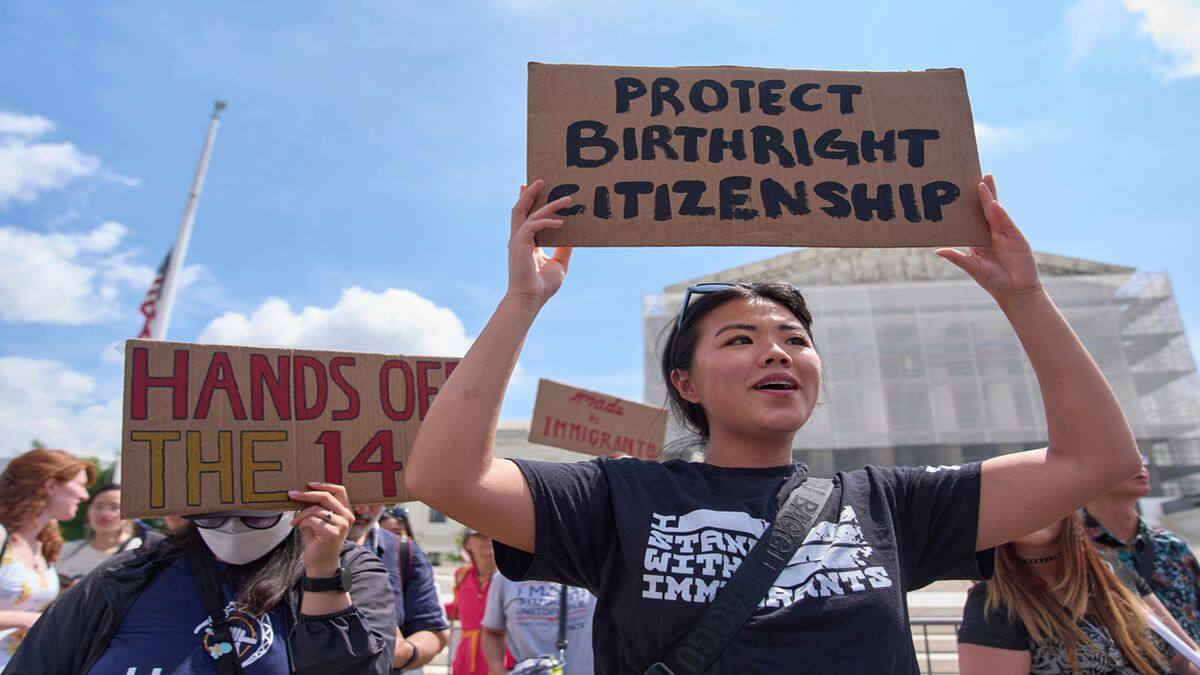
Why does this ruling matter to Indians?
For many Indians living in the US, the ruling has provided them with relief. It removes the uncertainties created by the US president.
How?
The United States is home to an estimated 5.2 million to 5.4 million people of Indian origin, accounting for roughly 1.6 per cent of the country’s population.
If Trump’s executive order had been implemented, children born in the US to parents who were neither American citizens nor lawful permanent residents would have been denied automatic citizenship.
So, if those living in the US on H-1B visas or other temporary visas had children, those babies wouldn’t be considered US citizens. However, the US Supreme Court has upheld birthright citizenship, meaning that the children born to Indian parents on temporary visas or awaiting their green card would still be considered as US citizens.
Chinten Patel, the executive director of Indian American Impact, an organisation promoting political involvement by the community, told IANS, “Today’s ruling is a profound affirmation of who belongs in America. Indians and South Asian immigrant families are among those most directly threatened by Trump’s executive order.”
Referring to the decades-long Green Card backlog for Indians on H-1B visas, he said their “children are often born here long before their parents have a clear path to permanency”. “Today the Supreme Court looked at those families and said: ‘Your children are American. They belong here,” Patel stated.
Indian-American members of the US Congress welcomed the Supreme Court’s ruling on birthright citizenship. Pramila Jayapal said, “Today’s ruling rightly reaffirms that if you are born in America, you are American, plain and simple. This ruling should settle this issue once and for all. I hope it is a signal to Donald Trump to stop putting forward executive orders that are clearly illegal, anti-immigrant, and traumatising to Americans across the country and families who feared their children would be born stateless.”
Another Indian-American lawmaker, Ami Bera, also rejoiced after the court’s decision. “Wow. This Supreme Court got something right for once by protecting birthright citizenship,” adding, “At least I know John Roberts knows how to read the Constitution.”
With inputs from agencies

Military drones & police check-ups: How Sri Lanka is fighting against worst dengue outbreak in a decade
How Facebook job ad lured 2 Karnataka men into Myanmar cyber scam camp
Why is India seeing 95% cloud cover despite a Super El Niño?
What is CJP’s fourth demand to the government as protests in Delhi intensify?
The new geography of war: Why the Houthis can no longer be ignored