


How the Iran war has turned Strait of Hormuz into a death trap for Indian sailors
Yet another Indian seafarer has died in the Strait of Hormuz after Iran struck two UAE oil tankers on Monday (July 13). This incident highlights how precarious the situation has become in the vital waterway for ships to pass since the beginning of the conflict in February

After a brief lull, the United States and Iran have resumed fighting, with Donald Trump announcing that Washington would reinstate a maritime blockade on the country and, in an apparent policy reversal, charge ships for safe passage through the Strait of Hormuz.
And late on Monday (July 13), the United Arab Emirates said two of its tankers had been targeted by Iranian missiles in the southern lane of the Strait of Hormuz in Omani territorial waters, killing one Indian crew member and wounding eight others, including four seriously.
- Catch more updates on the US-Iran war here
The death of the crew member highlights how Indian seafarers have repeatedly found themselves on the front lines in the Strait of Hormuz.
We illustrate further.
Indian killed on UAE tanker
On Monday, amid the renewed fighting between the US and Iran, two UAE oil tankers came under attack from Iranian missiles. The UAE’s Ministry of Defence said the tankers, Mombasa and Al Bahiyah, came under attack while transiting the southern shipping lane of the strait, inside Omani territorial waters.
 More from Explainers
And in this attack, an Indian crew member on board the Mombasa was killed while eight others were wounded, four sustaining serious injuries. The UAE stated that six of the injured were Indian nationals and two were Ukrainian nationals.
Following the strike, Tehran claimed the vessels had ignored repeated warnings, switched off their navigation systems and attempted to sail through what it described as a “mined route” despite instructions from its forces.
Without naming the vessels, the IRGC said two “offending” supertankers had been “successfully struck and disabled” after failing to comply with maritime warnings.
Indian goes missing from GFS Galaxy ship
The death of the Indian seafarer comes a day after a Cyprus-flagged commercial vessel came under fire, after which one Indian went missing while 10 have been rescued.
On Sunday (July 12), India’s Ministry of External Affairs (MEA) condemned the attack on the merchant vessel, GFS Galaxy, off the coast of Oman with 11 Indian nationals on board, saying that the targeting of civilian shipping and infrastructure in the region must end.
“We condemn the attack on the commercial vessel GFS Galaxy off the coast of Oman, earlier today. Of the 11 Indian nationals on board, 10 have been rescued so far, while one Indian National is reportedly missing,” it said in a statement which did not mention Iran.
Earlier on Sunday, the US Central Command noted that a Cyprus-flagged container ship was hit by Iran and suffered “significant engine room damage,” and a civilian crew member was missing. “At 7:15 pm ET today [4.45 am IST], US Central Command forces began launching the third round of strikes this week against Iran after Islamic Revolutionary Guard Corps forces blatantly attacked M/V GFS Galaxy, a Cyprus-flagged container ship transiting the Strait of Hormuz. A civilian crew member is missing, and the vessel is unable to continue the journey due to an onboard fire and significant engine room damage,” the US Central Command said.
When Indians have come under attack in the Strait of Hormuz
Since the beginning of the war between the US and Iran on February 28, the Strait of Hormuz has become the scene of fighting. This has led to many crew members of various countries, including India, being attacked.
In early June, three Indian seafarers were killed in a US strike on a commercial oil tanker, prompting fury in India. The incident occurred when MT Settebello, a Palau-flagged vessel, was transiting the Sea of Oman, laden with Iranian oil, when a US aircraft fired precision munitions into its engine room –– causing a fire, sending smoke billowing into the air, and sparking a large rescue operation.
While 21 of the seamen were rescued, three died, who were later identified as Aditya Sharma, a cadet, Shivanand Chaurashiya, a fitter, and Patnala Suresh, a chief engineer.
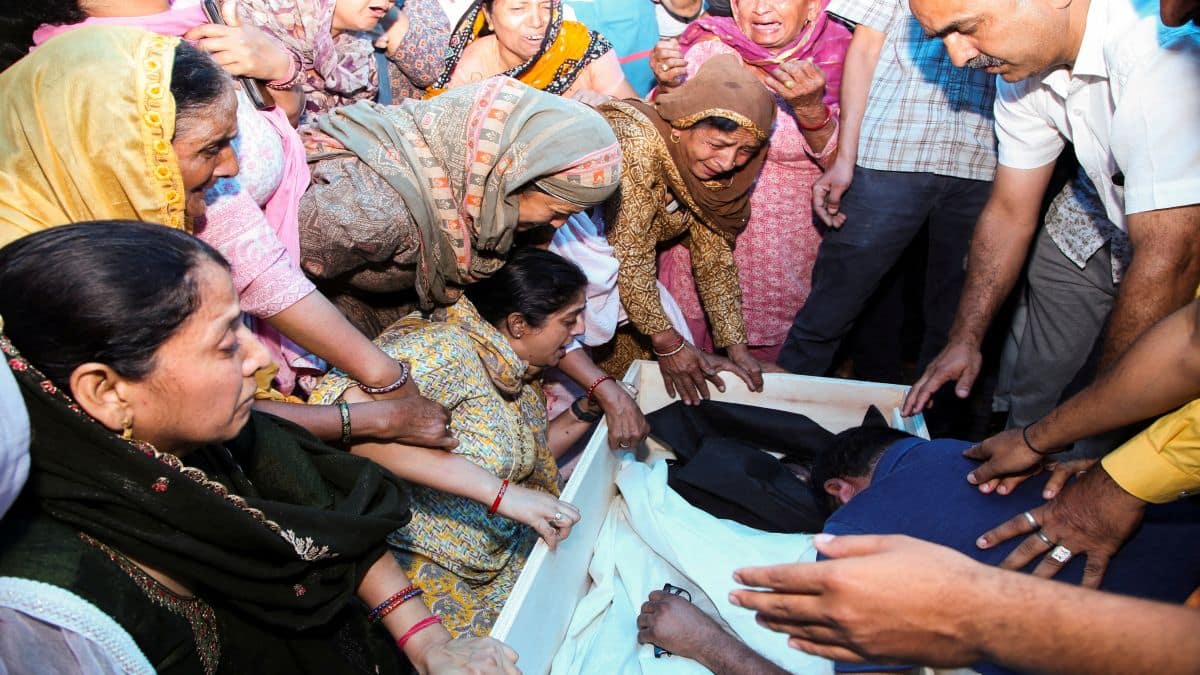
Just a day earlier, another 24 Indian sailors had to be rescued from another commercial oil tanker –– the M/T Marivex –– after it was also struck by US forces in the Gulf of Oman.
Prior to this, Indians have been killed in the Strait of Hormuz since the start of the war. The first death occurred on board the Marshall Islands-flagged tanker MKD Vyom on March 1 when the vessel came under attack by an unmanned surface missile off the coast of Oman. While no one claimed responsibility for the attack, US Centcom blamed Iranian forces.
On the same day, an attack on the Palau-flagged tanker Skylight near Oman’s Musandam Peninsula killed two Indian crew members, while a third was reported missing.
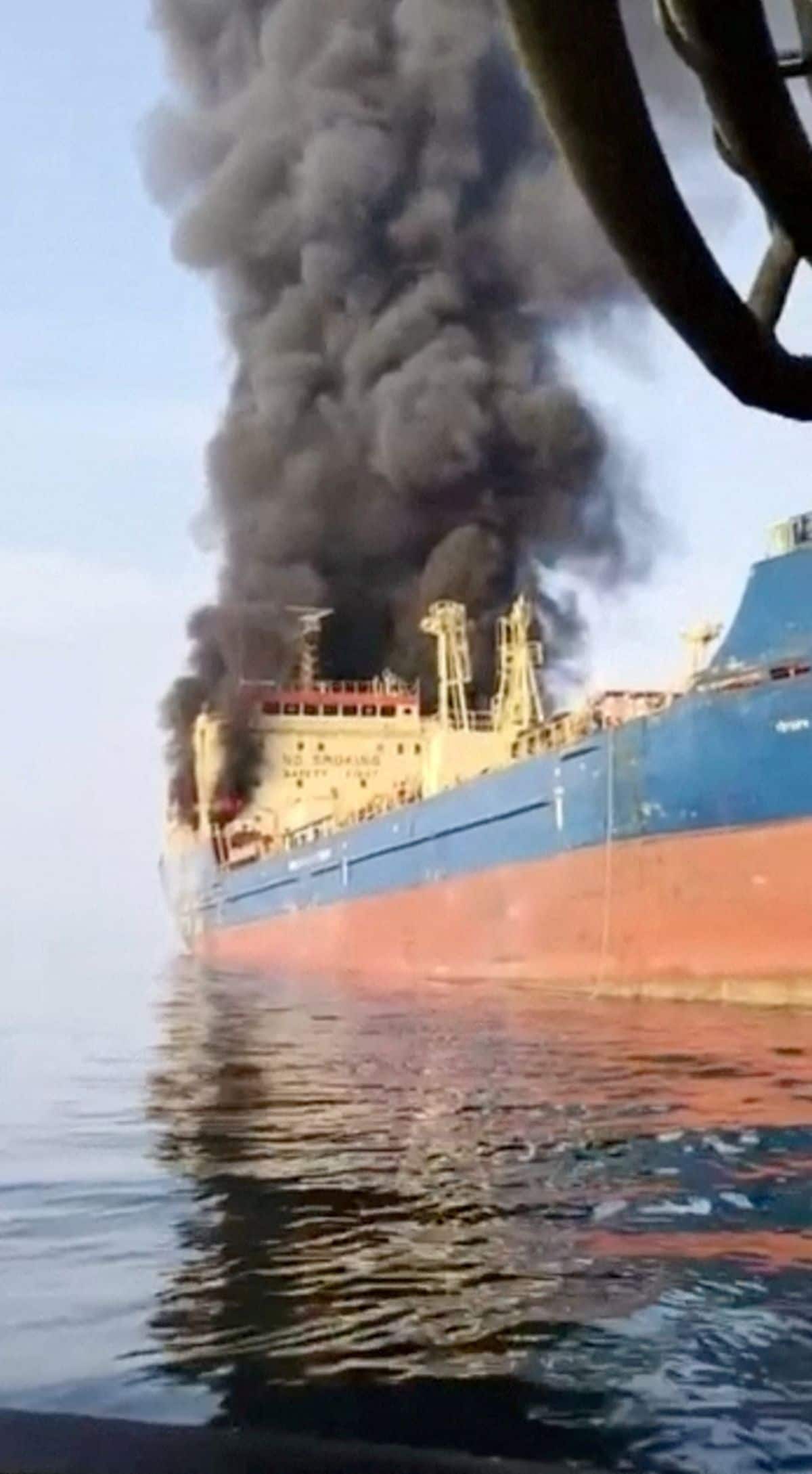
And on May 8, yet another Indian sailor was killed when a wooden dhow carrying Indian crew members caught fire near the Strait of Hormuz.
According to an Indian Express report, 11 Indians have died in the US-Iran war since it began on February 28.
Indian seafarers caught in troubled waters
The exchange of strikes between the US and Iran has once again choked ships transiting the vital waterway. As per a Bloomberg report, nine Indian-linked tankers with 198 Indian crew members have been unable to proceed as maritime traffic through the strait has fallen to its lowest level since the US-Iran memorandum of understanding (MoU) came into effect last month.
According to the report, the MEA is expected to take up the issue of the Indian crew members’ safety with Iranian authorities as it closely monitors developments in the region.
For Indians who have successfully transited through the Strait of Hormuz amid the war, the experience has been harrowing. “The whole crew was rationing food as supplies were limited. At night, we could see explosions on ships anchored near us. People from attacked vessels reached out over the radio, but we couldn’t move to help — any movement would have made us a target,” said one seafarer about his experience.
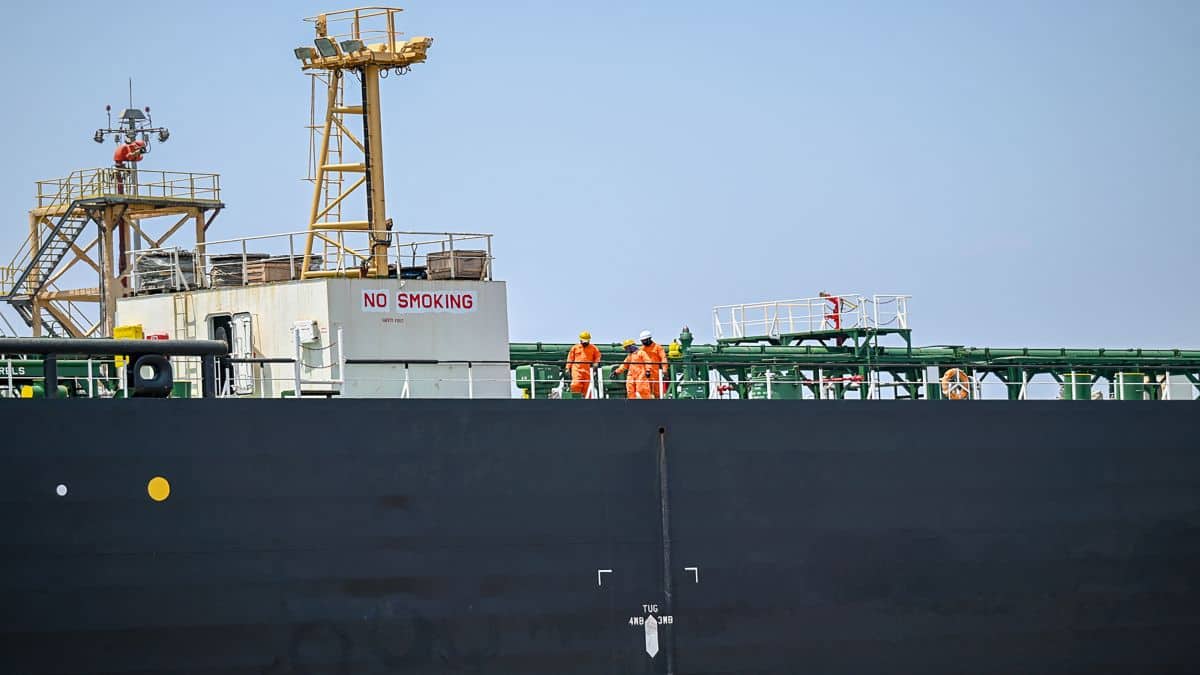
India is the world’s third-largest supplier of seafarers, with more than 300,000 Indians serving aboard merchant vessels, accounting for nearly 10-12 per cent of the world’s seafaring workforce. But the US-Iran war has turned the Gulf waters into a dangerous workplace.
Many shipping experts note that it isn’t just the active fighting that makes the waters dangerous. They note that as vessels remain stranded — sometimes for weeks or months — this exposes both the vessels and their crews to significant risks.
Manoj Yadav, general secretary of the Forward Seamen's Union of India (FSUI), told Middle East Eye that prolonged anchoring was causing ships to accumulate rust, barnacles, algae, and jellyfish, while many were struggling to obtain critical spare parts, potentially affecting their ability to leave the region when tensions ease.
“Ships are meant to move, not remain idle for months,” Yadav said. He further explained that extended inactivity can also create hazardous conditions onboard, including the build-up of harmful gases in confined spaces, posing risks to crew health and safety.
It’s to be seen how New Delhi reacts to the death of yet another seafarer in the crisis. As of now, it appears that Indian seafarers are collateral in this fighting.
With inputs from agencies
Tags

Military drones & police check-ups: How Sri Lanka is fighting against worst dengue outbreak in a decade
How Facebook job ad lured 2 Karnataka men into Myanmar cyber scam camp
Why is India seeing 95% cloud cover despite a Super El Niño?
What is CJP’s fourth demand to the government as protests in Delhi intensify?
The new geography of war: Why the Houthis can no longer be ignored