


Inside the Oval Office meeting that convinced Trump to ditch ceasefire and attack Iran again
Weeks after he signed a peace deal, Donald Trump declared the ceasefire with Iran dead on Wednesday (July 8) and ordered strikes on the Islamic Republic. The US president’s sharp turnaround comes after an Oval Office briefing on ships being attacked in the Strait of Hormuz enraged him

West Asia is on the boil again. The US and Iran have been trading strikes, leading to speculation about whether the truce between the two warring nations is over.
Qatar, Pakistan, and other regional mediators are trying to de-escalate tensions between the US and Iran and revive negotiations on a nuclear deal. However, on Wednesday (July 8), US President Donald Trump announced that the US-Iran memorandum of understanding (MOU) and the ceasefire were “over”.
But how did Trump reach this decision? According to reports, the decision came as the US president was preparing to leave the White House for Turkey, when an urgent meeting in the Oval Office changed the course of the Iran conflict.
So, what happened behind closed doors at that meeting for Trump to change his mind on the truce? We try to get you that answer.
 More from Explainers
Behind closed doors at the Oval Office
On Monday evening, Trump was departing the White House to attend the Nato summit in Turkey when Secretary of State Marco Rubio and Defence Secretary Pete Hegseth walked in with reports of Iranian strikes in the Strait of Hormuz.
The two American leaders apprised Trump that Iran had fired anti-ship cruise missiles and one-way attack drones at vessels seeking to cross the Strait of Hormuz through a southern route, reports the Wall Street Journal. They told him that three ships had been hit, including a liquefied natural gas tanker.
The news angered Trump, who then asked his top advisers whether Tehran was negotiating in good faith toward a final deal to end the war. “In the end, after discussing it with his senior aides, the president decided they weren’t,” said the Wall Street Journal report.
A swift rollback by the US
Following that meeting, the Trump administration soon began dismantling key aspects of the Memorandum of Understanding (MoU) with Iran that Trump had signed at the Palace of Versailles two weeks ago.
The US president ordered a barrage of strikes against Iran over the next two days, reinstated sanctions on Iranian oil sales, and threatened to reimpose a US blockade in the strait.
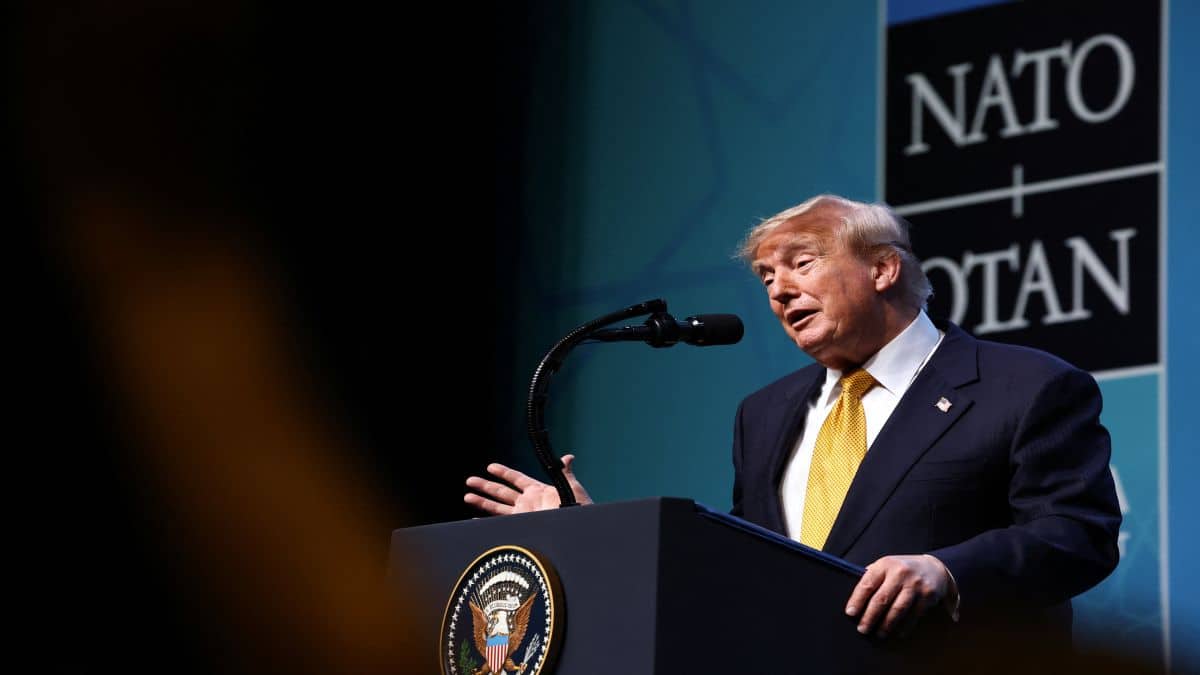
By the time Trump reached Ankara, the Turkish capital, for the Nato meet, he declared the ceasefire to be dead. When asked if the ceasefire was done and the initial peace agreement was dead, Trump said, “to me, I think it’s over.”
The US president also expressed anger that the administration had allowed the funeral for Ayatollah Ali Khamenei to proceed peacefully while the Iranian military was simultaneously attacking commercial vessels.
“They’re liars,” Trump said. “We make a deal, they go outside, talk to the press, they say we never even talked about it. There’s something wrong with them. They’re cuckoo.”
“They’re scum, they’re sick people, they’re led by sick people, and they’re vicious, violent people,” Trump added.
A plot to kill Trump shared by Israel
Additionally, the decision to strike Iran came after Israel recently shared intelligence with the US that Iran was devising a new plan to kill Trump. A source told CNN that the information was shared this week, while another stated that a steady hum of the plan had been picked up by US intelligence in recent weeks, but the warning from Israel was new and concerned a specific plot.
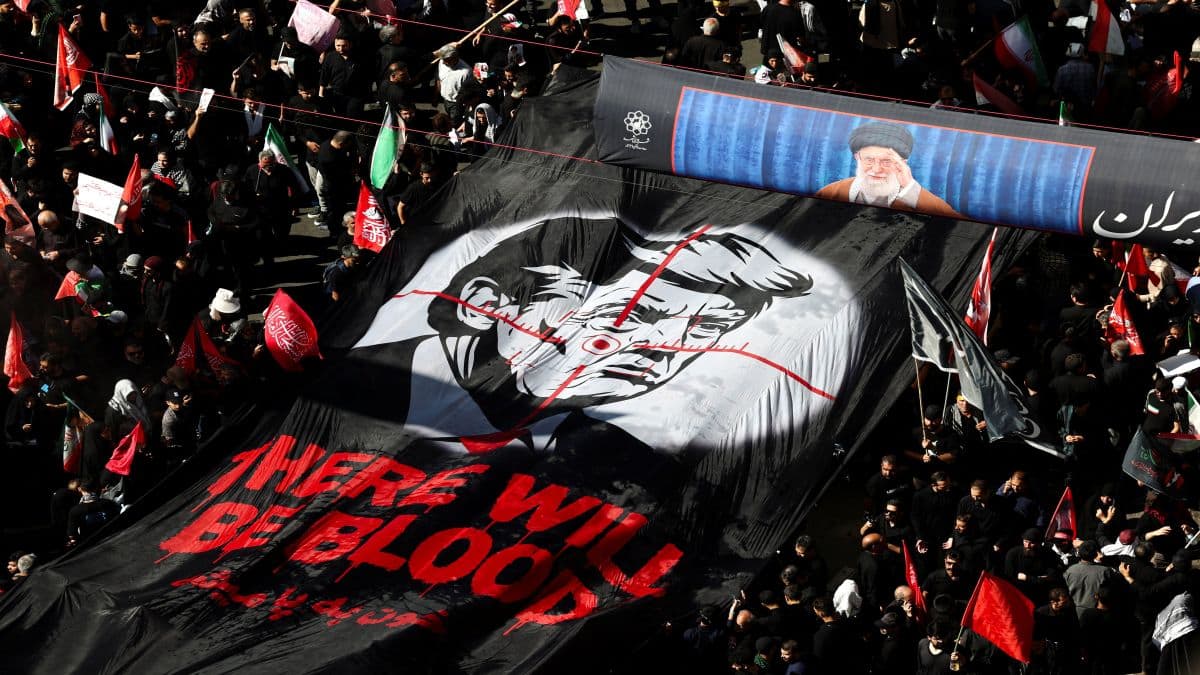
Earlier on Wednesday, Trump himself said that he was Iran’s “No. 1 target”. It’s not clear whether he was referring to the new Israeli intelligence.
“They want to take out the US leader — me,” Trump told reporters Wednesday. “I’m on whatever list. I saw this morning that I’m on every single one of their lists. And so far, I guess I’ve been a bit lucky, but maybe that doesn’t last very long. These are evil, sick people. And we have to root out that cancer. That cancer. You know what you do? You’ve got to cut out cancer early. And that’s the way I feel.”
It’s not clear if Iran’s reported plot to kill Trump was one of the motivations for the US president to declare the ceasefire dead. However, the timing of it can’t be ignored.
US-Iran exchange strikes
Since Tuesday, the US and Iran have been trading strikes. On Tuesday, the US Central Command (Centcom) noted that it had struck 80 targets in the Islamic Republic. The following day, another 90 targets had been struck, said Centcom.
Iran says 14 people have been killed in the past two days. State media also reported that targets near the Bushehr nuclear power plant were hit, citing the deputy governor of the province. The US has not commented on the latest strikes.
Bridges and a railway route connecting Tehran to the city of Mashhad, where the late supreme leader’s funeral was being held, were also damaged, Iran’s foreign ministry said.
Iranian media also reported power cuts in the port city of Chabahar and a fire at an Islamic Revolutionary Guard Corps (IRGC) barracks in Bushehr. Images on social media showed damage to a marine control tower in Chabahar.
In turn, Iran retaliated by striking US assets in Kuwait, Bahrain, and Qatar. Later on Thursday, Tehran launched more strikes on sites in Kuwait, Jordan, and Iraq, state-linked media reported. Iran’s parliamentary speaker, Mohammad Bagher Ghalibaf, also said on X that America “still hasn’t learned that bullying and breaking promises are no longer cost-free”.
“Let me put it plainly: if you strike, you’ll get hit,” he wrote, adding that the Strait of Hormuz will only open under Iranian arrangements - not “American threats”.
A peace deal in limbo
The tit-for-tat exchanges have led to concerns of a return to war between the two nations. It also marks a sharp break from last month, when the two countries signed the memorandum of understanding. The agreement effectively brought an end to the conflict that started on February 28, when the US and Israel launched attacks on Iran.
The 14-point agreement called for an immediate cessation of hostilities, the reopening of the Strait of Hormuz, and a final deal within 60 days. In the wake of the latest strikes, those prospects appear increasingly remote, raising the likelihood that a war already viewed unfavourably by the public may grind on.
A US official has pinned the blame for it on Iran. “As the world knows, President Trump’s first preference is always peace and diplomacy,” the official told The Independent. “Unfortunately, Iran has chosen the path of violence – and they are reaping the consequences of that decision. The United States will not stand idly by while Iran commits acts of international terrorism, and President Trump will never allow Iran to have a nuclear weapon.”
However, Iran rejects responsibility for the breakdown of the ceasefire. An Iranian diplomat told The Wall Street Journal that Washington had violated the agreement by creating a shipping lane through the Strait of Hormuz without coordinating the move with Tehran. According to him, that decision broke the understanding reached under the memorandum of understanding and justified Iran’s response against ships using the route.
While the US and Iran blame each other, regional mediators are trying hard to ensure hostilities don’t escalate any further. An Axios report claimed that Qatari, Pakistani, Turkish, Egyptian and Saudi officials have conducted multiple phone calls on Wednesday with both US and Iranian officials in an effort to calm down the situation.
A US official was also quoted as telling CNN that diplomacy was happening behind the scenes right now to ease tensions in the US-Iran conflict.
With inputs from agencies

Military drones & police check-ups: How Sri Lanka is fighting against worst dengue outbreak in a decade
How Facebook job ad lured 2 Karnataka men into Myanmar cyber scam camp
Why is India seeing 95% cloud cover despite a Super El Niño?
What is CJP’s fourth demand to the government as protests in Delhi intensify?
The new geography of war: Why the Houthis can no longer be ignored