
Advertisement


Sections
Explained: The Unification Church scandal haunting Fumio Kishida's Cabinet in Japan
Four ministers have been sacked by Fumio Kishida in the past two months amid the Unification Church scandal that emerged following Shinzo Abe’s assassination. The controversial religious group's deep political ties with the ruling party have caused public outrage and hurt the prime minister's image

Four ministers have exited Japanese prime minister Fumio Kishida-led Cabinet in the past two months. Kishida sacked reconstruction minister Kenya Akiba on Tuesday (27 December) amid the Unification Church scandal rocking Japan politics.“I have made a heavy decision and submitted my resignation,” Akiba told reporters after meeting the Japanese prime minister.Former reconstruction minister Hiromichi Watanabe will succeed Akiba, Kishida announced as per Reuters.Confirming Akiba’s resignation, the Japanese prime minister said, “I take my responsibility very seriously as the one who appoints (ministers)”.“By rising to my political responsibilities, I hope to be fulfilling my duties as prime minister,” Reuters further quoted him as saying.In November, Japan’s internal affairs minister, Minoru Terada, and justice minister Yasuhiro Hanashi had stepped down from their posts. Earlier in October, economic revitalisation minister Daishiro Yamagiwa had resigned over his ties to the Unification Church.What is known about the Unification Church and how is it linked to the assassination of former prime minister Shinzo Abe? How has the scandal hurt Fumio Kishida? Let’s take a closer look.Unification Church![Unification Church]() Unification Church came to Japan in the late 1950s. AFP File Photo[/caption]Nobusuke Kishi, Japan’s prime minister from 1957 to 1960 and Shinzo Abe’s grandfather, helped Moon in establishing the church’s political arm, the International Federation for Victory Over Communism in Japan in 1968, as per the Japanese media.The church has also strengthened political ties over the past decades in Japan to gain followers, while the politicians have benefited from this association by securing votes from the church members and ensuring their help in election campaigning, as per The Hindu.A cult?
Unification Church came to Japan in the late 1950s. AFP File Photo[/caption]Nobusuke Kishi, Japan’s prime minister from 1957 to 1960 and Shinzo Abe’s grandfather, helped Moon in establishing the church’s political arm, the International Federation for Victory Over Communism in Japan in 1968, as per the Japanese media.The church has also strengthened political ties over the past decades in Japan to gain followers, while the politicians have benefited from this association by securing votes from the church members and ensuring their help in election campaigning, as per The Hindu.A cult?![shinzo abe]() Former Japan's PM Shinzo Abe was killed in July. AFP File Photo[/caption]While Abe was not a member of the Unification Church, he had reportedly taken part in multiple events organised by the group’s affiliated arms.In 2021, he had reportedly praised Hak Ja Han Moon, the widow of the church's founder, at a meeting of the Universal Peace Federation, a church affiliate.Allegations against the churchSince the 1980s, the Unification Church has been accused of brainwashing followers – known as Moonies – into offering a large amount of their income to it, as per Associated Press (AP).A former senior member said after the church gained steam in Japan, it treated its followers like an “economic army”, raised money through donations and sold “spiritual goods” like expensive ginseng tea or miniature stone pagodas, Reuters reported.According to the National Network of Lawyers Against Spiritual Sales – which represents people pressured by the church to make huge donations – said that over 30,000 complaints have been made against the religious group but the Japanese government did not take any action, reported DW."As lawyers, we have witnessed the distress, anguish and economic suffering of too many former members, current members' families and 'second-generation' ex-members of the Unification Church, and we have long been deeply concerned with this dire reality," the organisation said in a statement earlier.It accused the church of using pressure and psychological tactics and fear of "karma and fate" to get donations from the members.The Unification Church has refuted the claims as well as its role in Japan’s politics. However, it has accepted that "groups affiliated with the church have relationships with politicians as part of their political activities”, as per DW.Unification Church scandalEarlier in December, Japan’s parliament passed a law to restrict soliciting funds by religious and other groups through coercion, threats, or linking donations to spiritual salvation, notes AP.In October, the Japanese government had ordered a probe into the Unification Church amid huge criticism from the public and the Opposition.Kishida’s approval ratings have plunged since his party’s links with the church emerged after Abe’s assassination.As many as 179 of the 379 LDP lawmakers have admitted ties to the church, including 23 of the 54 vice ministers and parliamentary secretaries in the Cabinet.Despite his unpopularity, Kishida will survive, believes Yukihisa Fujita, a former member of the Constitutional Democratic Party.He told DW that the government has been attenuated by the scandal and will always be remembered for the ruling party’s links to the church."None of this would have come into the open without the killing of Abe earlier in the year, and it is alarming to think that, had that not happened, then we would probably not know the scale of the church's influence on politics here," he was quoted as saying by DW.Meanwhile, speculations are rife that Kishida will reshuffle his Cabinet soon to contain the unpopularity of his government.With inputs from agenciesRead all the Latest News, Trending News, Cricket News, Bollywood News,India News and Entertainment News here. Follow us on Facebook, Twitter and Instagram.
Former Japan's PM Shinzo Abe was killed in July. AFP File Photo[/caption]While Abe was not a member of the Unification Church, he had reportedly taken part in multiple events organised by the group’s affiliated arms.In 2021, he had reportedly praised Hak Ja Han Moon, the widow of the church's founder, at a meeting of the Universal Peace Federation, a church affiliate.Allegations against the churchSince the 1980s, the Unification Church has been accused of brainwashing followers – known as Moonies – into offering a large amount of their income to it, as per Associated Press (AP).A former senior member said after the church gained steam in Japan, it treated its followers like an “economic army”, raised money through donations and sold “spiritual goods” like expensive ginseng tea or miniature stone pagodas, Reuters reported.According to the National Network of Lawyers Against Spiritual Sales – which represents people pressured by the church to make huge donations – said that over 30,000 complaints have been made against the religious group but the Japanese government did not take any action, reported DW."As lawyers, we have witnessed the distress, anguish and economic suffering of too many former members, current members' families and 'second-generation' ex-members of the Unification Church, and we have long been deeply concerned with this dire reality," the organisation said in a statement earlier.It accused the church of using pressure and psychological tactics and fear of "karma and fate" to get donations from the members.The Unification Church has refuted the claims as well as its role in Japan’s politics. However, it has accepted that "groups affiliated with the church have relationships with politicians as part of their political activities”, as per DW.Unification Church scandalEarlier in December, Japan’s parliament passed a law to restrict soliciting funds by religious and other groups through coercion, threats, or linking donations to spiritual salvation, notes AP.In October, the Japanese government had ordered a probe into the Unification Church amid huge criticism from the public and the Opposition.Kishida’s approval ratings have plunged since his party’s links with the church emerged after Abe’s assassination.As many as 179 of the 379 LDP lawmakers have admitted ties to the church, including 23 of the 54 vice ministers and parliamentary secretaries in the Cabinet.Despite his unpopularity, Kishida will survive, believes Yukihisa Fujita, a former member of the Constitutional Democratic Party.He told DW that the government has been attenuated by the scandal and will always be remembered for the ruling party’s links to the church."None of this would have come into the open without the killing of Abe earlier in the year, and it is alarming to think that, had that not happened, then we would probably not know the scale of the church's influence on politics here," he was quoted as saying by DW.Meanwhile, speculations are rife that Kishida will reshuffle his Cabinet soon to contain the unpopularity of his government.With inputs from agenciesRead all the Latest News, Trending News, Cricket News, Bollywood News,India News and Entertainment News here. Follow us on Facebook, Twitter and Instagram.
South Korea-based Unification Church, officially known as the Family Federation for World Peace and Unification, is a religious group.Founded by the late Reverend Sun Myung Moon in 1954, the church is known for its ultra-conservative, anti-communist views and mass-weddings, notes The Hindu.The church expanded its reach in Japan in the late 1950s and early 1960s. “Experts say the church’s right-wing beliefs helped it expand overseas during the Cold War,” says Al Jazeera report.[caption id="attachment_11897181" align="alignnone" width="640"]
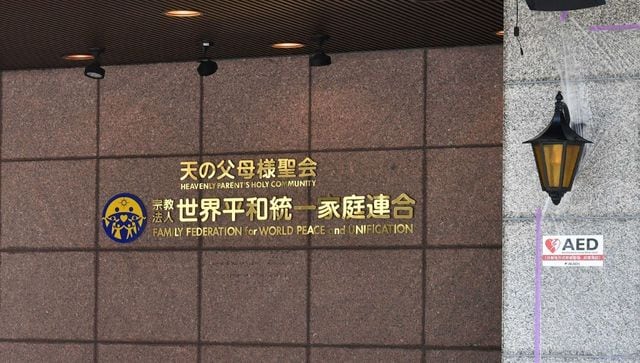 Unification Church came to Japan in the late 1950s. AFP File Photo[/caption]Nobusuke Kishi, Japan’s prime minister from 1957 to 1960 and Shinzo Abe’s grandfather, helped Moon in establishing the church’s political arm, the International Federation for Victory Over Communism in Japan in 1968, as per the Japanese media.The church has also strengthened political ties over the past decades in Japan to gain followers, while the politicians have benefited from this association by securing votes from the church members and ensuring their help in election campaigning, as per The Hindu.A cult?
The Unification Church is often described as a “cult” by its critics.“The Unification Church is not so much regarded as a religious organisation, but rather as a predatory cult in Japan,” Koichi Nakano, professor of political science at the Sophia University in Tokyo, told Al Jazeera earlier.Abe’s assassinationThe killing of Abe in July this year opened a can of worms for the ruling Liberal Democratic Party (LDP).Tetsuya Yamagami told investigators he shot dead the former Japanese prime minister because of his ties with the Unification Church, reported Deutsche Welle (DW).Yamagami said the church was responsible for his mother bankrupting their family by donating 100 million yen to it.[caption id="attachment_11897231" align="alignnone" width="640"]
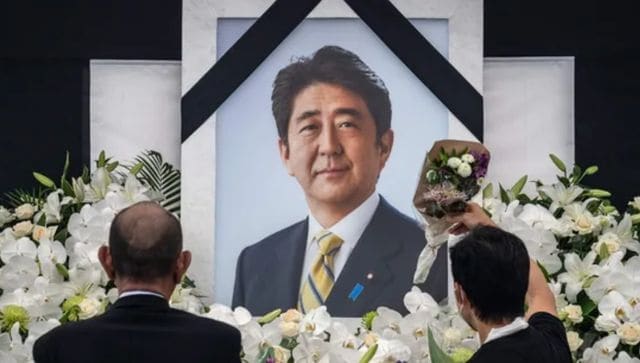 Former Japan's PM Shinzo Abe was killed in July. AFP File Photo[/caption]While Abe was not a member of the Unification Church, he had reportedly taken part in multiple events organised by the group’s affiliated arms.In 2021, he had reportedly praised Hak Ja Han Moon, the widow of the church's founder, at a meeting of the Universal Peace Federation, a church affiliate.Allegations against the churchSince the 1980s, the Unification Church has been accused of brainwashing followers – known as Moonies – into offering a large amount of their income to it, as per Associated Press (AP).A former senior member said after the church gained steam in Japan, it treated its followers like an “economic army”, raised money through donations and sold “spiritual goods” like expensive ginseng tea or miniature stone pagodas, Reuters reported.According to the National Network of Lawyers Against Spiritual Sales – which represents people pressured by the church to make huge donations – said that over 30,000 complaints have been made against the religious group but the Japanese government did not take any action, reported DW."As lawyers, we have witnessed the distress, anguish and economic suffering of too many former members, current members' families and 'second-generation' ex-members of the Unification Church, and we have long been deeply concerned with this dire reality," the organisation said in a statement earlier.It accused the church of using pressure and psychological tactics and fear of "karma and fate" to get donations from the members.The Unification Church has refuted the claims as well as its role in Japan’s politics. However, it has accepted that "groups affiliated with the church have relationships with politicians as part of their political activities”, as per DW.Unification Church scandalEarlier in December, Japan’s parliament passed a law to restrict soliciting funds by religious and other groups through coercion, threats, or linking donations to spiritual salvation, notes AP.In October, the Japanese government had ordered a probe into the Unification Church amid huge criticism from the public and the Opposition.Kishida’s approval ratings have plunged since his party’s links with the church emerged after Abe’s assassination.As many as 179 of the 379 LDP lawmakers have admitted ties to the church, including 23 of the 54 vice ministers and parliamentary secretaries in the Cabinet.Despite his unpopularity, Kishida will survive, believes Yukihisa Fujita, a former member of the Constitutional Democratic Party.He told DW that the government has been attenuated by the scandal and will always be remembered for the ruling party’s links to the church."None of this would have come into the open without the killing of Abe earlier in the year, and it is alarming to think that, had that not happened, then we would probably not know the scale of the church's influence on politics here," he was quoted as saying by DW.Meanwhile, speculations are rife that Kishida will reshuffle his Cabinet soon to contain the unpopularity of his government.With inputs from agenciesRead all the Latest News, Trending News, Cricket News, Bollywood News,India News and Entertainment News here. Follow us on Facebook, Twitter and Instagram.
First Published:Dec 29, 2022, 17:27:27 IST
Advertisement
Advertisement

Military drones & police check-ups: How Sri Lanka is fighting against worst dengue outbreak in a decade
Sri Lanka is fighting its most severe dengue outbreak in nearly a decade, with infections rising sharply across the nation. Military drones have been deployed to tackle the outbreak, which has claimed 56 lives. Health officials said the outbreak is being driven primarily by the DENV-2 variant of the virus
3 min read
How Facebook job ad lured 2 Karnataka men into Myanmar cyber scam camp
The Karnataka Cyber Command has rescued two youths from a scam compound in Myanmar operated by Chinese fraudsters. The duo from Karnataka were lured on the pretext of data-entry jobs. They were asked to work for 16 hours a day and were expected to sleep for six hours daily
4 min read
Why is India seeing 95% cloud cover despite a Super El Niño?
India is witnessing nearly 95 per cent cloud cover despite a Super El Niño, a climate event usually linked to weaker monsoons. Regional weather systems, cyclonic circulations, the monsoon trough and moisture from two seas are temporarily overpowering one of the world's strongest climate phenomena
5 min read
What is CJP’s fourth demand to the government as protests in Delhi intensify?
The protest by the Cockroach Janta Party at Delhi’s Jantar Mantar refuses to die down. The group have made a fourth demand to the Centre, asking that no FIRs are filed against the agitators and that no legal action be taken. The government has expressed willingness to speak to the protesters, but refused to accede on the resignation of Education Minister Dharmandra Pradhan
5 min read
The new geography of war: Why the Houthis can no longer be ignored
The rise of the Houthis marks the emergence of a new geography of war — one in which influence flows not only from capitals and conventional armies, but also from rugged mountains overlooking vital sea lanes
6 min read
Advertisement
Advertisement