


Trump at 80: From Argentina to Japan, the rise of ‘mini-Trumps’ across the world
Since entering US politics as a novice in 2015, Donald Trump has completely reordered American politics. Little wonder then that he has spawned a number of imitators from Brazil to Argentina and Japan

Donald Trump has turned American politics upside down since he announced his run for president in 2015.
Trump, then a political outsider, took on and defeated a crowded Republican field that included establishment heavyweights such as Jeb Bush, Chris Christie, Ted Cruz, Marco Rubio, Lindsey Graham and Rick Perry. Several of these figures would later go on to serve in or ally with his administration.
Trump didn’t just stop there. He went on to defeat the vaunted Clinton political machine in the 2016 presidential election, cementing one of the great and most improbable political rises in modern political history.
Is it little wonder then that Trump, who reached incredible political heights, has since spawned a number of imitators around the world? From Jair Bolsonaro in Brazil to Boris Johnson in the United Kingdom, Javier Milei in Argentina and Sohei Kamiya in Japan, let’s take a closer look at the leaders who have aped Trump.
 More from Explainers
Jair Bolsonaro
No international figure has drawn more comparisons with Trump than Jair Bolsonaro, also known as the 'Trump of the tropics'. During his rise to power, Bolsonaro positioned himself as an outsider determined to confront corruption, challenge political elites and restore national pride. His campaign rhetoric frequently targeted political correctness, left-wing movements and established institutions.
Bolsonaro's communication style proved central to his appeal. Rather than relying heavily on traditional media, he cultivated a direct relationship with supporters through social media platforms, allowing him to bypass conventional gatekeepers and shape his own narrative. Bolsonaro took over as president of Brazil in 2019 and served till 2022.
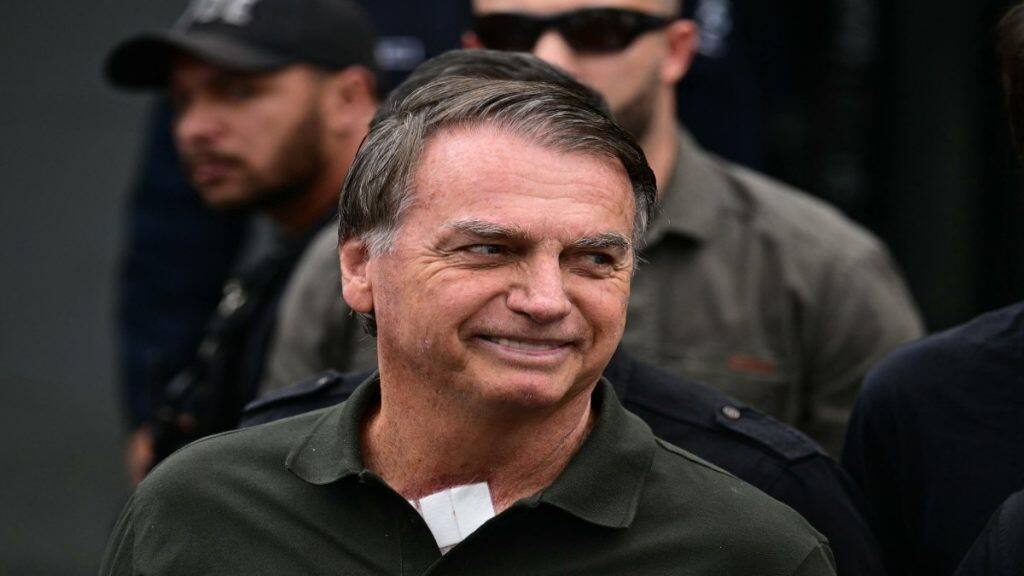
The parallels with Trump became especially striking after Bolsonaro's defeat in the 2022 presidential election. Refusing to fully accept the result, he alleged irregularities in the voting process, echoing arguments that had emerged in the United States following the 2020 election. In January 2023, thousands of Bolsonaro supporters stormed government buildings in Brasília, drawing inevitable comparisons with the attack on the US Capitol on January 6, 2021.
However, while Trump ultimately returned to the White House, Bolsonaro faced severe legal consequences in Brazil. He was barred from holding public office and later imprisoned after being convicted for his role in efforts to overturn the election result.
Bolsonaro was hospitalised earlier this year after being diagnosed with bronchopneumonia, and his friends and family have begged the authorities to consider house arrest. It remains to be seen if Bolsonaro can somehow return to politics as Trump did. If he does, he would have somehow bettered the man he took inspiration from, which is no mean feat.
Javier Milei
While Bolsonaro borrowed Trump's populist playbook, it was Javier Milei that adapted it to Argentina's economic crisis.
A libertarian economist with a flair for political theatre, Milei built his reputation through combative television appearances and fierce criticism of Argentina's governing class. His campaign centred on a promise to dismantle what he described as a bloated and dysfunctional political system.
"In terms of political logic, I am a mistake, because what I have come to do is in fact stamp out the privileges of politicians," Milei said in an interview. I don't care who my rivals are on the ballot; I will beat them all," he vowed.
The chainsaw he carried at campaign events became a symbol of his pledge to slash government spending and overhaul state institutions. Supporters embraced his message as a radical break from decades of economic instability, soaring inflation and declining living standards.
Milei's political appeal rests on more than symbolism. His rise reflected deep public frustration with Argentina's recurring economic failures and widespread distrust of traditional parties. By presenting himself as an outsider unconstrained by political convention, he attracted voters seeking dramatic change rather than incremental reform.
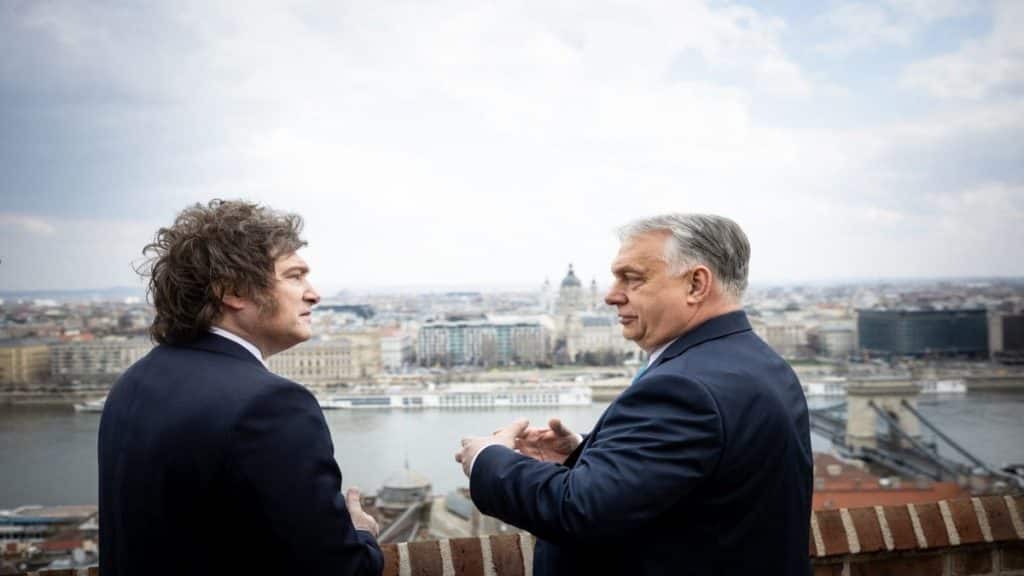
His confrontational style has also become a defining characteristic. Journalists, economists and political opponents frequently find themselves targeted by his criticism, reinforcing his image as a disruptive force challenging entrenched interests.
Sohei Kamiya
Sohei Kamiya, a 47-year-old former supermarket manager and English teacher, has been labelled the “Japanese Trump” for his populist rhetoric. Kamiya shocked many when his Sanseito (participate in politics) party won 14 seats in Japan’s Upper House.
Japan has historically offered limited space for outsider populist movements, making Kamiya's emergence particularly notable.
The leader of the Sanseito party has built support by focusing on economic anxiety, national identity and public dissatisfaction with established political institutions. His "Japan First" slogan taps into concerns about globalisation, immigration and cultural change while presenting his movement as a defender of ordinary citizens.

Much of Sanseito's growth has occurred online. Rather than relying on traditional party networks, Kamiya has used digital platforms to mobilise supporters and expand his message, a strategy that reflects broader changes in political communication across democracies.
His positions on issues such as immigration, media credibility and Covid-era policies have generated controversy, but they have also attracted voters who feel disconnected from mainstream politics.
Ironically, Kamiya was previously a member of Japan’s ruling Liberal Democratic Party (LDP). However, Kamiya left the party after growing disgruntled with the LDP’s fundraising-driven culture.
Boris Johnson
Unlike many politicians compared to Trump, Boris Johnson was never a true outsider. By the time he became Prime Minister of the UK, he had spent decades in public life as a journalist, parliamentarian and mayor of London.
Nevertheless, Johnson's political success relied on some of the same instincts that fuelled Trump's rise. Charisma, media savvy and a willingness to provoke controversy helped him connect with voters who felt ignored by traditional political leaders.
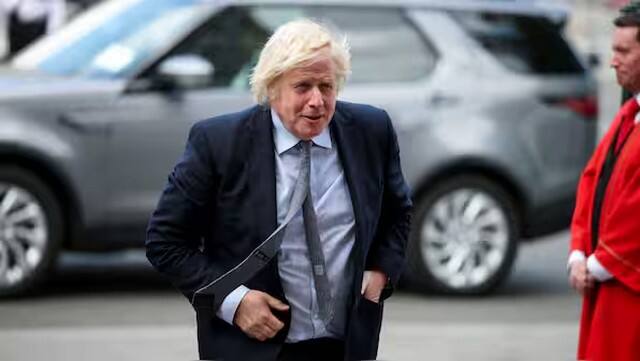
His leadership of the Brexit campaign transformed him into the dominant figure of British politics. Promising to "take back control," Johnson channelled public frustration with political institutions and presented himself as a champion of democratic accountability.
Yet important differences with Trump remained. Despite numerous controversies and scandals, Johnson ultimately operated within the constraints of Britain's parliamentary system.
What do experts say?
Experts say there is a method to the madness.
Explaining the appeal of such figures, Harvard political scientist Steven Levitsky, co-author of “How Democracies Die,” said, “It’s just so much easier to be a populist than it used to be.” “Voters want figures from recognisably outside the political establishment who basically want to punch the establishment,” Levitsky added.
Some have drawn direct comparisons between Trump and Milei.
Analyst Gimena Sánchez-Garzoli, the director for the Andes at the Washington Office on Latin America, a human rights organisation, added, “There is definitely a feeding off each other.” Many supporters back such figures because “they feel that this person is different so somehow it has to be different.”
She said voters, particularly the youth, have a sense of disillusionment and mass polarisation. She said they have responded by saying, “let’s burn it down and go with something completely different.” “They feel that this person is different so somehow it has to be different,” she added.
She said that beyond sharing policy goals, Trump and Milei are also stylistically similar, both are viewed as celebrities who project a sense of machismo and thrive on “being as outlandish as possible, to keep ratings going.”
“What Trump did was he broke the rules of how you talk about things,” she said. “I think he made it OK to go after your opponents in a very no-holds-barred, no-respect, exterminate-them-at-any-point way,” which, she said, wasn’t the kind of rhetoric “you saw to this level in Latin America before.”
Will more Trump imitators emerge as the man himself keeps going? Time will tell.
FAQs
1. Why are some global leaders compared to Donald Trump?
They are compared to Trump because of similarities in their political style, including anti-establishment rhetoric, nationalist messaging, direct communication with voters and a willingness to break traditional political norms.
2. Who are the Trump imitators?
Boris Johnson in the UK, Jair Bolsonaro in Brazil, Javier Milei in Argentina and Sohei Kamiya in Japan are the most prominent Trump imitators.
3. What explains the rise of Trump-like leaders worldwide?
Experts say economic instability, distrust of political elites, the influence of social media and a growing appetite among voters for outsider figures who promise radical change are just some of the reasons why Trump imitators are on the rise.
With inputs from agencies

Military drones & police check-ups: How Sri Lanka is fighting against worst dengue outbreak in a decade
How Facebook job ad lured 2 Karnataka men into Myanmar cyber scam camp
Why is India seeing 95% cloud cover despite a Super El Niño?
What is CJP’s fourth demand to the government as protests in Delhi intensify?
The new geography of war: Why the Houthis can no longer be ignored