


This Week in Explainers: Why Argentina’s banner after beating England is controversial
The Argentinian national team is under FIFA’s scanner for their celebrations following the win over England in the semi-finals of the World Cup. The players displayed a banner reading ‘Las Malvinas Son Argentinas’. We discuss why this has created such an outrage and more in our weekly roundup

After a brief period of peace-like conditions, the United States and Iran are back to exchanging strikes this week, straining the preliminary deal to end the war.
The US has launched a barrage of strikes for over six consecutive days, with the Central Command noting that the attacks are intended to “further degrade Iranian military capabilities”.Iran’s media has reported that the US has hit civilian infrastructure, including bridges, a train station, and an airport.
Iran’s Revolutionary Guards (IRGC) say they have retaliated by striking US maritime surveillance radar sites in Oman as well as targets in Kuwait and Bahrain. They also claim to have attacked a US special operations command centre in Syria.
This week also saw US President Donald Trump address the nation in a primetime address. But it wasn’t about the war against Iran, but about the integrity of the US electoral process, saying it was “catastrophically” short of standards of fairness and trust, and vulnerable to trespassing by foreign powers.
 More from Explainers
Meanwhile, the FIFA World Cup continues to be the big newsmaker. Spain defeated France to enter the finals, while Argentina made yet another dramatic comeback to triumph over England. However, the result of this second semi-final wasn’t the only headline. Argentina’s celebration after the win has stoked a massive controversy.
We explain all of this and much more in our wrap of the news from around the globe.
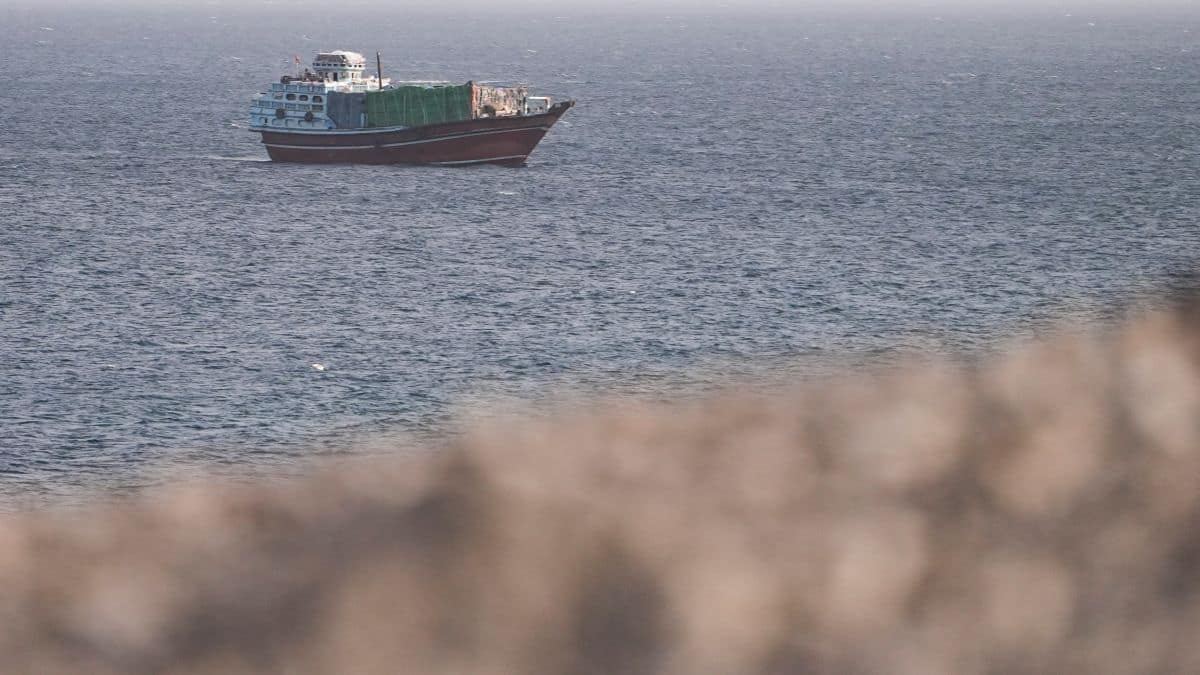
1) The US has launched a barrage of strikes against Iran in its attempt to fully reopen the Strait of Hormuz. The US president even reinstated his naval blockade on all Iranian ports to push Tehran to open the critical chokepoint.
According to Iran’s state media, the US attacks have hit civilian infrastructure, including bridges, a train station, and an airport. In retaliation, Iran has struck US maritime surveillance radar sites in Oman as well as targets in Kuwait and Bahrain. They also claim to have attacked a US special operations command centre in Syria.
The ensuing situation in West Asia has hammered home what many analysts have long said: Securing the strait and convincing shippers that it is safe to cross without Iran’s consent would likely take a risky naval-escort mission or a vast and costly ground operation in southern Iran. Either would require a major commitment of US personnel.
But these are risky propositions for the US. We explain.
2) The escalating attacks in the Strait of Hormuz this week have effectively shut down the critical waterway. This has impacted the flow of oil from the region, with the head of the International Energy Agency, Fatih Birol, saying he has concerns about global energy supplies. “We should be worried, and I am worried, if the situation does not improve in the next few weeks,” Birol said on Thursday night.
Amid this situation, Dubai has announced plans to build a new port and terminal to circumvent Iran’s control over the Strait of Hormuz. According to reports, Dubai-based port operator DP World is in talks to develop new facilities in the coastal area of Fujairah.
How will this impact the flow of oil to the world? Read on to find out.
3) When Trump initiated the war in February, one of the goals he had laid out was regime change. And this week, it emerged that Israel spent years secretly cultivating former Iranian President Mahmoud Ahmadinejad as an intelligence asset and potential replacement for Iran’s leadership.
The effort unfolded through covert meetings abroad, financial support, and an eventual attempt to extract him from government surveillance in Tehran.
Read more about this covert operation in our explainer.
4) Apart from the US-Iran war, another conflict made headlines this week, courtesy of the Argentinian football team.
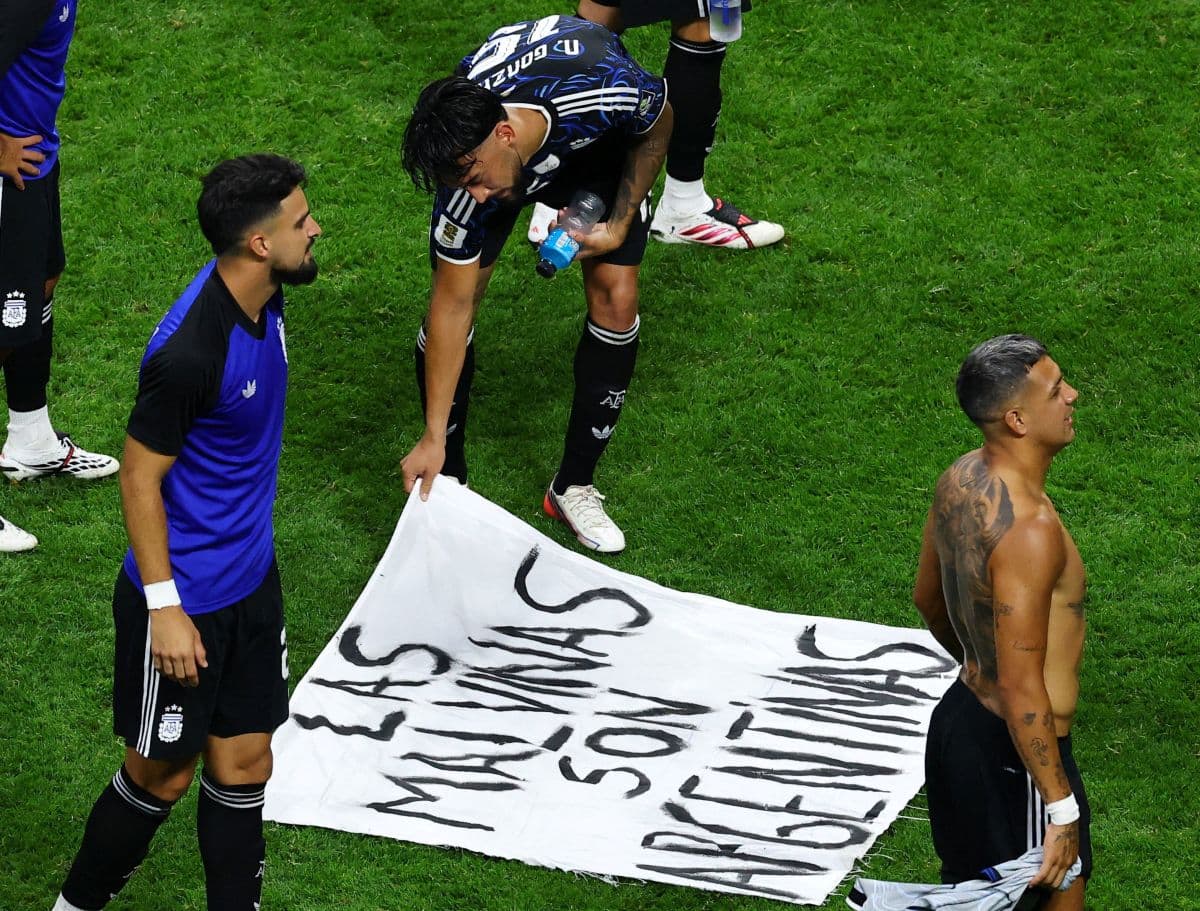
Following their semi-final victory over England at the FIFA World Cup, Argentinian players waved a banner that read “Las Malvinas son Argentinas”, which translates as “The Falklands are Argentine”. They now face possible disciplinary action from FIFA, with the UK’s Keir Starmer also calling for an investigation into the matter.
But why has this banner caused such an uproar? It’s connected to the Falklands War that the UK and Argentina fought in 1982.
5) Gen Z believed he could bring about change. Now, Gen Z wants Nepal’s Prime Minister Balendra ‘Balen’ Shah out.
Early this week, fresh demonstrations broke out in the Himalayan kingdom, with many calling for the PM’s ouster.
The demonstrations mark a dramatic turn for the youth movement that had played a key role in the 2025 uprising, which dismantled Nepal’s old political establishment and paved the way for Shah, making him the country’s youngest prime minister to take office in March 2026.
But what’s behind Gen-Z’s anger against Shah? We have the answer.
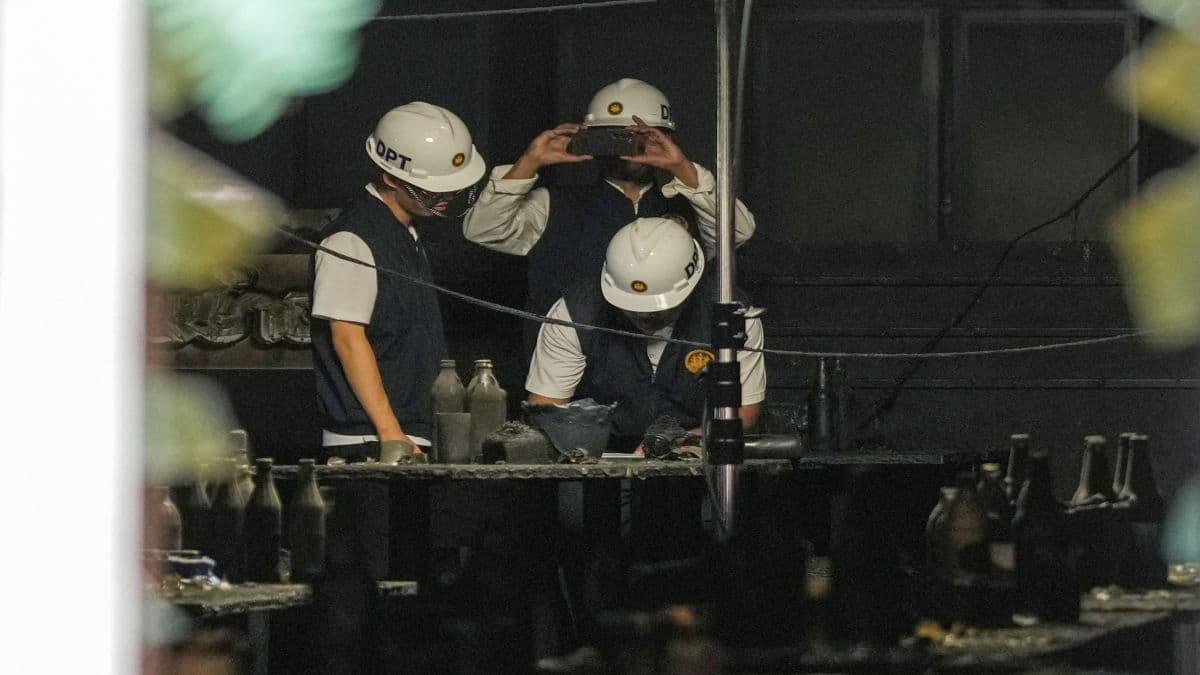
6) Bangkok, Thailand’s capital, is in mourning. This comes after a fire tore through a pub, killing 33 people and injuring many more. The tragedy took place late on Sunday night at Rong Beer Na Lat Phrao pub in the Chatuchak district.
Footage shared online by first responders shows a huge blaze raging and plumes coming out of the front door. People are seen trying to flee as thick black smoke billows into the sky.
Days after the blaze, the building’s street-facing windows have been blown. From outside, the scale of the devastation is visible through the shattered windows, where burned-out tables, some still holding empty beer bottles, remained inside.
Initial investigations point to fire safety lapses at the pub. What were they?
7) Pakistan has been flying high on cryptocurrency — it has around two crore crypto users, making it the world’s top 10 for crypto trading.
However, this week, this trading was severely affected when one of the country’s most influential clerics, Mufti Muhammad Taqi Usmani, issued a fatwa, stating that dealing in digital currency is haram under Islamic law. The fatwa stated that cryptocurrency is not wealth under Islamic law, and therefore not a valid means of payment.
This prompted selling by religious investors in Pakistan and among some Muslim investors in India and the United Arab Emirates.
We have the full story here.
That’s it from us for this week. If you want to read similar explainers, here’s the page to bookmark.

Military drones & police check-ups: How Sri Lanka is fighting against worst dengue outbreak in a decade
How Facebook job ad lured 2 Karnataka men into Myanmar cyber scam camp
Why is India seeing 95% cloud cover despite a Super El Niño?
What is CJP’s fourth demand to the government as protests in Delhi intensify?
The new geography of war: Why the Houthis can no longer be ignored