


This Week in Explainers: Why changes in Waqf Act have sparked uproar
The Centre tabled The Waqf (Amendment) Bill in the Lok Sabha, which proposes more than three dozen changes to the 1995 Waqf Act. The proposed legislation was vehemently opposed by the opposition. But what changes have been introduced? All this and more in our weekly roundup of stories from India

The weekend is here. This week saw several major developments in India. The Centre introduced The Waqf (Amendment) Bill in the Lok Sabha, which faced major objections from opposition parties.
India’s friendly neighbour Bangladesh witnessed political turmoil as the week began, with its prime minister Sheikh Hasina resigning and fleeing the country. She is in India “for the moment” but her stay could be extended.
In a big relief for the Aam Aadmi Party (AAP), its leader and former Delhi deputy chief minister Manish Sisodia secured bail from the Supreme Court in corruption and money laundering cases linked to the Delhi excise policy scam.
Here’s all this and more in the weekly round-up of stories from India.
 More from Explainers
1. Union Minority Affairs Minister Kiren Rijiju brought The Waqf (Amendment) Bill in the Lok Sabha, which suggests over three dozen changes to the 1995 Waqf Act that governs waqf boards in India. The proposed changes have created outrage, with many opposition MPs calling it an “attack on the Constitution and federalism”.
The bill has sparked a war of words between the Centre and opposition. Home Minister Amit Shah accused the opposition of “misleading” Muslims and said the amendments were necessary as the present act had many “mistakes” and could not serve its purpose.
What are the amendments proposed by the Centre? Why has the bill triggered outrage? We explain in this report.
2. Sheikh Hasina has been in India since she fled her country on Monday. The former Bangladesh PM has reportedly requested asylum in the United Kingdom but the Keir Starmer government is not playing ball. The embattled leader’s sister, Sheikh Rehana, who fled with her is a citizen of the UK. Rehana’s daughter Tulip Siddiq is a member of the British Parliament. Thus, the UK was Hasina’s first choice.
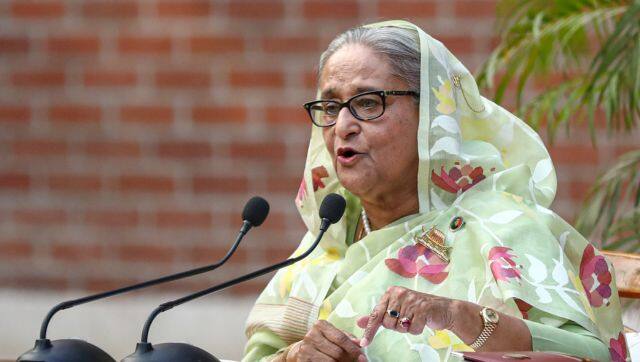
Hasina’s stay in India was expected to be a stopover. However, as her UK plans have hit a roadblock, she is likely to remain in India. New Delhi has always been a “trusted” ally of the Bangladesh leader and her family. Now that her stay has been extended, how will India accommodate her? Read our story to find out.
3. After spending a year and a half in jail, Manish Sisodia walked out of jail on Friday, hours after he was granted bail by the Supreme Court in both the CBI and ED cases in the alleged Delhi liquor policy scam. The top court bench comprising Justices BR Gavai and KV Viswanathan said the former Delhi deputy CM had been deprived of the right to a speedy trial.
Sisodia’s bail is a major relief for the AAP, whose convenor Arvind Kejriwal remains behind bars. The party has faced several setbacks and needs a boost, especially ahead of the crucial Assembly elections in Delhi and Haryana. Read our report to know what Sisodia’s bail means for the AAP.
4. It was a major heartbreak for India as wrestler Vinesh Phogat was disqualified from the Paris Olympics, just before her bout for the gold medal. The 29-year-old received tonnes of love and support from all corners after reports emerged that she was disqualified from the women’s 50 kg wrestling at the Paris Olympics for being overweight by a mere 100 grammes.
Hours later, Vinesh hung up her boots. “Ma, wrestling has won, I have lost. Please forgive me, your dreams and my courage, everything is broken. I don’t have any more strength now. Goodbye wrestling 2001-2024. I shall be indebted to you all. Forgive (me),” she wrote in a post on X.
Vinesh's disqualification sparked conspiracy claims on social media. It also led to opposition leaders questioning the government. But why? Read in our explainer.
5. Sheikh Hasina’s ouster has triggered concerns that it could hurt India. Trade between the two nations was affected after the ex-PM fled the country. Reports surfaced that goods trucks were halted at the Changrabandha in West Bengal’s Cooch Behar.
Dhaka is New Delhi’s largest trading partner in Asia and its 25th largest overall. India is Bangladesh’s second-largest trading partner, after China. However, bilateral trade has been hit due to the political crisis in Bangladesh. We explain in this story.
6. Kerala is witnessing a surge in cases of amoebic meningoencephalitis, or amoebic brain fever, with seven infections found in the capital Thiruvananthapuram itself. The rare brain infection claimed the life of a young man in July.
The rising cases of amoebic brain fever in Kerala have triggered concerns. Earlier, the infection was reported mostly in children but now it is being seen in adults. The disease, which is caused by Naegleria fowleri or “brain-eating amoeba”, has a high mortality rate. Read our report to know how dangerous amoebic brain fever is.
This is all that we have for you this week. If you like our explainers, you can bookmark this page to stay updated.

Military drones & police check-ups: How Sri Lanka is fighting against worst dengue outbreak in a decade
How Facebook job ad lured 2 Karnataka men into Myanmar cyber scam camp
Why is India seeing 95% cloud cover despite a Super El Niño?
What is CJP’s fourth demand to the government as protests in Delhi intensify?
The new geography of war: Why the Houthis can no longer be ignored