
Advertisement


Sections
The A to Z of the Russia-Ukraine war
From Bucha, the town synonymous with massacre allegations, to the ‘Z’ symbol for Russia's attack on its neighbour, here are some of the words that have defined the last 12 months of war in Ukraine

Kyiv: From Bucha, the town synonymous with massacre allegations, to the "Z" symbol for Russia's attack on its neighbour, here are some of the words that have defined the last 12 months of war in Ukraine.AzovstalOne of the largest metal mills in Europe, the Azovstal steel plant in the eastern Ukrainian city of Mariupol went down in history as a symbol of Ukrainian resistance to Russia's invasion.The fighters inside Azovstal withstood attacks by the Russian army for weeks, when the rest of the city had fallen after a devastating siege.The troops, including fighters from the Azov regiment that Moscow describes as a neo-Nazi organisation, took shelter in a warren of tunnels beneath the plant.![]() Funeral workers carry a coffin containing the body of an unidentified civilian who died in the Bucha community territory during the Russian occupation period in February-March 2022, during a funeral in Bucha, near Kyiv, Ukraine. AP[/caption]They discovered Ukrainians dressed in civilian clothes, shot dead and some with their hands tied behind their backs.Ukraine and the West say the Russian army committed war crimes in Bucha and elsewhere, pointing to an abundance of footage and witness accounts.Moscow denies the accusation, claiming the atrocities in Bucha were staged.'Go f**k yourself'The Russian navy captured Snake Island in the Black Sea shortly after the invasion was launched on 24 February, 2022 and ordered the Ukrainian contingent on the small, strategically located outcrop to surrender.The Ukrainian soldiers became a symbol of their country's resistance when they told the crew of the attacking Russian warship, the Moskva, to "go f**k yourself".The exchange went viral, appearing on internet memes, placards at pro-Ukraine rallies abroad and on a Ukrainian stamp showing a soldier making an obscene gesture in the warship's direction.The Moskva, the flagship of Russia's Black Sea fleet, sank in mid-April following what the Kremlin said was an explosion on board. Ukraine said its forces hit it with missiles.Russian forces left Snake Island in June.HIMARSThe High Mobility Artillery Rocket System (HIMARS) is a US truck-mounted unit that can launch multiple precision-guided rockets at the same time, reaching targets up to 80 kilometres (50 miles) away.The systems, which Washington delivered to Ukraine in June 2022, are widely seen as one of the most effective tools in the counter-offensive Ukraine mounted against Russian forces last summer and autumn.HIMARS seriously damaged Russian supply lines and weapons depots, helping to force Moscow's fighters to pull back from the northeastern Kharkiv region and abandon the southern city of Kherson.[caption id="attachment_12180992" align="alignnone" width="640"]
Funeral workers carry a coffin containing the body of an unidentified civilian who died in the Bucha community territory during the Russian occupation period in February-March 2022, during a funeral in Bucha, near Kyiv, Ukraine. AP[/caption]They discovered Ukrainians dressed in civilian clothes, shot dead and some with their hands tied behind their backs.Ukraine and the West say the Russian army committed war crimes in Bucha and elsewhere, pointing to an abundance of footage and witness accounts.Moscow denies the accusation, claiming the atrocities in Bucha were staged.'Go f**k yourself'The Russian navy captured Snake Island in the Black Sea shortly after the invasion was launched on 24 February, 2022 and ordered the Ukrainian contingent on the small, strategically located outcrop to surrender.The Ukrainian soldiers became a symbol of their country's resistance when they told the crew of the attacking Russian warship, the Moskva, to "go f**k yourself".The exchange went viral, appearing on internet memes, placards at pro-Ukraine rallies abroad and on a Ukrainian stamp showing a soldier making an obscene gesture in the warship's direction.The Moskva, the flagship of Russia's Black Sea fleet, sank in mid-April following what the Kremlin said was an explosion on board. Ukraine said its forces hit it with missiles.Russian forces left Snake Island in June.HIMARSThe High Mobility Artillery Rocket System (HIMARS) is a US truck-mounted unit that can launch multiple precision-guided rockets at the same time, reaching targets up to 80 kilometres (50 miles) away.The systems, which Washington delivered to Ukraine in June 2022, are widely seen as one of the most effective tools in the counter-offensive Ukraine mounted against Russian forces last summer and autumn.HIMARS seriously damaged Russian supply lines and weapons depots, helping to force Moscow's fighters to pull back from the northeastern Kharkiv region and abandon the southern city of Kherson.[caption id="attachment_12180992" align="alignnone" width="640"]![]() The High Mobility Artillery Rocket System (HIMARS) is a US truck-mounted unit that can launch multiple precision-guided rockets at the same time. AFP[/caption]Since then, Russia has positioned its depots further back from the front lines, leading Kyiv to urge its Western allies to provide even longer-range weapons.After months of hesitation, the United States announced on 3 February that it would send rocket-propelled precision bombs called GLSDBs (Ground Launched Small Diameter Bomb), which could nearly double Ukraine's strike range.MobikiUkrainians use this term for the hundreds of thousands of Russian reservists called up by President Vladimir Putin since September to boost Moscow's troop numbers, following a series of battleground defeats.Accounts gathered by AFP or posted on social media say these soldiers are often poorly trained and equipped, and rely on family to send them sometimes the most basic of equipment.Kyiv says the Kremlin is using these reservists as cannon fodder, deploying waves of "mobiki" to exhaust Ukrainian forces by numerical superiority, whatever the human losses that entails.OrcsThe Ukrainian authorities regularly compare Russia to "Mordor", the realm of the power-hungry tyrant Sauron in JRR Tolkien's Lord of the Rings trilogy.
The High Mobility Artillery Rocket System (HIMARS) is a US truck-mounted unit that can launch multiple precision-guided rockets at the same time. AFP[/caption]Since then, Russia has positioned its depots further back from the front lines, leading Kyiv to urge its Western allies to provide even longer-range weapons.After months of hesitation, the United States announced on 3 February that it would send rocket-propelled precision bombs called GLSDBs (Ground Launched Small Diameter Bomb), which could nearly double Ukraine's strike range.MobikiUkrainians use this term for the hundreds of thousands of Russian reservists called up by President Vladimir Putin since September to boost Moscow's troop numbers, following a series of battleground defeats.Accounts gathered by AFP or posted on social media say these soldiers are often poorly trained and equipped, and rely on family to send them sometimes the most basic of equipment.Kyiv says the Kremlin is using these reservists as cannon fodder, deploying waves of "mobiki" to exhaust Ukrainian forces by numerical superiority, whatever the human losses that entails.OrcsThe Ukrainian authorities regularly compare Russia to "Mordor", the realm of the power-hungry tyrant Sauron in JRR Tolkien's Lord of the Rings trilogy.![]() Russian president Vladimir Putin justified his invasion by an alleged need to 'de-Nazify' Ukraine, which he accused of trying to eliminate its Russian-speaking minority. AP[/caption]Russian propagandists refer to Ukrainians as "Ukronazis".'Z'The letter "Z" daubed on many of the Russian tanks deployed in Ukraine has become a symbol of the war, for both supporters and detractors.For the pro-war contingent, who use it on public buildings, cars and clothes, "Z" is a rallying sign.Opponents of the conflict see it as an emblem of Putin's regime, along with the Nazi swastika, which has seen it mutate into "Zwastika".Read all the Latest News, Trending News, Cricket News, Bollywood News,India News and Entertainment News here. Follow us on Facebook, Twitter and Instagram.
Russian president Vladimir Putin justified his invasion by an alleged need to 'de-Nazify' Ukraine, which he accused of trying to eliminate its Russian-speaking minority. AP[/caption]Russian propagandists refer to Ukrainians as "Ukronazis".'Z'The letter "Z" daubed on many of the Russian tanks deployed in Ukraine has become a symbol of the war, for both supporters and detractors.For the pro-war contingent, who use it on public buildings, cars and clothes, "Z" is a rallying sign.Opponents of the conflict see it as an emblem of Putin's regime, along with the Nazi swastika, which has seen it mutate into "Zwastika".Read all the Latest News, Trending News, Cricket News, Bollywood News,India News and Entertainment News here. Follow us on Facebook, Twitter and Instagram.
They finally surrendered in May 2022 as they ran out of food, ammunition and medicine, but remained heroes in the eyes of Ukrainians.Some were later released in prisoner exchanges with Russian forces. Others are still held by Moscow.BuchaBucha, a quiet commuter town northwest of the Ukrainian capital Kyiv, has become a byword for alleged Russian war crimes.Russian troops are accused of massacring civilians in Bucha, which they occupied for more than a month in early 2022.AFP journalists were the first reporters to discover the horrors of Bucha after the Russians retreated in late March.[caption id="attachment_12180982" align="alignnone" width="640"]
 Funeral workers carry a coffin containing the body of an unidentified civilian who died in the Bucha community territory during the Russian occupation period in February-March 2022, during a funeral in Bucha, near Kyiv, Ukraine. AP[/caption]They discovered Ukrainians dressed in civilian clothes, shot dead and some with their hands tied behind their backs.Ukraine and the West say the Russian army committed war crimes in Bucha and elsewhere, pointing to an abundance of footage and witness accounts.Moscow denies the accusation, claiming the atrocities in Bucha were staged.'Go f**k yourself'The Russian navy captured Snake Island in the Black Sea shortly after the invasion was launched on 24 February, 2022 and ordered the Ukrainian contingent on the small, strategically located outcrop to surrender.The Ukrainian soldiers became a symbol of their country's resistance when they told the crew of the attacking Russian warship, the Moskva, to "go f**k yourself".The exchange went viral, appearing on internet memes, placards at pro-Ukraine rallies abroad and on a Ukrainian stamp showing a soldier making an obscene gesture in the warship's direction.The Moskva, the flagship of Russia's Black Sea fleet, sank in mid-April following what the Kremlin said was an explosion on board. Ukraine said its forces hit it with missiles.Russian forces left Snake Island in June.HIMARSThe High Mobility Artillery Rocket System (HIMARS) is a US truck-mounted unit that can launch multiple precision-guided rockets at the same time, reaching targets up to 80 kilometres (50 miles) away.The systems, which Washington delivered to Ukraine in June 2022, are widely seen as one of the most effective tools in the counter-offensive Ukraine mounted against Russian forces last summer and autumn.HIMARS seriously damaged Russian supply lines and weapons depots, helping to force Moscow's fighters to pull back from the northeastern Kharkiv region and abandon the southern city of Kherson.[caption id="attachment_12180992" align="alignnone" width="640"]
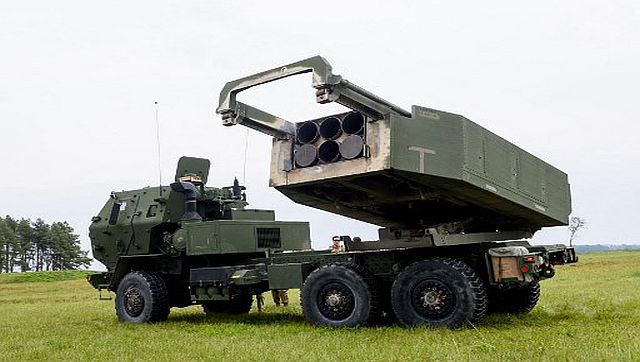 The High Mobility Artillery Rocket System (HIMARS) is a US truck-mounted unit that can launch multiple precision-guided rockets at the same time. AFP[/caption]Since then, Russia has positioned its depots further back from the front lines, leading Kyiv to urge its Western allies to provide even longer-range weapons.After months of hesitation, the United States announced on 3 February that it would send rocket-propelled precision bombs called GLSDBs (Ground Launched Small Diameter Bomb), which could nearly double Ukraine's strike range.MobikiUkrainians use this term for the hundreds of thousands of Russian reservists called up by President Vladimir Putin since September to boost Moscow's troop numbers, following a series of battleground defeats.Accounts gathered by AFP or posted on social media say these soldiers are often poorly trained and equipped, and rely on family to send them sometimes the most basic of equipment.Kyiv says the Kremlin is using these reservists as cannon fodder, deploying waves of "mobiki" to exhaust Ukrainian forces by numerical superiority, whatever the human losses that entails.OrcsThe Ukrainian authorities regularly compare Russia to "Mordor", the realm of the power-hungry tyrant Sauron in JRR Tolkien's Lord of the Rings trilogy.
Russian fighters have become "Orcs" — Sauron's cruel and ugly humanoid soldiers.This pejorative epithet first appeared online before making its way into the lexicon of Ukrainian officials.Another common term is "Rascist", a conflation of "Russian" and "fascist".SVO"Special military operation" or its Russian acronym SVO is the euphemism used by the Kremlin to refer to its war on Ukraine.Russia has passed a law banning the use of the words "war" and "invasion" in reference to its neighbour.In Russia, "war" is a term reserved for the offensive Moscow says the West is waging against it.UkronaziPutin justified his invasion by an alleged need to "de-Nazify" Ukraine, which he accused of trying to eliminate its Russian-speaking minority.[caption id="attachment_12181002" align="alignnone" width="640"]
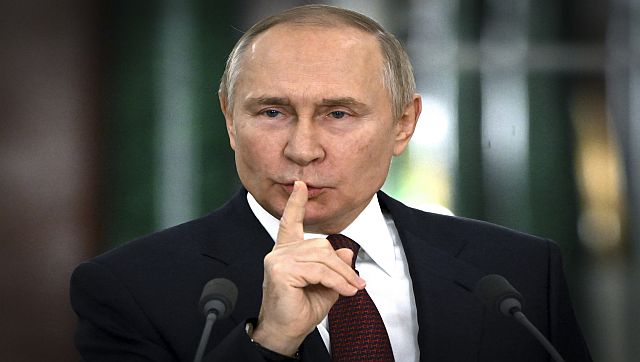 Russian president Vladimir Putin justified his invasion by an alleged need to 'de-Nazify' Ukraine, which he accused of trying to eliminate its Russian-speaking minority. AP[/caption]Russian propagandists refer to Ukrainians as "Ukronazis".'Z'The letter "Z" daubed on many of the Russian tanks deployed in Ukraine has become a symbol of the war, for both supporters and detractors.For the pro-war contingent, who use it on public buildings, cars and clothes, "Z" is a rallying sign.Opponents of the conflict see it as an emblem of Putin's regime, along with the Nazi swastika, which has seen it mutate into "Zwastika".Read all the Latest News, Trending News, Cricket News, Bollywood News,India News and Entertainment News here. Follow us on Facebook, Twitter and Instagram.
First Published:Feb 21, 2023, 07:45:29 IST
Advertisement
Advertisement

Military drones & police check-ups: How Sri Lanka is fighting against worst dengue outbreak in a decade
Sri Lanka is fighting its most severe dengue outbreak in nearly a decade, with infections rising sharply across the nation. Military drones have been deployed to tackle the outbreak, which has claimed 56 lives. Health officials said the outbreak is being driven primarily by the DENV-2 variant of the virus
3 min read
How Facebook job ad lured 2 Karnataka men into Myanmar cyber scam camp
The Karnataka Cyber Command has rescued two youths from a scam compound in Myanmar operated by Chinese fraudsters. The duo from Karnataka were lured on the pretext of data-entry jobs. They were asked to work for 16 hours a day and were expected to sleep for six hours daily
4 min read
Why is India seeing 95% cloud cover despite a Super El Niño?
India is witnessing nearly 95 per cent cloud cover despite a Super El Niño, a climate event usually linked to weaker monsoons. Regional weather systems, cyclonic circulations, the monsoon trough and moisture from two seas are temporarily overpowering one of the world's strongest climate phenomena
5 min read
What is CJP’s fourth demand to the government as protests in Delhi intensify?
The protest by the Cockroach Janta Party at Delhi’s Jantar Mantar refuses to die down. The group have made a fourth demand to the Centre, asking that no FIRs are filed against the agitators and that no legal action be taken. The government has expressed willingness to speak to the protesters, but refused to accede on the resignation of Education Minister Dharmandra Pradhan
5 min read
The new geography of war: Why the Houthis can no longer be ignored
The rise of the Houthis marks the emergence of a new geography of war — one in which influence flows not only from capitals and conventional armies, but also from rugged mountains overlooking vital sea lanes
6 min read
Advertisement
Advertisement