


How a teen’s Instagram addiction led to landmark verdict against Meta and Google
A Los Angeles jury has ordered Meta and Google to cough up $3 million after finding both companies liable for a young woman’s mental distress, including body dysmorphia and suicidal thoughts. This case could cost Big Tech billions — and potentially transform the use of social media

It is “validation that what we saw, our children being harmed, was true. It’s going to make the world safer.”
Tears of relief and celebrations broke out at the Federal Courthouse in downtown Los Angeles after a jury found Meta, which owns Instagram, Facebook, and WhatsApp, and Google, owner of YouTube, guilty of designing their platforms to hook young users without concern for their well-being. The jury also ordered the tech giants to pay $3 million in compensatory damages to the plaintiff, who argued that Instagram and YouTube caused depression, body dysmorphia, and suicidal thoughts.
This decision is being hailed as a landmark one — it could also upend Big Tech — as it opens up social media companies to more lawsuits over users’ well-being.
Let’s examine exactly what the case was, what the jury ordered, and why it matters for Big Tech.
What was the case against Meta and Google all about?
The case before the Los Angeles court was brought by a 20-year-old named Kaley, who was referred to in case documents by her initials, KGM. She accused social media companies of creating products as addictive as cigarettes or digital casinos. Citing features like infinite scroll and algorithmic recommendations, KGM sued Meta, which owns Instagram and Facebook, and Google’s YouTube, claiming they led to anxiety and depression.
 More from Explainers
While testifying in court, KGM said she started using YouTube at age 6 and Instagram at 11. She said her compulsive app use had damaged her self-worth, isolated her from friends and family, and contributed to her depression and body dysmorphia.
She also told the jury that she so craved the validation of social media that she would run off to the bathroom at school to check the number of ‘likes’ her posts had received. She testified that it was hard to concentrate on school because all she wanted to do was stay glued to her social media feeds.
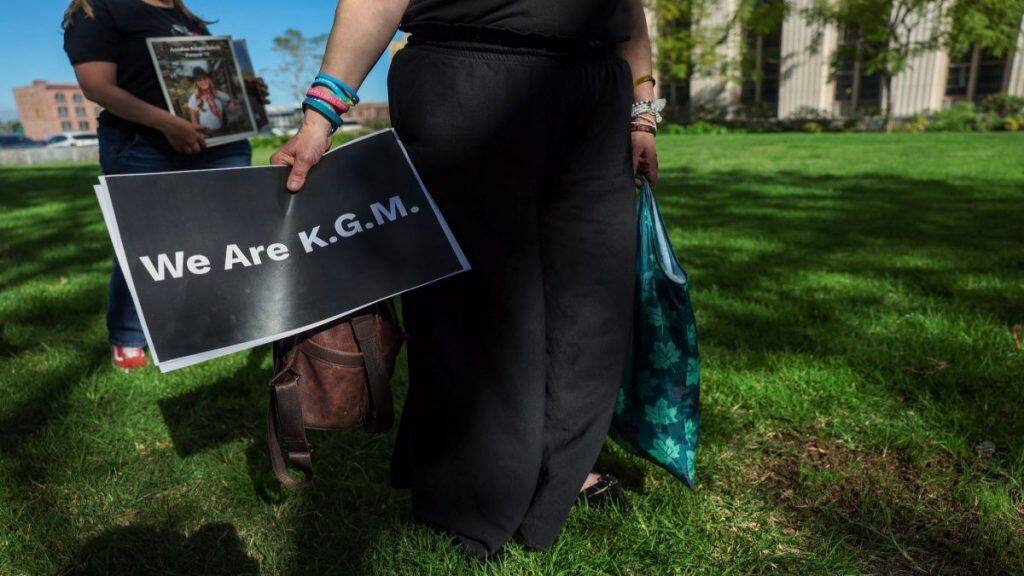
In arguing for Kaley, KGM’s lawyers presented internal documents to prove that the companies were briefed on their products’ damaging effects and warned that their policies were harming children. “If we wanna win big with teens, we must bring them in as tweens,” said one Meta memo. Another showed that Meta was aware that 11-year-olds were regularly using Instagram, despite its rules requiring a minimum age of 13.
“How do you make a child never put down the phone? That’s called the engineering of addiction,” said KGM’s lawyer Mark Lanier.
Countering this, the tech giants countered that KGM had many other problems in her life, noting that her therapist never documented social media as a cause of her mental health problems. They said it was wrong and simplistic to blame social media for wider societal problems.
In fact, when lawyers for KGM told Adam Mosseri, the head of Instagram, that her longest single day of use of the platform stretched to 16 hours, he denied that it was evidence of an addiction. Instead, he called a teenager spending most hours of the day on Instagram “problematic”.
What has the jury ruled in the case?
After nine days of deliberation, a Los Angeles jury found Google and Meta liable for harms stemming from the design of their social media products, ordering them to pay $3 million in compensatory damages.
Meta was ordered to pay 70 per cent of the damages and YouTube the rest.
In its order, the jury noted that Meta and Google were negligent in designing or operating Instagram and YouTube, adding that this negligence was a “substantial factor” in harming the 20-year-old plaintiff. Additionally, both tech giants were held liable for failing to adequately warn users about the dangers of using these apps.
How have Meta and Google reacted to the verdict?
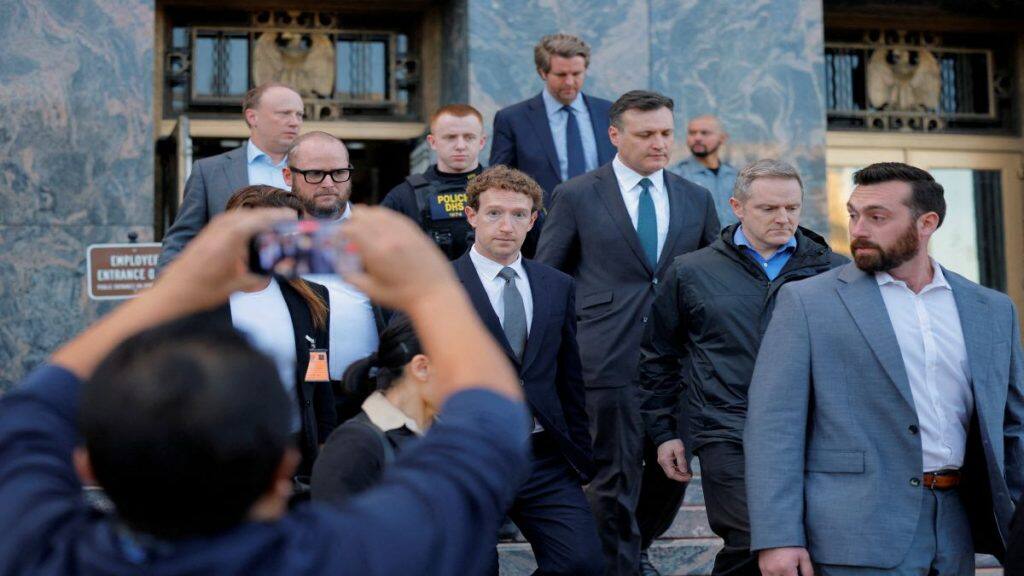
The jury’s decision hasn’t gone down well with the tech biggies. Meta, the parent of Instagram and Facebook, and Google-owned YouTube issued statements disagreeing with the verdict and vowed to explore their legal options, which include appeals.
Google spokesperson Jose Castañeda said the verdict misrepresents YouTube, “which is a responsibly built streaming platform, not a social media site.”
“This case misunderstands YouTube, which is a responsibly built streaming platform, not a social media site.”
A Meta spokesperson said teen mental health is “profoundly complex and cannot be linked to a single app.” “We will continue to defend ourselves vigorously as every case is different, and we remain confident in our record of protecting teens online.”

Why is this case being hailed as a landmark decision?
On its own, the case and monetary compensation don’t hold great significance. However, this case was selected from thousands as a “bellwether trial” to test a new theory of liability. What this means is that it essentially acts as a evaluation case to gauge juries’ reactions and set a legal precedent.
As Clay Calvert, a nonresident senior fellow at the American Enterprise Institute, a centre-right think tank, and expert on media law, told the New York Times, “There is a long road ahead, but this decision is quite significant. If there is a series of verdicts for plaintiffs, it will force the defendants to reconsider how they design social media platforms and how they deliver content to minors.”
Noting the bigger impact that the verdict could have, lawyers for KGM noted, “Today’s verdict is a historic moment — for Kaley and for the thousands of children and families who have been waiting for this day. This verdict is bigger than one case. For years, social media companies have profited from targeting children while concealing their addictive and dangerous design features. Today’s verdict is a referendum — from a jury, to an entire industry — that accountability has arrived.”

Even Peter Ormerod, an associate professor of law at Villanova University, noted that the verdict was “a momentous development”, but added that it’s “one step in a much longer saga”.
Further weighing in on the verdict in the social media addiction trial, Sarah Kreps, a professor and director of Cornell University’s Tech Policy Institute, told AP: “The reason why this case is consequential is not the individual case, but the way that it’s a bellwether test case that might guide the resolution of other lawsuits.
“There are thousands pending, and hundreds in California. So the concern if you’re a social media platform is, as this case goes, so might these others,” she said. “I think the reason why they would be concerned, and I’ve seen this analogy with the tobacco lawsuits, is that once you have this type of verdict in one case, it just opens the floodgates for so many more.”
Many social media experts have noted that Meta and Google will face an avalanche of trials, which, in turn, could force them to consider a design overhaul. John Banzhaf, professor of public interest law at George Washington University, told The Times, “There’s almost certainly going to be a vast avalanche of our lawsuits. In the tobacco cases, you only had a limited number of potential plaintiffs. How many people have lung cancer, for example … compared with the huge number of people who are on social media and presumably suffered, or will at least claim to have suffered, some kind of mental or emotional problem.
“So they’re going to face a virtual avalanche of new lawsuits, and I think that’s going to pressure them to do what the tobacco industry and the food industry tried unsuccessfully to do, which is to go to Congress and get some kind of immunity.”
Social media campaigners believe the case is a turning point. Andy Burrows, chief executive of the Molly Rose Foundation, told the publication, “This is a landmark ruling that shows how aggressive and addictive algorithms can damage young people’s mental health, and Meta knew about it. The ruling will rightly send shockwaves across the tech sector and governments and highlights how we need to legislate for safer tech that protects young people and their wellbeing.”
While the future is uncertain, one thing is unquestionable: People are losing patience with social media giants, and it’s time for Big Tech to change its ways.
With inputs from agencies

Military drones & police check-ups: How Sri Lanka is fighting against worst dengue outbreak in a decade
How Facebook job ad lured 2 Karnataka men into Myanmar cyber scam camp
Why is India seeing 95% cloud cover despite a Super El Niño?
What is CJP’s fourth demand to the government as protests in Delhi intensify?
The new geography of war: Why the Houthis can no longer be ignored