


SpaceX IPO makes Elon Musk a trillionaire. But how much is $1,000,000,000,000?
The SpaceX IPO has made Elon Musk the world's first trillionaire. While most of us know how much $1 million (Rs 9.5 crore) is, the sum of $1 trillion (Rs 95 lakh crore), or $1 million million, is mind-boggling. This is larger than the individual GDP of 170 nations and at par with the combined fortunes of Amazon's Jeff Bezos, Oracle's Larry Ellison, and Google's Larry Page and Sergey Brin

Much has been made of the SpaceX IPO debut on Wall Street today (June 12).
And for good reason. The IPO has made Elon Musk, who is already the world's richest man, the first trillionaire.
But have you considered just how much money $1 trillion (Rs 95 lakh crore) is? How much is it exactly? What does it mean for humanity?
Let's take a closer look.
A mind-boggling number
Let's begin by defining $1 trillion (Rs 95 lakh crore). We all know how much 1 million (Rs 9.5 crore) is. Well, $1 trillion is equal to 1 million million. However, even that does not adequately put the sheer amount of the money into perspective.
 More from Explainers
According to CNN, even if someone spends $1 million (Rs 9.5 crore) per hour around the clock, it could take over 100 years for someone to spend such a vast fortune. Even reaching $1 million (Rs 9.5 crore) over a lifetime is out of reach for most people. The $1 trillion (Rs 95 lakh crore) figure is thus beyond comprehension.
Let's try putting it in perspective via some helpful visual aids. If it were stacked in $1 bills, it would stretch about 109,200 kilometres — enough to wrap around the Earth nearly three times. It would be enough to fill roughly 4.5 Olympic-sized swimming pools with $100 bills. Just $700 billion (Rs 66.5 lakh crore) would stretch into a “money train” over 90 kilometres long.
To get a better idea of the scale, it would be instructive to compare the figure to economies.
Bigger than GDP of countries
According to CNBC, less than two dozen countries in the world have a GDP larger than $1 trillion. That means most nations around the world — their populations, industries and governments — have less economic value in a year than Musk's net worth.
In fact, $1 trillion (Rs 95 lakh crore) is “more than the Gross Domestic Product of 170 countries”. This includes the individual GDPs of Taiwan ($977 billion or Rs 9.28 lakh crore), Ireland ($779 billion or Rs 7.4 lakh crore), Sweden ($760 billion or Rs 7.22 lakh crore), Singapore ($660 billion or Rs 6.27 lakh crore), and South Africa ($480 billion or Rs 4.56 lakh crore).
Which means someone with such a fortune isn't just being filthy rich, but in a different category altogether.
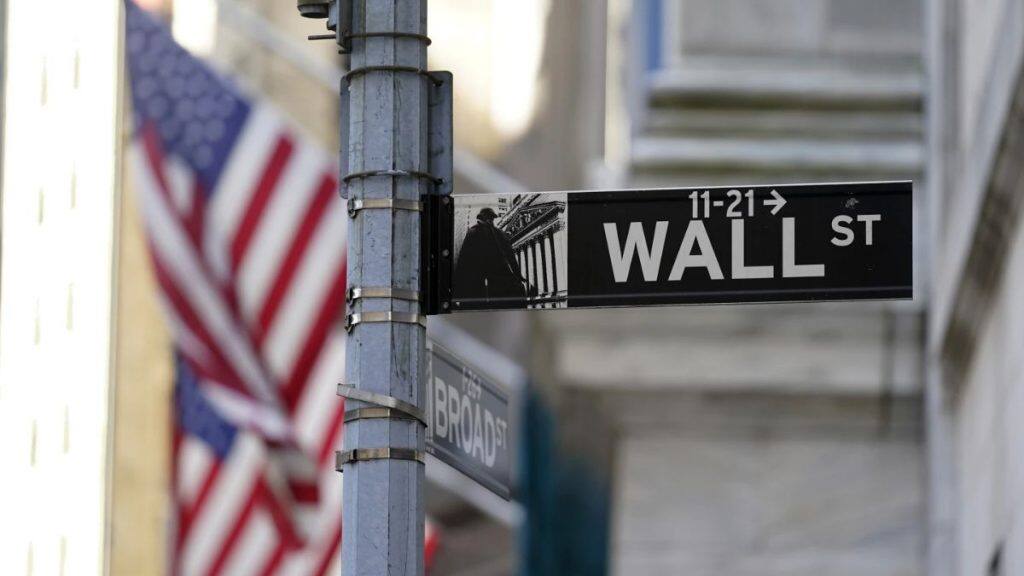
Manhattan, which is the heart of Wall Street, global banks, hedge funds, and corporate headquarters, generates just over $1 trillion (Rs 95 lakh crore) in economic output per year, according to data cited by the outlet.
Bigger than industries
Let's look at cars. As per CNN, Americans spent about $789 billion (Rs 7.49 lakh crore) buying 16.3 million new vehicles in 2025. That is every car sold across the United States in a year — from budget hatchbacks to luxury SUVs. That still doesn't measure up to $1 trillion.
How about real estate? All residential and commercial property in Houston — one of America’s largest economic hubs — is valued at roughly $879 billion (Rs 8.35 lakh crore), based on US housing market estimates cited in financial reports.
How would that vast fortune compare to other billionaires?
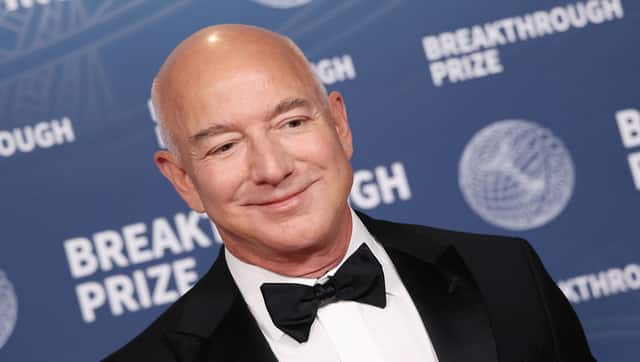
Let's take other richest individuals on the planet: Amazon's Jeff Bezos, Oracle's Larry Ellison, and Google co-founders Larry Page and Sergey Brin. The combined fortunes of these tech titans barely cross $1 trillion (Rs 95 lakh crore).
Let's even take a look at sport. Using Forbes valuations, CNN noted that the 50 most valuable sports teams in the world are worth about $353 billion (Rs 3.35 lakh crore) combined. That includes the biggest NFL franchises, European football clubs, NBA teams, and others. Musk, in theory, could buy all of them and have hundreds of billions left to spare.
Why is this happening?
A piece in Forbes explained why.
The piece, analysing what it termed the coming trillionaire era, argued that modern wealth creation is fundamentally different from what came before. Technology companies scale globally at extraordinary speed, while founders retain large ownership stakes. That combination allows fortunes to grow not gradually, but exponentially.
However, it is important to note that this is not cash. Musk's fortune comes from his stake in companies such as Tesla and SpaceX. According to NDTV, Musk does not get a traditional salary. Instead, his compensation package comes with stock grants that could result in him being given 423.7 million extra Tesla shares over the next decade. The first payout kicks in when Tesla reaches $2 trillion (Rs 190 lakh crore) in value.
The point is that Musk does not and will not have a $1 trillion fortune sitting in any bank. As financial analysts have repeatedly pointed out, this is “paper wealth”, which depends on market valuations and fluctuations. As the shares of Tesla and SpaceX rise, so does Musk's fortune. If they fall, Musk loses some of his net worth too.
What about inequality?
The amount of money being compiled by the billionaire class has left many raising concerns about inequality. According to NDTV, those who have campaigned against wealth inequality have described such fortunes as “staggering and abhorrent”.
Experts have pointed out that the richest 1 per cent now own over 45 per cent of the world's wealth. They also warn of “alarming levels of financial inequality in the world”. Global poverty, meanwhile, remains at 9 per cent.
They also point out how this money could actually be used to solve the world's problems. “In 2021 the United Nations World Food Programme said it would need around $40 billion annually (Rs 0.38 lakh crore) to end world hunger by 2030,” the report cited UN estimates as saying.
Over a decade, that works out to around $400 billion (Rs 3.8 lakh crore), which is still short of half of $1 trillion. The experts have warned this could set “a worrying precedence… opening the door for even greater (and faster) concentration of wealth.”
Musk is now the world's first trillionaire. He will likely not be the last.
FAQs
1. How much is $1 trillion in numbers?
$1 trillion is written as $1,000,000,000,000 or one million million.
2. Does Elon Musk have $1 trillion in cash?
No. His wealth is largely tied to shares in companies like Tesla and SpaceX, meaning it is “paper wealth” which fluctuates with market valuations.
3. Why are some concerned?
The amount of money being compiled by the billionaire class has left many concerned about inequality.
With inputs from agencies

Military drones & police check-ups: How Sri Lanka is fighting against worst dengue outbreak in a decade
How Facebook job ad lured 2 Karnataka men into Myanmar cyber scam camp
Why is India seeing 95% cloud cover despite a Super El Niño?
What is CJP’s fourth demand to the government as protests in Delhi intensify?
The new geography of war: Why the Houthis can no longer be ignored