


Is Sonam Wangchuk’s hunger strike legal? Can the Indian activist be force-fed to break fast?
Sonam Wangchuk is on Day 19 of his hunger strike, with his weight rapidly declining and doctors claiming that he’s entered a critical phase. A public interest litigation was filed, seeking urgent medical intervention, including force-feeding. But what does the law say on this?

“Whatever medical intervention is required to check his deteriorating health condition should be taken care of,” said the Delhi High Court on a public interest litigation (PIL) petition, seeking urgent medical intervention for Indian activist Sonam Wangchuk.
Dismissing the PIL, the Division Bench comprising Chief Justice Devendra Kumar Upadhyaya and Justice Tejas Karia observed, “Life of any citizen is precious and all efforts ought to be made by government authorities to save the same.”
This matter and Wangchuk’s declining health condition have prompted many to ask: Are hunger strikes legal in India, and can courts force-feed an individual?
Here is what the law says on the matter.
Wangchuk’s deteriorating health
On June 28, Sonam Wangchuk, popularly known as ‘Sonam Sir’, began a hunger strike at Jantar Mantar, demanding the resignation of Union Education Minister Dharmendra Pradhan over the Neet paper leak and seeking broader education reforms.
 More from Explainers
Now, 19 days later, his health has deteriorated quite significantly; he has lost more than nine kilogrammes in this period of time, with doctors noting that he has entered a critical phase of prolonged fasting and could soon face organ damage if the fast continues.
Wangchuk’s most recent medical bulletin on Thursday showed that his blood sugar was 80 mg/dL, his pulse rate was 72 per minute, while his blood pressure was 105/61 mmHg in the lying position and 101/65 mmHg while sitting.
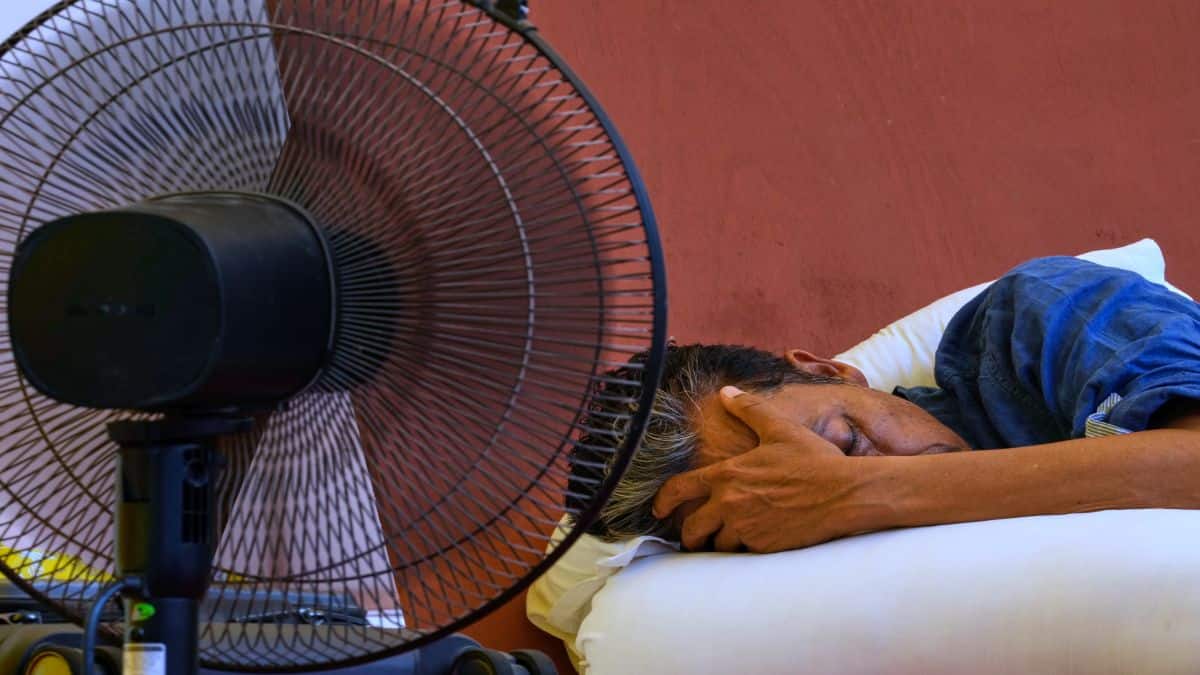
The 59-year-old climate activist’s attending physician, Dr Satish Lamba, has, however, warned that the fast could lead to multiple-organ complications if it continues.
“Wangchuk has entered the second stage of prolonged starvation. This involves elevated uric acid levels, said Dr Lamba, adding that the most critical window of danger lies immediately ahead. “We now face a potential third stage, which could be alarming, involving organ involvement; for this, we must adopt a ‘wait and watch’ approach. We are maintaining extra vigilance around the clock,” Dr Lamba warned.
Wangchuk’s deteriorating health has sparked concern among many, with some even requesting him to break his fast. However, Wangchuk has refused to do so, adding that his condition remains normal for someone on a hunger strike.
“It is not bad… So that is why I can walk for many days now. Yes, there is weakness… my muscles are getting tired… but my heart and core are still fine,” he said in an Instagram message.
A PIL filed in Delhi High Court
As Wangchuk’s health began to deteriorate, activist and lawyer Rakesh Kumar Saini filed a petition in the Delhi High Court.
In his petition, as per a Bar and Bench report, he mentioned that if Wangchuk continued with his hunger strike, he could end up losing his life in two days. The petitioner also sought urgent directions to the Central Government and the Delhi Government to shift Wangchuk to a hospital and administer necessary medical treatment, including force-feeding.
Hearing the matter on Thursday (July 16), the court directed the Centre to ensure daily clinical monitoring of climate activist Sonam Wangchuk and observed that any medical intervention required to improve his deteriorating health should be undertaken by the government.
Taking into account the Centre’s submission that Wangchuk’s health was being monitored by doctors, the bench directed that the 59-year-old’s condition continue to be assessed on a daily basis and that necessary treatment be provided as and when required.
“We appreciate the stand taken by the learned Solicitor General and direct that Wangchuk’s medical condition be clinically monitored on a daily basis and whatever medical intervention is required shall be taken,” the court said.
It then disposed of the PIL.
Legality of hunger strikes and force-feeding
Wangchuk’s hunger strike and the ensuing PIL have now got many wondering if such an action is legal in India.
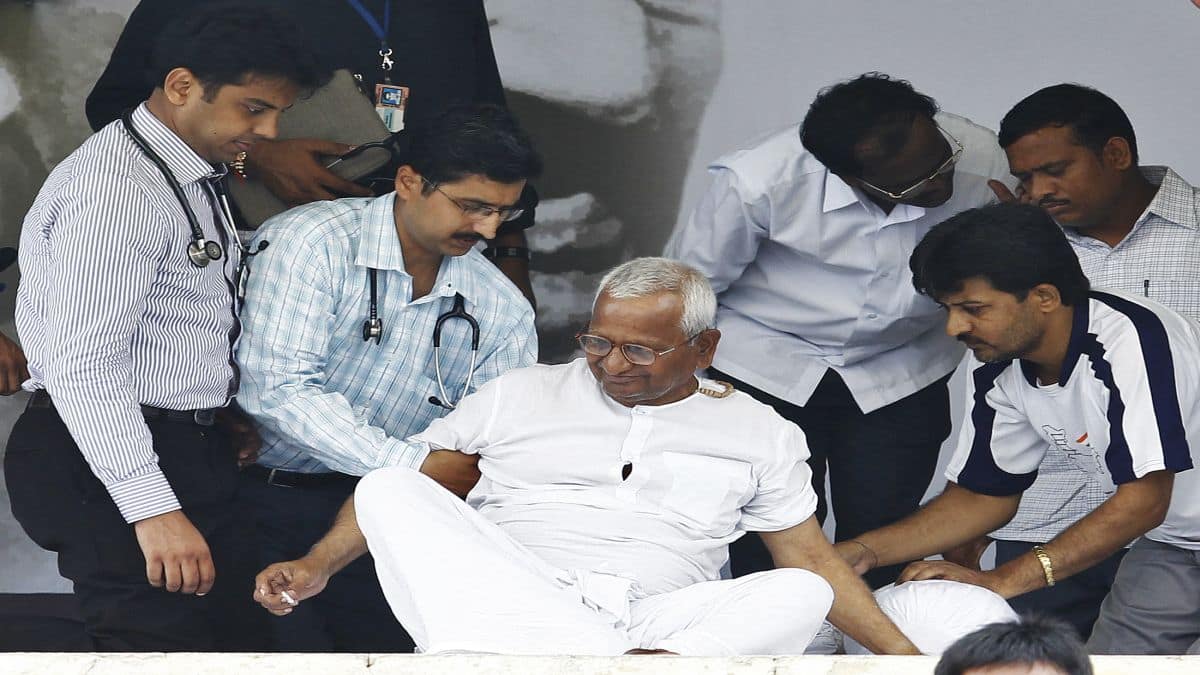
There is no law in the country that prohibits an individual from going on a hunger strike. In fact, many Indians have undertaken this task at different points to facilitate change. For instance, Mahatma Gandhi used fasting as a form of non-violent resistance during the freedom struggle. Later, Manipur activist Irom Sharmila and anti-corruption crusader Anna Hazare undertook indefinite fasts.
Courts have also upheld that Indians have the right to assemble peacefully without arms under Article 19(1)(b) of the Constitution. In 2021, the Madras High Court even dismissed proceedings against a farmer leader, who was on a hunger strike, stating that simply taking part in a hunger strike does not constitute an offence related to attempted suicide.
“The mere fact that the petitioner has protested by sitting on a hunger strike will not attract the offence under Section 309 IPC... It would not constitute an attempt to commit suicide,” the court said while quashing criminal proceedings against a farmer leader.
The PIL in the Delhi High Court also brings into focus the legality of force-feeding in India. In his petition, Saini contended that allowing a citizen to die of starvation during a public protest would amount to a failure of the state’s constitutional duty to protect life.
In the past, courts have also noted that the State cannot remain a passive spectator if someone’s life is in imminent danger.
Earlier, authorities imposed Section 309 of the Indian Penal Code, which criminalised the attempt to suicide, to get individuals to break their fast. In many cases, authorities would interpret a hunger strike as an attempt at suicide and arrest those individuals. As they were in the custody of the State, they then became the responsibility of the State. For instance, Irom Sharmila was repeatedly arrested under Section 309 for attempted suicide and was force-fed through a nasogastric tube.
However, the laws have since changed. In 2017, India introduced the Mental Healthcare Act (MHCA), which took the transformative step of decriminalising suicide and suicidal attempts. The Act made a change in the approach taken by the government against people suffering from mental health issues by sympathising with them instead of holding them liable for the offence of attempting suicide.
Section 115(1) of The MHCA stated: “Notwithstanding anything contained in section 309 of the Indian Penal Code, any person who attempts to commit suicide shall be presumed, unless proved otherwise, to have severe stress and shall not be tried and punished under the said Code.”
Later, in 2024, India implemented the Bharatiya Nyaya Sanhita (BNS), replacing the Indian Penal Code. As per Section 226 of the BNS, if a person attempts suicide with the intent to deter or influence a public servant in the discharge of official duties, it will be treated as a criminal offence. The punishment may include simple imprisonment up to one year, a fine, community service, or a combination thereof.
Even globally, hunger strikes are approved as a legitimate tool of protest, with the World Medical Association’s Declaration of Malta on Hunger Strikers noting that force-feeding a mentally competent individual who has voluntarily refused food is ethically unacceptable.
With inputs from agencies
Tags

Military drones & police check-ups: How Sri Lanka is fighting against worst dengue outbreak in a decade
How Facebook job ad lured 2 Karnataka men into Myanmar cyber scam camp
Why is India seeing 95% cloud cover despite a Super El Niño?
What is CJP’s fourth demand to the government as protests in Delhi intensify?
The new geography of war: Why the Houthis can no longer be ignored