


Sniffing it Out: How electronic 'noses' could help fight wildfires
Brandenburg, the German region most affected by forest fires, is currently conducting trials of cutting-edge sensors capable of detecting wildfires within minutes of their ignition. They can also distinguish the difference between a raging wildfire and, say, the exhaust from a passing diesel truck

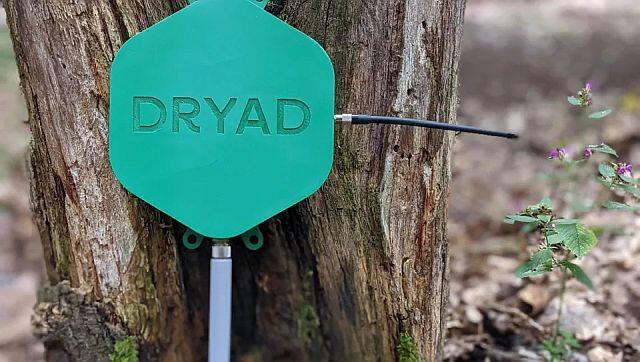
Dryad Networks said 10 countries including the United States, Greece and Spain are already experimenting with the device. Image Courtesy: Dryad[/caption]“We also send out an alert and we can interface directly with the local fire brigade’s IT systems. What you get is an alarm with the exact GPS coordinates of the sensor that picked up the fire,” says Dryad’s co-founder and CEO, Carsten Brinkschulte.Eberswalde forest has been fitted with around 400 sensors, or one device per hectare (2.5 acres), as part of a pilot project with the municipality to test the early-warning system's reliability.Dryad Networks said 10 countries including the United States, Greece and Spain are already experimenting with the device.The company sold around 10,000 of the devices last year. By 2030, it aims to have 120 million installed worldwide.Preventing disaster Raimund Engel, Brandenburg's forest fire protection officer, sees the sensors as a useful addition to the visual detection method currently used in the state.From the top of 105 towers, 360-degree rotating cameras scan the surrounding landscape where once human observers kept watch.At the forest fire centre in Wuensdorf, south of Berlin, Engel closely monitors the images they transmit, and sounds the alarm if he spots danger.With 521 forest fires recorded in 2022, Brandenburg is Germany's worst affected region."Because of climate change" the weather conditions in the forest-rich area are "very similar to some Mediterranean regions", Engel said, "with periods of drought and temperatures that sometimes reach up to 40 degrees Celsius (104 degrees Fahrenheit)."Super-early intervention is key to preventing wildfires from raging out of control, he said."The faster we detect the fire, the quicker firefighters can be on the scene."With inputs from AFP

Military drones & police check-ups: How Sri Lanka is fighting against worst dengue outbreak in a decade
How Facebook job ad lured 2 Karnataka men into Myanmar cyber scam camp
Why is India seeing 95% cloud cover despite a Super El Niño?
What is CJP’s fourth demand to the government as protests in Delhi intensify?
The new geography of war: Why the Houthis can no longer be ignored