


Explained: The ‘shrinking sanitary pad’ scandal that has Chinese women seeing red
China is seeing a ‘shrinkflation’ — the sizes of sanitary pads are smaller than advertised. This has resulted in angry women, who are now taking to social media to vent their ire

There’s an interesting row that’s broken out on China’s social media networks, Weibo and Xiaohongshu, with many women alleging that several major companies were reducing the size and quality of their sanitary pads.
The numerous posts on the matter have resulted in a huge rumpus, with major sanitary pad makers now apologising for it. The uproar has also spread to bigger grievances — some are complaining about the lack of feminine hygiene products in public spaces.
So, what’s exactly going on? What’s the big hubbub all about?
Honey, I shrunk the pads
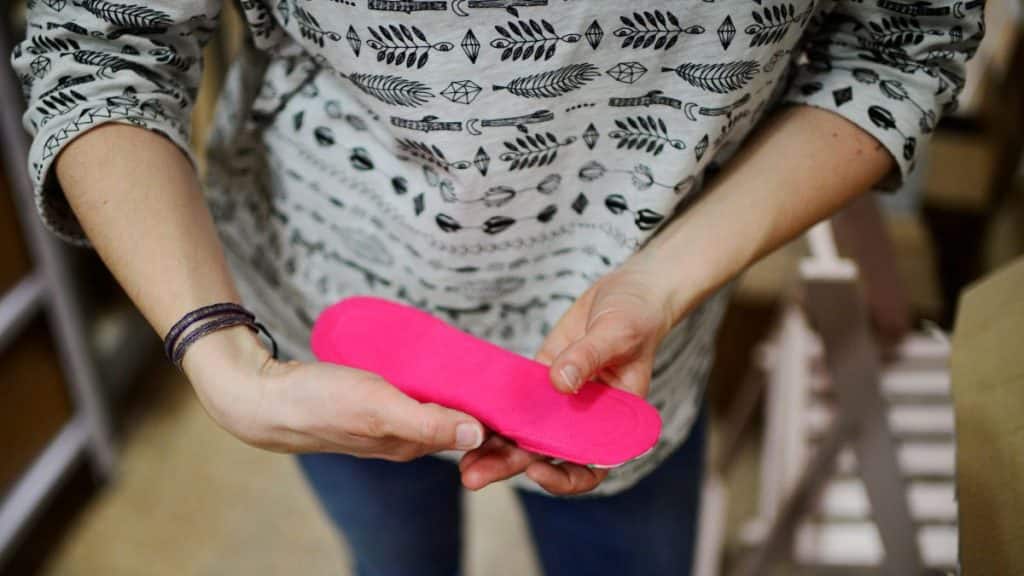
The row began in late November when a woman in a social media post pointed out that the 10 sanitary pads she measured with a measuring tape were five to 20 millimetres shorter than the length indicated on their packaging.
 More from Explainers
“Is it really that difficult to make standard pads about 200 mm long these days?” the woman said on lifestyle platform Xiaohongshu. “It is now time to reject these companies’ skimping on women’s items.”
Other women jumped on the bandwagon, complaining that the companies manufacturing these sanitary pads were being deceitful. One wrote on Weibo, “The inflated sanitary pad length is just like the insoles under men’s feet.”
Another wrote, “Sanitary pads are already incredibly expensive, and now they’re even falsifying the length. Do these people have no morals, trying to make money off women like this?”
Amid this uproar, local news outlet The Paper carried a report in which they analysed the size of 20 different sanitary pads and found that nearly 90 per cent of the products were “shrunken”, measuring at least 10 mm shorter than claimed on their packaging.
The situation soon snowballed larger with sanitary pads becoming a hot topic on China’s social media. Between November 23 and 24, sanitary products became one of the hottest topics on Weibo. On the Hot Search list on Weibo, the topic ‘what to use after sanitary pad scandal’ jumped to number 11.
Fuelling the fire
The situation went from bad to worse when popular Chinese brand ABC shrugged off the complaints from the women with one customer service reportedly responding to a complaint by saying “if you cannot accept the length difference then you can choose not to buy it”.
Others also tried to justify the shrinking of the pads, saying that minor variations in product sizes were the norm and accepted by law. Chinese law, in fact, allows for size discrepancy. As per the rules, a four per cent discrepancy, which equates to about 10-15 millimetres, is permissible.
But women in China are not happy, slamming the companies and continuing their outrage.
The situation became such that ABC then issued a proper apology, saying the earlier response was “inappropriate” and promised “zero deviation” in its products. Deng Jingheng, founder of ABC, said as per China Daily, “We solemnly promise here that we will eliminate negative deviations for some products in December and make all products meet the national standard squarely without any deviations by March of next year.”
“We plead for some time to make adjustments,” he said. “Netizens are right in that we companies should hold ourselves to higher standards and serve females with higher quality products.”
Other brands such as Shecare and Beishute have also issued their own apologies over recent days.
Past sanitary pad rows in China
The shrinking of sanitary pads isn’t the first time that controversy has broken out about feminine products and menstruation in the country.
Last year, many women activists rallied against high levels of tax on period-related products, such as tampons and sanitary towels, using social media. In China, sanitary pads attract a whopping 13 per cent Value Added Tax (VAT), the highest level of taxation and are on a par with the tax rate applied to imported goods.
Then in 2021, came the horrific case of a well-known Chinese sanitary pad company coming under fire after a needle was found inside one of their products. Space 7, the company, later apologised for the issue.
In 2016, Chinese authorities busted a massive “fake sanitary towel” operation in southeast China, where millions of sanitary pads were manufactured in a factory without proper hygiene measures and packaged as popular brands.
China is still quite conservative when it comes to topics of menstruation. For instance, there was a huge debate in 2022 about whether or not high-speed trains should sell pads. Even today, some argue whether stores should keep using black bags when selling them.
With inputs from agencies

Military drones & police check-ups: How Sri Lanka is fighting against worst dengue outbreak in a decade
How Facebook job ad lured 2 Karnataka men into Myanmar cyber scam camp
Why is India seeing 95% cloud cover despite a Super El Niño?
What is CJP’s fourth demand to the government as protests in Delhi intensify?
The new geography of war: Why the Houthis can no longer be ignored