


How Sheikh Hamad bin Khalifa Al Thani made Qatar one of India's closest strategic partners
Under the late Sheikh Hamad bin Khalifa Al Thani, Qatar became India's largest LNG supplier, signed the 2008 Defence Cooperation Agreement, expanded the Indian diaspora to over 830,000, and laid the groundwork for a Strategic Partnership targeting $30 billion in bilateral trade by 2030

The passing of Qatar's Father Amir, His Highness Sheikh Hamad bin Khalifa Al Thani, on Sunday (July 12, 2026), marked the close of a defining chapter not only in Qatar's history but also in the evolution of modern Gulf diplomacy. He was 74.
During nearly two decades as emir, Sheikh Hamad oversaw one of the most dramatic transformations witnessed in West Asia, steering Qatar from a relatively modest, financially constrained Gulf state into one of the world's leading exporters of liquefied natural gas (LNG), a major investment hub and an increasingly influential diplomatic actor.
Among the relationships that flourished under this vision, few have proved as enduring or as strategically significant as the one with India.
New Delhi's response to the former Emir's death reflected the depth of those ties. The Government of India observed a national day of mourning on Monday. National flags were flown at half-mast across the country and official entertainment programmes were suspended as a mark of respect.
 More from Explainers
Prime Minister Narendra Modi paid tribute to Hamad, describing him as a "visionary leader" and a "true friend" of India.
How Hamad saw an opportunity in developing India
When Sheikh Hamad bin Khalifa Al Thani assumed power in June 1995, Qatar occupied a far different position from the one it holds today. The country possessed enormous natural gas reserves but had yet to fully harness them.
Financial resources were limited, its regional influence remained modest and its international profile was comparatively subdued.
Recognising the long-term potential of Qatar's natural gas wealth, Hamad embarked on an ambitious programme that would redefine the country's future.
Central to this strategy was the development of the North Field, the world's largest non-associated natural gas reserve.
Rather than relying solely on conventional hydrocarbon exports, Qatar invested heavily in LNG infrastructure, production facilities and export capabilities while actively encouraging partnerships with international companies.
The decision fundamentally altered Qatar's economic fortunes. LNG exports rapidly became the backbone of the country's economy. However, the significance of this transformation extended beyond domestic development.
At roughly the same time, India was undergoing rapid economic liberalisation and industrial expansion. Growing manufacturing capacity, rising electricity demand and increasing urbanisation sharply increased the country's appetite for reliable energy supplies.
Hamad recognised that India's expanding economy represented far more than a commercial opportunity. Rather than treating India simply as another energy customer, Qatar began viewing New Delhi as a long-term strategic partner whose sustained demand could support Qatar's emergence as a global LNG leader.
That decision would eventually reshape bilateral relations for decades to come.
Energy security: the cornerstone of India-Qatar relations
Over time, Qatar became India's largest supplier of liquefied natural gas, accounting for more than 40 per cent of India's total LNG imports. This position was not achieved through short-term commercial arrangements but through long-duration supply contracts designed to provide certainty for both countries.
For India, these agreements reduced exposure to volatile international spot markets while ensuring stable access to an essential fuel source required to support economic growth. For Qatar, they guaranteed long-term demand from one of the world's fastest-growing major economies.
The relationship gradually expanded beyond straightforward purchases of LNG.
Joint ventures, petrochemical cooperation and infrastructure projects became increasingly important components of bilateral engagement, reflecting a shift from purely transactional trade towards broader strategic collaboration across the energy sector.
Perhaps the most enduring symbol of this partnership was the Sale and Purchase Agreement (SPA) signed in 1999 between India's Petronet LNG and Qatar's RasGas, now known as QatarEnergy.
The agreement originally guaranteed supplies for 25 years and was scheduled to expire in 2028. Rather than allowing uncertainty over future supplies, both countries agreed to significantly strengthen the arrangement through a landmark extension valued at approximately $78 billion.
The renewed agreement secures supplies of 7.5 million metric tonnes per annum (MMTPA) of LNG from 2028 until 2048, effectively extending one of India's most important energy partnerships by another two decades.
The revised contract also introduced several commercial improvements benefiting India. One important change involved the complete removal of a historical fixed charge of $0.52 per million British thermal units (mmBtu), lowering the overall cost structure of LNG imports.
Another major improvement came through changes in shipping arrangements.
The original framework operated under a Free on Board (FOB) model, requiring India to arrange transportation after cargo was loaded. Under the revised Delivered Ex-Ship (DES) structure, QatarEnergy assumes responsibility for maritime transportation and associated costs.
This logistical shift is expected to generate estimated savings of approximately $6 billion for India across the life of the agreement.
Energy cooperation has also broadened beyond the Petronet arrangement. A separate 17-year agreement has been put in place to supply up to one million metric tonnes per annum of LNG to the Gujarat State Petroleum Corporation (GSPC), reinforcing India's objective of increasing natural gas to 15 per cent of its primary energy mix by 2030.
Together, these agreements illustrate how the energy partnership first established under Sheikh Hamad has evolved into a long-term strategic arrangement extending well into the middle of the century.
Indian community strengthened bilateral ties
As Qatar's economy expanded under Hamad's leadership, the country undertook an extensive programme of infrastructure development involving modern cities, transportation networks and large-scale construction projects.
Delivering these ambitious plans required a sizeable international workforce with expertise across engineering, healthcare, information technology, finance, construction and numerous other sectors.
Indian professionals and workers became an integral part of that transformation.
During Hamad's reign, the Indian community in Qatar expanded steadily, eventually becoming the country's largest expatriate population.
Today, more than 830,000 Indian citizens live and work in Qatar, making them not only the largest foreign community in the country but also an essential contributor to Qatar's economy.
The growth of the Indian diaspora reflected more than employment opportunities. According to the framework established during Hamad's tenure, emphasis was placed on the welfare and legal security of expatriate residents.
That stable environment enabled the Indian community to establish itself across a wide range of professions, extending far beyond traditional manual labour.
Indian doctors, engineers, technology specialists, corporate executives and other skilled professionals now play an important role in supporting Qatar's continued economic development as well as its Qatar National Vision 2030 objectives.
Remittances sent home by Indian workers in Qatar have consistently made the Gulf nation an important source of foreign exchange inflows.
In recent years, India's Unified Payments Interface (UPI) has also been progressively introduced across Qatar National Bank's commercial network and merchant establishments, enabling Indian residents and visitors to make digital transactions more efficiently while reducing conversion costs associated with traditional payment methods.
Alongside digital payments, both countries are also engaged in discussions on establishing a mechanism for conducting bilateral trade settlements directly in Indian Rupees and Qatari Riyals.
Defence cooperation & diplomacy beyond gas
As the Gulf and the wider Indian Ocean assumed greater strategic importance for global trade and energy transportation, both countries recognised the value of institutionalising security cooperation alongside their growing economic ties.
A significant milestone came in November 2008 during the visit of then Prime Minister Manmohan Singh to Doha.
The two countries signed a comprehensive Defence Cooperation Agreement, marking a major evolution in bilateral relations. The agreement established a framework that extended well beyond conventional military exchanges.
It included provisions covering maritime security, intelligence sharing on counter-terrorism and cooperation in safeguarding critical sea lanes that connect the Gulf with the Indian Ocean.
The defence framework established during Hamad's rule continues to guide military cooperation today.
Joint naval exercises such as Zair-Al-Bahr have become a regular feature of bilateral engagement, bringing together the Indian Navy and the Qatari Emiri Naval Forces to enhance interoperability and operational coordination.
These exercises focus on strengthening preparedness against piracy, illegal trafficking and threats to maritime energy routes across the Western Indian Ocean.
As challenges in the Gulf have evolved, the mechanisms established under the 2008 agreement have enabled both countries to maintain close coordination on regional security issues while preserving a broader strategic partnership that extends beyond defence alone.
Another notable feature of the bilateral relationship has been the level of diplomatic trust developed over the years. This confidence has enabled India and Qatar to address complex judicial and legal issues through sustained high-level engagement and ministerial consultations without allowing such matters to undermine the overall trajectory of relations.
A steady stream of high-level diplomacy
The expansion of India-Qatar ties did not occur through a single agreement or isolated initiative. Instead, it developed through a series of high-level visits and policy decisions that gradually broadened cooperation across multiple sectors.
Sheikh Hamad's first official visit to India in April 1999 marked an important turning point. The visit helped establish the political foundations for the modern energy partnership and encouraged Indian public sector enterprises to participate in Qatar's rapidly expanding hydrocarbon sector.
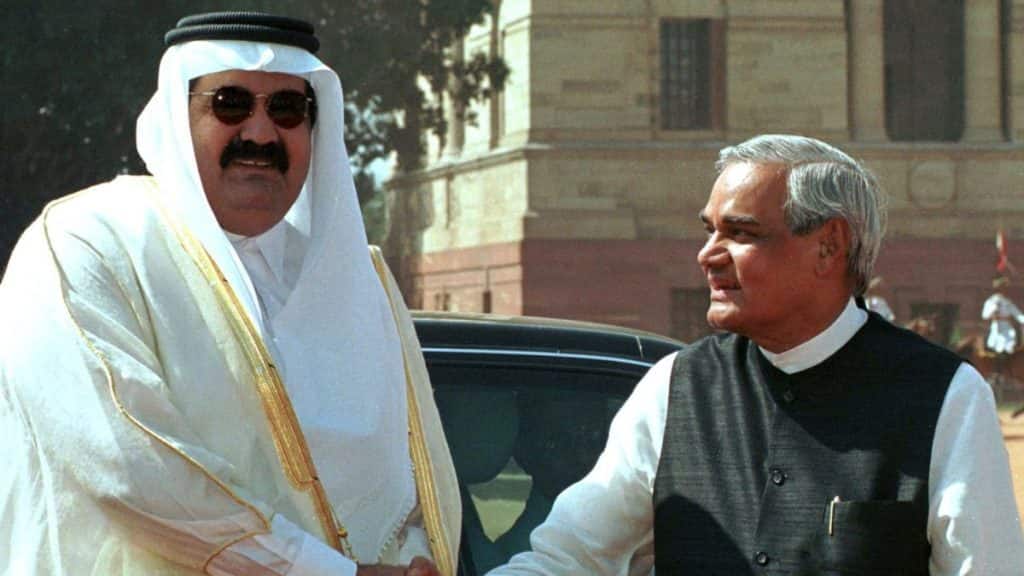
By this stage, Qatar's ambitious LNG development programme was gathering momentum, while India's economy was becoming increasingly dependent on secure and diversified energy supplies. .
A second state visit followed in April 2005.
Energy cooperation dominated discussions as both countries formalised long-term LNG supply arrangements that would shape India's energy security for decades.
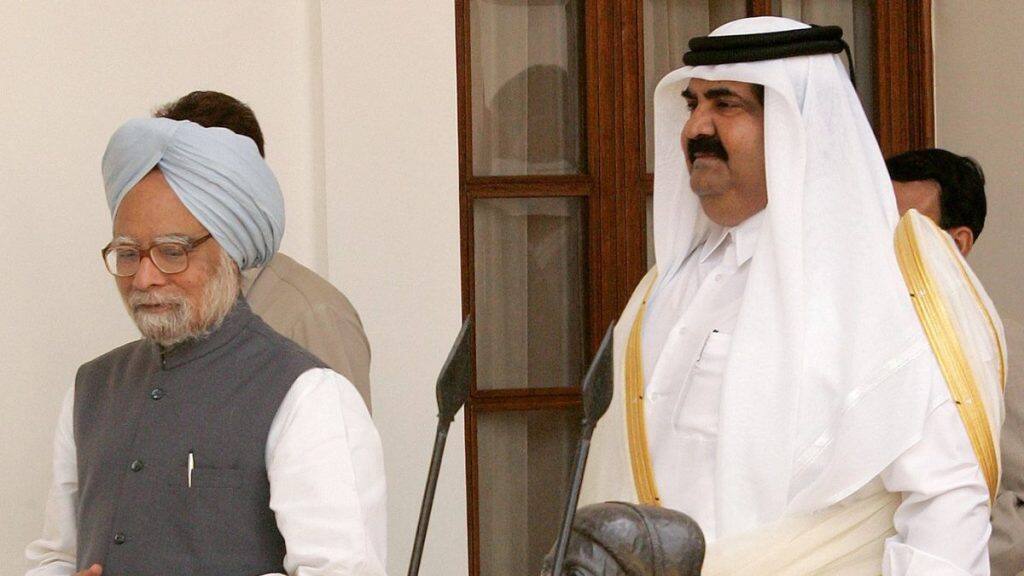
The visit also strengthened the relationship between India's Petronet LNG and Qatar's RasGas, laying the groundwork for a stable supply framework that continues today through QatarEnergy.
The relationship entered a new strategic phase three years later.
During Prime Minister Manmohan Singh's visit to Doha in November 2008, the signing of the Defence Cooperation Agreement added an entirely new dimension to bilateral engagement by institutionalising cooperation on maritime security and defence.
By the time Hamad returned to India for his final official state visit as the reigning Emir in April 2012, bilateral ties had expanded considerably beyond hydrocarbons.
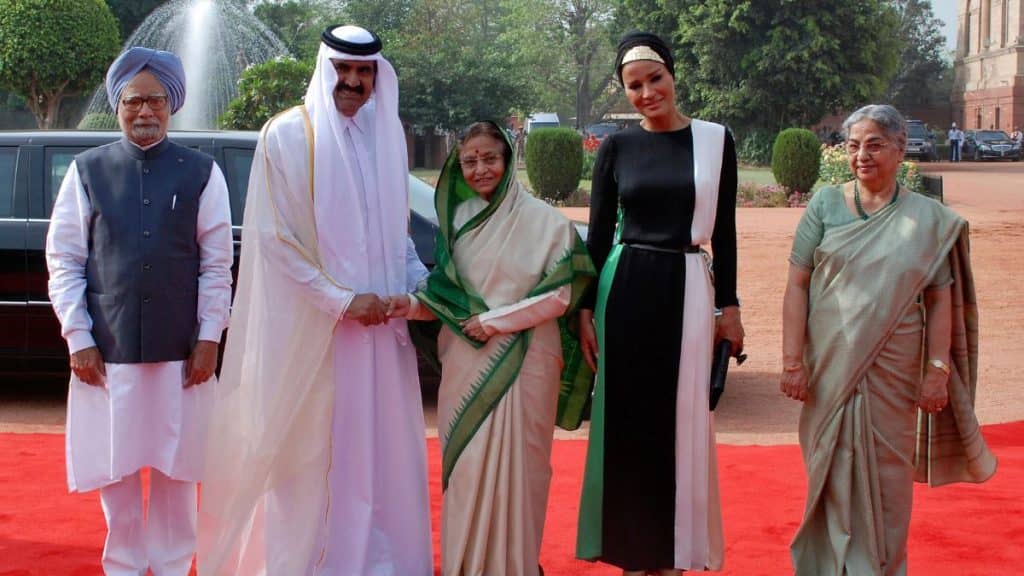
Discussions during the visit focused on diversifying cooperation into banking, fertiliser manufacturing and sovereign investment, reflecting the increasing maturity of the partnership.
The agenda demonstrated that India and Qatar were no longer engaging solely as energy partners but were actively exploring opportunities across finance, manufacturing and long-term investment.
Another defining moment arrived in June 2013 when Sheikh Hamad voluntarily transferred power to his son, Sheikh Tamim bin Hamad Al Thani.
The decision was widely regarded as unusual within the Gulf, where leadership transitions have traditionally occurred upon the death of a ruler.
By choosing an orderly and planned succession, Sheikh Hamad ensured continuity in governance and foreign policy, allowing Qatar's established international partnerships — including its close relationship with India — to continue without disruption.
Modi and Sheikh Tamim have built on the foundations laid by Hamad
Although many of the pillars of the relationship were established before 2013, bilateral ties have continued to expand under Prime Minister Narendra Modi and Emir Sheikh Tamim bin Hamad Al Thani.
The two leaders have overseen a period of deeper political engagement, increased investment, broader economic cooperation and stronger people-to-people links, building upon the framework inherited from Sheikh Hamad.
Modi has travelled to Qatar twice. His first official visit in June 2016 centred on strengthening economic relations and expanding cooperation in hydrocarbons, reinforcing the importance of Qatar as one of India's principal energy partners.
His second visit took place in February 2024. The trip attracted considerable international attention because it followed the release of eight former Indian Navy personnel who had been imprisoned in Qatar.
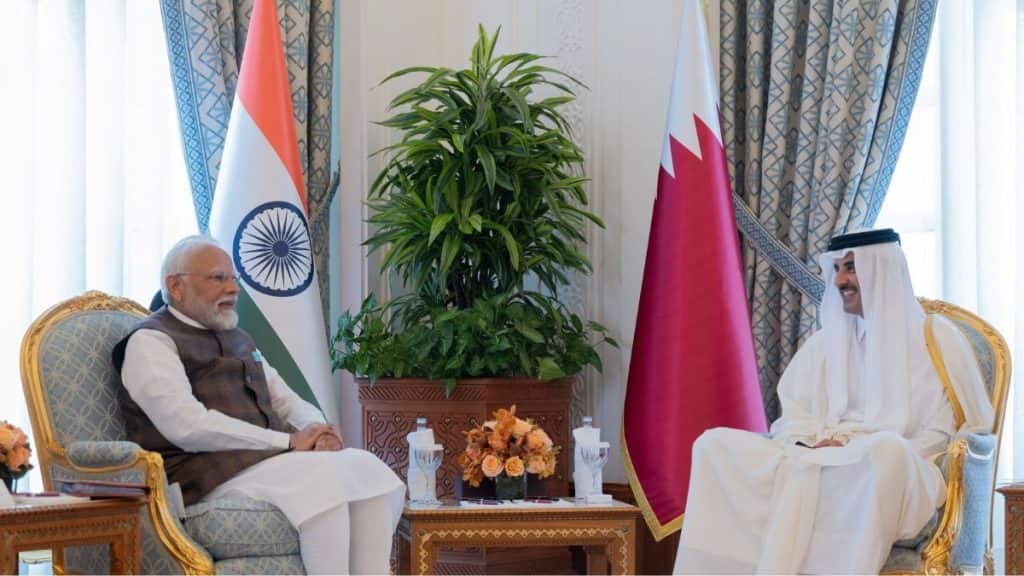
The Emir of Qatar has likewise visited India twice during Modi's tenure.
Sheikh Tamim bin Hamad Al Thani made his first state visit to India in March 2015 following an invitation from the Indian prime minister.
A decade later, in February 2025, he returned to New Delhi for his second state visit, which focused on strengthening bilateral and economic cooperation. During the visit, Modi personally welcomed the emir upon his arrival at the airport, reflecting the importance attached by both governments to the relationship.
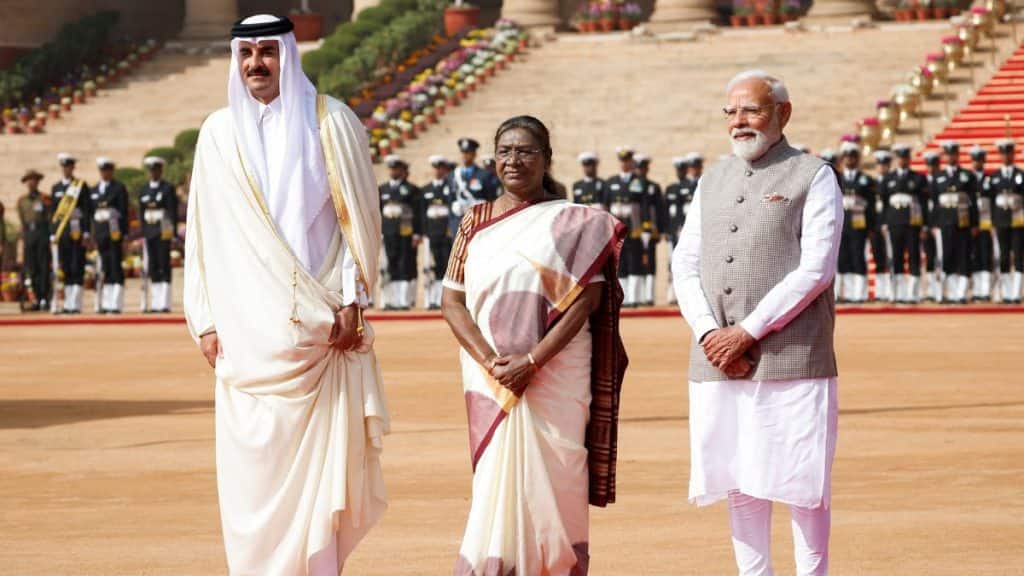
One of the most significant outcomes has been the formal elevation of bilateral ties to a Strategic Partnership.
The upgraded framework reflects the evolution of India-Qatar relations from a predominantly commercial engagement into a comprehensive strategic relationship spanning energy, trade, investment, technology, security and human connectivity.
As part of this upgraded partnership, both countries have established an ambitious target of increasing bilateral trade from approximately $14 billion to $30 billion by 2030.
Another important feature of the relationship's evolution has been Qatar's growing role as an institutional investor in India's economy.
The Qatar Investment Authority (QIA), the country's sovereign wealth fund, has also committed to investing $10 billion in India across infrastructure, logistics, green energy and high-growth technology sectors.
With inputs from agencies
Inhaling global affairs daily, Anmol covers foreign policy & defence with the occasional piece in lifestyle and the thrilling sport of polo, to keep things light when they get too tense. He has far too many disparate interests with a constant itch for travel. You can follow him on X (AnmolSingla001); and please feel free to reach out to him at anmol.singla@nw18.com for interviews, tips, feedback or travel recommendations.

Military drones & police check-ups: How Sri Lanka is fighting against worst dengue outbreak in a decade
How Facebook job ad lured 2 Karnataka men into Myanmar cyber scam camp
Why is India seeing 95% cloud cover despite a Super El Niño?
What is CJP’s fourth demand to the government as protests in Delhi intensify?
The new geography of war: Why the Houthis can no longer be ignored