


Russia-Ukraine war: How mud in eastern Ukraine has become the common enemy
After several days of dry weather, rain returned to Donbas on Sunday, particularly around Bakhmut, where Russian and Ukrainian forces have been fighting for months. The circumstances make it difficult for either side to shift a front line that has remained relatively static since November

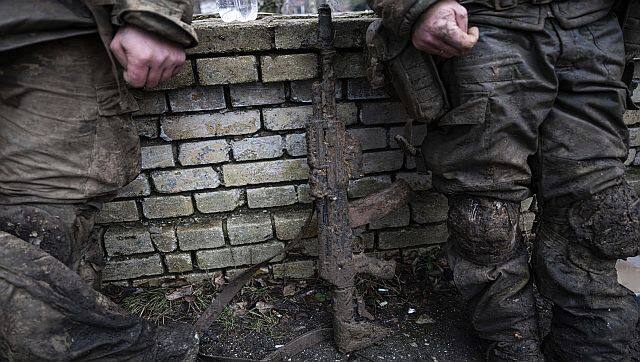
A mud-stained gun is seen with Ukrainian servicemen in Chasiv Yar, Ukraine. AP[/caption]"Both sides are waiting for weather conditions to improve," Ruslan, the head of Grygoriy's artillery unit, told AFP."Any major offensives are impossible or at least very problematic. Time is on the side of those defending," he said.The mud can also slow down evacuations."Of course, it's a problem but we have always been able to find an appropriate vehicle for an injured soldier to be transported to hospital," a member of a medical unit in a small village near the front line said, speaking on condition of anonymity.Also Read: Ukraine says missiles blown up in annexed Crimea, Russia says civilians targeted"For the more serious cases, we transport them with the vehicles that we have here, even though we cannot move quickly."You've seen the conditions here," said the medical worker, pointing to a crater-pocked road covered in thick, slippery mud.A lieutenant in an infantry unit near Bakhmut said the rain was "a major problem"."Our boys stay in the trenches, in the mud and they have to defend the position.""Tracked vehicles are also blocked at the moment — both on our side and on theirs."If the weather dries up and stays that way for three or four weeks there will definitely be a large-scale attack," he said.Read all the Latest News, Trending News, Cricket News, Bollywood News,India News and Entertainment News here. Follow us on Facebook, Twitter and Instagram.

Military drones & police check-ups: How Sri Lanka is fighting against worst dengue outbreak in a decade
How Facebook job ad lured 2 Karnataka men into Myanmar cyber scam camp
Why is India seeing 95% cloud cover despite a Super El Niño?
What is CJP’s fourth demand to the government as protests in Delhi intensify?
The new geography of war: Why the Houthis can no longer be ignored