


Rock on: How meteorite that crashed into US home provide clues to life’s origin?
In 2024, a meteorite crashed through a bedroom ceiling in New Jersey. Now, researchers have discovered traces of ancient salty water, organic compounds and amino acids inside the space rock. The findings may provide new insights into how the building blocks of life were distributed billions of years ago

A meteorite that crashed through the roof of a New Jersey home in July 2024 has given scientists a rare glimpse into the early Solar System.
The meteorite, a solid piece of rock or debris from space, may have a composition similar to that of the celestial bodies that brought water and organic materials to early Earth, according to reports.
Researchers have discovered traces of ancient salty water, organic compounds and amino acids inside the meteorite. The findings may provide new insights into how the building blocks of life were distributed billions of years ago.
We take a look.
What happened in 2024?
Across the daytime sky over New York, New Jersey and neighbouring states, a meteorite crashed into a New Jersey rooftop on July 16 2024.
 More from Explainers
One piece of debris, weighing more than 2 pounds (approximately 1 kilogram), pierced the roof of a house in Hillsborough, Jersey. Using aluminium foil and disposable gloves, the homeowner kept the fragments in glass jars.
The international teams of experts were allowed to study it in detail, the researchers noted in a published journal Science Advances on Wednesday (July 15).
Scientists got to study the rock within hours before rain or any natural phenomenon could change its composition.
Why is the meteorite significant? Where did it come from?
Researchers determined that the Hillsborough meteorite belongs to a rare, carbon-rich class of meteorites known as CM carbonaceous chondrites.
It was the second observed fall of such a meteorite, making it "one of the most scientifically valuable meteorites ever recovered," said a news release from the SETI Institute in California.
Researchers also found tiny pockets with unusually high concentrations of sodium, suggesting that salty, mineral-rich water once circulated through the asteroid that produced the meteorite.
According to reports, scientists traced the rock's likely origin using fireball camera footage and laboratory analysis. They believe the meteorite originated from the Erigone asteroid family, which is located in the inner asteroid belt between Mars and Jupiter.
What else scientists discovered
Among the evidence of ancient briny water, researchers also found a rich assortment of amino acids and other organic compounds.
It is pertinent to note that these molecules are not proof of life; they are among the core chemical ingredients needed to build living organisms.
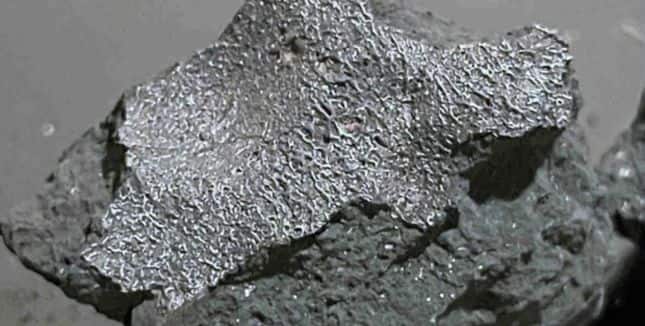
These discoveries have added to the growing evidence that carbon-rich asteroids could have played a role in transporting essential building blocks to early Earth.
There are questions being asked: does this decode how human life started? The answer to this is no.
Several reports suggested that findings do not indicate that life originated in space. Scientists, instead, reckon that asteroids played a role in delivering water and organic compounds to Earth billions of years ago, supplying some of the ingredients that ultimately enabled life to emerge.
Why does the meteorite matter?
Hillsborough meteorite matters as it was recovered just after the impact. The rock remained largely free from any alteration by rain, air and other environmental factors.
According to scientists, these well-preserved meteorites can offer valuable clues about the interaction between water and ancient asteroids, as well as the movement of life-forming chemical ingredients across the early Solar System.
With inputs from agencies

Military drones & police check-ups: How Sri Lanka is fighting against worst dengue outbreak in a decade
How Facebook job ad lured 2 Karnataka men into Myanmar cyber scam camp
Why is India seeing 95% cloud cover despite a Super El Niño?
What is CJP’s fourth demand to the government as protests in Delhi intensify?
The new geography of war: Why the Houthis can no longer be ignored