
Advertisement


Sections
Will humans be able to grow young again after study makes reverse ageing possible in mice?
A Harvard Medical School professor and his team have challenged the belief that the main driver of ageing is genetic mutations to the DNA. They found that not only was it possible to increase the rate at which mice age but also back-pedal the process of growing old

What if ageing was reversible in humans? If the idea is unimaginable, then here is some astonishing news for you.While humans cannot reverse the clock on their age (yet), scientists in the United States have made mice young again.The study published on 12 January in the journal Cell has revealed that changes in DNA are not the only factors behind ageing.“We believe ours is the first study to show epigenetic change as a primary driver of ageing in mammals,” the paper’s senior author, David Sinclair, professor of genetics at the Blavatnik Institute at Harvard Medical School and co-director of the Paul F Glenn Center for Biology of Aging Research, said.How was the study conducted and what claims does it make? Let’s take look.Role of epigenetics in ageingBefore delving into the study, let's make a sense of some terms.“Epigenetics is the study of how cells control gene activity without changing the DNA sequence,” says Medicine Plus wesbite.It is like a "cell’s operating system, telling it how to use the same genetic material differently,” co-first author of the study, Jae-Hyun Yang -- who is a research fellow in genetics in the Sinclair lab -- said as per Harvard Medical School article.Epigenes are proteins and chemicals that dictate the gene “what to do, where to do it, and when to do it,” according to the National Human Genome Research Institute.The “modifications that regulate the activity (expression) of the genes” are epigenomes, which turn genes on and off.This process can set off by a person’s diet, behaviours like smoking, and exposure to pollutants and environmental toxins.[caption id="attachment_11983732" align="alignnone" width="640"]![ageing]() Scientists have found that changes in DNA are not the factor behind ageing. Pixabay (Reprtesentational Image)[/caption]“The cellular process becomes corrupted as more DNA is broken or damaged,” Sinclair told CNN. “The cell panics, and proteins that normally would control the genes get distracted by having to go and repair the DNA”.“Then they don’t all find their way back to where they started, so over time it’s like a Ping-Pong match, where the balls end up all over the floor,” the author was quoted as saying by CNN.ALSO READ: What’s your Ageotype? The science of why some people look younger than they areICE miceSinclair found that not only was it possible to increase the rate at which mice age but also back-pedal the effects of that ageing.This challenges the scientific belief that the main driver of ageing is genetic mutations to the DNA."If the cause of ageing was because a cell became full of mutations, then age reversal would not be possible,” he said, as per Time magazine. “But by showing that we can reverse the ageing process, that shows that the system is intact, that there is a backup copy and the software needs to be rebooted.”
Scientists have found that changes in DNA are not the factor behind ageing. Pixabay (Reprtesentational Image)[/caption]“The cellular process becomes corrupted as more DNA is broken or damaged,” Sinclair told CNN. “The cell panics, and proteins that normally would control the genes get distracted by having to go and repair the DNA”.“Then they don’t all find their way back to where they started, so over time it’s like a Ping-Pong match, where the balls end up all over the floor,” the author was quoted as saying by CNN.ALSO READ: What’s your Ageotype? The science of why some people look younger than they areICE miceSinclair found that not only was it possible to increase the rate at which mice age but also back-pedal the effects of that ageing.This challenges the scientific belief that the main driver of ageing is genetic mutations to the DNA."If the cause of ageing was because a cell became full of mutations, then age reversal would not be possible,” he said, as per Time magazine. “But by showing that we can reverse the ageing process, that shows that the system is intact, that there is a backup copy and the software needs to be rebooted.”![mice]() The reverse ageing process was done multiple times on mice. AFP (Representational Image)[/caption]“One of our breakthroughs was to realize that if you use this particular set of three pluripotent stem cells, the mice don’t go back to age zero, which would cause cancer or worse,” Sinclair was quoted as saying by CNN.“Instead, the cells go back to between 50 per cent and 75 per cent of the original age, and they stop and don’t get any younger, which is lucky. How the cells know to do that, we don’t yet understand,” he added.The team concluded from their experiments that “by manipulating the epigenome, ageing can be driven forwards and backwards,” Yang said, as per the Harvard article.ALSO READ: Changes in gut microbiome could predict healthy ageing and longevity, new study claimsCan this be possible in humans?Sinclair said his team has reversed age in mice by resetting the cells in mice on many occasions, adding that they are now testing the genetic reset in primates.However, it will take years before anti-ageing clinical trials can even begin in humans.Sinclair hoped that the study will inspire other scientists to examine how ageing can be controlled to prevent age-related illnesses in humans, including type 2 diabetes, cardiovascular disease, neurodegeneration, and so on.He said this is just the first step in “redefining what it means to age”.“We don’t understand how rejuvenation really works, but we know it works,” the genetics professor told Time.“We can use it to rejuvenate parts of the body and hopefully make medicines that will be revolutionary. Now, when I see an older person, I don’t look at them as old, I just look at them as someone whose system needs to be rebooted. It’s no longer a question of if rejuvenation is possible, but a question of when.”With inputs from agenciesRead all the Latest News, Trending News, Cricket News, Bollywood News,India News and Entertainment News here. Follow us on Facebook, Twitter and Instagram.
The reverse ageing process was done multiple times on mice. AFP (Representational Image)[/caption]“One of our breakthroughs was to realize that if you use this particular set of three pluripotent stem cells, the mice don’t go back to age zero, which would cause cancer or worse,” Sinclair was quoted as saying by CNN.“Instead, the cells go back to between 50 per cent and 75 per cent of the original age, and they stop and don’t get any younger, which is lucky. How the cells know to do that, we don’t yet understand,” he added.The team concluded from their experiments that “by manipulating the epigenome, ageing can be driven forwards and backwards,” Yang said, as per the Harvard article.ALSO READ: Changes in gut microbiome could predict healthy ageing and longevity, new study claimsCan this be possible in humans?Sinclair said his team has reversed age in mice by resetting the cells in mice on many occasions, adding that they are now testing the genetic reset in primates.However, it will take years before anti-ageing clinical trials can even begin in humans.Sinclair hoped that the study will inspire other scientists to examine how ageing can be controlled to prevent age-related illnesses in humans, including type 2 diabetes, cardiovascular disease, neurodegeneration, and so on.He said this is just the first step in “redefining what it means to age”.“We don’t understand how rejuvenation really works, but we know it works,” the genetics professor told Time.“We can use it to rejuvenate parts of the body and hopefully make medicines that will be revolutionary. Now, when I see an older person, I don’t look at them as old, I just look at them as someone whose system needs to be rebooted. It’s no longer a question of if rejuvenation is possible, but a question of when.”With inputs from agenciesRead all the Latest News, Trending News, Cricket News, Bollywood News,India News and Entertainment News here. Follow us on Facebook, Twitter and Instagram.
 Scientists have found that changes in DNA are not the factor behind ageing. Pixabay (Reprtesentational Image)[/caption]“The cellular process becomes corrupted as more DNA is broken or damaged,” Sinclair told CNN. “The cell panics, and proteins that normally would control the genes get distracted by having to go and repair the DNA”.“Then they don’t all find their way back to where they started, so over time it’s like a Ping-Pong match, where the balls end up all over the floor,” the author was quoted as saying by CNN.ALSO READ: What’s your Ageotype? The science of why some people look younger than they areICE miceSinclair found that not only was it possible to increase the rate at which mice age but also back-pedal the effects of that ageing.This challenges the scientific belief that the main driver of ageing is genetic mutations to the DNA."If the cause of ageing was because a cell became full of mutations, then age reversal would not be possible,” he said, as per Time magazine. “But by showing that we can reverse the ageing process, that shows that the system is intact, that there is a backup copy and the software needs to be rebooted.”
Sinclair accelerated ageing in mice without causing mutations or cancer.He along with his Harvard team has been able to age tissues in the brain, eyes, muscle, skin and kidneys of mice, as per CNN.For this, they came up with ICE or inducible changes to the epigenome.They made temporary, fast-healing cuts in the DNA of lab mice that mimicked the daily damage from sunlight and certain chemicals.ICE did not change the coding sections of the mice’s DNA that can lead to mutations but altered the way DNA is folded.As time passed, scientists observed that one-year-old ICE mice started looking and acting twice their age, reported CNN.Reversing ageingGene therapy was used to overturn the epigenetic changes triggered by scientists.It involved a cocktail of three genes that are active in stem cells and can aid in reprogramming mature cells to an earlier state.Sinclair Lab geneticist Yuancheng Lu mixed three of Yamanaka factors – a set of genes discovered in 2006 by Nobel scientist Shinya Yamanaka that can take back adult cells to their embryonic, stem cell state so their development can restart, Times noted.The gene “therapy set in motion an epigenetic programme that led cells to restore the epigenetic information they had when they were young,” Sinclair said, adding “it’s a permanent reset.”The cocktail of genes was helpful in restoring most of the eyesight of blind mice. As per the study, brain, muscle and kidney cells were also reinstated to their much younger levels, CNN reported.[caption id="attachment_11983742" align="alignnone" width="640"]
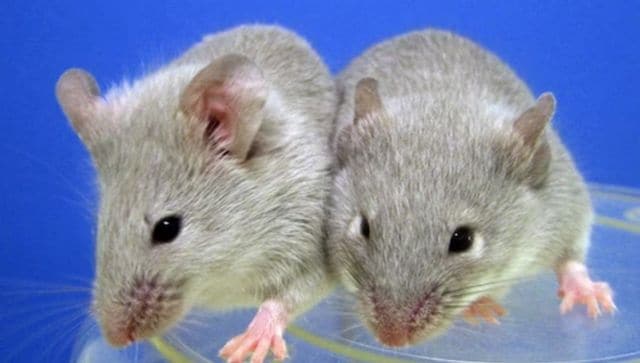 The reverse ageing process was done multiple times on mice. AFP (Representational Image)[/caption]“One of our breakthroughs was to realize that if you use this particular set of three pluripotent stem cells, the mice don’t go back to age zero, which would cause cancer or worse,” Sinclair was quoted as saying by CNN.“Instead, the cells go back to between 50 per cent and 75 per cent of the original age, and they stop and don’t get any younger, which is lucky. How the cells know to do that, we don’t yet understand,” he added.The team concluded from their experiments that “by manipulating the epigenome, ageing can be driven forwards and backwards,” Yang said, as per the Harvard article.ALSO READ: Changes in gut microbiome could predict healthy ageing and longevity, new study claimsCan this be possible in humans?Sinclair said his team has reversed age in mice by resetting the cells in mice on many occasions, adding that they are now testing the genetic reset in primates.However, it will take years before anti-ageing clinical trials can even begin in humans.Sinclair hoped that the study will inspire other scientists to examine how ageing can be controlled to prevent age-related illnesses in humans, including type 2 diabetes, cardiovascular disease, neurodegeneration, and so on.He said this is just the first step in “redefining what it means to age”.“We don’t understand how rejuvenation really works, but we know it works,” the genetics professor told Time.“We can use it to rejuvenate parts of the body and hopefully make medicines that will be revolutionary. Now, when I see an older person, I don’t look at them as old, I just look at them as someone whose system needs to be rebooted. It’s no longer a question of if rejuvenation is possible, but a question of when.”With inputs from agenciesRead all the Latest News, Trending News, Cricket News, Bollywood News,India News and Entertainment News here. Follow us on Facebook, Twitter and Instagram.
First Published:Jan 13, 2023, 20:39:11 IST
Advertisement
Advertisement

Who is Sandeep Lamba, the Delhi cop removed from protest site duty after slapping female protester?
Sandeep Lamba, an Additional Deputy Commissioner of Police (DCP) (North East District), was seen slapping a female CJP protester in a video on July 20. Lamba has now been removed from the protest site and sent back to his original station. In 2021, Lamba was awarded the Union Home Minister’s medal for excellent investigation
4 min read
Explorers discover wreckage of plane 72 years later. Will this help in finding MH370?
On April 11, 1952, a Pan Am Flight 526A, crashed into the Atlantic Ocean, killing 52 of the 69 people on board. After decades of effort, explorers have found the wreck of the plane at the bottom of the seabed near Puerto Rico. The discovery offers new hope to families who lost loved ones in the Malaysia Airlines Flight 370 crash in 2014
5 min read
Cruise missiles, drones and more... The deadly arsenal of the Houthis
The Houthis have evolved into one of the world's most formidable non-state military forces, deploying anti-ship ballistic missiles, cruise missiles, drones and explosive boats to threaten Red Sea shipping. Their latest attacks on Saudi oil tankers have raised concerns over shipping through the Bab el-Mandeb Strait amid the Strait of Hormuz crisis
10 min read
Why India may not witness a medal rush at 2026 Commonwealth Games
A 125-strong Indian contingent is in Glasgow for the 2026 Commonwealth Games, starting today (July 23), chasing international glory. However, with a roster of sports such as badminton and wrestling being cut from the event, the country’s medal chances have been drastically reduced
4 min read
Delhi Police asks personnel to wear uniform: What the law says on cops in plainclothes during protests
The Delhi Police has instructed all its personnel to wear uniforms when they report for duty at Jantar Mantar for crowd control. This comes after outrage grew over videos of men in civilian clothes or without name tags hitting protesters in the Capital. Is it legal for the police to ditch uniforms during protests?
4 min read
Advertisement
Advertisement