


Hiding money in washrooms, evading CCTVs: Inside the Ram Mandir donation theft
During the investigation into the Ram Mandir donation theft case, the eight accused have revealed how cash was stolen. One of them told authorities that the money would be stashed in washrooms and moved out of the premises later. The probe has even put a spotlight on the long-drawn process that the shrine follows for counting donations

It’s been days since a donation scam has emerged at Ayodhya’s Ram Mandir.
Since the controversy first broke, a Special Investigation Team (SIT) has been set up to probe the matter. Eight persons have been arrested, and many more are being questioned. Simultaneously, two members of the Shri Ram Janmabhoomi Teerth Kshetra Trust — an independent trust which manages the shrine — have also resigned.
Now, murkier details are emerging from the probe into the alleged donation scam at the Ram Temple, such as how the money was taken from the premises. The entire episode has also shed a spotlight on the donation collection system at the Ram Temple in Ayodhya.
Accused questioned in Ram Mandir donation row
The matter of donations being manhandled was first raised publicly by Samajwadi Party leader Akhilesh Yadav, who alleged that crores of the temple wealth was missing and calling for an investigation.
 More from Explainers
This was followed up by former SP legislator MLA Pawan Pandey stating that Rs 7-7.5 crore had been embezzled.
As allegations emerged and uproar grew, on June 13, the Uttar Pradesh government, led by Yogi Adityanath, set up a three-member Special Investigation Team (SIT).
During the investigations, eight accused have been arrested — Avinash Shukla, Anukalp Mishra, Lav Kush Mishra, Manish Kumar Yadav, Karunesh Pandey, Ramashankar Mishra, Subhash Srivastava, and Ramshankar Yadav alias Tinnu.
And on Tuesday (June 30), the eight of them were grilled by cops for several hours, with authorities trying to ascertain the modus operandi to steal the donations from the temple and sneak them out of the premises.
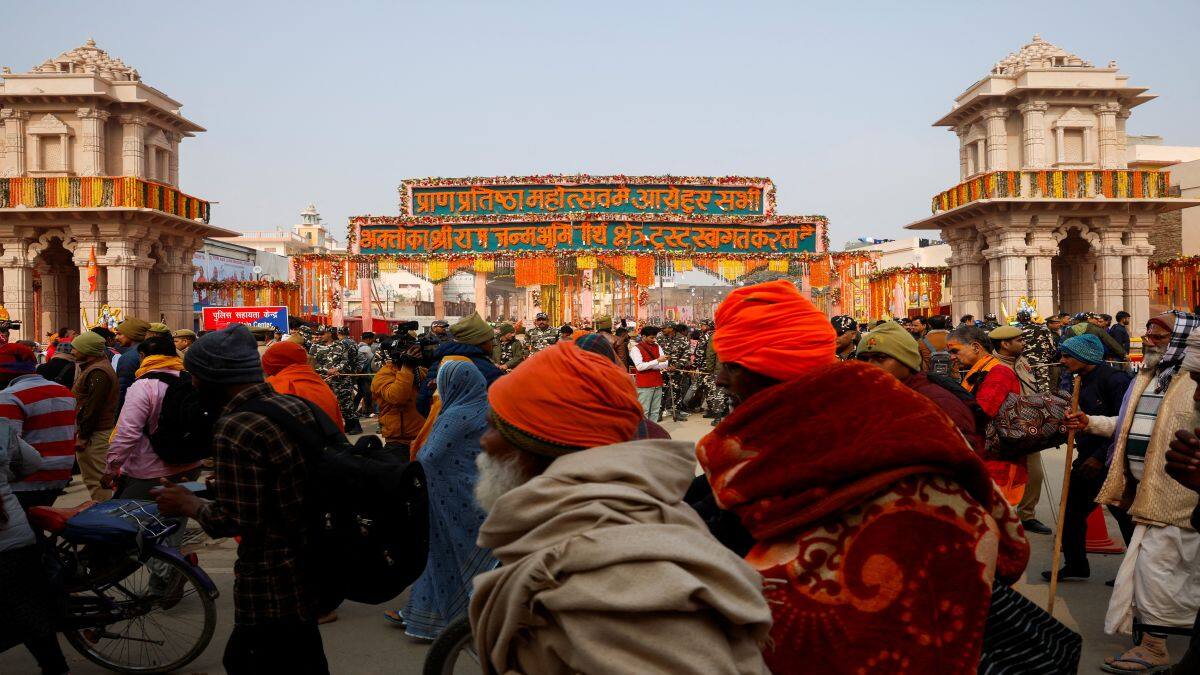
Access to counting rooms, stashing money in washrooms
The investigations have so far revealed that Ramshankar Yadav, alias Tinnu, had the keys to the counting room at the temple complex.
According to Avinash Shukla, the temple donations were stolen in a concerted effort involving multiple people, with one person allegedly taking the cash while others created a cover around him.
As they had knowledge of the locations of the CCTV cameras, they were able to avoid detection and then hide the stolen donations in the washrooms at the temple premise.
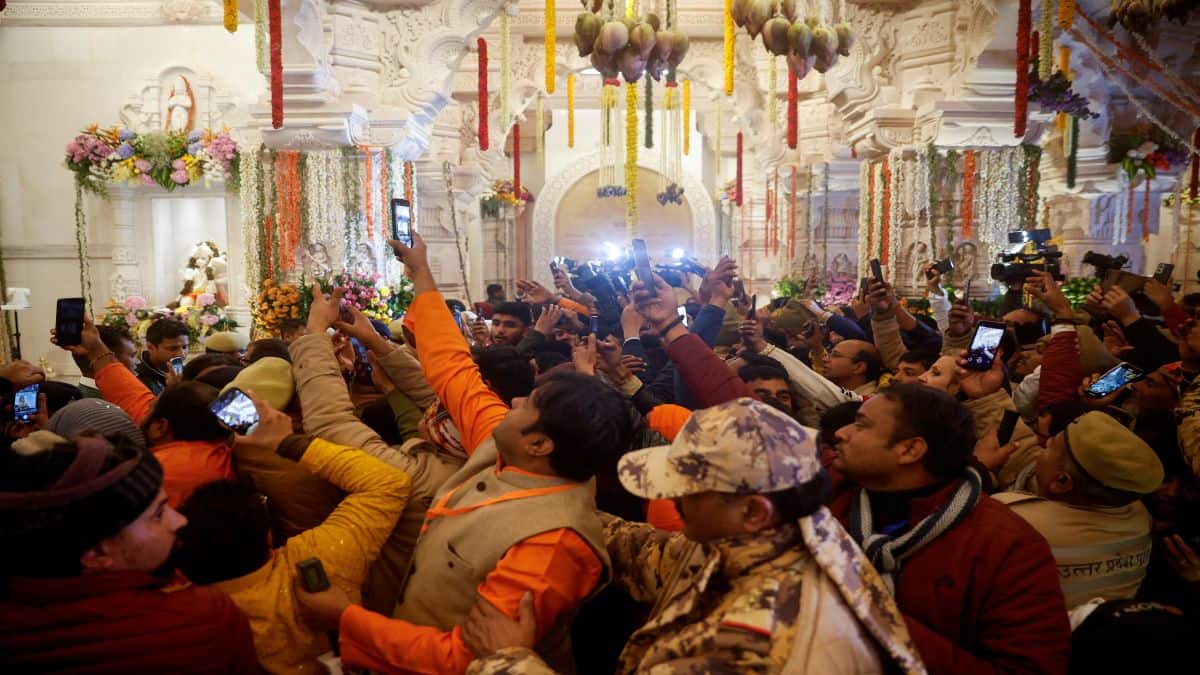
An India Today report states that the accused also told police that the cameras installed inside the temple complex were monitored from a control room, but surveillance staff were not actively tracking their movements.
Shukla, the accused, also pointed out that their proximity to individuals associated with the trust meant they were rarely suspected.
According to an NDTV report, the probe also reveals that a significant amount of the donations were stolen during the Kumbh Mela early last year.
As part of their ongoing investigations, the police are studying the financial trail and assets linked to the accused. Authorities are also trying to determine the duration of the thefts and whether more people were involved.
Focus on Ram Mandir’s donation collection system
The entire episode has put the shrine’s finances under scrutiny. It has also shed light on how the temple collects donations.
Around 40-50 donation boxes are placed in the temple complex. Devotees deposit their cash donations into these boxes. However, those wishing to donate larger or more valuable jewellery have the option of depositing it directly at the office of the trust, which issues receipts after receiving jewellery or other offerings.
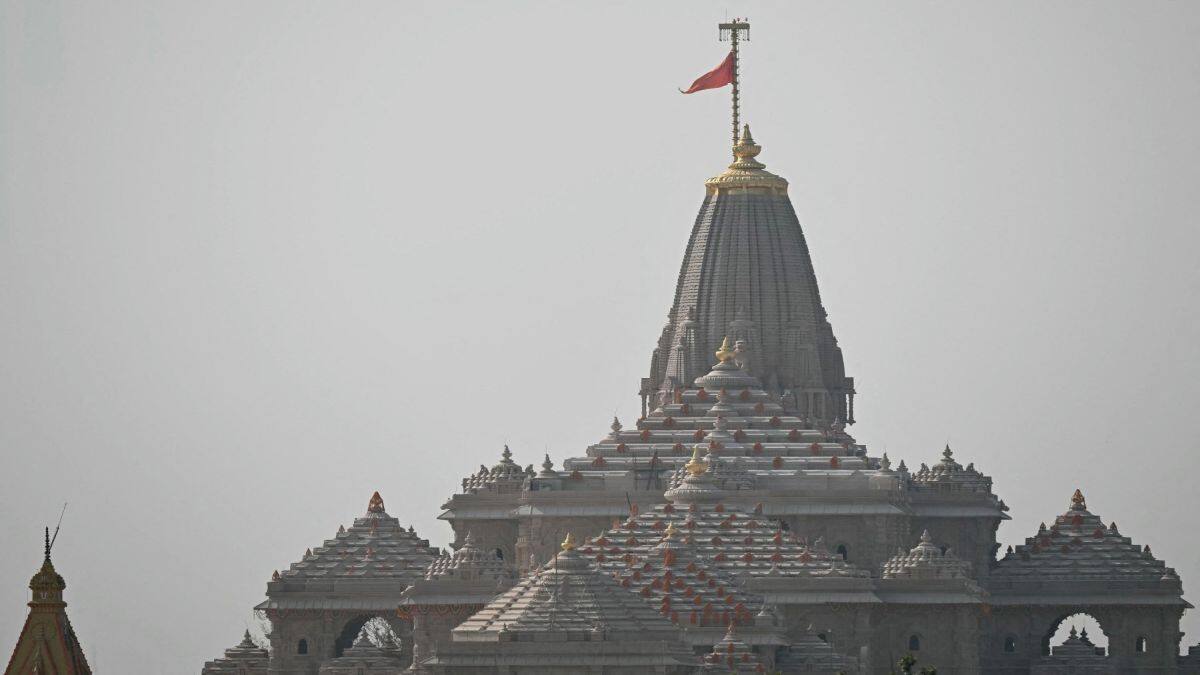
The Shri Ram Janmabhoomi Teerth Kshetra Trust has assigned responsibility for counting the donations to the State Bank of India (SBI). The counting team includes an SBI staff member, employees of a Varanasi-based agency and some members of the Trust.
The counting of donations occurs twice a day, and it is a long-drawn-out process. Once the donation boxes are opened, the cash is transferred into locked iron containers. These are transported to the counting hall where the staff separates the currency notes, coins, and jewellery. The items are then distributed among different tellers, who count them at separate counters under the supervision of senior officials.
Once the money is counted, it is sent to the bank through a van. Following the bank’s verification, the money is deposited into the Ram Janmabhoomi Kshetra Teerth Trust’s designated donation account. SBI also informs the Trust about the credited amount so that official records can be updated.
Other temples and their donation process
The process of donation collection at the Ram Mandir is significantly different than that followed by other temples in India.
The majority of temples are managed by specific families or hereditary priest lineages. Here, offerings and donations belong to the managing family or families.
Another way is through the Mahant system. In this, a single spiritual head controls the temple assets, properties, offerings, and administration, and typically appoints or nominates his successor. One famous example of this process is the Gorakhnath Math, headed by Chief Minister Yogi Adityanath. He was appointed by the late Mahant Avaidyanath.
There are also some temples in India that are run by government-appointed bodies. The Tirumala Tirupati Devasthanams (TTD) is an independent trust that manages the Sri Venkateswara Temple and several allied temples. The government appoints its Board of Trustees and Chief Executive Officer.
In Jammu and Kashmir, a state government-appointed body manages the Vaishno Devi temple.
It’s to be seen what happens next in the Ram Mandir probe. As of now, we can only wait until new evidence is gathered.
With inputs from agencies

Military drones & police check-ups: How Sri Lanka is fighting against worst dengue outbreak in a decade
How Facebook job ad lured 2 Karnataka men into Myanmar cyber scam camp
Why is India seeing 95% cloud cover despite a Super El Niño?
What is CJP’s fourth demand to the government as protests in Delhi intensify?
The new geography of war: Why the Houthis can no longer be ignored