
Advertisement


Sections
India's Rahul Gandhi disqualified as MP: What could be the Congress leader's next step
A day after being convicted in a 2019 criminal defamation case, Rahul Gandhi has now lost his Wayanad seat after being disqualified as an MP. The Congress leader needs a stay on his conviction if he wants to return as a lawmaker

Congress leader Rahul Gandhi has been disqualified as a member of parliament, a day after a court in Gujarat’s Surat convicted him in a 2019 criminal defamation case over his alleged remarks on the “Modi surname”.As per an NDTV report, the Lok Sabha Secretariat has also declared his Wayanad constituency vacant."Rahul Gandhi, Member of Lok Sabha representing the Wayanad parliamentary constituency of Kerala stands disqualified from the membership of Lok Sabha from the date of his conviction ie 23 March 2023 in terms of the provisions of Article 102(1)(e) of the Constitution of India read with Section 8 of the Representation of the People Act, 1951," the Lok Sabha Secretariat said in a notification today (24 March).The Election Commission can now call for a special election for the Wayanad seat.Congress has denounced the disqualification and called it a “conspiracy” to silence Gandhi, who has raised questions to Prime Minister Narendra Modi over his alleged ties to billionaire industrialist Gautam Adani.Adani Group has found itself in the middle of a controversy following allegations of stock manipulation and fraud. The Opposition parties, including Congress, have been demanding a joint parliamentary committee probe into these allegations.Adani Group has denied allegations of financial fraud.Why was Rahul Gandhi disqualified and what can he do next? We explain.Rahul Gandhi’s convictionGandhi was found guilty of defamation over his alleged “why do all thieves have the name Modi” remark by the court of Chief Judicial Magistrate HH Varma under sections 499 and 500 of the Indian Penal Code (IPC).He was sentenced to two years in prison, but moments later, the Surat court granted the Congress leader bail on a surety of Rs 15,000 and suspended the sentence for 30 days to allow him to appeal.[caption id="attachment_12346432" align="alignnone" width="640"]![rahul gandhi conviction]() Rahul Gandhi was found guilty of defamation over his alleged 'why do all thieves have the name Modi' remark. AP[/caption]The criminal defamation case was filed by Bharatiya Janata Party’s (BJP) Purnesh Modi who claimed Gandhi had made the remarks during a rally in Karnataka’s Kolar on 13 April 2019 ahead of the Lok Sabha elections that year.Disqualification rulesA legislator can be disqualified in three scenarios. According to Articles 102(1) and 191(1), which pertain to the disqualification of an MP and a member of the Legislative Assembly respectively, the lawmakers can lose their seat if they hold office of profit, are of unsound mind or are insolvent, or do not have valid citizenship.The other way a lawmaker can be disqualified is through the Tenth Schedule of the Constitution, which deals with defection.The Representation of The People Act (RPA), 1951 stipulates disqualification for conviction in criminal cases.What does RPA state?The RPA has several provisions that deal with disqualification.Section 8 of the RPA aims at “preventing criminalisation of politics” and disallowing “tainted” legislators from contesting elections.Section 8(1) of the RPA includes removal as a lawmaker due to conviction under certain offences such as promoting enmity between two groups, bribery, and undue influence or personation at an election. As per Indian Express, defamation is not included in these offences.The offences listed under Section 8(2) are hoarding or profiteering, adulteration of food or drugs as well as conviction and sentence of at least six months under any provisions of the Dowry Prohibition Act.According to Section 8(3), “A person convicted of any offence and sentenced to imprisonment for not less than two years shall be disqualified from the date of such conviction and shall continue to be disqualified for a further period of six years since his release.”Earlier, Section 8(4) of the RPA stated that disqualification can be imposed only “after three months have elapsed” from the date of conviction. However, in the 2013 verdict in ‘Lily Thomas v Union of India’, the Supreme Court revoked this section, calling it “unconstitutional”.The 2013 landmark order says that any lawmaker convicted and sentenced to two or more years in prison will stand disqualified as an MP with immediate effect, noted BBC. ALSO READ: Meet Purnesh Modi, the man whose defamation complaint led to Rahul Gandhi’s two-year sentenceWhat legal remedy can Rahul Gandhi avail?The Grand Old Party plans to fight Gandhi's disqualification "both legally and politically".Now, the Congress leader has to appeal in a higher court and get an immediate stay on his conviction if he wants to get his disqualification reversed, legal experts told News18.He will first have to appeal before the Surat Sessions Court under Section 374 of the Code of Criminal Procedure (CrPC), as per Indian Express.[caption id="attachment_12346452" align="alignnone" width="640"]
Rahul Gandhi was found guilty of defamation over his alleged 'why do all thieves have the name Modi' remark. AP[/caption]The criminal defamation case was filed by Bharatiya Janata Party’s (BJP) Purnesh Modi who claimed Gandhi had made the remarks during a rally in Karnataka’s Kolar on 13 April 2019 ahead of the Lok Sabha elections that year.Disqualification rulesA legislator can be disqualified in three scenarios. According to Articles 102(1) and 191(1), which pertain to the disqualification of an MP and a member of the Legislative Assembly respectively, the lawmakers can lose their seat if they hold office of profit, are of unsound mind or are insolvent, or do not have valid citizenship.The other way a lawmaker can be disqualified is through the Tenth Schedule of the Constitution, which deals with defection.The Representation of The People Act (RPA), 1951 stipulates disqualification for conviction in criminal cases.What does RPA state?The RPA has several provisions that deal with disqualification.Section 8 of the RPA aims at “preventing criminalisation of politics” and disallowing “tainted” legislators from contesting elections.Section 8(1) of the RPA includes removal as a lawmaker due to conviction under certain offences such as promoting enmity between two groups, bribery, and undue influence or personation at an election. As per Indian Express, defamation is not included in these offences.The offences listed under Section 8(2) are hoarding or profiteering, adulteration of food or drugs as well as conviction and sentence of at least six months under any provisions of the Dowry Prohibition Act.According to Section 8(3), “A person convicted of any offence and sentenced to imprisonment for not less than two years shall be disqualified from the date of such conviction and shall continue to be disqualified for a further period of six years since his release.”Earlier, Section 8(4) of the RPA stated that disqualification can be imposed only “after three months have elapsed” from the date of conviction. However, in the 2013 verdict in ‘Lily Thomas v Union of India’, the Supreme Court revoked this section, calling it “unconstitutional”.The 2013 landmark order says that any lawmaker convicted and sentenced to two or more years in prison will stand disqualified as an MP with immediate effect, noted BBC. ALSO READ: Meet Purnesh Modi, the man whose defamation complaint led to Rahul Gandhi’s two-year sentenceWhat legal remedy can Rahul Gandhi avail?The Grand Old Party plans to fight Gandhi's disqualification "both legally and politically".Now, the Congress leader has to appeal in a higher court and get an immediate stay on his conviction if he wants to get his disqualification reversed, legal experts told News18.He will first have to appeal before the Surat Sessions Court under Section 374 of the Code of Criminal Procedure (CrPC), as per Indian Express.[caption id="attachment_12346452" align="alignnone" width="640"]![rahul gandhi disqualification]() Rahul Gandhi has to has to appeal in a higher court and get an immediate stay on his conviction. Reuters File Photo[/caption]A higher court will have to stay his conviction and not merely suspend his sentence. "If it (the court) only suspends the sentence, that's not enough. There has to be a suspension or stay of conviction. He (Rahul Gandhi) can stay on as a member of parliament only if there is a stay on the conviction," former Union law minister Kapil Sibal told NDTV. Gandhi can then file a writ petition before the Gujarat High Court challenging his disqualification from the Parliament.If his conviction is not suspended or he is not acquitted in the defamation case by any higher court, Gandhi will not be able to contest elections for the next eight years. The next general elections are due in 2024.As per News18 sources, Gandhi is likely to be asked to vacate his government bungalow in central Delhi.Meanwhile, Congress has questioned the legality of the move, saying only the President can disqualify MPs in consultation with the Election Commission.However, BJP has backed the decision of the Lok Sabha Secretariat.With inputs from agenciesRead all the Latest News, Trending News, Cricket News, Bollywood News,India News and Entertainment News here. Follow us on Facebook, Twitter and Instagram.
Rahul Gandhi has to has to appeal in a higher court and get an immediate stay on his conviction. Reuters File Photo[/caption]A higher court will have to stay his conviction and not merely suspend his sentence. "If it (the court) only suspends the sentence, that's not enough. There has to be a suspension or stay of conviction. He (Rahul Gandhi) can stay on as a member of parliament only if there is a stay on the conviction," former Union law minister Kapil Sibal told NDTV. Gandhi can then file a writ petition before the Gujarat High Court challenging his disqualification from the Parliament.If his conviction is not suspended or he is not acquitted in the defamation case by any higher court, Gandhi will not be able to contest elections for the next eight years. The next general elections are due in 2024.As per News18 sources, Gandhi is likely to be asked to vacate his government bungalow in central Delhi.Meanwhile, Congress has questioned the legality of the move, saying only the President can disqualify MPs in consultation with the Election Commission.However, BJP has backed the decision of the Lok Sabha Secretariat.With inputs from agenciesRead all the Latest News, Trending News, Cricket News, Bollywood News,India News and Entertainment News here. Follow us on Facebook, Twitter and Instagram.
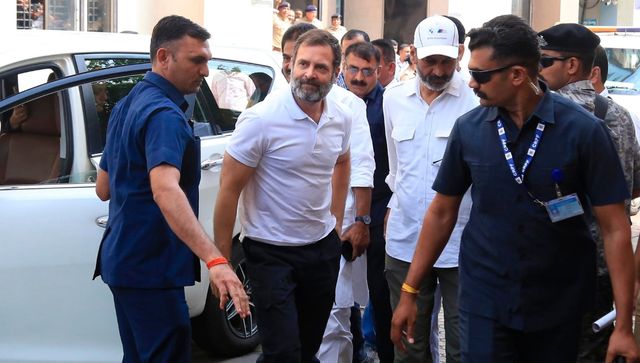 Rahul Gandhi was found guilty of defamation over his alleged 'why do all thieves have the name Modi' remark. AP[/caption]The criminal defamation case was filed by Bharatiya Janata Party’s (BJP) Purnesh Modi who claimed Gandhi had made the remarks during a rally in Karnataka’s Kolar on 13 April 2019 ahead of the Lok Sabha elections that year.Disqualification rulesA legislator can be disqualified in three scenarios. According to Articles 102(1) and 191(1), which pertain to the disqualification of an MP and a member of the Legislative Assembly respectively, the lawmakers can lose their seat if they hold office of profit, are of unsound mind or are insolvent, or do not have valid citizenship.The other way a lawmaker can be disqualified is through the Tenth Schedule of the Constitution, which deals with defection.The Representation of The People Act (RPA), 1951 stipulates disqualification for conviction in criminal cases.What does RPA state?The RPA has several provisions that deal with disqualification.Section 8 of the RPA aims at “preventing criminalisation of politics” and disallowing “tainted” legislators from contesting elections.Section 8(1) of the RPA includes removal as a lawmaker due to conviction under certain offences such as promoting enmity between two groups, bribery, and undue influence or personation at an election. As per Indian Express, defamation is not included in these offences.The offences listed under Section 8(2) are hoarding or profiteering, adulteration of food or drugs as well as conviction and sentence of at least six months under any provisions of the Dowry Prohibition Act.According to Section 8(3), “A person convicted of any offence and sentenced to imprisonment for not less than two years shall be disqualified from the date of such conviction and shall continue to be disqualified for a further period of six years since his release.”Earlier, Section 8(4) of the RPA stated that disqualification can be imposed only “after three months have elapsed” from the date of conviction. However, in the 2013 verdict in ‘Lily Thomas v Union of India’, the Supreme Court revoked this section, calling it “unconstitutional”.The 2013 landmark order says that any lawmaker convicted and sentenced to two or more years in prison will stand disqualified as an MP with immediate effect, noted BBC. ALSO READ: Meet Purnesh Modi, the man whose defamation complaint led to Rahul Gandhi’s two-year sentenceWhat legal remedy can Rahul Gandhi avail?The Grand Old Party plans to fight Gandhi's disqualification "both legally and politically".Now, the Congress leader has to appeal in a higher court and get an immediate stay on his conviction if he wants to get his disqualification reversed, legal experts told News18.He will first have to appeal before the Surat Sessions Court under Section 374 of the Code of Criminal Procedure (CrPC), as per Indian Express.[caption id="attachment_12346452" align="alignnone" width="640"]
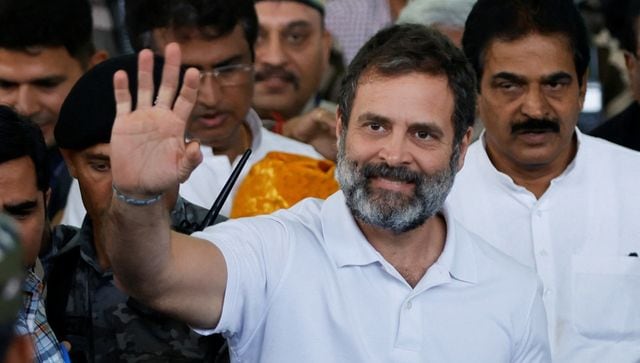 Rahul Gandhi has to has to appeal in a higher court and get an immediate stay on his conviction. Reuters File Photo[/caption]A higher court will have to stay his conviction and not merely suspend his sentence. "If it (the court) only suspends the sentence, that's not enough. There has to be a suspension or stay of conviction. He (Rahul Gandhi) can stay on as a member of parliament only if there is a stay on the conviction," former Union law minister Kapil Sibal told NDTV. Gandhi can then file a writ petition before the Gujarat High Court challenging his disqualification from the Parliament.If his conviction is not suspended or he is not acquitted in the defamation case by any higher court, Gandhi will not be able to contest elections for the next eight years. The next general elections are due in 2024.As per News18 sources, Gandhi is likely to be asked to vacate his government bungalow in central Delhi.Meanwhile, Congress has questioned the legality of the move, saying only the President can disqualify MPs in consultation with the Election Commission.However, BJP has backed the decision of the Lok Sabha Secretariat.With inputs from agenciesRead all the Latest News, Trending News, Cricket News, Bollywood News,India News and Entertainment News here. Follow us on Facebook, Twitter and Instagram.
First Published:Mar 24, 2023, 17:30:25 IST
Advertisement
Advertisement

Military drones & police check-ups: How Sri Lanka is fighting against worst dengue outbreak in a decade
Sri Lanka is fighting its most severe dengue outbreak in nearly a decade, with infections rising sharply across the nation. Military drones have been deployed to tackle the outbreak, which has claimed 56 lives. Health officials said the outbreak is being driven primarily by the DENV-2 variant of the virus
3 min read
How Facebook job ad lured 2 Karnataka men into Myanmar cyber scam camp
The Karnataka Cyber Command has rescued two youths from a scam compound in Myanmar operated by Chinese fraudsters. The duo from Karnataka were lured on the pretext of data-entry jobs. They were asked to work for 16 hours a day and were expected to sleep for six hours daily
4 min read
Why is India seeing 95% cloud cover despite a Super El Niño?
India is witnessing nearly 95 per cent cloud cover despite a Super El Niño, a climate event usually linked to weaker monsoons. Regional weather systems, cyclonic circulations, the monsoon trough and moisture from two seas are temporarily overpowering one of the world's strongest climate phenomena
5 min read
What is CJP’s fourth demand to the government as protests in Delhi intensify?
The protest by the Cockroach Janta Party at Delhi’s Jantar Mantar refuses to die down. The group have made a fourth demand to the Centre, asking that no FIRs are filed against the agitators and that no legal action be taken. The government has expressed willingness to speak to the protesters, but refused to accede on the resignation of Education Minister Dharmandra Pradhan
5 min read
The new geography of war: Why the Houthis can no longer be ignored
The rise of the Houthis marks the emergence of a new geography of war — one in which influence flows not only from capitals and conventional armies, but also from rugged mountains overlooking vital sea lanes
6 min read
Advertisement
Advertisement