PM Narendra Modi gifted the US president the first edition print of the book ‘The Ten Principal Upanishads’, an English translation by William Butler Yeats and Shri Purohit Swami. Joe Biden often cites great Irish poets, including Yeats whose several works have themes from Hindu spiritual texts
Prime Minister Narendra Modi presented a number of special gifts to United States president Joe Biden and First Lady Jill Biden during a private dinner at the White House on Tuesday (21 July). These gifts included a lab-grown 7.5-carat green diamond, a handcrafted sandalwood box and a first edition print of the book, ‘
The Ten Principal Upanishads’, an English translation of the Hindu religious text by Irish poet William Butler Yeats and Shri Purohit Swami.The book was published in 1937 and is among the final works of Yeats. “A copy of the first edition print of this book,
The Ten Principal Upanishads published by M/s Faber and Faber Ltd of London and printed at the University Press Glasgow has been gifted to President Biden,” the government said in a press statement."Yeats’ admiration for Indian spirituality was much deeper and he was deeply influenced by the Upanishads and other ancient knowledge streams of India",
ThePrint cited officials as saying.The gift assumes significance as the US president often cites great Irish poets, including Yeats and Seamus Heaney, who he has called the “best poets in the world”.
What are Upanishads and why are they significant? What is WB Yeats’ connection to Hinduism? We explain.
What are Upanishads?Upanishads are one of the four texts that together compile each of the Vedas – a collection of poems or hymns written in Sanskrit.There are four Vedas – Rigveda, Yajurveda, Samaveda, and Atharvaveda.As per
The Hindu report, Upanishads are referred to as Vedanta as they form the concluding parts of the Vedas.This ancient Hindu sacred text teaches how the “individual self (
atman) finds the ultimate reality (
brahman)” through an “inner spiritual journey”, author Janet Zimmerman Marsh noted in the Yeats Eliot Review, posted on
Gale Academic Onefile.From the middle of the 5th century to the 2nd century BCE, 13 well-known Upanishads were composed, including
Brihadaranyaka, Chandogya, Taittiriya, Aitareya, Kaushitaki, Kena, Katha, Isa, Svetasvatara, Mundaka, Prasna, Mandukya, and
Maitri, according to
Britannica.Besides these, there are hundreds of other Upanishads.
Significance of UpanishadsAs per the
Britannica article, “Upanishads present a vision of an interconnected universe with a single, unifying principle behind the apparent diversity in the cosmos, any articulation of which is called
brahman.”The Upanishads say this
brahman dwells in the
atman, the eternal core of a human, the article added.
ALSO READ:
PM Modi gifts Bidens a sandalwood box and green diamond. But can they keep it?How Upanishads reached the WestDara Shikoh, the eldest son of Mughal emperor Shah Jahan and Mumtaz Mahal, had a keen interest in the religions of the world. According to
ThePrint report, Dara, who lived from 1615 to 1659, translated the
Bhagavad Gita and 52 Upanishads from Sanskrit to Persian.In 1775, Dara’s translation was discovered by a French resident at the court of Shuja-ud-daula, Nawab of Awadh, who sent the copy to Anquetil Duperron, a popular French traveller and translator, as per
The New Indian Express (TNIE) report.Duperron translated the book from Persian into Latin and named it
Oupnekhat. German philosopher Arthur Schopenhauer, who came across the book, became greatly impressed by the Upanishads, who – as per
TNIE – called them “the production of the highest human wisdom”. “From every sentence of the Upanishads deep, original and sublime thoughts arise, and the whole is pervaded by a high and holy, and earnest spirit. In the whole world, there is no study so beneficial and so elevating as that of the Upanishads,” he said, as per the report.Famous American poets Ralph W Emerson, Walt Whitman and Henry David Thoreau have been credited for popularising this Hindu religious text in the US.
ALSO READ:
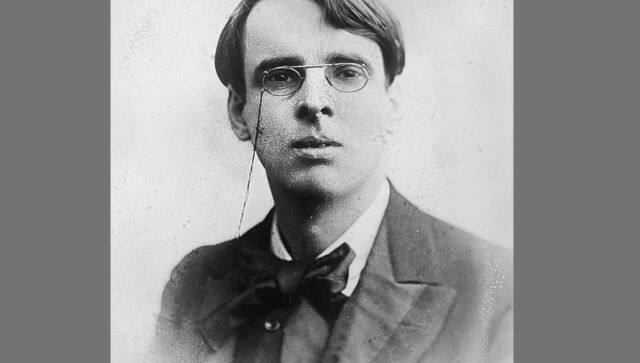
How PM Modi's visit to the US is sparking a wave of investmentsWB Yeats and HinduismSeveral works by Irish poet and dramatist Yeats promote ideas from Hindu spiritual texts.Bailey Betik wrote in the paper ‘Yeats, WB, India, and Rabindranath Tagore’ that it was his friend and fellow poet AE, pseudonym of George William Russell, who introduced Yeats to the Upanishads.Yeats was also heavily inspired by the teachings of Mohini Mohan Chatterjee, who came to Dublin in 1885 as a representative of the Theosophical Society.[caption id="attachment_12775202" align="alignnone" width="640"]
![William Butler Yeats]()
Several works of William Butler Yeats were inspired by Hindu spiritual ideas. Wikimedia Commons File Photo[/caption]In three poems in the 1889 collection Crossways, Yeats has used India as the setting– The Indian to His Love, Anushaya and Vijaya, and The Indian Upon God, noted Betik.“Indian philosophy and spirituality was indeed something that Yeats pursued throughout his entire life, not just a passing phase,” the paper said.According to Marsh, Yeat’s interest in philosophy increased after he met poet and Hindu monk Shri Purohit Swami in 1931. He also wrote the Introduction to Swami's The Holy Mountain.Citing Joseph Hone, Marsh wrote that Yeats acknowledged he "fed on the Upanishads" all his life just two years before he died in 1939.With inputs from ReutersRead all the Latest News, Trending News, Cricket News, Bollywood News,India News and Entertainment News here. Follow us on Facebook, Twitter and Instagram.