


Missiles, minerals, Malacca and more: What are India’s big gains from PM Modi’s Indonesia visit?
India and Indonesia’s partnership has deepened further during PM Narendra Modi’s visit. The Southeast Asian nation will purchase additional BrahMos cruise missiles and the Astra air-to-air missiles. New Delhi has also extended support to develop the strategically important Sabang Port

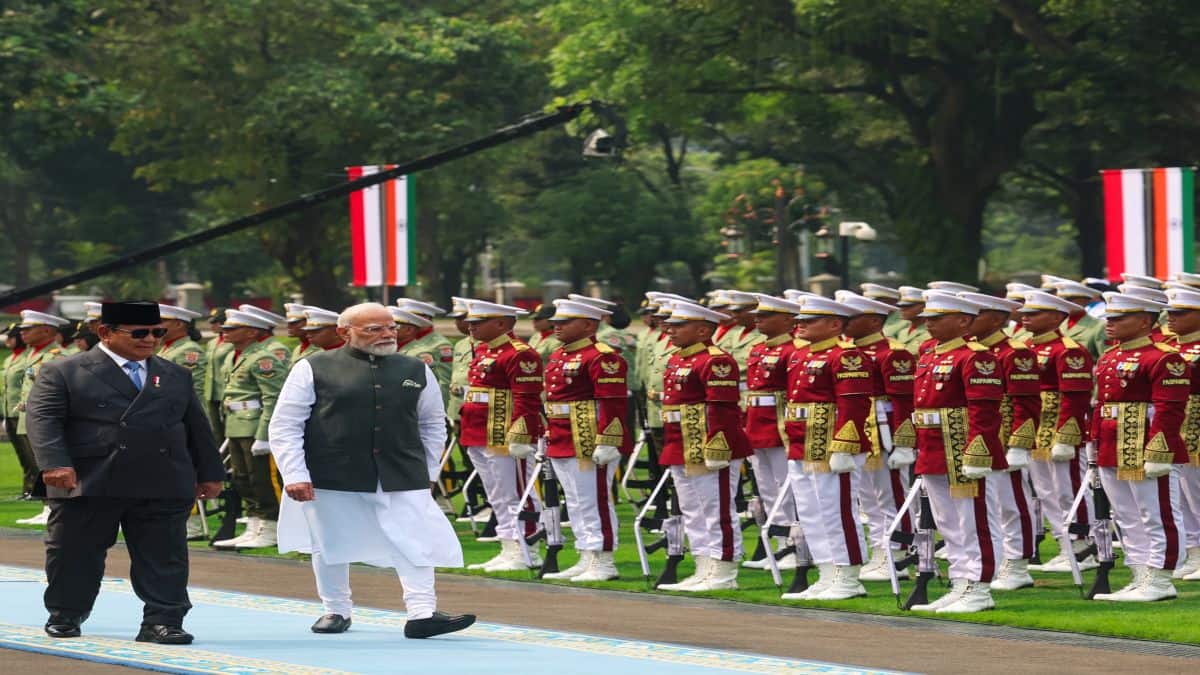
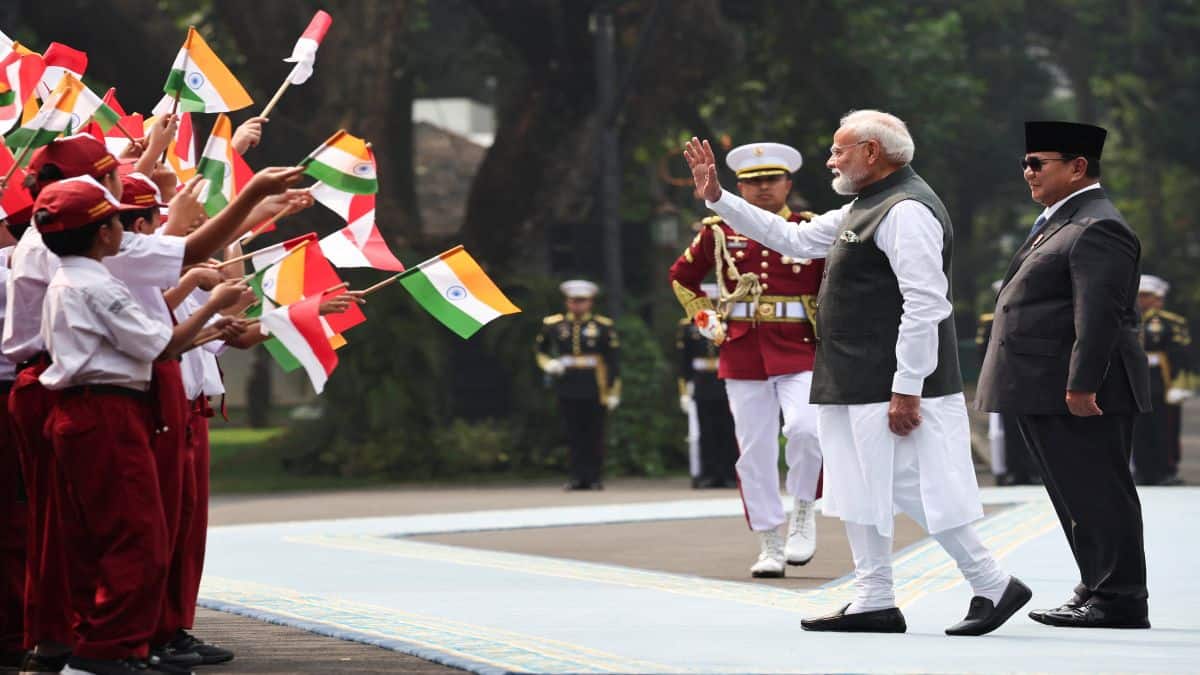
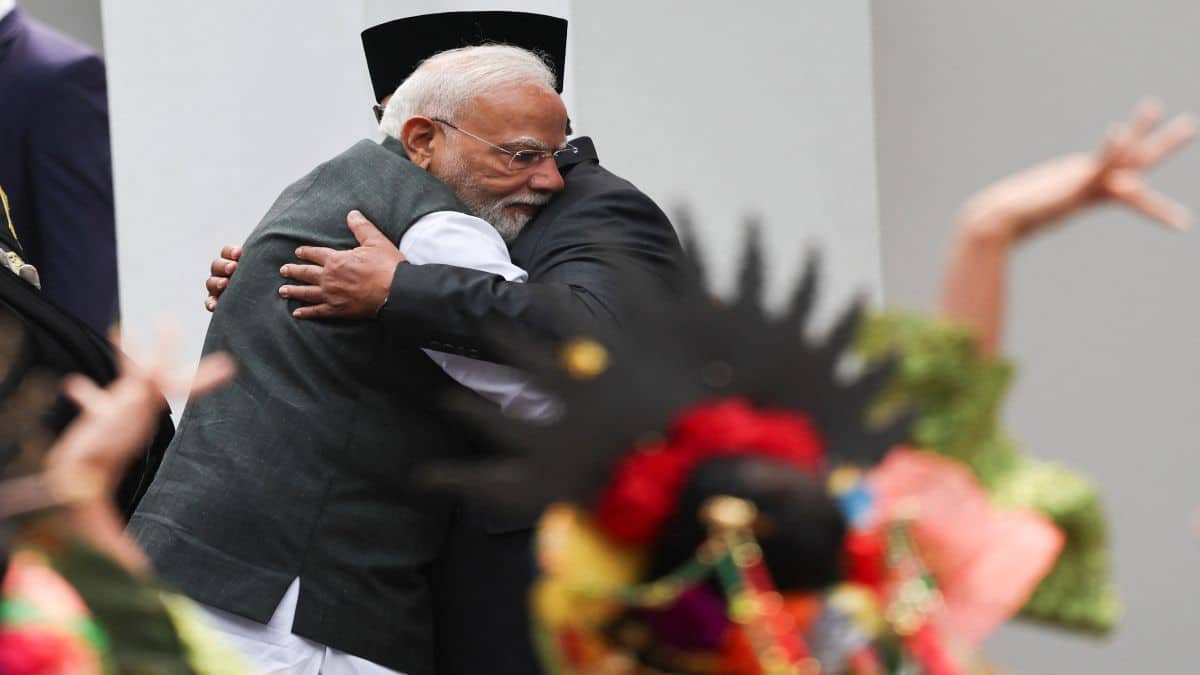
After reaching Jakarta on Monday evening, Prime Minister Narendra Modi received a grand welcome on Tuesday (July 7) before his talks with Indonesian President Prabowo Subianto.
This marks PM Modi’s fourth visit to Indonesia and is aimed at further strengthening India’s Act East Policy, the MAHASAGAR Vision, and its commitment to a free, open, and inclusive Indo-Pacific.
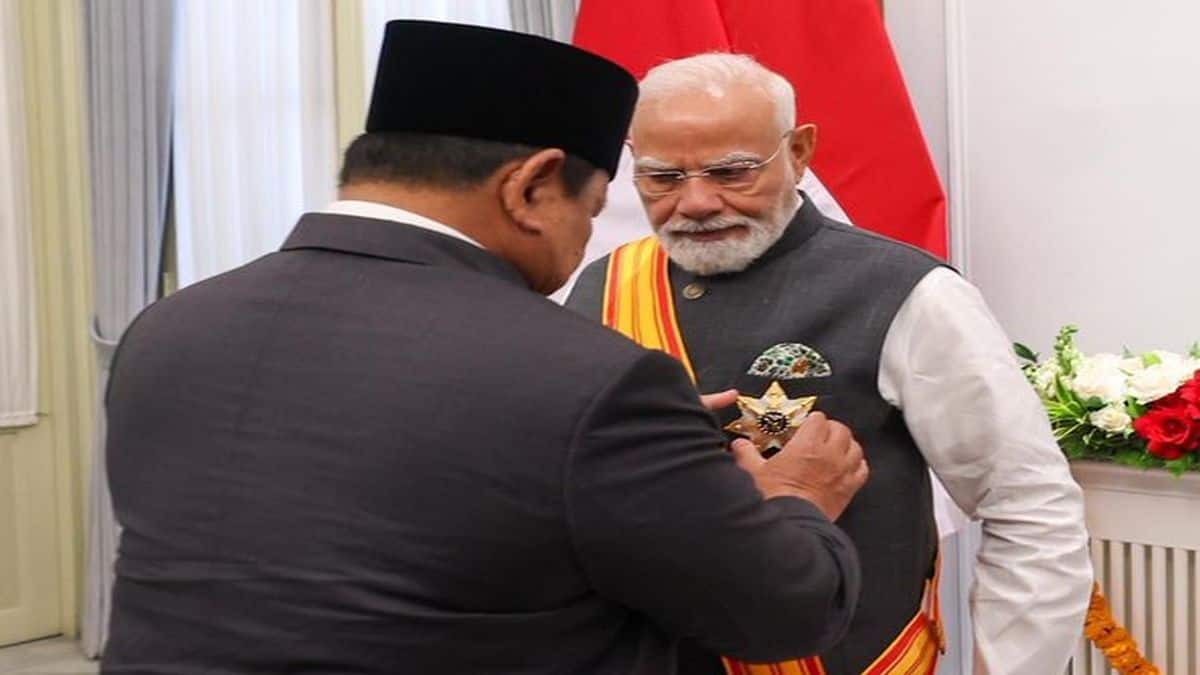
And the discussions between Modi and Subianto kicked off on a very positive note after Subianto conferred Modi with Indonesia’s highest honour ‘Bintang Adipurna of the Republic of Indonesia’ medal.
“This morning, I have also been conferred with Indonesia’s highest honour with immense affection. This honour belongs to the crores of Indians... it belongs to the sentiments of the people of Indonesia, to the historic and intimate ties between India and Indonesia," Prime Minister's Office posted on X. “I express my heartfelt gratitude to President Prabowo Ji, the Government of Indonesia, and the people here: PM @narendramodi,” the post said.
 More from Explainers
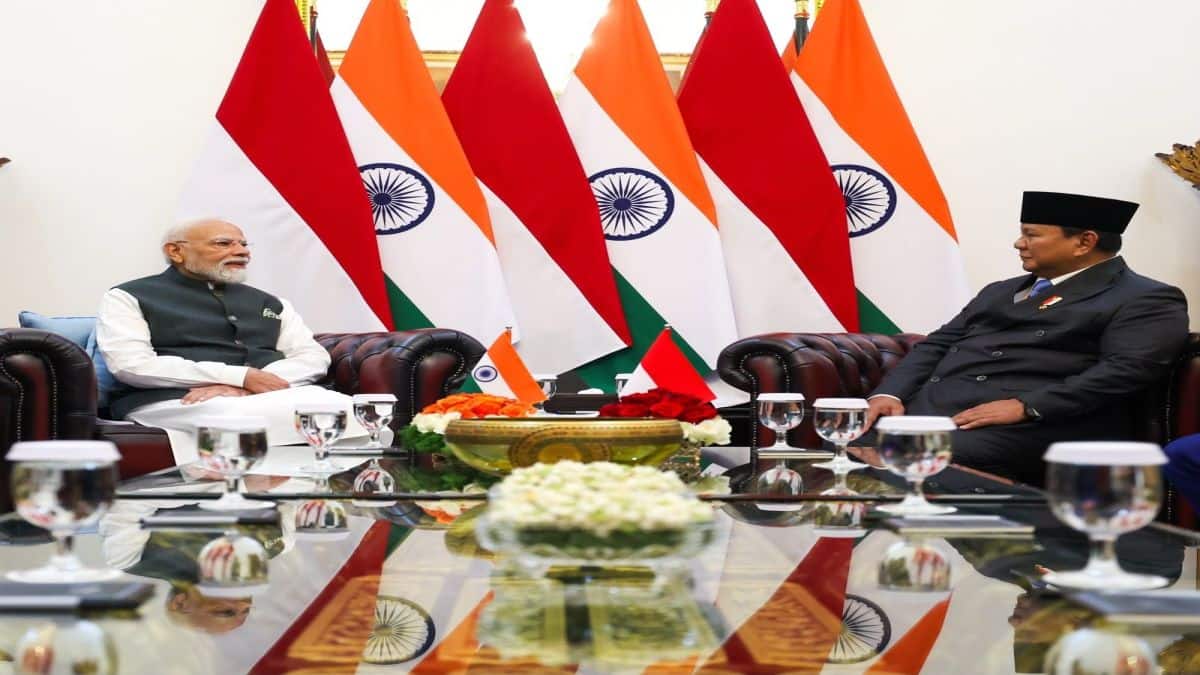
After this, the two leaders sat down for detailed discussions, which resulted in big wins for both India and Indonesia. Here’s how.
Indonesia to get India’s BrahMos and Astra missiles
The first big win is that India will supply the BrahMos cruise missile system and the Astra air-to-air missile to Indonesia.
The BrahMos missile, developed jointly by India and Russia, demonstrated its operational effectiveness and was used in limited action during Operation Sindoor last year, reinforcing its reputation as one of the world’s fastest precision strike weapons.
Apart from the BrahMos deal, India is also going to supply Indonesia with the Astra air-to-air missile. Under the arrangement, state-run Bharat Dynamics Limited (BDL), which manufactures the Astra missile, will integrate the weapon with the Indonesian Su-30s.
The Astra is an all-weather, beyond‑visual‑range air-to-air missile developed by India’s Defence Research and Development Organisation (DRDO). These missiles are capable of engaging enemy targets at a distance of over 150 kilometres. Additionally, they can travel at speeds more than four times that of sound and can reach a maximum altitude of 20 km, making them extremely flexible for air combat.
The Astra also boasts of the ability to track, lock onto, and destroy highly manoeuvrable, supersonic enemy aircraft completely beyond the line-of-sight.
According to defence experts, the defence deal is a win-win for both sides as it deepens interoperability between the two forces, improves Indonesia’s deterrence posture across the archipelago, and extends India’s defence footprint.
For India, it also indicates a shift from being a weapons importer to becoming a competitive supplier of high‑end missile systems, which until now depended on Russian platforms. It also reinforces India’s “Aatmanirbhar Bharat” (self‑reliant India) narrative.
Meanwhile, Indonesia’s armed forces will get a boost. The BrahMos and Astra missiles would add a credible layered deterrence across Indonesia’s vast island territories and contested maritime zones.
India, Indonesia to jointly develop Sabang Port
The two leaders also signed an agreement to jointly develop the Sabang Port, located at the northern tip of Indonesia’s Sumatra island overlooking the Strait of Malacca and about 160 km from India’s upcoming Great Nicobar trans-shipment port project.
As the Sabang port is to be located near the Strait of Malacca, it gives India easier access to the Malacca Straits. For those who don’t know, the Strait of Malacca is one of the world’s busiest maritime chokepoints through which a significant portion of global trade and energy supplies passes.
In fact, this narrow passage handles a substantial share of the world’s trade, accounting for 25-35 per cent of global trade volume, with China relying on it for around 80 per cent of its energy supplies.
It would also give India a better ability to monitor the People’s Liberation Army (PLA) Navy’s movements in the Indian Ocean, where it has been exerting its strength.
As a report in The Diplomat stated, the Sabang port would grant the Indian Navy a well-positioned logistics and resupply node to sustain operations in the eastern Indian Ocean and the Malacca Strait. In particular, the port at Sabang could boost the Indian Navy’s ability to respond to humanitarian emergencies, provide disaster relief, and conduct anti-piracy patrols.
Defence experts also note that Sabang offers India greater maritime access. Additionally, the deep-water port is capable of hosting all classes of naval vessels, including submarines.
A push for minerals
A significant outcome of Modi and Prabowo’s talks was an MoU on cooperation in the field of minerals. India has signed to invest in manufacturing facilities in Indonesia for steel, nickel, and rare-earth permanent magnets, as New Delhi seeks to diversify supply chains.
India holds a special interest in nickel, a key component of EV batteries and electric vehicles. It is crucial for India as it seeks to move towards cleaner energy technologies. Currently, India imports more than 80 per cent of its ferronickel, which is critical for steel production, from Indonesia.
According to the Global Minerals Outlook 2024 report by the International Energy Agency, Indonesia and China accounted for 65 per cent of the world’s refined nickel, with Indonesia alone projected to account for 44 per cent refined nickel by 2040.
India to supply customised EVMs to Indonesia
The two countries have also signed an MoU on election cooperation. As per this deal, New Delhi will provide Jakarta with customised Electronic Voting Machines (EVMs).
“Democratic values and unity in diversity have been shared strengths for both India and Indonesia. We are set to further strengthen our democratic cooperation through an MoU between the Election Commissions of both nations,” PM Modi said. He further said that the agreement would enhance cooperation in election technology, capacity building, human resource development and the exchange of best practices.
It is being reported that the EVMs India develops will be introduced by Jakarta for the 2029 general elections. The world’s third-largest democracy still conducts elections using paper ballots.
An IIM for Indonesia
Prime Minister Narendra Modi and Indonesian President Prabowo Subianto also unveiled plans to open IIT and IIM campuses in Indonesia. “We have signed an agreement to deepen collaboration in tech, AI, and startup businesses,” Modi said. “We will be opening a campus of the Indian Institute of Management, Bangalore (IIM-B) in Indonesia.”
PM Modi added that the presence of an IIM would greatly benefit young people across the ASEAN region.
Other notable outcomes
India and Indonesia have also agreed and signed other agreements in other sectors. PM Modi stated that the Unified Payments Interface (UPI) will soon be available in Indonesia, which will make doing business and travelling between the two countries easier.
“We are delighted that India’s UPI is set to be integrated with Indonesia’s payment system. This will boost both the ease of doing business and the ease of travel,” said PM during a joint press meet with Indonesian President Prabowo Subianto.
With this, Indonesia joins the long list of nations where UPI is available. India’s UPI has steadily expanded across the globe, with countries such as Singapore, the UAE, France, Sri Lanka, Mauritius, Bhutan, and Nepal all having it.
India and Indonesia are also deepening their cultural ties. PM Modi announced that both countries will launch the conservation project for the Prambanan Temple in Yogyakarta, describing the more than 1,000-year-old temple as a symbol of the shared cultural heritage of India and Indonesia.
“Tomorrow I will have the privilege of launching the conservation project for the Prambanan Temple in Yogyakarta alongside President Prabowo. More than a thousand years old, the Prambanan Temple stands as a symbol of the shared cultural heritage of India and Indonesia,” he said.
Besides this, India and Indonesia will celebrate the centenary of Gurudev Rabindranath Tagore’s historic visit to Indonesia as the ‘Tagore-Dewantara Year of Cultural and Educational Diplomacy.’ The PM said Indonesia’s first Education Minister, Dewantara, drew inspiration from Gurudev Tagore's philosophy of education.
All in all, it seems that PM Modi’s visit to Indonesia has yielded significant results for both nations and helped deepen ties between the two.
With inputs from agencies
Tags

Military drones & police check-ups: How Sri Lanka is fighting against worst dengue outbreak in a decade
How Facebook job ad lured 2 Karnataka men into Myanmar cyber scam camp
Why is India seeing 95% cloud cover despite a Super El Niño?
What is CJP’s fourth demand to the government as protests in Delhi intensify?
The new geography of war: Why the Houthis can no longer be ignored