


Why Pakistan risks losing World Heritage site tag for Vedic-era Taxila complex
Taxila, the ancient archaeological site in Pakistan, is at risk of losing its Unseco World Heritage Site tag. This comes after the UN’s cultural arm found that Islamabad had carried out ‘reconstruction’ work which could ‘undermine the integrity’ of the site. The world agency noted that in the name of conservation, the country had used cement to erect walls at the spot

Pakistan’s economy is in shambles. It’s fighting the Tehreek-e-Taliban Pakistan along its border with Afghanistan. Now, the country risks losing the Unesco World Heritage Site tag for Taxila, located in the Rawalpindi district of Pakistan’s Punjab province.
The UN’s cultural arm, United Nations Educational, Scientific and Cultural Organization (Unesco), has directed the Pakistan government to reverse the “reconstructions” that undermined the integrity of two historical sites in Taxila, warning that a failure to take such action would result in their being placed on the agency’s ‘danger list’.
But what exactly happened? What are the “reconstructions” that Unesco has taken objections to?
The so-called reconstructions at Pakistan’s Taxila
The entire issue came to light in March when a visitor to Taxila shared images with Pakistan’s Permanent Delegate to Unesco in Paris of reconstruction works at Mohra Moradu and Sirkap by the Punjab archaeology department.
 More from Explainers
According to the visitor, the interventions by the Punjab archaeology department could affect the authenticity and integrity of the property, specifically, original walls being replaced with new construction or their height being raised.
The photos that have now emerged from the world heritage site show masonry work being carried out at some of the ancient walls. In a few instances, reconstruction was carried out to increase the height of the walls “in the name of conservation”, said a report from The Dawn. However, the difference between the old stones and the cement used presently could be identified.
Perturbed by the images, the Unesco team even arrived at Pakistan’s Taxila on June 12. The officials from the UN agency requested documentation on the conservation and restoration at Mohra Moradu and Sirkap sites. Additionally, they also sought copies of the heritage impact assessment report, comprehensive photographic documentation of the archaeological structures before and after restoration, and drawings of the proposed intervention in the core zone and the buffer zone of Mohra Moradu.
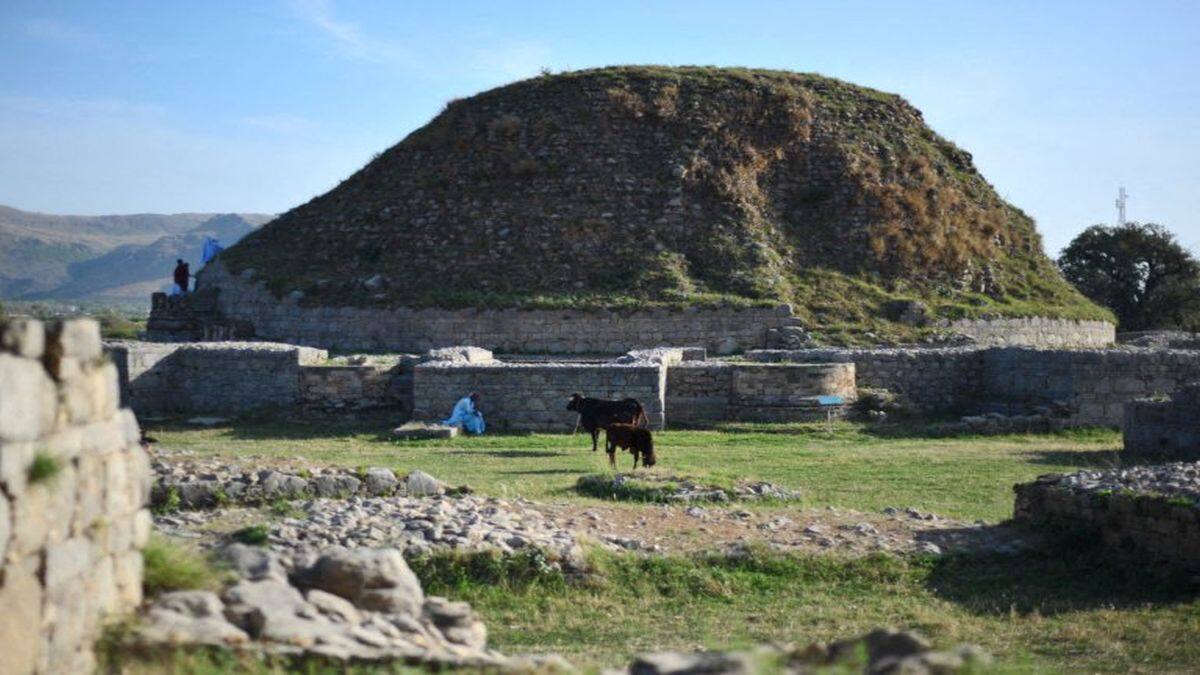
Following their investigations, the Unesco team issued a strict warning to Pakistan, stating that it wouldn’t hesitate to delist Taxila.
“Restoration and using cement to erect walls of World Heritage sites is a serious violation of Unesco rules for conservation of archaeological monuments of historical value. This weakens Pakistan’s position, which is endeavouring to have 24 more sites of historical importance included in Unesco’s World Heritage list since 1997,” the official was quoted as saying.
Moreover, Unesco warned that such “unnecessary interventions” compromised the authenticity and integrity of these sites and could put them at risk of being placed on the danger list.
The Unesco World Heritage Committee will hold a meeting this month, where Pakistan could possibly face trouble.
If Unesco delists Taxila from its World Heritage site, it will only be the fourth time in its history that it has taken such action. In 2007, the Arabian Oryx Sanctuary became the first site to be removed after Oman sharply reduced the protected area amid plans for oil exploration. In 2009, Germany’s Dresden Elbe Valley lost its status following the construction of a bridge, which Unesco argued fundamentally altered the landscape. And in 2021, Liverpool Maritime Mercantile City was delisted after disputes over waterfront redevelopment.
Pakistan archaeology team defends itself
Responding to the fracas, Punjab archaeology department Director General Malik Zaheer Abbas defended his team’s efforts, saying that calling the work done as “reconstruction” was not accurate.
“The interventions being undertaken are conservation measures based on internationally accepted conservation principles, with the primary objective of stabilising vulnerable archaeological remains, preventing further deterioration, and preserving the authenticity and integrity of these World Heritage properties,” he was quoted as telling Dawn.
He further added, “At present, there is no question of ‘reversing reconstruction’ because the works are conservation interventions, not reconstruction.”
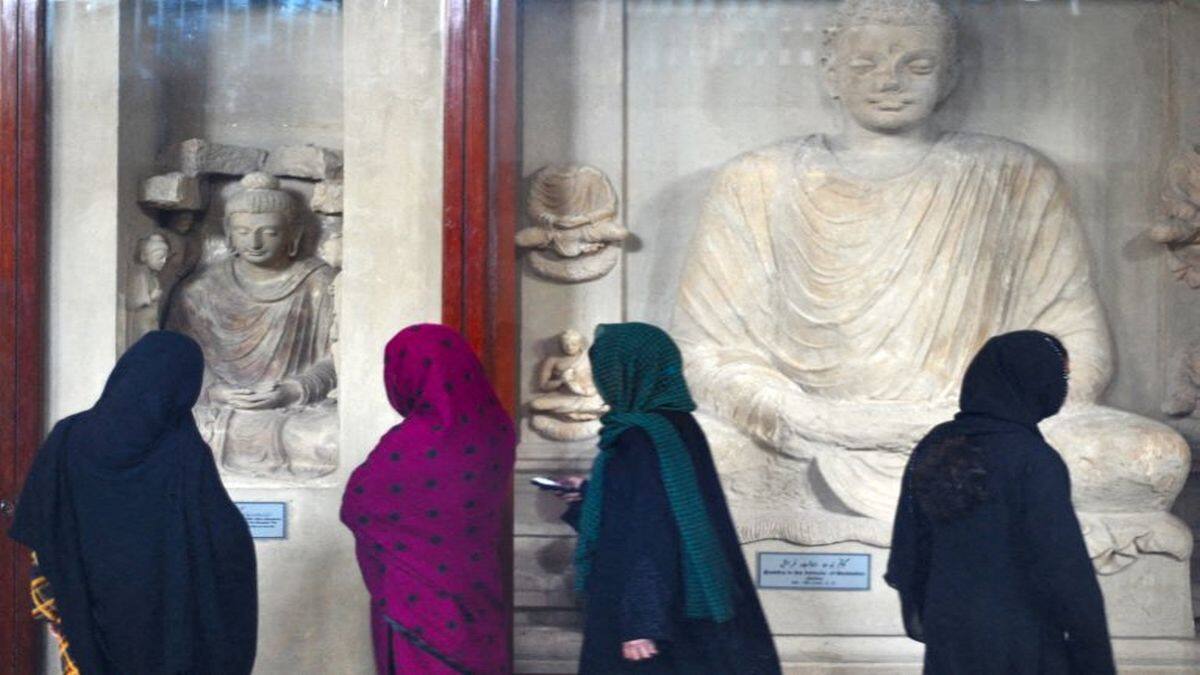
History of Taxila and its significance to Pakistan
Taxila, also known as Takshashila, lies just half an hour away from Pakistan’s capital, Islamabad, in Rawalpindi. Founded around 3,000 years ago, this complex of residential and religious buildings was, for a millennium, one of the most significant centres of urban civilisation in Central Asia.
Taxila features in the great Indian epic Ramayana. The story states how the city got its name from its founder, Taksha, the nephew of Lord Ram. Later, it became a hub of Buddhist culture and learning at the heart of the Gandhara region, which was absorbed by Persia’s Cyrus the Great.
Over 200 years later, Alexander the Great toppled the Persians, beginning a period in which the Buddhist Gandharan culture fused with that of the Greek world. A decade after Alexander’s death, Taxila was absorbed into the Mauryan empire founded by Chandragupta, under whom it became a provincial capital.
In the fifth century AD, Taxila saw a violent and sudden end. Sacked by the Huns, it was abandoned and fell into ruin.
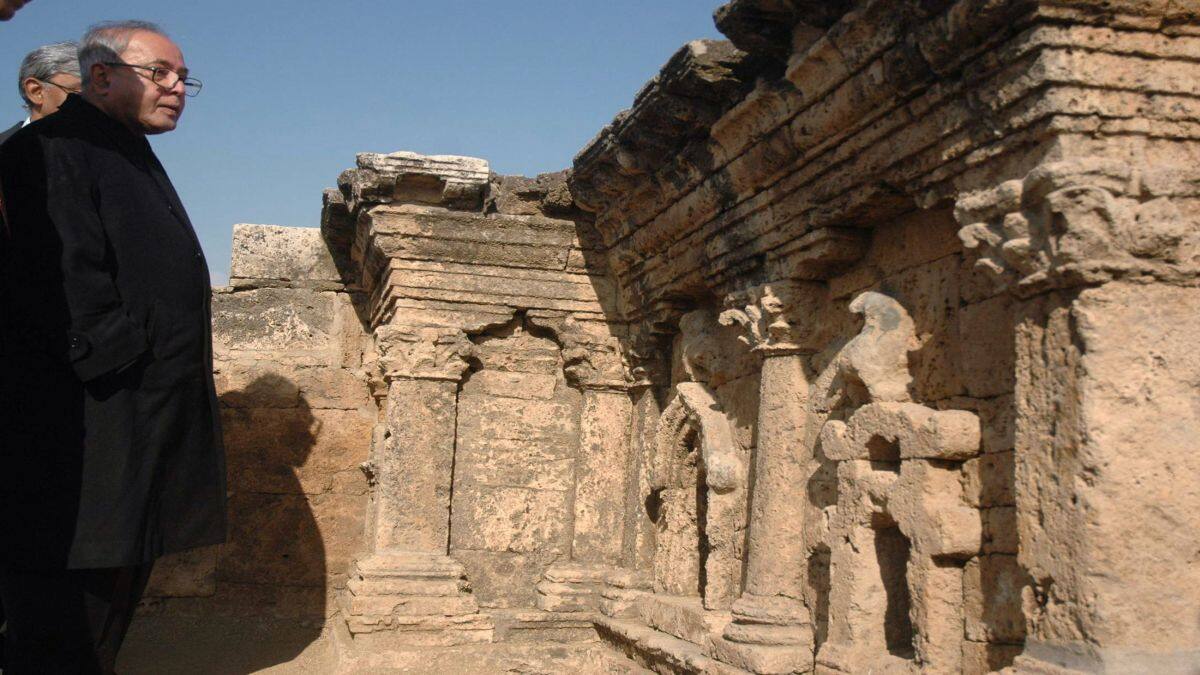
According to the Unesco website, the ruins of the four settlement sites — Saraikala, Bhir, Sirkap, and Sirsukh — at Taxila reveal the pattern of urban evolution on the Indian subcontinent through more than five centuries.
Moreover, Taxila also houses Khanpur cave, which has produced stratified microlithic tools of the Mesolithic period, and a number of Buddhist monasteries and stupas of various periods. It also It features iconic archaeological sites like the Dharmarajika Stupa, Sirkap, and Jaulian Monastery.
Today, Taxila remains one of Pakistan’s top tourist destinations. It attracts scholars, tourists, and pilgrims drawn to its stupas and monasteries. Recent records show that the World Heritage Site attracts a few thousand international tourists each year, while the vast majority who tour the area are local visitors.
It’s left to be seen if Unesco delists Taxila and what the impact of that could be on Pakistan’s efforts to seek the World Heritage status for sites such as the Buddhist site of Rani Ghat (in Khyber Pakhtunwa’s Buner), the Scytho-Parthian and Buddhist site, and Bhanbhore in Sindh’s Thatta.
With inputs from agencies
Tags

Military drones & police check-ups: How Sri Lanka is fighting against worst dengue outbreak in a decade
How Facebook job ad lured 2 Karnataka men into Myanmar cyber scam camp
Why is India seeing 95% cloud cover despite a Super El Niño?
What is CJP’s fourth demand to the government as protests in Delhi intensify?
The new geography of war: Why the Houthis can no longer be ignored