


Is Pakistan's military failing to control Baloch militants?
Pakistan Defence Minister Khawaja Asif has admitted that the country’s security forces were ‘handicapped’ against Baloch insurgents owing to the sheer size of Balochistan. The resource-rich province, Pakistan’s largest, witnessed coordinated attacks by the Baloch Liberation Army (BLA) last week targeting security forces. In response, police and military forces launched operations, killing over 100 militants

Is Pakistan struggling to contain the Baloch rebels? Defence Minister Khawaja Asif’s recent remarks have raised doubts about the military's capability. He said on Monday (February 2) that Pakistani security forces were "handicapped" against the insurgents owing to the sheer size of Balochistan, the country's largest province.
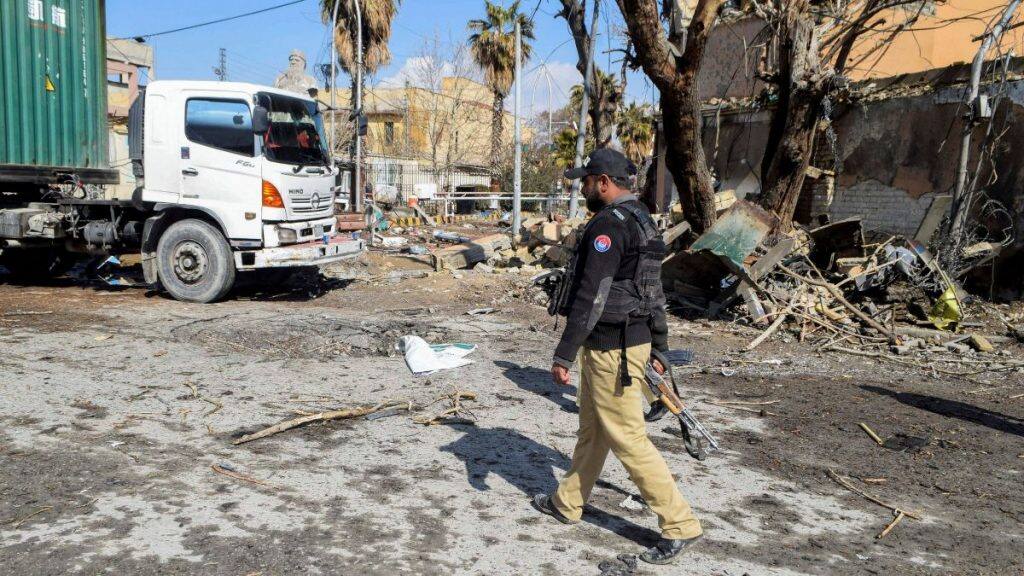
The comments came days after the Baloch Liberation Army (BLA) launched coordinated suicide and gun attacks across the restive southwestern province, killing dozens, including security forces and civilians. Pakistan's security forces claim to have killed 197 militants in Balochistan in counter-terror operations following the attacks.
Let’s take a closer look.
What Khawaja Asif said
Pakistan Defence Minister Khawaja Asif addressed the security situation in Balochistan on Monday.
Speaking at the National Assembly, he said, “Controlling this is way more difficult than a populated city or area, and there is a need for the deployment of our forces on a massive scale. Our forces are deployed there and taking action against them, but there is a physical handicap when it comes to guarding and patrolling such a large area.”
 More from Explainers
Asif underlined that Balochistan was the largest province of Pakistan in terms of area, with a person residing every 35 kilometres, reported Dawn.
Addressing the House, he also ruled out talks with the BLA militant group. “They are involved in mischief in the world (fasad-ul-ard) […] and talks cannot be held with them.”
“It is the bottom line of the state of Pakistan that nobody will be able to rationalise violence. When you try to rationalise violence or dress it up as a freedom movement, it is not acceptable because it is not true. This is a cover to legitimise criminal activities,” the defence minister added.
Asif also blamed the patronage of politicians and bureaucracy for smuggling in the province.
“The province’s resources have been looted under this system. And this reaction is coming from those same people, it is the same nexus that tried to hamper Balochistan’s progress,” he said.
Balochistan, which is rich in minerals, is Pakistan's poorest province. The Baloch people, making up 15 million (1.5 crore) out of Pakistan’s 240 million (24 crore) population, have long felt marginalised and exploited, with their province’s wealth of natural resources being used to benefit the federal government disproportionately.
Did Baloch rebels use US arms?
Pakistan’s defence minister has reportedly claimed that Baloch militants, who launched widespread attacks across the province last week, possess advanced American weapons, including night vision devices and rifles.
Asif said rebels in Balochistan had a rifle worth PKR 2 million. “We don’t have that rifle. They also had thermal weapon sights worth $4,000-$5,000. The total military gear that they own is close to $20,000. Where is it coming from? Who is paying for it?" he asked.
The minister claimed that the rifles and night vision devices used by Baloch militants were "American weapons."
He also claimed that the “leadership” of these rebels operate from Afghan soil. Asif alleged that the “political element in this movement was hijacked by smuggling in the recent, or slightly distant past”.
“Billions and trillions of rupees were being lost to smuggling, mainly oil smuggling. This criminal mafia […] began supporting the movement. And their leadership now comprises these elements,” he added.
Pakistan has blamed India for the recent attacks across Balochistan, a charge vehemently rejected by New Delhi. The Ministry of External Affairs (MEA) has said that Islamabad should instead tackle the "long-standing demands of its people in the region".
BLA’s recent attacks stun Pakistan
The BLA launched a coordinated operation dubbed Herof (“black storm”), targeting security forces across Pakistan’s restive southwestern province on Saturday.
The attacks were launched across Quetta, Mastung, Noshki, Dalbandin, Kharan, Panjgur, Tump, Gwadar and Pasni, as per Pakistan military’s media wing, ISPR.
The BLA released the pictures of two female 'fidayeens' or suicide bombers involved in these attacks.
The militants had stormed schools, banks, markets and security installations across Balochistan, killing more than 22 security officials and 36 civilians, reported Reuters.
Pakistani security forces retaliated, exchanging fire with insurgents in more than a dozen places, killing 197 militants.
In the desert town of Nushki, the militants seized control of the police station and other security installations, leading to a three-day standoff. According to police, officers regained control of the town late on Monday but seven personnel were killed in the operation.
"More troops were sent to Nushki," one security official told Reuters. "Helicopters and drones were used against the militants."
Security forces are continuing their operations against the BLA in other parts of the province.
With inputs from agencies

Military drones & police check-ups: How Sri Lanka is fighting against worst dengue outbreak in a decade
How Facebook job ad lured 2 Karnataka men into Myanmar cyber scam camp
Why is India seeing 95% cloud cover despite a Super El Niño?
What is CJP’s fourth demand to the government as protests in Delhi intensify?
The new geography of war: Why the Houthis can no longer be ignored