


Pakistan elections: How two trans candidates are hoping to change politics
In the 8 February elections in Pakistan, two transgender candidates are in the fray. Sobia Khan and Nayab Ali are contesting as independents and they have one goal – to ensure that the community gets its due. They want representation of transpeople in government jobs and politics

The conservative Pakistan society is patriarchal. Women are not always treated as equals. So one can imagine the plight of transgender people. They are marginalised and often subject to violence. But change could be on the cards. As the country heads to polls on 8 February, two transgender candidates will run for office.
Sobia Khan and Nayab Ali are contesting from the northwestern province of Khyber Pakhtunkhwa (KP) and National Assembly seat NA-47 Islamabad, respectively.
We take a look at their struggles and the promises they’ve made ahead of the elections.
The struggles of Sobia Khan
Sobia Khan is a trans woman contesting from PK-84, a constituency in Khyber Pakhtunkhwa which has often witnessed discrimination and violence against the community.
 More from Explainers
Khan has had her own struggles. She remained unemployed despite holding a Bachelor’s degree because of the discrimination she faced. But this has not disheartened her. She is determined to fight not only for herself but for people of the trans community and their rights.
“I think my struggles have only shaped me into a better person. I can now stand up for my community and speak against the injustices [we face],” she was quoted as saying by Dawn.
The politician addresses the lack of social protection in the province for trans persons. Thet have faced violence and have been killed because of their gender identity. And Khan says the “murders happen because nobody takes responsibility to protect us”.
“We have always been on our own. As a member of the trans community, I will raise these concerns and ensure they are brought forward,” she told Dawn.
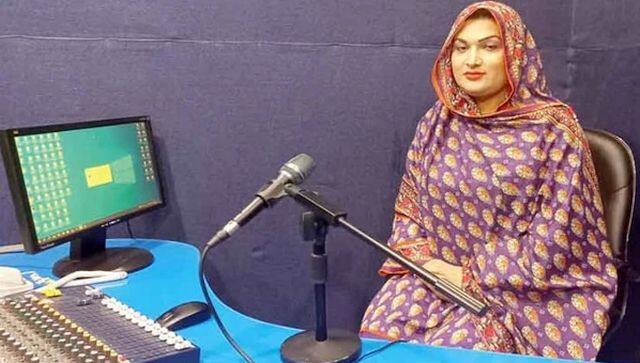
After enduring discrimination, Khan carved a place for herself in society. She went on to become Khyber Pakhtunkhwa’s first transgender radio jockey. Now she is running as an independent candidate.
If she wins, Khan promises to empower women and children within the community. In her manifesto, the focus is to improve safety and create opportunities for marginalised groups. “There are many trans people who, despite being very educated, are deprived of their rights by the state. I will become their voice and make sure they’re being heard,” she told Dawn.
She emphasises the need for inclusion in government departments in the province, which currently lacks employment for the trans community. “Not even one transgender in KP is employed. How are they supposed to survive if they do not have a job,” she said.
Also read: Pakistan elections: Who are the key players? What’s at stake?
To ensure that her community is well represented in elections, she has also filed a case in the Peshawar High Court demanding separate representation for transgenders on reserved seats in the National and provincial assemblies of Pakistan, according to a report in The News.
Khan has also promised to work to reduce violence against women and for the betterment of the poor. In an interview with Geo TV, she said, “If I win the elections, I will raise funds for women engaged in domestic work to help them earn a livelihood, enabling them to stay at home and raise their children without worrying about anything.”
The big goal is to make the society more inclusive.
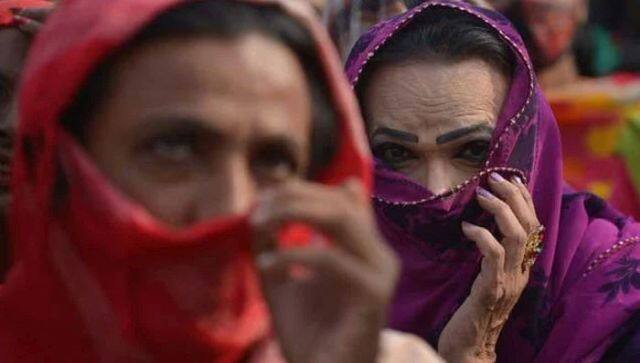
Nayyab Ali wants to bring change
Khan is not alone in this endeavour. She is joined by Nayyab Ali.
Ali has an undergraduate degree in botany and a master’s in international relations. She has been working for the community for years now. She played a key role in the special committee tasked with reviewing the Pakistan Transgender Persons (Protection of Rights) Act 2018, the legislation that provided legal recognition to transgender persons and prevented discrimination and harassment, reports GeoTV.
Also read: Imran Khan’s spiritual leader and now ‘illegal’ wife: Who is Bushra Bibi?
Yet, fighting the election is a different ball game.
It was only last month that the Islamabad high court upheld her right to contest. She will be running as an independent candidate.
After the Election Commission of Pakistan accepted Ali’s papers to fight the polls, Imran Khan’s Pakistan Tahreek-i-Insaaf (PTI) launched a campaign against her on social and mainstream media. It argued that while the papers of its candidate, a lawyer, had been rejected, those of a transwoman accepted – dragging gender into politics, reports The Friday Times.
Now that Ali is in the fray, her goals are clear. She wants to ensure “the inclusion of the transgender community in politics and the legislation process”.
“As a parliamentarian, I think your biggest responsibility is law-making. The existing laws about harassment and injustice against marginalised groups don’t have a concept of punishment. It is written that one is not supposed to discriminate against transgender people, but there is no punishment for it,” she said in one of her interviews.
But to usher in the change, you need to be part of the system. Ali is leaving no page unturned.
Campaigning also comes with challenges of its own. Ali spoke about the perception of the community. “People often perceive transgenders as beggars. During our election campaign, transgender volunteers distributing brochures encountered rude reactions, with people dismissively saying, ‘Go away, don't bother us, asking for money,’” she told Geo TV.
But it is not money but votes that they want.
Both Khan and Ali have crossed the first hurdles and the next big test is the election.
With inputs from agencies

Military drones & police check-ups: How Sri Lanka is fighting against worst dengue outbreak in a decade
How Facebook job ad lured 2 Karnataka men into Myanmar cyber scam camp
Why is India seeing 95% cloud cover despite a Super El Niño?
What is CJP’s fourth demand to the government as protests in Delhi intensify?
The new geography of war: Why the Houthis can no longer be ignored