


From Afghan attack to arrest of Baloch activist, how Pakistan’s peacemaker status is exposed
On the global stage, Pakistan is celebrating its peacemaker status after it mediated between the US and Iran. But the strikes along the Afghan border that killed 29, the ban on Geo TV, and sentencing prominent activist, Mahrang Baloch, to life imprisonment, show that Islamabad still grapples with insurgency, terrorism, and state suppression

On the international stage, Pakistan is applauding itself for being a peacemaker. The country’s Prime Minister Shehbaz Sharif claimed over the weekend that Islamabad had emerged as a “peacemaker” on the global stage after its diplomatic efforts in West Asia culminated in the signing of an agreement between the United States and Iran.
The country’s foreign minister, Ishaq Dar, added that “Pakistan, which was once said to have become diplomatically isolated, is now being discussed across the entire world. “Even those countries that did not know Pakistan before now know Pakistan.”
But away from the global limelight and the self-praise, a darker truth lies: Pakistan still struggles with insurgency, terrorism, and state repression. And recent events, including the ground operation along the Afghan border on Sunday, prove that all isn’t well within the country.
 More from Explainers
We elaborate further.
Pakistan’s deadly airstrikes along Afghanistan border
On Sunday (June 28), Pakistan launched airstrikes and sent ground troops into Afghan provinces along its western border. While Pakistan’s Information Minister Attaullah Tarar said the strikes killed 25 militants, the Taliban government in Afghanistan claimed that the military action killed or wounded dozens of civilians.
Spokesman Zabihullah Mujahid condemned the military action, calling it a “cowardly act of aggression”.
Speaking on the action, Tarar noted that the attack was aimed at the terror group which was responsible for a deadly militant attack in Karachi that killed three security personnel over the weekend. He said Pakistan’s latest operation along the Afghan border targeted the hideouts and safe havens of Jamaat-ul-Ahrar and Fitna al-Khwarij, a term Pakistan uses for the Pakistani Taliban.
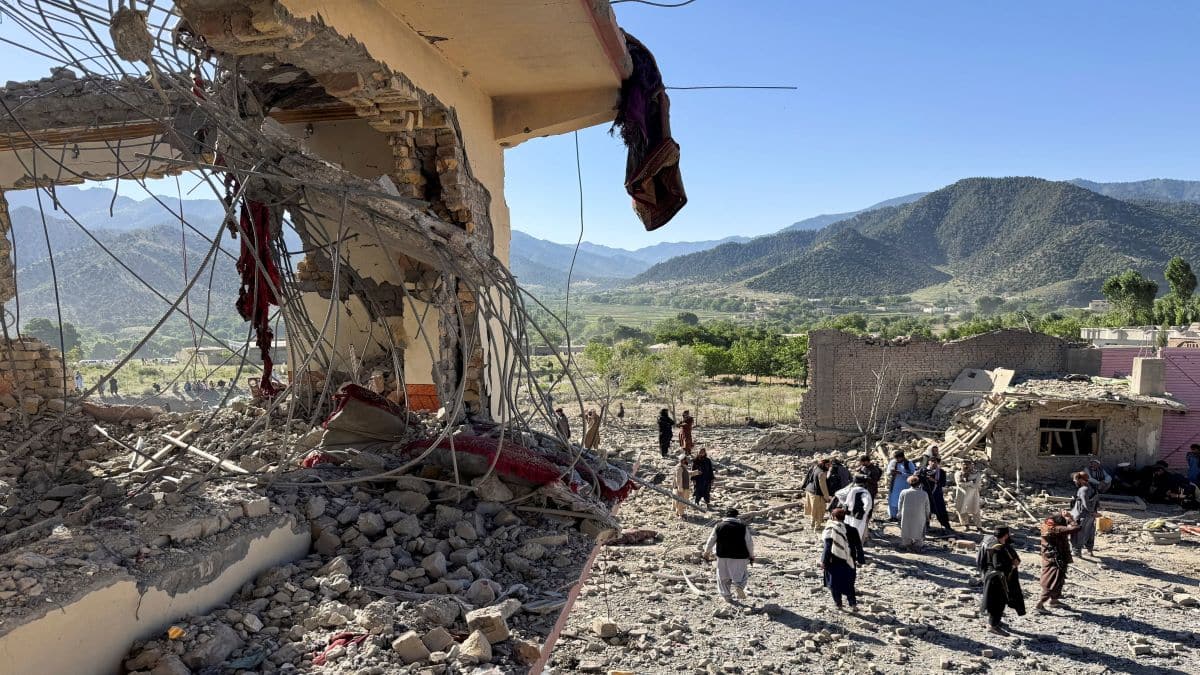
Notably, Jamaat-ul-Ahrar, a breakaway faction of the Pakistani Taliban, claimed responsibility for the Karachi attack in a statement on Saturday night.
However, the Taliban has rejected this claim, stating that Islamabad had targeted civilians.
Pakistan and Afghanistan agreed to a ceasefire in March, but there have been sporadic attacks since, with Pakistani strikes in June killing 13 people according to Afghan officials.
The incident is a clear indicator that Pakistan continues to struggle with cross-border insurgency. Notably, after the attack in Karachi, many in Islamabad resorted to blaming India, prompting New Delhi to reject the allegations, accusing Islamabad of attempting to deflect attention from its own internal security failures.
A ban on Pakistan’s Geo TV
Earlier on Friday (June 26), Pakistan’s media watchdog, the Pakistan Electronic Media Regulatory Authority (PEMRA), suspended Geo News’ broadcasting licence for 15 days after a Muharram programme aired by the channel was deemed to be potentially offensive to religious sentiments and a threat to public order.
PEMRA stated that Geo News’ broadcast during a June 26 programme raised serious concerns due to religious, cultural, and social sensitivities during the holy month of Muharram.
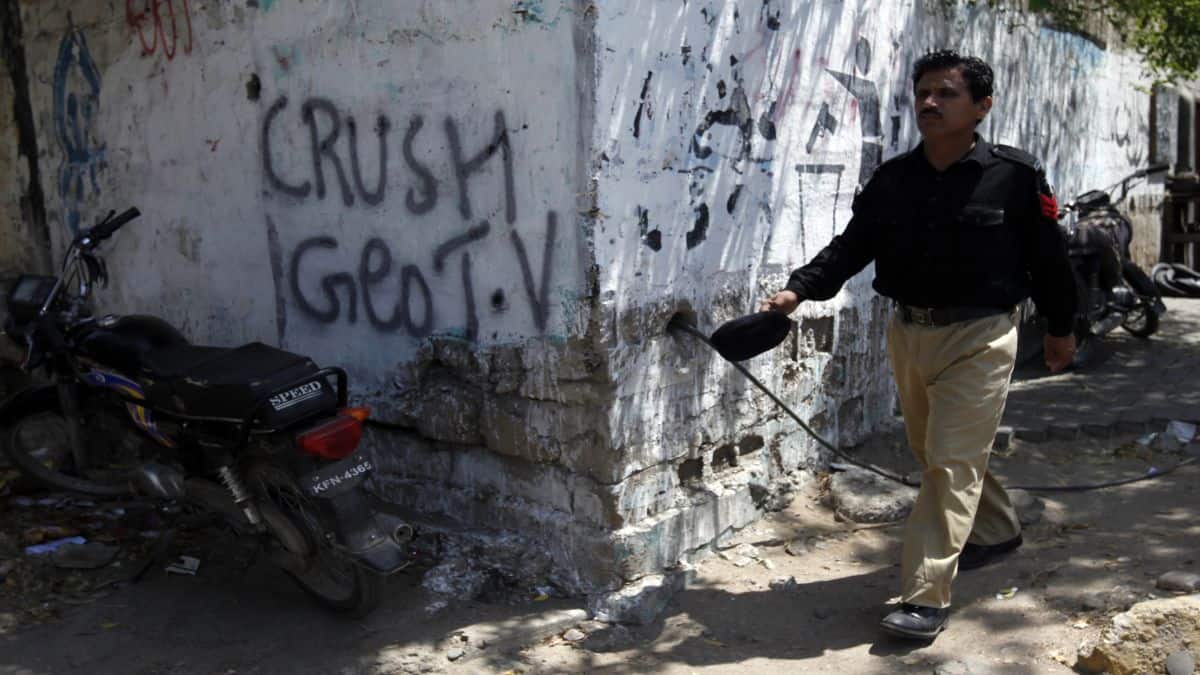
Geo News has apologised for the footage, adding that it did not reflect the channel’s editorial policy or religious beliefs.
The incident highlights how blasphemy accusations remain one of the most volatile forces in Pakistan. Amnesty International, the international human rights body, has even called out the nation for its arbitrary use of blasphemy laws. In a paper, the organisation wrote that in many cases, the evidence suggested that charges were brought as a measure to intimidate and punish members of minority religious communities, or as a consequence of accusations brought by individuals motivated by personal enmity or a desire to gain political advantage.
Life imprisonment of activist Mahrang Baloch
Earlier in the week, fear of unrest grew in Pakistan when an anti-terrorism court sentenced prominent Baloch activist and Baloch Yakjehti Committee (BYC) Mahrang Baloch and two of her aides to life imprisonment.
Thirty-three-year-old Baloch is a prominent campaigner against alleged enforced disappearances in Balochistan and the leader of the Balochistan Unity Committee. Her activism began after her father, Abdul Ghaffar Langove, was allegedly forcibly disappeared in 2009. His body was later recovered in 2011.
Her life sentence comes after she was arrested last March on allegations of “attacking” the Quetta Civil Hospital and “inciting people to violence.”
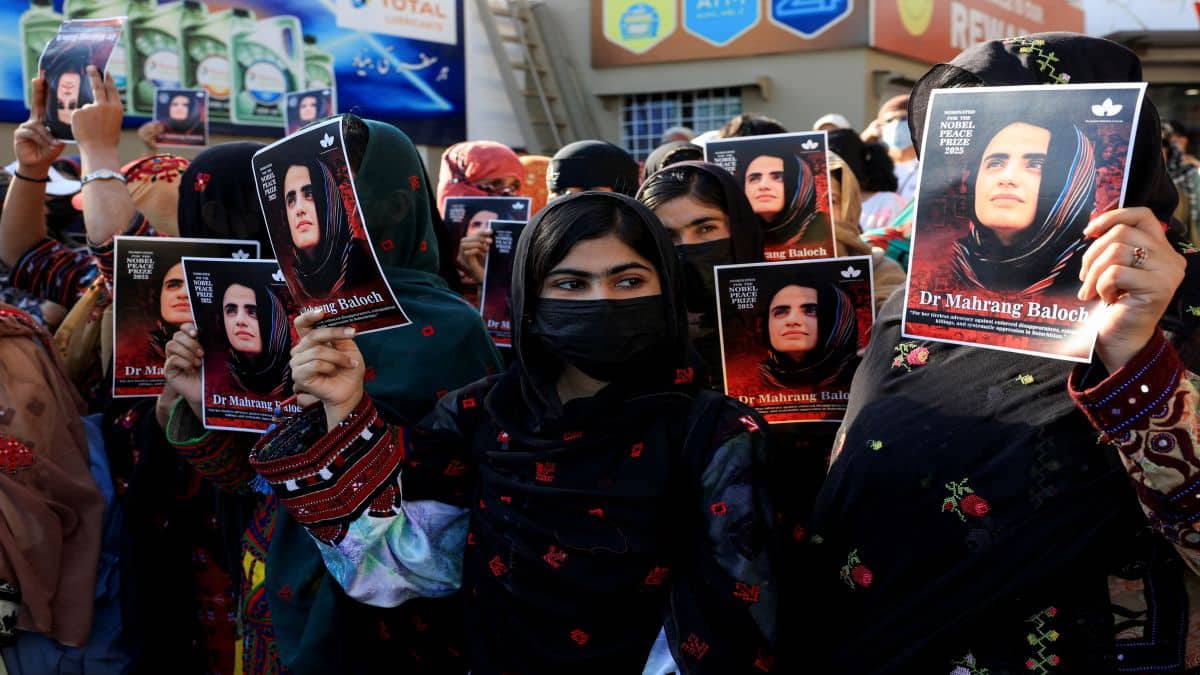
Several human rights groups have claimed that Baloch’s sentencing is an example of the Pakistan government’s vendetta campaign. The Human Rights Commission of Pakistan called for a review of the ruling, saying the state had “continued its policy of treating fundamental rights advocacy in the same way it treats extremism, resulting in administrative and judicial decisions that are one-sided and biased”.
Meanwhile, Pakistani authorities noted that the matter was not politically motivated.
Pakistan’s domestic troubles vs global positioning
These recent events highlight just how Pakistan is struggling internally even as it celebrates its role in ending the West Asia war.
Late last week, heaping praise on the administration, Pakistan’s Foreign Minister Ishaq Dar stated that the nation was now viewed as a “middle power” with an active diplomatic role internationally. “We now have to become an economic power. For this, Prime Minister Shehbaz Sharif is working day and night,” he said.
Experts note that Pakistan will want to leverage its mediation role for economic benefit, particularly in its dealings with allies in Washington and the Gulf. And this would be very helpful for the country’s economy, which remains under stress, leading to repeated bailouts from the International Monetary Fund.
However, as the Indian Express noted, “For a country eager to present itself as a force for regional stability, these are reminders that some of its most difficult battles remain domestic.”
With inputs from agencies
Tags

Military drones & police check-ups: How Sri Lanka is fighting against worst dengue outbreak in a decade
How Facebook job ad lured 2 Karnataka men into Myanmar cyber scam camp
Why is India seeing 95% cloud cover despite a Super El Niño?
What is CJP’s fourth demand to the government as protests in Delhi intensify?
The new geography of war: Why the Houthis can no longer be ignored