


Oxford Museum is returning a 500-year-old statue to India. Here's why
The Ashmolean Museum in Oxford has returned a bronze statue of Saint Tirumankai Alvar, dating back to the 16th century. Stolen during the 19th century, the idol made its way to the UK institute in 1967 through an auction held by Sotheby's

Hundreds of years after a bronze statue of Saint Tirumankai Alvar dating back to the 16th century was taken from a temple in Tamil Nadu, it is returning home from the United Kingdom.
The University of Oxford's Ashmolean Museum is returning the bronze idol to India, which it had acquired in a Sotheby's auction in 1967.
Here is all you need to known about the idol.
All about the bronze statue
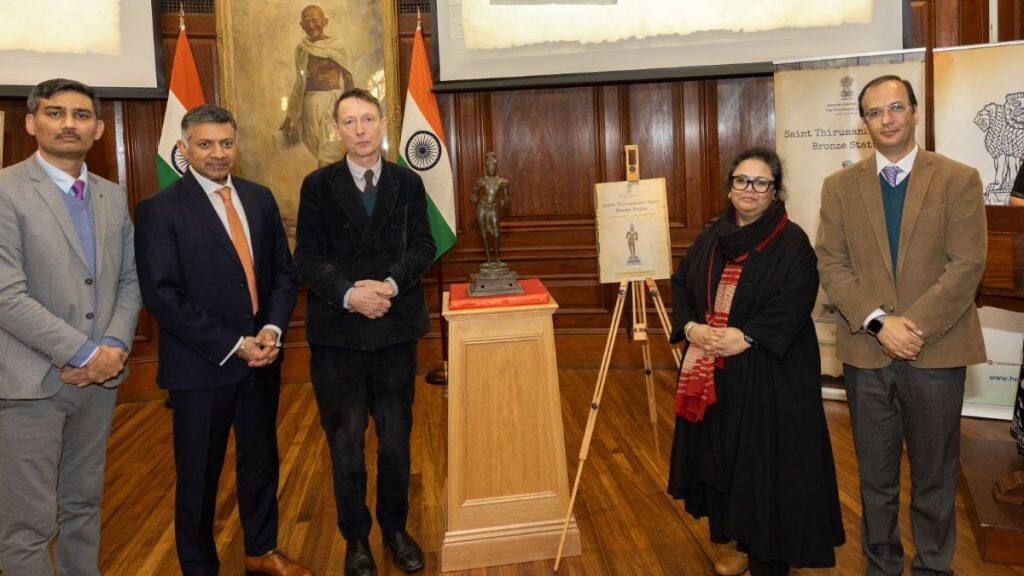
- The bronze statue is of Saint Tirumankai Alvar.
- Saint Tirumankai Alvar was the last and most prolific of the 12 South Indian Vaishnava Alvar saints in the 8th Century CE.
- He was known for his intense devotion to Lord Vishnu and was a prolific poet.
- According to website Exotic India Art, he was originally a military commander named Kaliyan but became a saint after a divine transformation.
- He composed six major works in the Divya Prabandham (a foundational Tamil anthology of 4,000 devotional hymns dedicated to Lord Vishnu) and contributed heavily to the construction of the Srirangam temple.
- The bronze statue is about 57-60 centimetres tall.
- It was acquired by the the Ashmolean Museum in 1967 through a sale at Sotheby's from a private collector, Dr J R Belmont.
- The statue was acquired in good faith by the museum without clear knowledge of its earlier history.
Why Oxford is returning the idol
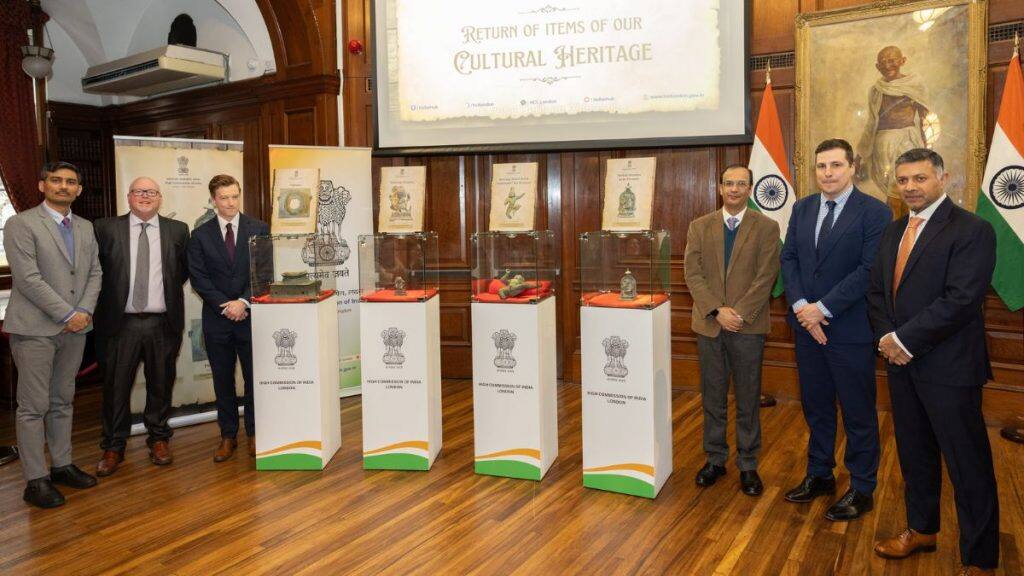
- On March 3, the Ashmolean Museum in Oxford returned the 16th-century bronze statue of Saint Tirumankai Alvar to the Indian High Commission.
- It was in 2019 that a French scholar alerted the University of Oxford Museum to research after he pointed out a photograph of the statue taken in 1957 in the temple had been identified in the archives of the Institut Français de Pondichéry and the École française d’Extrême-Orient (IFP-EFEO).
- The museum decided to investigate the statue's origins.
- The Ashmolean wrote to the Indian High Commission on December 16, 2019, requesting further information, indicating the museum's willingness to discuss its possible return.
- On February 11, 2020 a temple executive officer filed a police report noting that a modern replica had replaced the original bronze.
- Following this, the Indian High Commissioner then made a formal claim for the return of the bronze on March 3, 2020.
- The museum commissioned a metal analysis of the bronze at the request of the Archaeological Survey of India (ASI) and submitted the results to support a report on the artefact’s provenance.
- According to the Times of India, Director of the Ashmolean Dr Xa Sturgis said, "The Ashmolean is pleased to see this important object returned to India and we are grateful to the Indian authorities and scholars who have helped establish its provenance. The museum and University of Oxford are committed to ethical collections practices and continued research into our collections, their origins and history."
- S Vijayakumar, cultural enthusiast and co-founder of India Pride. told The Hindu, "The return of the Thirumangai Alvar bronze from the Ashmolean Museum is an important step toward restoring bronzes removed from the Soundararaja Perumal Temple (Sundaraperumal Koil), Tamil Nadu."
- He further said, "The identification was made by the India Pride Project by matching the Ashmolean bronze with 1957 temple photographs preserved at the Institut Français de Pondichéry (IFP). The evidence was shared with the Tamil Nadu Idol Wing CID, including then ADGP Abhay Kumar, and with the Indian High Commission in London, including First Secretary Rahul Nagare. We thank them for their support. The process from identification to repatriation approval took nearly eight years."
This is not the first time that artefacts have been returned to India. In 2022, the Kelvingrove Art Gallery and Museum in Glasgow returned seven artefacts to India. These included 14th-century carvings and 11th-century stone door jams. These were stolen from shrines and temples in the 19th Century. One of the items returned was a ceremonial sword, or talwar, with its scabbard. It was taken in 1905 from the collection of the Nizam of Hyderabad by his prime minister.
 More from Explainers
With inputs from agencies

Military drones & police check-ups: How Sri Lanka is fighting against worst dengue outbreak in a decade
How Facebook job ad lured 2 Karnataka men into Myanmar cyber scam camp
Why is India seeing 95% cloud cover despite a Super El Niño?
What is CJP’s fourth demand to the government as protests in Delhi intensify?
The new geography of war: Why the Houthis can no longer be ignored