
Advertisement


Sections
One Nation, One Poll: How much will it cost India to hold simultaneous elections?
A new study has pegged the total expenditure on all elections from Lok Sabha to local bodies at Rs 10 lakh crore. This, however, does not include expenditure on new electronic voting machines

The debate on the pros and cons of holding simultaneous elections to Lok Sabha and state Assemblies is on. But, what would it require to hold one election in the country. Other than bringing amendments to at least five articles of the Constitution and consensus of all political parties, it will need around 30 lakh electronic voting machines (EVMs) and voter-verified paper audit trail (VVPAT) machines, deployment of massive central forces around the country, and a significant workforce of officials to ensure the smooth conduct of the election process.And how much will it cost? Let’s find out.Nearly Rs 10 lakh croreA new study on Tuesday pegged the total expenditure on all elections from Lok Sabha to local bodies at Rs 10 lakh crore which could be brought down by Rs 3-5 lakh crore if the voting period is reduced to just a week and parties strictly follow the model code.The study said the 2024 Lok Sabha polls will involve an expenditure of around Rs 1.20 lakh crore of which the Election Commission is estimated to spend "hardly 20 per cent" and this does not include expenditure on new electronic voting machines.[caption id="attachment_13121102" align="alignnone" width="640"]![]() According to estimates, to be able to hold simultaneous elections, the Election Commission will need around 30 lakh EVMs. File image/AP[/caption]According to N Bhaskara Rao, a research-based analyst of public policies, Rs 10 lakh crore is the estimate for holding Lok Sabha, assembly and local body polls (panchayats, zila parishad, municipalities) together.But the total amount in elections is not necessarily spent by the central and the state governments. Parties too incur expenditure on candidates and campaigning.Party spending soars before electionsCampaigning often begins even before the election schedule is announced. But parties are only mandated to share election expenditure with the EC from the date polls are announced till the election process is completed.Also Read: Centre sets up panel on ‘One Nation, One Election’: How feasible is the idea?While there is ceiling on how much candidates can spend on campaigning, there is no such bar on parties. For the 2019 Lok Sabha polls, parties had collected Rs 6,400 crore, they had spent Rs 2,600 crore.According to Rao, while Rs 1.20 lakh crore is estimated to be spent on Lok Sabha polls in 2024, Rs 3 lakh crore could be spent if all assembly polls are held together. There are a total of nearly 4,500 assembly seats in the country.He has pegged the cost of holding all municipal elections together at Rs 1 lakh crore. There are nearly 500 municipal seats across the country.Similarly, for zila parishads (650 seats), mandals (7000 seats) and village (gram) panchayats (2,50,000 seats), the cost of holding polls has been pegged at Rs 4.30 lakh crore).Simultaneous polls alone cannot reduce the expenditure Rao said holding simultaneous polls itself was not enough to reduce poll expenditure significantly substantially.He said the present practice followed by parties on campaigning, effectiveness of the poll panel and strict adherence by parties to the model code of conduct will play an important role in reducing expenditure.According to Rao, a "one-week poll" is likely to bring down poll expenditure. He said a rationale poll schedule which is not spread across phases will help reduce poll expenditure.[caption id="attachment_13121112" align="alignnone" width="640"]
According to estimates, to be able to hold simultaneous elections, the Election Commission will need around 30 lakh EVMs. File image/AP[/caption]According to N Bhaskara Rao, a research-based analyst of public policies, Rs 10 lakh crore is the estimate for holding Lok Sabha, assembly and local body polls (panchayats, zila parishad, municipalities) together.But the total amount in elections is not necessarily spent by the central and the state governments. Parties too incur expenditure on candidates and campaigning.Party spending soars before electionsCampaigning often begins even before the election schedule is announced. But parties are only mandated to share election expenditure with the EC from the date polls are announced till the election process is completed.Also Read: Centre sets up panel on ‘One Nation, One Election’: How feasible is the idea?While there is ceiling on how much candidates can spend on campaigning, there is no such bar on parties. For the 2019 Lok Sabha polls, parties had collected Rs 6,400 crore, they had spent Rs 2,600 crore.According to Rao, while Rs 1.20 lakh crore is estimated to be spent on Lok Sabha polls in 2024, Rs 3 lakh crore could be spent if all assembly polls are held together. There are a total of nearly 4,500 assembly seats in the country.He has pegged the cost of holding all municipal elections together at Rs 1 lakh crore. There are nearly 500 municipal seats across the country.Similarly, for zila parishads (650 seats), mandals (7000 seats) and village (gram) panchayats (2,50,000 seats), the cost of holding polls has been pegged at Rs 4.30 lakh crore).Simultaneous polls alone cannot reduce the expenditure Rao said holding simultaneous polls itself was not enough to reduce poll expenditure significantly substantially.He said the present practice followed by parties on campaigning, effectiveness of the poll panel and strict adherence by parties to the model code of conduct will play an important role in reducing expenditure.According to Rao, a "one-week poll" is likely to bring down poll expenditure. He said a rationale poll schedule which is not spread across phases will help reduce poll expenditure.[caption id="attachment_13121112" align="alignnone" width="640"]![]() Parliament and state elections were held concurrently until 1967, but as Assemblies and Lok Sabhas were dissolved before the end of their terms, the polls became out of sync. File image/AP[/caption]By having simultaneous polls for different levels what is likely to be reduced visibly is expenditure on travel, printing, media campaign, booth-level logistics.Without curbing "note for vote" or voter inducement, poll expenditure will not reduce significantly, he said.Rao, who headed Centre for Media Studies (CMS), has authored several books on elections and poll expenditure.Cost of an electionAccording to the Former Chief Election Commissioner O P Rawat: “As of now, the ECI delivers the cheapest election in the world — one dollar, one vote. That means each EVM is used over multiple elections. If there are simultaneous polls, EVMs would be used for three elections as their life span is about 15 years,” reports Indian Express.However, the Election Commission of India has often highlighted the difficulties in having simultaneous elections. According to a 2015 Parliamentary Standing Committee report: “The chief issue highlighted by ECI is that simultaneous conduct of elections would require large-scale purchase of Electronic Voting Machines and Voter Verifiable Paper Audit Trail machines. For conducting simultaneous elections, the Commission expects that a total of Rs 9,284.15 crore will be needed for procurement of EVMs and VVPATs. The machines would also need to be replaced every 15 years which would again entail expenditure. Further, storing these machines would increase the warehousing cost,” as per an Indian Express report.According to a reply to Parliament in 2021, the Union government granted states and union territories a total of Rs 5,814.29 crore for holding elections from 2014 to 2019. With inputs from PTI
Parliament and state elections were held concurrently until 1967, but as Assemblies and Lok Sabhas were dissolved before the end of their terms, the polls became out of sync. File image/AP[/caption]By having simultaneous polls for different levels what is likely to be reduced visibly is expenditure on travel, printing, media campaign, booth-level logistics.Without curbing "note for vote" or voter inducement, poll expenditure will not reduce significantly, he said.Rao, who headed Centre for Media Studies (CMS), has authored several books on elections and poll expenditure.Cost of an electionAccording to the Former Chief Election Commissioner O P Rawat: “As of now, the ECI delivers the cheapest election in the world — one dollar, one vote. That means each EVM is used over multiple elections. If there are simultaneous polls, EVMs would be used for three elections as their life span is about 15 years,” reports Indian Express.However, the Election Commission of India has often highlighted the difficulties in having simultaneous elections. According to a 2015 Parliamentary Standing Committee report: “The chief issue highlighted by ECI is that simultaneous conduct of elections would require large-scale purchase of Electronic Voting Machines and Voter Verifiable Paper Audit Trail machines. For conducting simultaneous elections, the Commission expects that a total of Rs 9,284.15 crore will be needed for procurement of EVMs and VVPATs. The machines would also need to be replaced every 15 years which would again entail expenditure. Further, storing these machines would increase the warehousing cost,” as per an Indian Express report.According to a reply to Parliament in 2021, the Union government granted states and union territories a total of Rs 5,814.29 crore for holding elections from 2014 to 2019. With inputs from PTI
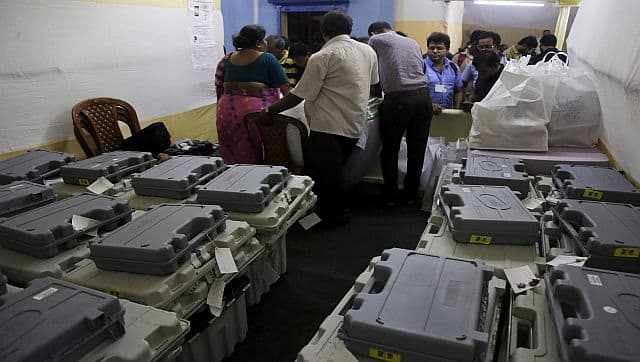 According to estimates, to be able to hold simultaneous elections, the Election Commission will need around 30 lakh EVMs. File image/AP[/caption]According to N Bhaskara Rao, a research-based analyst of public policies, Rs 10 lakh crore is the estimate for holding Lok Sabha, assembly and local body polls (panchayats, zila parishad, municipalities) together.But the total amount in elections is not necessarily spent by the central and the state governments. Parties too incur expenditure on candidates and campaigning.Party spending soars before electionsCampaigning often begins even before the election schedule is announced. But parties are only mandated to share election expenditure with the EC from the date polls are announced till the election process is completed.Also Read: Centre sets up panel on ‘One Nation, One Election’: How feasible is the idea?While there is ceiling on how much candidates can spend on campaigning, there is no such bar on parties. For the 2019 Lok Sabha polls, parties had collected Rs 6,400 crore, they had spent Rs 2,600 crore.According to Rao, while Rs 1.20 lakh crore is estimated to be spent on Lok Sabha polls in 2024, Rs 3 lakh crore could be spent if all assembly polls are held together. There are a total of nearly 4,500 assembly seats in the country.
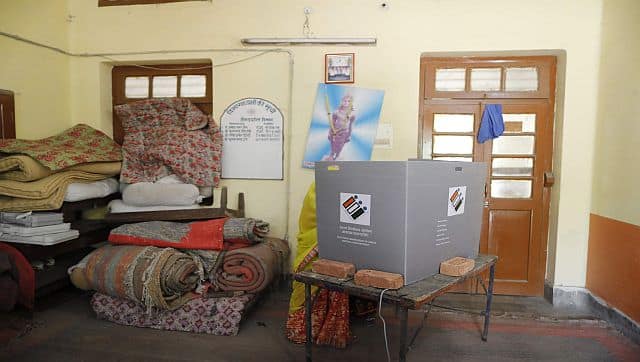 Parliament and state elections were held concurrently until 1967, but as Assemblies and Lok Sabhas were dissolved before the end of their terms, the polls became out of sync. File image/AP[/caption]By having simultaneous polls for different levels what is likely to be reduced visibly is expenditure on travel, printing, media campaign, booth-level logistics.Without curbing "note for vote" or voter inducement, poll expenditure will not reduce significantly, he said.Rao, who headed Centre for Media Studies (CMS), has authored several books on elections and poll expenditure.Cost of an electionAccording to the Former Chief Election Commissioner O P Rawat: “As of now, the ECI delivers the cheapest election in the world — one dollar, one vote. That means each EVM is used over multiple elections. If there are simultaneous polls, EVMs would be used for three elections as their life span is about 15 years,” reports Indian Express.However, the Election Commission of India has often highlighted the difficulties in having simultaneous elections. According to a 2015 Parliamentary Standing Committee report: “The chief issue highlighted by ECI is that simultaneous conduct of elections would require large-scale purchase of Electronic Voting Machines and Voter Verifiable Paper Audit Trail machines. For conducting simultaneous elections, the Commission expects that a total of Rs 9,284.15 crore will be needed for procurement of EVMs and VVPATs. The machines would also need to be replaced every 15 years which would again entail expenditure. Further, storing these machines would increase the warehousing cost,” as per an Indian Express report.According to a reply to Parliament in 2021, the Union government granted states and union territories a total of Rs 5,814.29 crore for holding elections from 2014 to 2019. With inputs from PTI
First Published:Sep 14, 2023, 09:25:00 IST
Advertisement
Advertisement

Military drones & police check-ups: How Sri Lanka is fighting against worst dengue outbreak in a decade
Sri Lanka is fighting its most severe dengue outbreak in nearly a decade, with infections rising sharply across the nation. Military drones have been deployed to tackle the outbreak, which has claimed 56 lives. Health officials said the outbreak is being driven primarily by the DENV-2 variant of the virus
3 min read
How Facebook job ad lured 2 Karnataka men into Myanmar cyber scam camp
The Karnataka Cyber Command has rescued two youths from a scam compound in Myanmar operated by Chinese fraudsters. The duo from Karnataka were lured on the pretext of data-entry jobs. They were asked to work for 16 hours a day and were expected to sleep for six hours daily
4 min read
Why is India seeing 95% cloud cover despite a Super El Niño?
India is witnessing nearly 95 per cent cloud cover despite a Super El Niño, a climate event usually linked to weaker monsoons. Regional weather systems, cyclonic circulations, the monsoon trough and moisture from two seas are temporarily overpowering one of the world's strongest climate phenomena
5 min read
What is CJP’s fourth demand to the government as protests in Delhi intensify?
The protest by the Cockroach Janta Party at Delhi’s Jantar Mantar refuses to die down. The group have made a fourth demand to the Centre, asking that no FIRs are filed against the agitators and that no legal action be taken. The government has expressed willingness to speak to the protesters, but refused to accede on the resignation of Education Minister Dharmandra Pradhan
5 min read
The new geography of war: Why the Houthis can no longer be ignored
The rise of the Houthis marks the emergence of a new geography of war — one in which influence flows not only from capitals and conventional armies, but also from rugged mountains overlooking vital sea lanes
6 min read
Advertisement
Advertisement