


Nvidia is betting big on AI PCs. But what are they?
Nvidia, which is getting into AI-powered personal computers, has unveiled a new chip designed to bring artificial intelligence (AI) capabilities to laptops and desktops. This comes even as demand for such devices remains mixed

Nvidia has long been associated with designing and manufacturing chips. Now, the Jensen Huang-led company is turning to another frontier: AI PCs.
The shift comes after Nvidia unveiled a new chip aimed at bringing artificial intelligence capabilities directly to laptops and desktop computers, even as demand for such devices remains mixed.
HP said last week that AI-optimised computers helped lift its quarterly results. In contrast, Dell said in January that the AI boom had yet to generate the level of demand it had anticipated.
What is an AI PC?
Manufacturers say AI PCs can process data faster than traditional systems and handle a greater share of AI workloads directly on the device, including chatbots.
 More from Explainers
Unlike conventional setups, they do not depend heavily on cloud data centres that power most AI applications such as ChatGPT and Claude. Some models can even support training AI systems locally — a compute-intensive task typically handled by servers.
The rise of AI agents — software that can perform tasks autonomously with minimal human input — is also driving renewed interest in AI PCs.
Nvidia pushing AI
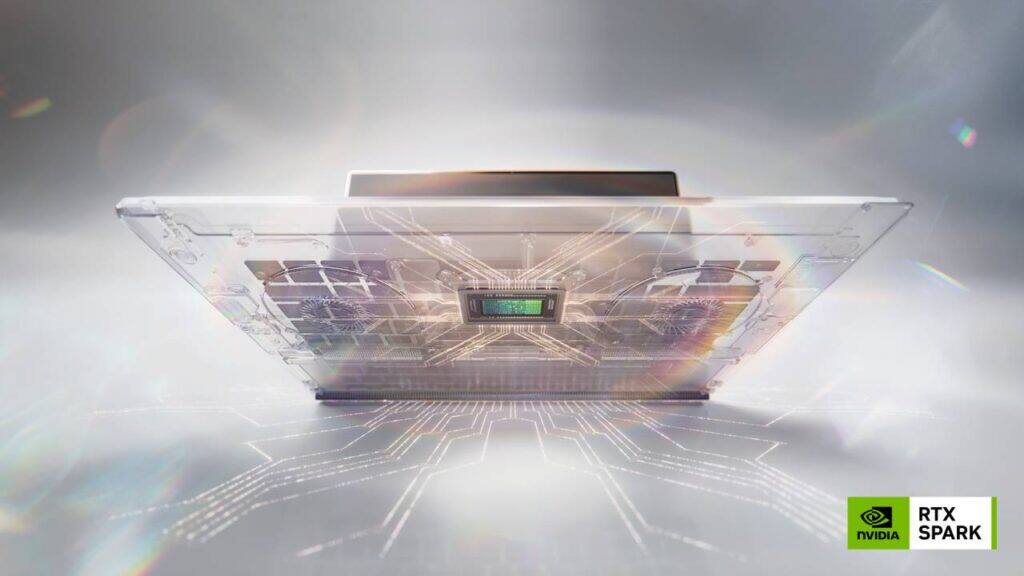
Nvidia’s RTX Spark, unveiled ahead of the Computex conference in Taiwan, is part of what the company described as an effort with Microsoft to “reinvent the PC” for the AI era.
The chip has been developed in collaboration with MediaTek to enable AI agents to run locally rather than rely on cloud computing.
PC makers are betting these capabilities will attract buyers as generative AI becomes more embedded in everyday tasks, from drafting emails to planning holidays.
HP said in late May that AI PCs accounted for 44 per cent of its PC shipments in the second quarter, up from more than 35 per cent in the previous quarter, helping it beat revenue and profit estimates.
However, the broader picture remains uncertain.
A squeeze in memory chip supply and rising costs could slow adoption. Market research firm IDC expects global PC shipments to decline in 2026 due to shortages, higher component prices and supply constraints, even as higher average selling prices support overall market value.
Under the hood
AI PCs are equipped with specialised processors known as neural processing units (NPUs), which handle most on-device AI workloads.
These work alongside central processing units and graphics processors to manage complex tasks, boost performance and enable applications such as AI assistants.
Nvidia said RTX Spark-powered laptops and compact desktops are expected later this year from ASUS, Dell, HP, Lenovo, Microsoft and MSI, with Acer and Gigabyte to follow.
Several of these brands, along with Microsoft and Qualcomm, already offer Copilot+ PCs designed specifically for on-device AI tasks.
Privacy and cost
Privacy remains a major talking point.
When introduced in 2024, Microsoft’s “Recall” feature raised concerns for tracking user activity — from voice interactions to browsing — and storing it locally for later retrieval.
Following backlash, Microsoft delayed the rollout and later introduced it in preview with stronger safeguards. The feature is now optional on newer Copilot+ PCs.
At the same time, some experts argue that processing AI tasks locally could enhance privacy by reducing reliance on cloud-based systems that use personal data to train large models.
FAQs
1. What makes an AI PC different from a regular computer?
AI PCs include dedicated neural processing units (NPUs) that allow them to run artificial intelligence tasks directly on the device, rather than relying heavily on cloud servers.
2. Do AI PCs work without the internet?
Many AI features on these devices can run offline, including certain chatbots and AI tools, though some advanced functions may still require cloud access.
3. Are AI PCs more expensive?
They tend to be priced higher due to specialised hardware and components, and costs could rise further amid supply constraints and higher chip prices.
With inputs from agencies
Tags

Military drones & police check-ups: How Sri Lanka is fighting against worst dengue outbreak in a decade
How Facebook job ad lured 2 Karnataka men into Myanmar cyber scam camp
Why is India seeing 95% cloud cover despite a Super El Niño?
What is CJP’s fourth demand to the government as protests in Delhi intensify?
The new geography of war: Why the Houthis can no longer be ignored