


No More Add to Cart: Why China’s Singles Day is losing its sheen
Singles' Day in China is the world's largest shopping occasion, peaking annually on 11 November. However, this year, experts predict a tepid response. This is largely because of the Communist nation's wobbly economy, more complicated terms, and less sincere discounts and promotions

For China, shopping has been a way to unwind.
The Communist country loves shopping so much that it uses it as a way to celebrate singlehood.
Counter-to-Valentine's Day, Singles' Day is the world's largest shopping festival, peaking annually on 11 November.
The event has been so popular for more than a decade that it has grown into a weeks-long online shopping bonanza.
However, gradually, the festival appears to be losing its shine as many consumers plan to keep a lid on spending this year.
Here’s why.
What is Singles’ Day?
The idea for Singles’ Day originated at China's Nanjing University back in 1993 when a bunch of students decided that “singles” need a day of their own.
 More from Explainers
Originally called "Bachelor's Day," the students picked 11 November (11/11) because the numeral 1 looks like a bare branch. It is the Chinese internet slang for a single/unmarried man who does not add branches to the family tree. 11/11 also appears like four ones or the four singles standing together like the four students who came up with the idea, according to Reuters.
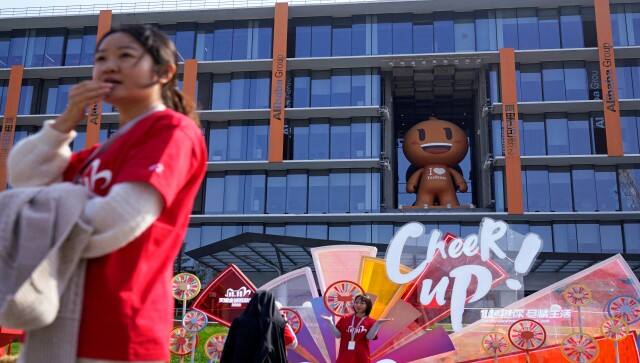
Similar to Valentine's Day, Singles' Day has turned into a shopping spree. On this day, single people plan parties and social events in addition to treating themselves to gifts and presents.
It represents China's concept of self-love and a countermovement to the social pressure to find a partner.
Although it's not a recognised holiday in China, it's becoming the world's biggest day for internet shopping.
The day became a big hit in 2009 when Chinese e-commerce giant Alibaba started offering online discounts for 24 hours from midnight on 11 November. Its competitor JD.com and other brands also followed the trend.
The festival is not restricted to only one day as the sales start weeks before.
How much do consumers usually spend?
Last year, the total value of goods sold during the shopping bonanza - also known as "Double 11" - totalled 1.15 trillion yuan ($157.97 billion), according to Reuters which cited data from consultancy firm Bain.
That is more than four times the $35.3 billion American shoppers spent last year during Cyber Week, the period from Black Friday to Cyber Monday, per data from Adobe Analytics.
Cyber Monday immediately follows Black Friday, which falls on the day after the US Thanksgiving Day holiday, the busiest shopping day of the year in the United States.
Why is the Singles' Day frenzy waning?
However, Singles’ Day has lost its gloss over the past recent years.
The annual shopping event has been impacted by the nation's wobbly economy, forcing businesses to engage in an aggressive pricing war to lure buyers.
Reopening the nation was supposed to stimulate domestic consumption and support growth, but Chinese consumers are facing more and more difficulties, such as high unemployment and declining income levels, and are being forced to make expenditure cuts, according to CNN.
More than three-fourths of consumers surveyed, or 77 per cent, indicated they had no plans to increase spending, as per a Bain & Company survey issued on Tuesday.
This Singles' Day, e-commerce sites are wooing them with extremely low pricing. Alibaba declared that during the sale, which began on 24 October, it will provide more than 80 million products "at their lowest prices this year."

JD.com is giving shoppers the chance to buy top-selling products for just one yuan (14 US cents) in addition to 50 per cent off of a selection of devices.
Moreover, consumers' initial enthusiasm for Singles' Day is also waning due to complicated terms and less sincere discounts. Today, people prefer simple price reductions over intricate ones, according to e-magazine ThinkChina.
A post-90s white-collar worker from Guangzhou said in an interview with Time Weekly that she realised Singles’ Day sales are no longer about a simple race against the clock, as the terms became increasingly complicated. “I studied the terms for ages but I couldn’t understand. It wasn’t a good experience.”
A few netizens complained, “Some brands even mark up their prices before Singles’ Day and then drop them back to the original price on 11 November, pretending there is a discount when in fact there is none.”
According to a Southern Metropolis Daily poll released on 28 October, 48.51 per cent of participants said that simple discounts are essential for customer happiness since they are fed up with the constant manipulations by online retailers.
Instead of needing to do complex maths and make a number of transactions to be eligible for "the lowest price of the year," they would want straight price reductions or package discounts.
The rise of other shopping festivals in the country, including the midyear “618” sales – the country’s second largest, is also another reason for this jadedness.
What is expected this year?
Strict COVID-19 curbs in China impacted sales massively last year, but several industry experts are expecting a rebound, as the economy improves and livestream sales remain robust.
"We're optimistic about growth this year because the recovery seems to be stabilizing and consumption is on a more clear upward trend," said Jacob Cooke, co-founder and CEO of Beijing-based WPIC Marketing + Technologies, according to Reuters.
His e-commerce consultancy firm expects sales for the Chinese shopping event to rise in the range between 14 per cent and 18 per cent from last year, which is higher than Adobe's projection for a 5.4 per cent rise in Cyber Week sales.
While Alibaba 9988.HK started "Double 11" in 2009 to win over online shoppers with discounts and promotions, China's major e-commerce platforms now all take part in it.
JD.com (9618.HK) joined in 2012 and PDD Holdings-owned (PDD.O) Pinduoduo has also become a significant player, offering low cost products in competition with Alibaba-owned Tmall and Taobao platforms.
Last year, Chinese shoppers spent more on essentials, supplements, vitamins and pet-care products. Those products are expected to stay in demand this year, along with more lifestyle-focused products such as athletic wear and sports equipment.
"There is enormous demand among Chinese consumers for products and services that improve their lifestyles and facilitate self-expression," Cooke said.
Several global companies ranging from L'Oreal to Estee Lauder have taken a cautious stance around the spending spree in China during the shopping event.
"The presale period of Tmall and particularly on -- in general, the Singles Day, confirms a softer trend versus a year ago," said Estee Lauder CEO Fabrizio Freda last week, adding that the company was more optimistic about the next part of the Singles Day events in November.
L'Oreal CEO Nicolas Hieronimus on a post earnings call with analysts in October said it was too soon to comment on "Double 11."
"The shy consumers are less shy during the big events, and we have seen that whether it's during Valentine's Day, whether it is 6/18, the market has had its best peaks of growth during this moment," Hieronimus said, adding he had lots of hope for the shopping bonanza.
With inputs from agencies

Military drones & police check-ups: How Sri Lanka is fighting against worst dengue outbreak in a decade
How Facebook job ad lured 2 Karnataka men into Myanmar cyber scam camp
Why is India seeing 95% cloud cover despite a Super El Niño?
What is CJP’s fourth demand to the government as protests in Delhi intensify?
The new geography of war: Why the Houthis can no longer be ignored