
Advertisement


Sections
The ‘Next Big One’: Will the new XBB.1.5 variant, dominating the US, lead to fresh waves in other countries?
The new Omicron variant XBB.1.5 is spreading fast in the US and is responsible for 40 per cent of COVID-19 cases. The most contagious version of the virus yet, it has raised fear of fresh surges in other countries

COVID-19 has made a comeback. China has been badly hit and even as United States President Joe Biden has flagged the Communist nation’s response to the outbreak, he has a lot to worry about in his own land. Coronavirus cases are rising in the United States and scientists have raised concerns about a new COVID-19 variant, which is spreading fast. It’s called XBB.1.5, nicknamed Kraken by some.Also read: Not only China, COVID-19 cases are rising in these nations as wellWhat do we know about XBB.1.5?XBB.1.5 is the latest descendant of the Omicron variant, which is dominating the US. It has evolved from the XBB variant, which spread widely in India and Singapore last year between September and November. Highly transmissible, it also caused a rise in cases in the United Kingdom last winter.Is it more dangerous than other variants?The World Health Organization (WHO) has said that the XBB.1.5 omicron subvariant is the most contagious version of COVID-19 yet, but it doesn’t appear to make people sicker.“It is the most transmissible subvariant that has been detected yet,” Maria Van Kerkhove, the WHO’s COVID-19 technical lead, to reporters in Geneva on Wednesday. “The reason for this is the mutations that are within this subvariant of Omicron allowing this virus to adhere to the cell and replicate easily.”XBB.1.5 has a “growth advantage” above all other sub-variants seen so far but there is no indication that it is more harmful, according to WHO scientists.[caption id="attachment_11935852" align="alignnone" width="640"]![]() XBB.1.5 has rapidly replaced other variants in the Northeast US. File photo/AFP[/caption]How widespread is the variant?XBB.1.5 accounts for more than 40 per cent of the cases in the US, according to information provided by Epidemiologist Eric Feigl-Ding on his official Twitter handle based on unreleased data from the US Centers for Disease Control and Prevention.The variant seems to have started infecting people in or around New York state in late October. In early December, it accounted for four per cent of the cases. Now it has quickly overtaken other variants.As of last Friday, it was responsible for an estimated 75 per cent of cases in Connecticut, Maine, Massachusetts, New Hampshire, Rhode Island, Vermont, New York, New Jersey, Puerto Rico, and the US Virgin Islands, according to the federal health agency.“In recent weeks there have been increasing reports of hospitalisations and health system pressure, particularly in temperate regions of the Northern Hemisphere, where respiratory diseases, including flu, are also circulating,” WHO Director-General Tedros Adhanom Ghebreyesus said Wednesday.The Northeast US, where XBB.1.5 is responsible for most sequenced COVID cases, is seeing increasing hospitalisations, Van Kerkhove said.But it’s not only the US where the variant poses. XBB.1.5 has been detected in 29 countries so far but it could be more widespread, the epidemiologist said.[caption id="attachment_11935872" align="alignnone" width="640"]
XBB.1.5 has rapidly replaced other variants in the Northeast US. File photo/AFP[/caption]How widespread is the variant?XBB.1.5 accounts for more than 40 per cent of the cases in the US, according to information provided by Epidemiologist Eric Feigl-Ding on his official Twitter handle based on unreleased data from the US Centers for Disease Control and Prevention.The variant seems to have started infecting people in or around New York state in late October. In early December, it accounted for four per cent of the cases. Now it has quickly overtaken other variants.As of last Friday, it was responsible for an estimated 75 per cent of cases in Connecticut, Maine, Massachusetts, New Hampshire, Rhode Island, Vermont, New York, New Jersey, Puerto Rico, and the US Virgin Islands, according to the federal health agency.“In recent weeks there have been increasing reports of hospitalisations and health system pressure, particularly in temperate regions of the Northern Hemisphere, where respiratory diseases, including flu, are also circulating,” WHO Director-General Tedros Adhanom Ghebreyesus said Wednesday.The Northeast US, where XBB.1.5 is responsible for most sequenced COVID cases, is seeing increasing hospitalisations, Van Kerkhove said.But it’s not only the US where the variant poses. XBB.1.5 has been detected in 29 countries so far but it could be more widespread, the epidemiologist said.[caption id="attachment_11935872" align="alignnone" width="640"]![]() In some parts of the US, there has been a rise in hospitalisations. AFP[/caption]Has XBB.1.5 been detected in India?Five cases of the XBB.1.5 variant have been detected in India, the coronavirus monitoring body, the Indian SARS-CoV-2 Genomics Consortium (INSACOG), said on Tuesday. It has been found in Gujarat, Rajasthan and Karnataka.The first case of the variant was found in a man from Rajasthan’s Sikar who returned from the US on 19 December.Also read: Explained: How desperate Chinese are illegally procuring India-made meds amid COVID scareDo vaccines work against XBB.1.5?According to scientists, XBB.1.5 dodges antibodies from vaccines and infections like XBB and XBB.1 relatives – two of the most immune evasive subvariants yet. But XBB.1.5 has a mutation that makes it bind more tightly to cells, giving it a growth advantage, reports CNBC.Dr Rajeev Jayadevan, Co-chairman of the National IMA Covid task force, told ANI, “XBB.1.5 has a greater ability to attach itself to the human ACE-2 receptor while retaining the outstanding immune evasiveness of its ancestor.”He said that this variant can infect those who had prior infection or even vaccination. “Immune evasiveness is the ability of the virus to infect people who had prior infection or vaccination or both. XBB.1.5 achieved this by creating a rare type of mutation called F486P, located in its RBD (receptor binding domain). It is not known whether it causes more severe diseases. Experts believe it is unlikely to do so,” he said.[caption id="attachment_11935902" align="alignnone" width="640"]
In some parts of the US, there has been a rise in hospitalisations. AFP[/caption]Has XBB.1.5 been detected in India?Five cases of the XBB.1.5 variant have been detected in India, the coronavirus monitoring body, the Indian SARS-CoV-2 Genomics Consortium (INSACOG), said on Tuesday. It has been found in Gujarat, Rajasthan and Karnataka.The first case of the variant was found in a man from Rajasthan’s Sikar who returned from the US on 19 December.Also read: Explained: How desperate Chinese are illegally procuring India-made meds amid COVID scareDo vaccines work against XBB.1.5?According to scientists, XBB.1.5 dodges antibodies from vaccines and infections like XBB and XBB.1 relatives – two of the most immune evasive subvariants yet. But XBB.1.5 has a mutation that makes it bind more tightly to cells, giving it a growth advantage, reports CNBC.Dr Rajeev Jayadevan, Co-chairman of the National IMA Covid task force, told ANI, “XBB.1.5 has a greater ability to attach itself to the human ACE-2 receptor while retaining the outstanding immune evasiveness of its ancestor.”He said that this variant can infect those who had prior infection or even vaccination. “Immune evasiveness is the ability of the virus to infect people who had prior infection or vaccination or both. XBB.1.5 achieved this by creating a rare type of mutation called F486P, located in its RBD (receptor binding domain). It is not known whether it causes more severe diseases. Experts believe it is unlikely to do so,” he said.[caption id="attachment_11935902" align="alignnone" width="640"]![]() The variant can infect those who have been vaccinated. File photo/AFP[/caption]Can it lead to another wave?The answer is yes. The UK is already on alert as recent figures for a week until 17 December from the Sanger Institute in Cambridge suggested that one in 25 Covid cases in the UK were XBB.1.5, according to the BBC.Prof Wendy Barclay from Imperial College London told the BBC that there are likely to be more hospitalisations in the UK if the variant takes off.However, WHO experts say that more cases do not mean more deaths. “The more this virus circulates the more opportunities it will have to change. We do expect further waves of infection around the world but that doesn’t have to translate into further waves of death because our countermeasures continue to work,” Van Kerkhove said.Ravi Gupta, professor of clinical microbiology at the University of Cambridge, told The Guardian that there was no need to panic. “The main thing we worry about is the severity of the disease, and there is no evidence that it’s more severe. People should, however, make sure they are up to date with their vaccines,” he said.With inputs from agencies Read all the Latest News, Trending News, Cricket News, Bollywood News,India News and Entertainment News here. Follow us on Facebook, Twitter and Instagram.
The variant can infect those who have been vaccinated. File photo/AFP[/caption]Can it lead to another wave?The answer is yes. The UK is already on alert as recent figures for a week until 17 December from the Sanger Institute in Cambridge suggested that one in 25 Covid cases in the UK were XBB.1.5, according to the BBC.Prof Wendy Barclay from Imperial College London told the BBC that there are likely to be more hospitalisations in the UK if the variant takes off.However, WHO experts say that more cases do not mean more deaths. “The more this virus circulates the more opportunities it will have to change. We do expect further waves of infection around the world but that doesn’t have to translate into further waves of death because our countermeasures continue to work,” Van Kerkhove said.Ravi Gupta, professor of clinical microbiology at the University of Cambridge, told The Guardian that there was no need to panic. “The main thing we worry about is the severity of the disease, and there is no evidence that it’s more severe. People should, however, make sure they are up to date with their vaccines,” he said.With inputs from agencies Read all the Latest News, Trending News, Cricket News, Bollywood News,India News and Entertainment News here. Follow us on Facebook, Twitter and Instagram.
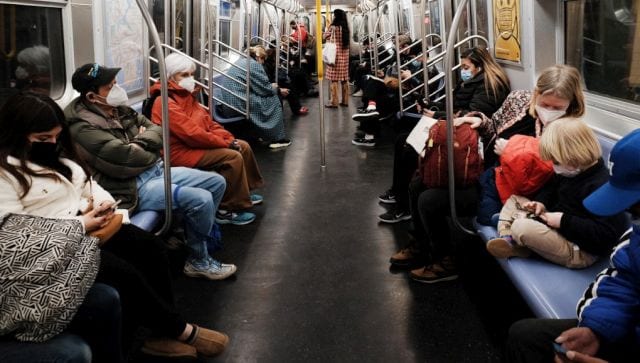 XBB.1.5 has rapidly replaced other variants in the Northeast US. File photo/AFP[/caption]How widespread is the variant?XBB.1.5 accounts for more than 40 per cent of the cases in the US, according to information provided by Epidemiologist Eric Feigl-Ding on his official Twitter handle based on unreleased data from the US Centers for Disease Control and Prevention.The variant seems to have started infecting people in or around New York state in late October. In early December, it accounted for four per cent of the cases. Now it has quickly overtaken other variants.As of last Friday, it was responsible for an estimated 75 per cent of cases in Connecticut, Maine, Massachusetts, New Hampshire, Rhode Island, Vermont, New York, New Jersey, Puerto Rico, and the US Virgin Islands, according to the federal health agency.“In recent weeks there have been increasing reports of hospitalisations and health system pressure, particularly in temperate regions of the Northern Hemisphere, where respiratory diseases, including flu, are also circulating,” WHO Director-General Tedros Adhanom Ghebreyesus said Wednesday.The Northeast US, where XBB.1.5 is responsible for most sequenced COVID cases, is seeing increasing hospitalisations, Van Kerkhove said.But it’s not only the US where the variant poses. XBB.1.5 has been detected in 29 countries so far but it could be more widespread, the epidemiologist said.[caption id="attachment_11935872" align="alignnone" width="640"]
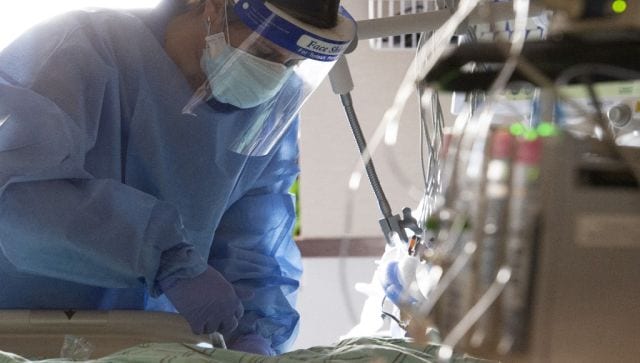 In some parts of the US, there has been a rise in hospitalisations. AFP[/caption]Has XBB.1.5 been detected in India?Five cases of the XBB.1.5 variant have been detected in India, the coronavirus monitoring body, the Indian SARS-CoV-2 Genomics Consortium (INSACOG), said on Tuesday. It has been found in Gujarat, Rajasthan and Karnataka.The first case of the variant was found in a man from Rajasthan’s Sikar who returned from the US on 19 December.Also read: Explained: How desperate Chinese are illegally procuring India-made meds amid COVID scareDo vaccines work against XBB.1.5?According to scientists, XBB.1.5 dodges antibodies from vaccines and infections like XBB and XBB.1 relatives – two of the most immune evasive subvariants yet. But XBB.1.5 has a mutation that makes it bind more tightly to cells, giving it a growth advantage, reports CNBC.Dr Rajeev Jayadevan, Co-chairman of the National IMA Covid task force, told ANI, “XBB.1.5 has a greater ability to attach itself to the human ACE-2 receptor while retaining the outstanding immune evasiveness of its ancestor.”He said that this variant can infect those who had prior infection or even vaccination. “Immune evasiveness is the ability of the virus to infect people who had prior infection or vaccination or both. XBB.1.5 achieved this by creating a rare type of mutation called F486P, located in its RBD (receptor binding domain). It is not known whether it causes more severe diseases. Experts believe it is unlikely to do so,” he said.[caption id="attachment_11935902" align="alignnone" width="640"]
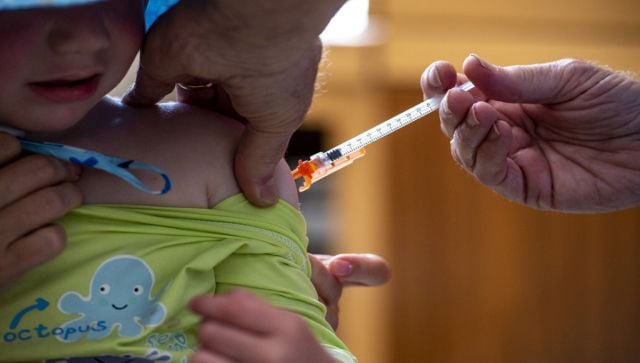 The variant can infect those who have been vaccinated. File photo/AFP[/caption]Can it lead to another wave?The answer is yes. The UK is already on alert as recent figures for a week until 17 December from the Sanger Institute in Cambridge suggested that one in 25 Covid cases in the UK were XBB.1.5, according to the BBC.Prof Wendy Barclay from Imperial College London told the BBC that there are likely to be more hospitalisations in the UK if the variant takes off.However, WHO experts say that more cases do not mean more deaths. “The more this virus circulates the more opportunities it will have to change. We do expect further waves of infection around the world but that doesn’t have to translate into further waves of death because our countermeasures continue to work,” Van Kerkhove said.Ravi Gupta, professor of clinical microbiology at the University of Cambridge, told The Guardian that there was no need to panic. “The main thing we worry about is the severity of the disease, and there is no evidence that it’s more severe. People should, however, make sure they are up to date with their vaccines,” he said.With inputs from agencies Read all the Latest News, Trending News, Cricket News, Bollywood News,India News and Entertainment News here. Follow us on Facebook, Twitter and Instagram.
First Published:Jan 05, 2023, 17:46:31 IST
Advertisement
Advertisement

Military drones & police check-ups: How Sri Lanka is fighting against worst dengue outbreak in a decade
Sri Lanka is fighting its most severe dengue outbreak in nearly a decade, with infections rising sharply across the nation. Military drones have been deployed to tackle the outbreak, which has claimed 56 lives. Health officials said the outbreak is being driven primarily by the DENV-2 variant of the virus
3 min read
How Facebook job ad lured 2 Karnataka men into Myanmar cyber scam camp
The Karnataka Cyber Command has rescued two youths from a scam compound in Myanmar operated by Chinese fraudsters. The duo from Karnataka were lured on the pretext of data-entry jobs. They were asked to work for 16 hours a day and were expected to sleep for six hours daily
4 min read
Why is India seeing 95% cloud cover despite a Super El Niño?
India is witnessing nearly 95 per cent cloud cover despite a Super El Niño, a climate event usually linked to weaker monsoons. Regional weather systems, cyclonic circulations, the monsoon trough and moisture from two seas are temporarily overpowering one of the world's strongest climate phenomena
5 min read
What is CJP’s fourth demand to the government as protests in Delhi intensify?
The protest by the Cockroach Janta Party at Delhi’s Jantar Mantar refuses to die down. The group have made a fourth demand to the Centre, asking that no FIRs are filed against the agitators and that no legal action be taken. The government has expressed willingness to speak to the protesters, but refused to accede on the resignation of Education Minister Dharmandra Pradhan
5 min read
The new geography of war: Why the Houthis can no longer be ignored
The rise of the Houthis marks the emergence of a new geography of war — one in which influence flows not only from capitals and conventional armies, but also from rugged mountains overlooking vital sea lanes
6 min read
Advertisement
Advertisement