
Advertisement


Sections
Is NATO looking to expand in Asia? Why is China unhappy?
At the annual summit being held in Lithuania, NATO has invited leaders of Japan, Australia, South Korea and New Zealand to discuss ways to counter and contain China. In recent times, the Western bloc has deemed Beijing a threat and seeks to limit its power

Today, all eyes will turn towards Lithuania’s capital Vilnius as leaders of countries belonging to the NATO alliance will meet for their annual summit. The two-day meeting (11 and 12 July) will be dominated by the Russia-Ukraine war and Kyiv’s membership to the alliance. However, there’s another important matter that is on the cards – NATO’s rising interest in the Asia-Pacific region.But why is it that NATO (the North Atlantic Treaty Organization), created in 1949 in response to the threat posed by the Soviet Union, is looking eastwards? How is the military alliance looking to expand in the Asia-Pacific region and what could be the consequences of such actions?We untangle the issue.NATO’s looking at Asia-PacificFor this annual summit, NATO has invited the leaders of Japan, South Korea, Australia and New Zealand – Fumio Kishida, Yoon Suk Yeol, Anthony Albanese and Chris Hipkins, respectively. Known as the AP4, the four leaders have been called for the summit for a second year in a row, following last year’s NATO summit in Madrid.In fact, Japanese prime minister Fumio Kishida, according to his Chief Cabinet Secretary Hirokazu Matsuno, will use the opportunity to stress the need for relations between Japan and the NATO to be stronger.An Economic Times report, citing sources, further stated that the four countries are planning a meeting on the sidelines of the summit where a discussion will be held on how to respond to China’s attempt to change the status quo in the South and East China Seas.Also read: Why Ukraine’s NATO membership seems out of reachThis comes after NATO Secretary General Jens Stoltenberg in June said, “What happens in Asia matters for Europe and what happens in Europe matters for Asia.”Furthermore, Tokyo and Canberra have already wrapped up negotiations with NATO on a new agreement called the “Individually Tailored Partnership Program (ITPP)” while New Zealand and South Korea are working to finalise their individual agreements.These focus on areas such as maritime security, cybersecurity, climate change, outer space, and emerging and disruptive technologies (including artificial intelligence). When it comes to defence, the countries have decided on improving the “interoperability” of their militaries. This might entail deepening the knowledge of each other’s military assets, improving the relationships between their soldiers and other military personnel, and expanding joint drills.But this is not the extent of NATO’s Asia-Pacific vision. The bloc is also seeking to open a liaison office in Japan – a first outpost in the region. The summit will also discuss this issue, as France has opposed the move. Just days before the meet, Elysée Palace said, “We are not in favour as a matter of principle. As far as the office is concerned, the Japanese authorities themselves have told us that they are not extremely attached to it.”A French official further said: “NATO means North Atlantic Treaty Organization,” adding that Articles 5 and 6, clauses at the heart of the alliance, are “geographic.”[caption id="attachment_12852872" align="alignnone" width="640"]![]() NATO Secretary-General Jens Stoltenberg shakes hands with New Zealand prime minister Chris Hipkins during a NATO leaders summit in Vilnius, Lithuania. Reuters[/caption]NATO’s wariness of ChinaThe recent moves come after NATO expressed concern over China.Last year, at the Madrid summit, NATO said China was the source of “systemic challenges” including threats to supply chains, infrastructure and “military tools to increase its global footprint and project power”.James Mackey, the director of security policy and partnerships, echoing similar sentiments was also quoted as telling The Guardian, “China is dramatically expanding its military capabilities in a largely non-transparent way, including in nuclear capability. We see China trying to influence global norms and standards, including through the UN system.”NATO’s Stoltenberg has also warned that what is happening in Europe today can happen in Asia tomorrow.“If (Russian) President (Vladimir) Putin wins in Ukraine, this would send the message that authoritarian regimes can achieve their goals through brute force,” NATO Secretary-General Jens Stoltenberg had said in Tokyo earlier this year. “This is dangerous. Beijing is watching closely, and learning lessons, which may influence its future decisions.”Stoltenberg was referring to Beijing’s future decisions on Taiwan, a self-governing island Beijing considers its province.[caption id="attachment_12852882" align="alignnone" width="640"]
NATO Secretary-General Jens Stoltenberg shakes hands with New Zealand prime minister Chris Hipkins during a NATO leaders summit in Vilnius, Lithuania. Reuters[/caption]NATO’s wariness of ChinaThe recent moves come after NATO expressed concern over China.Last year, at the Madrid summit, NATO said China was the source of “systemic challenges” including threats to supply chains, infrastructure and “military tools to increase its global footprint and project power”.James Mackey, the director of security policy and partnerships, echoing similar sentiments was also quoted as telling The Guardian, “China is dramatically expanding its military capabilities in a largely non-transparent way, including in nuclear capability. We see China trying to influence global norms and standards, including through the UN system.”NATO’s Stoltenberg has also warned that what is happening in Europe today can happen in Asia tomorrow.“If (Russian) President (Vladimir) Putin wins in Ukraine, this would send the message that authoritarian regimes can achieve their goals through brute force,” NATO Secretary-General Jens Stoltenberg had said in Tokyo earlier this year. “This is dangerous. Beijing is watching closely, and learning lessons, which may influence its future decisions.”Stoltenberg was referring to Beijing’s future decisions on Taiwan, a self-governing island Beijing considers its province.[caption id="attachment_12852882" align="alignnone" width="640"]![]() China has slammed NATO for its attempts to expand eastward, saying it would plunge the region into a “whirlpool” of conflict. File image/AP[/caption]NATO’s worry about China goes way beyond Taiwan. NATO is anxious about other potential threats, including what it calls Beijing’s “malicious hybrid and cyber operations and its confrontational rhetoric and disinformation.”As per a VOANews report, NATO views China as seeking to control key technological and industrial sectors, critical infrastructure such as 5G, and strategic materials and supply chains. It accuses Beijing of using economic leverage to “create strategic dependencies and enhance its influence.”Experts also note that China’s footprint inside NATO members’ territory is becoming harder to ignore. Meia Nouwens, a senior fellow at the International Institute for Strategic Studies, told The Guardian, “China has been operating west as well, militarily,” noting that the Chinese navy has conducted live fire drills in the Mediterranean.Also read: Why India should prefer cautious engagement with NATOChina’s reactionIt’s hardly surprising but Beijing is not happy with NATO’s moves. Earlier, the Chinese foreign ministry accused NATO of “hyping up the so-called ‘China threat’”.On the matter of an office in Japan, it had said, “Asia lies beyond the geographical scope of the North Atlantic and has no need for a replica of NATO. However, we have seen NATO bent on going east into this region, interfering in regional affairs and inciting bloc confrontation.”In June, China’s defence minister also warned against establishing “NATO-like” military alliances in the Asia-Pacific region, saying they would plunge the region into a “whirlpool” of conflict. Speaking at the Shangri-La Dialogue security summit in Singapore, China’s Li Shangfu had said, "In essence, attempts to push for NATO-like (alliances) in the Asia-Pacific is a way of kidnapping regional countries and exaggerating conflicts and confrontations, which will only plunge the Asia-Pacific into a whirlpool of disputes and conflicts.”And on 9 July, the Global Times, a state-owned newspaper, in an op-ed said that “NATO was Western civilization down a wrong and perilous path” and that China “cannot allow Western military forces to intervene in any way in its internal affairs issues, and China already has the capability to counter such interference”.With inputs from agencies
China has slammed NATO for its attempts to expand eastward, saying it would plunge the region into a “whirlpool” of conflict. File image/AP[/caption]NATO’s worry about China goes way beyond Taiwan. NATO is anxious about other potential threats, including what it calls Beijing’s “malicious hybrid and cyber operations and its confrontational rhetoric and disinformation.”As per a VOANews report, NATO views China as seeking to control key technological and industrial sectors, critical infrastructure such as 5G, and strategic materials and supply chains. It accuses Beijing of using economic leverage to “create strategic dependencies and enhance its influence.”Experts also note that China’s footprint inside NATO members’ territory is becoming harder to ignore. Meia Nouwens, a senior fellow at the International Institute for Strategic Studies, told The Guardian, “China has been operating west as well, militarily,” noting that the Chinese navy has conducted live fire drills in the Mediterranean.Also read: Why India should prefer cautious engagement with NATOChina’s reactionIt’s hardly surprising but Beijing is not happy with NATO’s moves. Earlier, the Chinese foreign ministry accused NATO of “hyping up the so-called ‘China threat’”.On the matter of an office in Japan, it had said, “Asia lies beyond the geographical scope of the North Atlantic and has no need for a replica of NATO. However, we have seen NATO bent on going east into this region, interfering in regional affairs and inciting bloc confrontation.”In June, China’s defence minister also warned against establishing “NATO-like” military alliances in the Asia-Pacific region, saying they would plunge the region into a “whirlpool” of conflict. Speaking at the Shangri-La Dialogue security summit in Singapore, China’s Li Shangfu had said, "In essence, attempts to push for NATO-like (alliances) in the Asia-Pacific is a way of kidnapping regional countries and exaggerating conflicts and confrontations, which will only plunge the Asia-Pacific into a whirlpool of disputes and conflicts.”And on 9 July, the Global Times, a state-owned newspaper, in an op-ed said that “NATO was Western civilization down a wrong and perilous path” and that China “cannot allow Western military forces to intervene in any way in its internal affairs issues, and China already has the capability to counter such interference”.With inputs from agencies
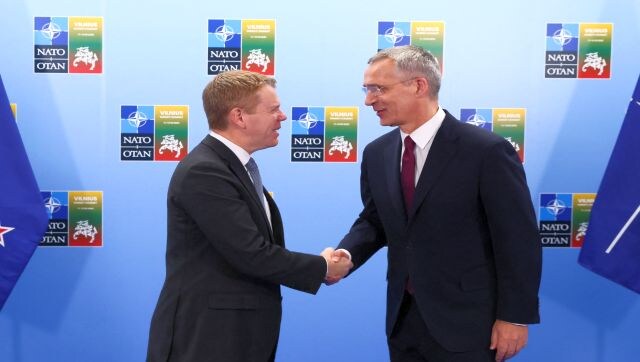 NATO Secretary-General Jens Stoltenberg shakes hands with New Zealand prime minister Chris Hipkins during a NATO leaders summit in Vilnius, Lithuania. Reuters[/caption]NATO’s wariness of ChinaThe recent moves come after NATO expressed concern over China.Last year, at the Madrid summit, NATO said China was the source of “systemic challenges” including threats to supply chains, infrastructure and “military tools to increase its global footprint and project power”.James Mackey, the director of security policy and partnerships, echoing similar sentiments was also quoted as telling The Guardian, “China is dramatically expanding its military capabilities in a largely non-transparent way, including in nuclear capability. We see China trying to influence global norms and standards, including through the UN system.”NATO’s Stoltenberg has also warned that what is happening in Europe today can happen in Asia tomorrow.“If (Russian) President (Vladimir) Putin wins in Ukraine, this would send the message that authoritarian regimes can achieve their goals through brute force,” NATO Secretary-General Jens Stoltenberg had said in Tokyo earlier this year. “This is dangerous. Beijing is watching closely, and learning lessons, which may influence its future decisions.”Stoltenberg was referring to Beijing’s future decisions on Taiwan, a self-governing island Beijing considers its province.[caption id="attachment_12852882" align="alignnone" width="640"]
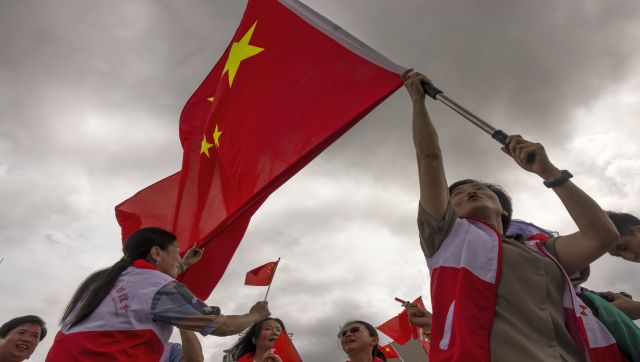 China has slammed NATO for its attempts to expand eastward, saying it would plunge the region into a “whirlpool” of conflict. File image/AP[/caption]NATO’s worry about China goes way beyond Taiwan. NATO is anxious about other potential threats, including what it calls Beijing’s “malicious hybrid and cyber operations and its confrontational rhetoric and disinformation.”As per a VOANews report, NATO views China as seeking to control key technological and industrial sectors, critical infrastructure such as 5G, and strategic materials and supply chains. It accuses Beijing of using economic leverage to “create strategic dependencies and enhance its influence.”Experts also note that China’s footprint inside NATO members’ territory is becoming harder to ignore. Meia Nouwens, a senior fellow at the International Institute for Strategic Studies, told The Guardian, “China has been operating west as well, militarily,” noting that the Chinese navy has conducted live fire drills in the Mediterranean.Also read: Why India should prefer cautious engagement with NATOChina’s reactionIt’s hardly surprising but Beijing is not happy with NATO’s moves. Earlier, the Chinese foreign ministry accused NATO of “hyping up the so-called ‘China threat’”.On the matter of an office in Japan, it had said, “Asia lies beyond the geographical scope of the North Atlantic and has no need for a replica of NATO. However, we have seen NATO bent on going east into this region, interfering in regional affairs and inciting bloc confrontation.”In June, China’s defence minister also warned against establishing “NATO-like” military alliances in the Asia-Pacific region, saying they would plunge the region into a “whirlpool” of conflict. Speaking at the Shangri-La Dialogue security summit in Singapore, China’s Li Shangfu had said, "In essence, attempts to push for NATO-like (alliances) in the Asia-Pacific is a way of kidnapping regional countries and exaggerating conflicts and confrontations, which will only plunge the Asia-Pacific into a whirlpool of disputes and conflicts.”And on 9 July, the Global Times, a state-owned newspaper, in an op-ed said that “NATO was Western civilization down a wrong and perilous path” and that China “cannot allow Western military forces to intervene in any way in its internal affairs issues, and China already has the capability to counter such interference”.With inputs from agencies
First Published:Jul 11, 2023, 13:26:13 IST
Advertisement
Advertisement

Military drones & police check-ups: How Sri Lanka is fighting against worst dengue outbreak in a decade
Sri Lanka is fighting its most severe dengue outbreak in nearly a decade, with infections rising sharply across the nation. Military drones have been deployed to tackle the outbreak, which has claimed 56 lives. Health officials said the outbreak is being driven primarily by the DENV-2 variant of the virus
3 min read
How Facebook job ad lured 2 Karnataka men into Myanmar cyber scam camp
The Karnataka Cyber Command has rescued two youths from a scam compound in Myanmar operated by Chinese fraudsters. The duo from Karnataka were lured on the pretext of data-entry jobs. They were asked to work for 16 hours a day and were expected to sleep for six hours daily
4 min read
Why is India seeing 95% cloud cover despite a Super El Niño?
India is witnessing nearly 95 per cent cloud cover despite a Super El Niño, a climate event usually linked to weaker monsoons. Regional weather systems, cyclonic circulations, the monsoon trough and moisture from two seas are temporarily overpowering one of the world's strongest climate phenomena
5 min read
What is CJP’s fourth demand to the government as protests in Delhi intensify?
The protest by the Cockroach Janta Party at Delhi’s Jantar Mantar refuses to die down. The group have made a fourth demand to the Centre, asking that no FIRs are filed against the agitators and that no legal action be taken. The government has expressed willingness to speak to the protesters, but refused to accede on the resignation of Education Minister Dharmandra Pradhan
5 min read
The new geography of war: Why the Houthis can no longer be ignored
The rise of the Houthis marks the emergence of a new geography of war — one in which influence flows not only from capitals and conventional armies, but also from rugged mountains overlooking vital sea lanes
6 min read
Advertisement
Advertisement