


Mumbai’s red alert: Has IMD got the monsoon forecast wrong once again?
Mumbai is supposed to be witnessing moderate showers today, according to the IMD. But the city has received little to no rainfall so far. India’s weather agency is often criticised for its monsoon forecasts. Here's what is going on

The Indian Meteorological Department (IMD) issued a red alert for Mumbai which was valid until 8.30 am this morning. The weather department has now scaled down the alert to ‘yellow’, predicting light to moderate showers for Friday (July 26).
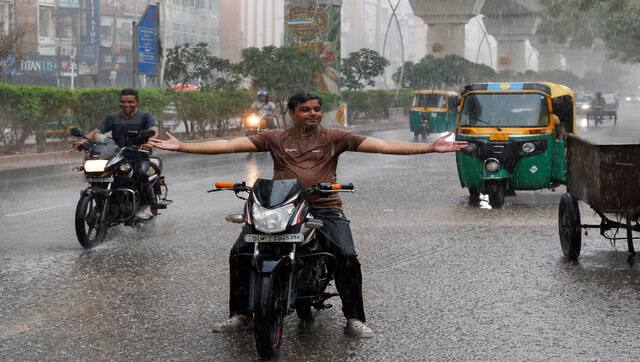
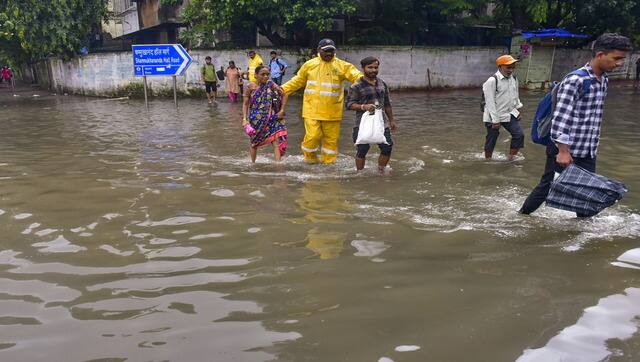
However, the city has received little to no rainfall so far. The IMD’s warning comes a day after Mumbai and Pune were brought to a grinding halt due to torrential rain.
The weather department has been criticised for dropping the ball with its forecasts during the monsoon. Predictions have also missed the mark for Delhi and the National Capital Region (NCR).
But why does this happen? Let’s understand.
How IMD predicts weather
The IMD relies on satellite data and computer models to make weather forecasts.
 More from Explainers
The INSAT satellites gather data on cloud motion, cloud top temperature, and water vapour content that facilitate the estimation of weather, including rainfall, and tracking cyclones, as per an NDTV report.
Besides satellites, the IMD uses weather balloons, manned and automatic weather stations, aircraft, ships, and ocean buoys to collect information on atmospheric temperature, wind speed, pressure humidity, and sea surface temperatures, the report added.
Tools like Doppler radars, radiosondes, surface observation centres and advanced weather processing systems are also required to forecast weather.
India uses Doppler radars, which forecast rainfall in close vicinity, making predictions more timely and accurate, reported NDTV.
The number of these radars have increased in the country from 15 in 2013 to 37 in 2023.
Why IMD gets it wrong
The IMD often faces flak when its predictions fail. Earlier this year, the IMD warned of “moderate rainfall across central and northwest India” on January 8 and 9. It also issued an orange alert for Haryana, Punjab, Delhi, Madhya Pradesh, and parts of Rajasthan, predicting rain and thunderstorms in these states.
However, there was no rain in most parts of these states on both these dates. After its inaccurate forecast on January 8, the IMD changed its prediction to “a possibility of isolated showers” for the next day.
In 2022, the Data Intelligence Unit (DIU) of India Today, which studied 20 years of data, found that IMD’s seasonal monsoon predictions were wrong for many years in this period.
India’s tropical climate makes it a challenge to predict the weather more accurately than in countries like the United States and the United Kingdom.
The US, UK and Japan are known for their apt weather forecasts.
"India is in a tropical zone. It is surrounded by sea and oceans and the weather is quite warm, humidity increases with high temperatures. There are several papers, tropical weather is less predictable than middle altitudes like Europe, and the US. The weather patterns in India, Bangladesh, and Pakistan are less predictable,” IMD's RK Jenamani told India Today.
Climate change poses another obstacle, making the job of forecasters more tough.
Experts also point out a lack of good network of machines and stations across the country. The US also has more Doppler radars – 200 – than India for weather prediction.
ALSO READ: A city submerged: The unforgettable saga of Mumbai's 26/7 deluge
According to M Rajeevan, former secretary of the ministry of earth sciences, the IMD’s model to predict weather has improved and is at par with technology used in the US, UK and Japan, reported Hindustan Times (HT).
However, he admitted the weather agency falls behind in interpreting data and satellite images. “IMD has access to all the state-of-the-art models along with its own models. The resolution of IMD’s models has also significantly improved over the last few years... An accurate weather forecast depends on two aspects — the model and the interpretation of forecasters... models are just tools and if we are unable to look at multiple satellite images, radars and pick up hints from the models, we will still be missing the mark with forecasts. That is what seems to be happening.”
Rajeevan told HT that the IMD’s weakness is believed to be long-range, seasonal forecasts. “Seasonal forecasts are more difficult to make. There is a term called ‘predictability’, which means the accuracy with which we can forecast, it is higher for three-day and five-day forecasts, but for seasonal forecasts, the predictability becomes low.”
Experts blame the “significant data gap” for inaccurate prediction of the IMD, especially in Delhi. "If we are collecting the wrong data on the first day itself, it will only increase on the second day and thereafter. Therefore, if we are predicting the day five weather based on these sets of data, the prediction is bound to fail. That problem is happening in metro cities where despite multiple stations, the forecast is not coming true many times in a year,” a scientist told India Today.
IMD Director General Mrutyunjay Mohapatra has defended the weather agency, saying it is not possible to be accurate all the time and small misses in predictions like unseasonal rains should not be considered as “mistakes”.
“Over the last few years our forecasts have improved significantly, and we are striving to make it better in the coming years,” he told HT earlier this year.
The IMD is taking steps to boost the accuracy of its weather prediction.
Speaking to India Today in 2022, the IMD director general had said they intend to raise the number of radars to 65 by 2025. “In the next few years, we have decided to place four more radars in the Western Himalayan region, 10 in the Northeastern region, and 11 additional radars in the plains of north India,” he said at the time.
The weather agency is also reportedly deploying artificial intelligence (AI) and machine learning to improve its forecasts.
With inputs from agencies

Military drones & police check-ups: How Sri Lanka is fighting against worst dengue outbreak in a decade
How Facebook job ad lured 2 Karnataka men into Myanmar cyber scam camp
Why is India seeing 95% cloud cover despite a Super El Niño?
What is CJP’s fourth demand to the government as protests in Delhi intensify?
The new geography of war: Why the Houthis can no longer be ignored