


How a manic monsoon led to closure of nearly Rs 7,000-crore Mumbai-Pune Expressway Missing Link, which opened in May
Inaugurated in May after being built for Rs 6,695 crore, traffic on the Missing Link of the Mumbai-Pune Expressway came to a grinding halt after a rain-triggered landslide occurred there. The closure caused commuters inordinate delays and inconvenience. It has also raised questions about one of Maharashtra’s most ambitious infrastructure projects

Monsoon mayhem has hit Maharashtra hard. Incessant rainfall has battered Mumbai, causing air, rail, and road traffic disruptions. Movement on the Mumbai-Pune Expressway has been suspended on Monday (July 6) as a result of the heavy showers.
Traffic on the Pune-to-Mumbai carriageway of the Khopoli-Kusgaon ‘Missing Link’ section of the Mumbai-Pune Expressway also had to be diverted on Monday after a landslide occurred near the exit of Tunnel 2.
This closure is significant for one of Maharashtra’s most ambitious infrastructure projects and raises questions for the state government to answer.
Why has traffic been diverted from the Missing Link?
On Monday, all traffic on the Missing Link of the Pune to Mumbai Expressway was diverted after heavy rains triggered a landslide near the exit of Tunnel 2. According to the Maharashtra State Road Transport Corporation (MSRTC), the diversion was put in place since 4 am to ensure the safety of commuters.
 More from Explainers
According to the police, a landslide and damage to a retaining wall caused water to gush around the Missing Link, prompting officials to shut it down. According to the State Highway Police, the incident occurred in the early hours of Monday following continuous heavy rainfall. Officials said a landslide took place near the end of the first tunnel on the Pune-to-Mumbai carriageway of the Missing Link, damaging a retaining wall and rendering the route unsafe for traffic.
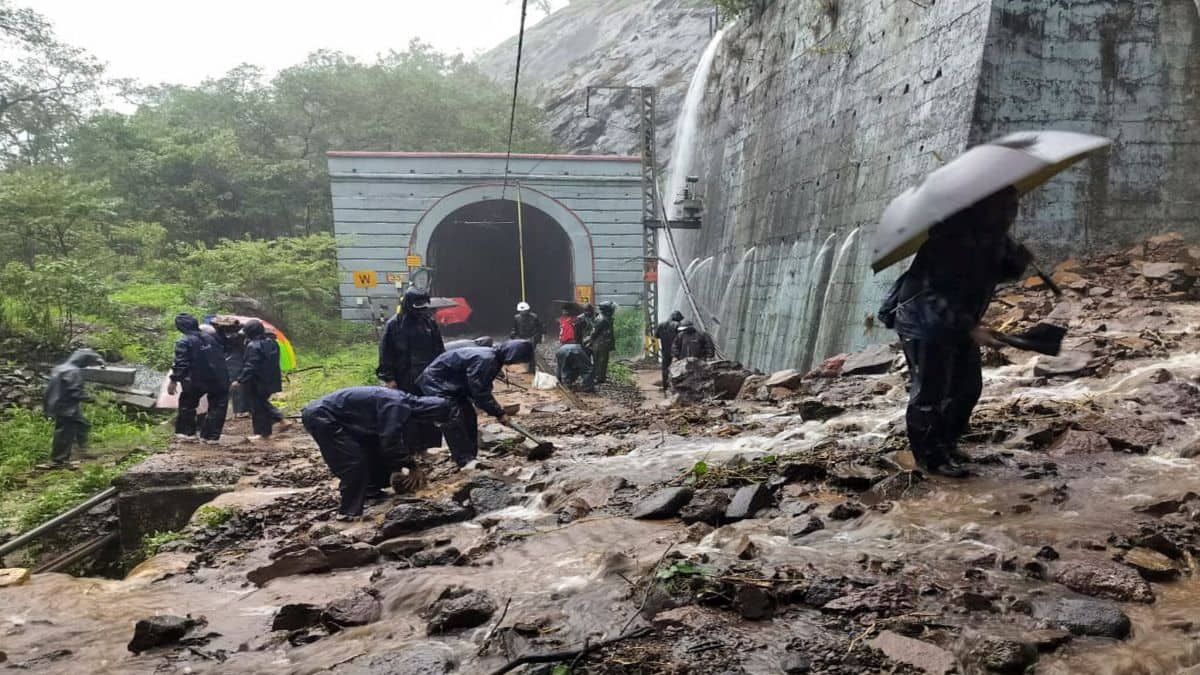
Rahul Vasaikar, chief engineer of Maharashtra State Road Development Corporation (MSRDC), said that they learnt about the landslide around 3:15 am on Monday. He said that their team had inspected the link and there was no structural damage.
An official of the MSRDC told Indian Express that the incident was an “act of God”. “This is not the contractor’s fault; it is nature at play,” said Anilkumar Gaikwad, vice chairman, MSRDC.
Videos of rainwater heavily pouring down and silt and mud covering a part of the stretch went viral on social media in the morning. Visuals also showed bulldozers deployed on site, trying to clean the mud off the stretch.
The closure of the Missing Link caused much inconvenience to commuters. A Sangli-based motorist, bound for Mumbai, told the Times of India that he had been stuck near the Missing Link since 4 am, as authorities diverted traffic.
Maharashtra’s Deputy Chief Minister Eknath Shinde said that authorities were working to clear the debris and reopen the Missing Link. “However, continuous rainfall and gusty winds are posing some challenges to these efforts,” Shinde said on social media.
Hours later, traffic on the Mumbai to Pune carriageway of the Missing Link section of the Mumbai–Pune Expressway was restored, reported the Indian Express. However, the Pune to Mumbai corridor remains closed.
Why does the closure of the Missing Link matter?
Earlier in May, the Mumbai-Pune Expressway’s Missing Link was thrown open to the public after Maharashtra Chief Minister Devendra Fadnavis inaugurated it, saying, “The Missing Link between Mumbai and Pune is no longer missing.”
Built at a cost of Rs 6,695 crore, the Missing Link is a 13-km bypass on the Mumbai-Pune Expressway that passes through the Sahyadri hills. It was built as a means to bypass the Khandala ghat section between Khopoli and Sinhgad Institute.
The new stretch also reduces the travel distance by about six kilometres and cuts journey time between Mumbai and Pune by an estimated 25-30 minutes.
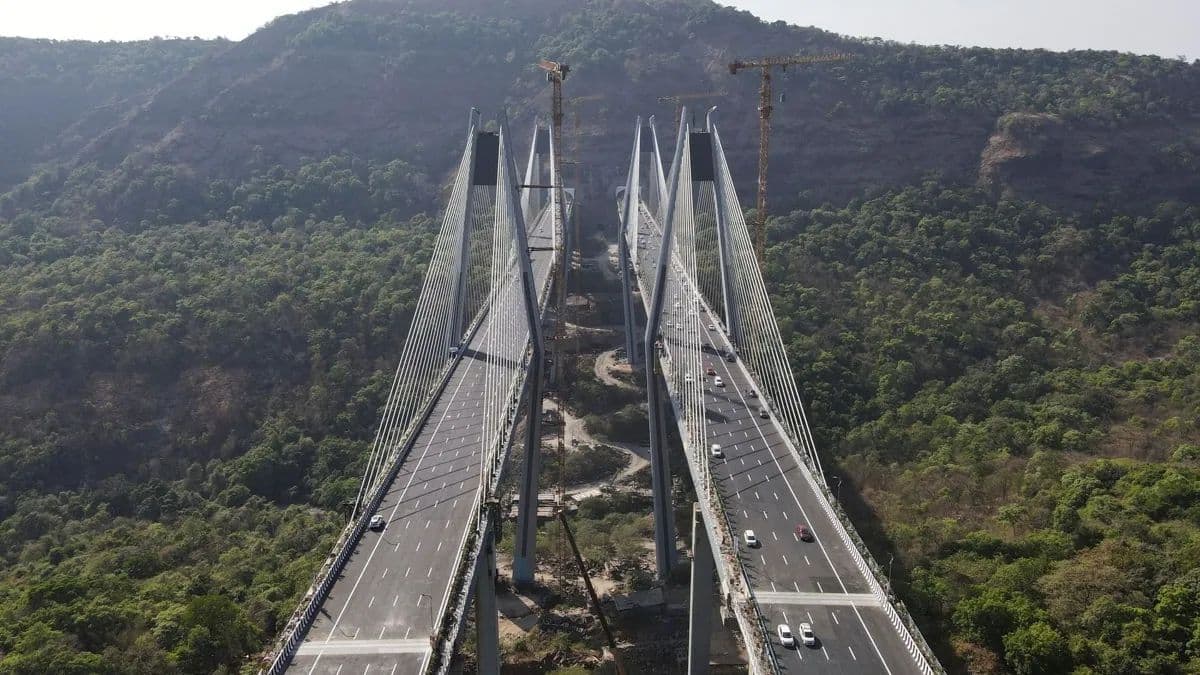
The Missing Link is also considered an engineering marvel. The 183-metre cable-stayed bridge, which is part of the stretch, is the tallest of its kind in the country. Moreover, the main 8.9-km tunnel below Lonavala Lake is among the widest road tunnels in the world.
At the time of its inauguration, Fadnavis had said that the Missing Link would help create an economy ten times more than the cost of the project, by boosting investments, connectivity, and industrial growth along the corridor.
What have been the reactions to the closure of the Missing Link?
The diversion of traffic from the Missing Link onto the old Mumbai-Pune Highway, which it was built to bypass, has invited a lot of criticism from the opposition as well as the public.
Shiv Sena (Uddhav Balasaheb Thackeray) leader Aaditya Thackeray said that the cost of the Missing Link project “has been escalated by thousands of crores” and that it has had a “landslide and much more within two months of its checks” and inaugurations.
Nationalist Congress Party (Sharadchandra Pawar) leader Rohit Pawar asked on social media, “Potholes were dug on the Missing Link for durability checks, so has a landslide occurred today for durability checks?”
“Due to only the link of brokerage and corruption emerging in the Missing Link’s work, even safety has gone missing,” Pawar said. “In the last four-five days, the rains from Pune to Mumbai have exposed the hollow claims of this corrupt government, revealing the dark deeds of this corrupt government.”
A social media user also posted on X: “We can keep blaming rains all we want, but if we don’t build infrastructure, keeping that in mind — then the blame is on us.”
Another X user, identified as Hathiram Choudhary, also wrote, “If a Rs 7,000 crore project faces serious questions over quality and safety within just two months of its inauguration, the government owes the public answers — not just publicity. Infrastructure should be built to last, not just to launch.”
With inputs from agencies
Tags

Military drones & police check-ups: How Sri Lanka is fighting against worst dengue outbreak in a decade
How Facebook job ad lured 2 Karnataka men into Myanmar cyber scam camp
Why is India seeing 95% cloud cover despite a Super El Niño?
What is CJP’s fourth demand to the government as protests in Delhi intensify?
The new geography of war: Why the Houthis can no longer be ignored