
Advertisement


Sections
Are you a mosquito magnet? Why your soap may be to blame
If you are a magnet for mosquitoes, then the answer may lie with the soap you use. A study has found that certain soapy fragrances could make people more attractive to the flies

Come summer and you become the favourite target of mosquitoes. If you are among those who relate to this and are fed up with attracting the insects, then it might be time to look at your soaps. A new study conducted by researchers from Virginia Polytechnic Institute and State University has found that certain soapy fragrances are likely making you a mosquito magnet.Published in the journal iScience, the study involved five human volunteers, four brands of soap and a mosquito species, noted The Atlantic.How was the study carried out, what are the findings and how can you repel mosquitoes? Let’s take a closer look.What did researchers do?They examined the odour profiles of their volunteers, before and after washing with one of the four different brands of soaps – Dial, Dove, Native, and Simple Truth.Fabric samples that had absorbed each human’s scent were used for the trial instead of exposing the volunteers to the female Aedes aegypti.According to Forbes, these fabric samples were tested before and one hour after volunteers washed with these soaps.What did they find?According to the study, washing with Dove, Dial and Simple Truth enhanced the attractiveness of some, but not all, volunteers for the mosquitoes.Another important finding was that a coconut-and-vanilla-scented body wash by Native seemed to repel mosquitoes.[caption id="attachment_12583122" align="alignnone" width="640"]![soaps mosquitoes]() Coconut-and-vanilla-scented soaps seem to repel mosquitoes. Pixabay (Representational Image)[/caption]This could be because of the coconut smell, as scientists believe coconut oils are a “natural deterrent” for mosquitoes, reported The Guardian.It must be noted that all soaps used in the experiment contain limonene, which is known to repel mosquitoes.
Coconut-and-vanilla-scented soaps seem to repel mosquitoes. Pixabay (Representational Image)[/caption]This could be because of the coconut smell, as scientists believe coconut oils are a “natural deterrent” for mosquitoes, reported The Guardian.It must be noted that all soaps used in the experiment contain limonene, which is known to repel mosquitoes.![mosquitoes]() Even if soaps are used or not, some people will continue to draw mosquitoes while others repel them. Pixabay (Representational Image)[/caption]“It’s well known that microbial composition on the skin plays a key role in the production of human body odour. The soaps tested in the study are presumably having a dual effect of altering the skin microbiota as well as the attractant or repellent chemicals in the specific soaps tested,” Messenger explained.So, how to repel mosquitoes?David Price, associate certified entomologist for Mosquito Joe, told Healthline that using soaps that have neem oil may help as it has been “scientifically proven to repel mosquitoes in various countries”.Daniel Peach, an assistant professor in vector ecology and infectious diseases at the University of Georgia’s Savannah River Ecology Lab & Department of Infectious Diseases, suggested using products containing DEET, which as per him is the “best repellent out there”, reported Medical News Today.“However, there are other options for those who seek to avoid DEET, such as picaridin. If you are particularly attractive to mosquitoes you can do things to try and minimise this attraction,” he added.Not wearing dark clothing can also keep mosquitoes at bay, Peach said.And well, there are always coconut-scented options that can be tried.With inputs from agenciesRead all the Latest News, Trending News, Cricket News, Bollywood News,India News and Entertainment News here. Follow us on Facebook, Twitter and Instagram.
Even if soaps are used or not, some people will continue to draw mosquitoes while others repel them. Pixabay (Representational Image)[/caption]“It’s well known that microbial composition on the skin plays a key role in the production of human body odour. The soaps tested in the study are presumably having a dual effect of altering the skin microbiota as well as the attractant or repellent chemicals in the specific soaps tested,” Messenger explained.So, how to repel mosquitoes?David Price, associate certified entomologist for Mosquito Joe, told Healthline that using soaps that have neem oil may help as it has been “scientifically proven to repel mosquitoes in various countries”.Daniel Peach, an assistant professor in vector ecology and infectious diseases at the University of Georgia’s Savannah River Ecology Lab & Department of Infectious Diseases, suggested using products containing DEET, which as per him is the “best repellent out there”, reported Medical News Today.“However, there are other options for those who seek to avoid DEET, such as picaridin. If you are particularly attractive to mosquitoes you can do things to try and minimise this attraction,” he added.Not wearing dark clothing can also keep mosquitoes at bay, Peach said.And well, there are always coconut-scented options that can be tried.With inputs from agenciesRead all the Latest News, Trending News, Cricket News, Bollywood News,India News and Entertainment News here. Follow us on Facebook, Twitter and Instagram.
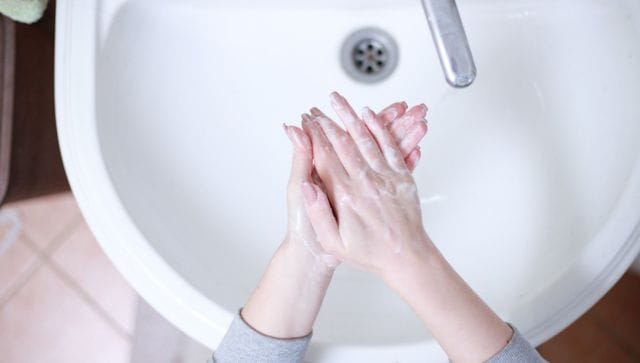 Coconut-and-vanilla-scented soaps seem to repel mosquitoes. Pixabay (Representational Image)[/caption]This could be because of the coconut smell, as scientists believe coconut oils are a “natural deterrent” for mosquitoes, reported The Guardian.It must be noted that all soaps used in the experiment contain limonene, which is known to repel mosquitoes.
Despite this, three of the four soaps used in the trials heightened attractiveness for mosquitoes.Why does this happen?Researchers involved in the study say mosquitoes may be attracted to soapy fragrances because they also feed on plant nectars when they are not sucking blood.“The fact we are taking those flowery, fruity smells and putting them on our bodies means that now the same object smells like a flower and a person at the same time,” Clément Vinauger, who led the work at Virginia Polytechnic Institute and State University, was quoted as saying by The Guardian. “It would be like waking up and smelling something that was like both coffee and muffins. Very appealing.”Chloé Lahondère, co-author of the study, said in a press release that, “soaps drastically change the way we smell, not only by adding chemicals but also by causing variations in the emission of compounds that we are already naturally producing.”“Our results indicate that more than the absolute amount of a given chemical, what really matters to the mosquitoes is the relative amounts of chemicals in mixtures. How these interactions are processed in the brain of the mosquito is something that we are going to pursue,” Vinauger told Medical News Today.The study also noted that the effects of the soaps differed between people owing to the interactions between the soaps and each person’s unique odour profile. Moreover, even if soaps are used or not, some people will continue to draw mosquitoes while others repel them.“This makes it hard to say, ‘Hey, this soap will make you really attractive’ or ‘That soap will keep mosquitoes completely away from you”, Seyed Mahmood Nikbakht Zadeh, a chemical ecologist and medical entomologist at CSU San Bernardino, who was not a part of the study, was quoted as saying by The Atlantic.Speaking to Healthline, Louisa Messenger, a UNLV School of Public Health researcher who specialises in the control of tropical infectious diseases spread by insects, said there are previous studies that show people’s level of attractiveness for mosquitoes varies due to their body odours.Using different soaps can alter each individual’s unique scent.[caption id="attachment_12583132" align="alignnone" width="640"]
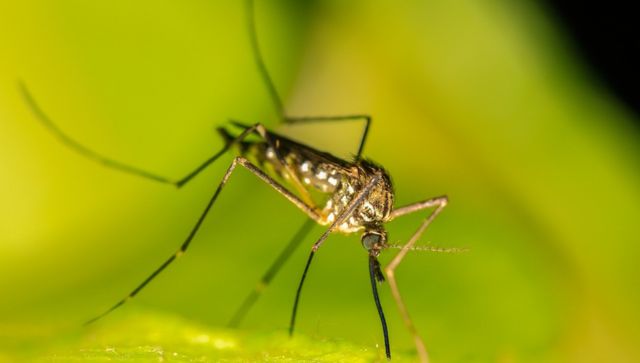 Even if soaps are used or not, some people will continue to draw mosquitoes while others repel them. Pixabay (Representational Image)[/caption]“It’s well known that microbial composition on the skin plays a key role in the production of human body odour. The soaps tested in the study are presumably having a dual effect of altering the skin microbiota as well as the attractant or repellent chemicals in the specific soaps tested,” Messenger explained.So, how to repel mosquitoes?David Price, associate certified entomologist for Mosquito Joe, told Healthline that using soaps that have neem oil may help as it has been “scientifically proven to repel mosquitoes in various countries”.Daniel Peach, an assistant professor in vector ecology and infectious diseases at the University of Georgia’s Savannah River Ecology Lab & Department of Infectious Diseases, suggested using products containing DEET, which as per him is the “best repellent out there”, reported Medical News Today.“However, there are other options for those who seek to avoid DEET, such as picaridin. If you are particularly attractive to mosquitoes you can do things to try and minimise this attraction,” he added.Not wearing dark clothing can also keep mosquitoes at bay, Peach said.And well, there are always coconut-scented options that can be tried.With inputs from agenciesRead all the Latest News, Trending News, Cricket News, Bollywood News,India News and Entertainment News here. Follow us on Facebook, Twitter and Instagram.
First Published:May 11, 2023, 20:23:45 IST
Advertisement
Advertisement

Military drones & police check-ups: How Sri Lanka is fighting against worst dengue outbreak in a decade
Sri Lanka is fighting its most severe dengue outbreak in nearly a decade, with infections rising sharply across the nation. Military drones have been deployed to tackle the outbreak, which has claimed 56 lives. Health officials said the outbreak is being driven primarily by the DENV-2 variant of the virus
3 min read
How Facebook job ad lured 2 Karnataka men into Myanmar cyber scam camp
The Karnataka Cyber Command has rescued two youths from a scam compound in Myanmar operated by Chinese fraudsters. The duo from Karnataka were lured on the pretext of data-entry jobs. They were asked to work for 16 hours a day and were expected to sleep for six hours daily
4 min read
Why is India seeing 95% cloud cover despite a Super El Niño?
India is witnessing nearly 95 per cent cloud cover despite a Super El Niño, a climate event usually linked to weaker monsoons. Regional weather systems, cyclonic circulations, the monsoon trough and moisture from two seas are temporarily overpowering one of the world's strongest climate phenomena
5 min read
What is CJP’s fourth demand to the government as protests in Delhi intensify?
The protest by the Cockroach Janta Party at Delhi’s Jantar Mantar refuses to die down. The group have made a fourth demand to the Centre, asking that no FIRs are filed against the agitators and that no legal action be taken. The government has expressed willingness to speak to the protesters, but refused to accede on the resignation of Education Minister Dharmandra Pradhan
5 min read
The new geography of war: Why the Houthis can no longer be ignored
The rise of the Houthis marks the emergence of a new geography of war — one in which influence flows not only from capitals and conventional armies, but also from rugged mountains overlooking vital sea lanes
6 min read
Advertisement
Advertisement