


Leopard, tiger and cheetah seen together in India’s Ranthambore. Why it isn’t as rare as believed
Earlier in April, a leopard, tiger and cheetah were seen in India’s Ranthambore national park. Overlap isn’t unusual in India’s forests. What matters is what drives it, and what happens when predators can no longer stay apart

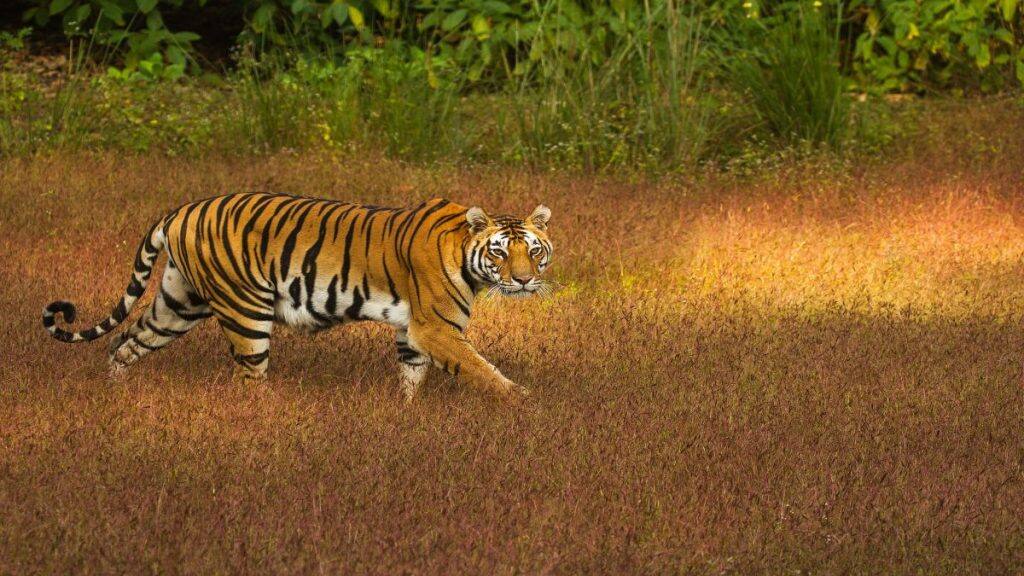
Last month (April), a tiger, a leopard and a cheetah were spotted in Zone 9 of Ranthambore Tiger Reserve in India’s Rajasthan. The cheetah, a dispersing individual from Kuno National Park in Madhya Pradesh, is not a resident of Ranthambore. All three big cats were within a one-to-two-kilometre range. The moment appears rare. The overlap isn’t.
“Spatial overlap among large predators is far more common than we assume,” says Supratim Dutta, research scholar at the Wildlife Institute of India, who studies carnivore movement and behaviour. “Tiger and leopard are the clearest examples. They co-occur across most forested landscapes in India.”
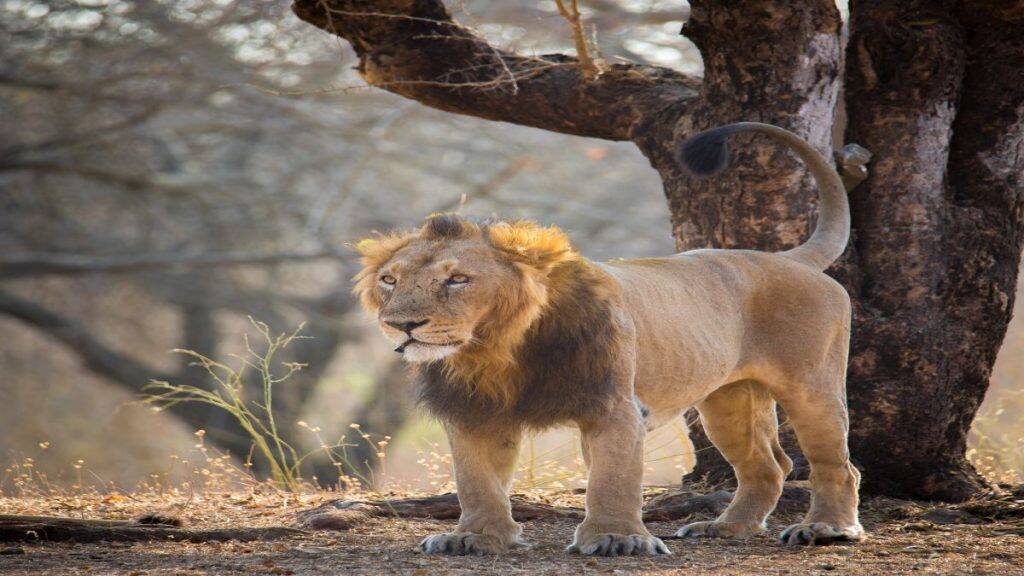
In reserves like Kanha National Park, Tadoba Andhari Tiger Reserve and Bandipur National Park, tigers, leopards and dholes all operate within the same areas. Outside tiger systems too, overlaps persist. Wolves and striped hyenas share space across parts of central and western India. “In Gir, leopards share space with Asiatic lions,” says Nishith Dharaiya, director, Centre of Excellence for Wildlife and Conservation Studies.
 More from Explainers
What keeps conflict low is how these predators use that shared space. “They’re not separated in a strict sense. They just use it differently — what they eat, where they move, and when they’re active,” says Dutta.
For example, tigers tend to focus on larger prey like sambar and chital. Leopards take smaller animals. Leopards stay closer to dense cover and rugged terrain, while tigers are more often found in relatively open areas.
There are differences in timing too, with leopards showing more flexibility in when they are active. Direct encounters are rare. “In one camera-trap analysis, only three or four instances of a leopard appearing within an hour of a tiger at the same location, out of around 2,000 detections,” Dutta says.
That balance holds as long as resources, space and corridors allow animals to avoid each other. It starts to shift when those margins shrink.
When resources tighten
“In dry seasons, water becomes the dominant factor. Multiple species are forced to aggregate around the same sources,” says Dutta. As water shrinks, animals cluster around what remains. Space tightens.
Food stress is another factor. “When food is limited or the landscape is small, predators end up sharing resources,” says Dharaiya. Encounters increase and avoidance reduces.
In reserves like Kanha, Bandhavgarh and Tadoba, strong protection and abundant prey support high predator numbers. That also means more sharing of space. In landscapes like the Western Ghats, however, overlap plays out differently. Greater prey diversity allows predators to separate more through diet, easing direct competition even when they share space.
At Ranthambore, the overlap likely reflects exactly these pressures. A dispersing cheetah moving through, resident predators holding territory, and limited space to spread out.
When space runs out
But the problem compounds when protected areas begin to fill up. “As populations approach carrying capacity, animals are forced into the same areas, and overlap increases. Beyond a point, that compression signals the system is reaching saturation,” says Dutta.
This pressure builds fastest in landscapes where predators have nowhere else to go. In smaller or fragmented habitats, it is harder to absorb. “These overlaps can become more stable, even permanent. Over time, that can drive changes in feeding patterns and behaviour,” says Dharaiya.
India’s protected areas are also often small, surrounded by human-dominated land. When corridors break down, dispersal slows or stops. Animals can’t move out. Overlap stops being temporary and starts becoming the default. “In those cases, the issue isn’t the overlap itself. It’s the lack of connectivity that prevents animals from moving out,” says Dutta.
In other places, this spillover leads to conflict. Leopards and tigers are now being seen more often near settlements and agricultural fields. Wolves, with grasslands reduced, are increasingly depending on livestock.
In the end, the Ranthambore sighting may be less about rarity and more about constraint. Three large predators within a kilometre or two of each other is likely what overlap looks like when space begins to run out.
Tags

Military drones & police check-ups: How Sri Lanka is fighting against worst dengue outbreak in a decade
How Facebook job ad lured 2 Karnataka men into Myanmar cyber scam camp
Why is India seeing 95% cloud cover despite a Super El Niño?
What is CJP’s fourth demand to the government as protests in Delhi intensify?
The new geography of war: Why the Houthis can no longer be ignored