


How India stands vindicated after Canada admits to Khalistani role in Kanishka bombing after 40 years
Forty-one years ago, on June 23, Air India flight 182 exploded, killing all 329 people on board. Now, the Canadian intelligence agency has acknowledged the involvement of Khalistanis in the blast for the first time. It marks a major shift in Ottawa’s stance vis-à-vis the terrorist group that continues to thrive on Western soil

Three days ago, on June 23, India and Canada marked an important occasion — the 41st anniversary of the deadly bombing of an Air India flight, also known as the Kanishka bombing.
Now, Ottawa has also done something that hasn’t been done until now: for the first time since the 1985 tragedy, the Canadian intelligence has acknowledged that Khalistani terrorists were involved in the bombing of Air India Flight 182 in 1985 that killed 329 people.
This acknowledgement by the Canadian Security Intelligence Service (CSIS) is a huge win for India, which has long held the position that the bombing was perpetrated by Khalistani extremists, who, even presently, operate from Canadian soil.
What happened to the Air India aircraft in 1985?
Before we dive into why Canada’s acknowledgment matters to India, here’s a recap of what happened 41 years ago, referred to as the Kanishka bombing.
 More from Explainers
On 23 June 1985, an Air India flight travelling from Canada’s Toronto to India via London exploded off the Irish coast, killing all 329 people on board. Of the passengers on board, 268 were Canadian citizens of Indian origin. Nearly one-third of the passengers were children who had just finished their school year, ready to travel for a family summer vacation.
The cause of the explosion was a bomb in a suitcase that was transferred to the flight even though the ticket holder had not boarded.
The Kanishka bombing is considered the worst aviation tragedy in Canada’s history, with some even calling it Canada’s 9/11 — a reference to the attacks on American soil of 2011.
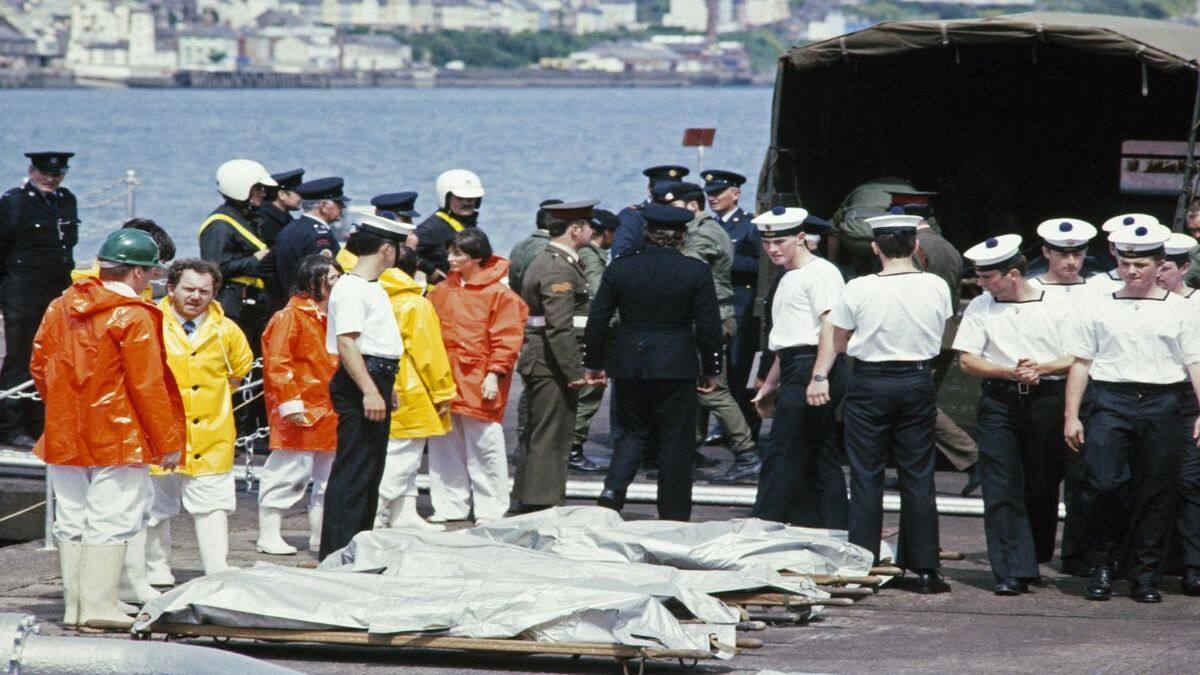
Investigations revealed that the bomb had been planted in the aircraft’s luggage compartment by operatives linked to the banned Khalistani outfit, Babbar Khalsa.
In the months to follow, Canadian authorities were criticised for not doing enough to prevent the attack and for bungling the investigation. A public inquiry, which was set up in 2006, concluded in 2010 that a “cascading series of errors” had led to the “largest mass murder in Canadian history”.
The inquiry heard that an unidentified witness had warned Canadian police of a plot to blow up a plane months before the attack. It also emerged that in the weeks before the attack, members of the Canadian secret services had followed Talwinder Singh Parmar, the leader of Babbar Khalsa, and Inderjit Singh Reyat to some woods on Vancouver Island where they heard “a loud explosive sound”, but did not regard this as important.
In India, the bombing evoked strong emotions. Many claimed they felt “excluded by the judicial process in Canada”, reported the BBC.
What has Canada finally said on the Kanishka bombing?
Now, years later, the Canadian Security Intelligence Service (CSIS) has for the first time explicitly blamed Canada-based Khalistani extremists (CBKEs) for the 1985 bombing of Air India ‘Kanishka’ Flight 182, in a statement marking the 41st anniversary of the country’s deadliest terror attack.
On Tuesday, the CSIS wrote, “On June 23, 1985, a bomb planted by Canada‑based Khalistani extremists destroyed the aircraft, killing everyone on board — most of them Canadians. It remains the deadliest terrorist attack in Canada’s history and a defining moment for our national security community.”
The statement further noted that the agency was less than a year old at the time, and the “Kanishka tragedy shaped its evolution.” “Over the past four decades, we have remained committed to protecting Canadians from political, religious, and ideologically motivated violence,” the CSIS noted.
Earlier, on the same day, Canadian Prime Minister Mark Carney also marked the anniversary of the Kanishka bombing, calling for “vigilance”. In a statement, Carney said the “legacy of Air India Flight 182 demands remembrance, but also vigilance.”
“Canada’s government is confronting and condemning violent extremism in all its forms, with new legislation to defend the safety and security of Canadians, strengthen our national security institutions, and disrupt terrorist financing and support networks,” he added.
Why is this significant to India?
India and Canada have repeatedly clashed over Khalistan activity on Canadian soil. For years, New Delhi has accused Ottawa of allowing Khalistani members to operate under the protection of free speech and political activism. Despite pointing out numerous instances, successive governments in Canada have permitted the Khalistani movement to grow under the guise of “freedom of expression”.
For those unaware, the Khalistan movement was born in Punjab in 1970. For many years, it carried out an insurgency in the state. However, it later faded, with many supporters relocating abroad, particularly to Canada, from where they continue to mobilise and support this movement.
Many experts note that this support for the Khalistanis by successive governments in Canada was owing to the fear that naming them would alienate the large Sikh population in the country. It’s important to note that the Sikh diaspora makes up two per cent of Canada’s population, making them a valuable vote bank.
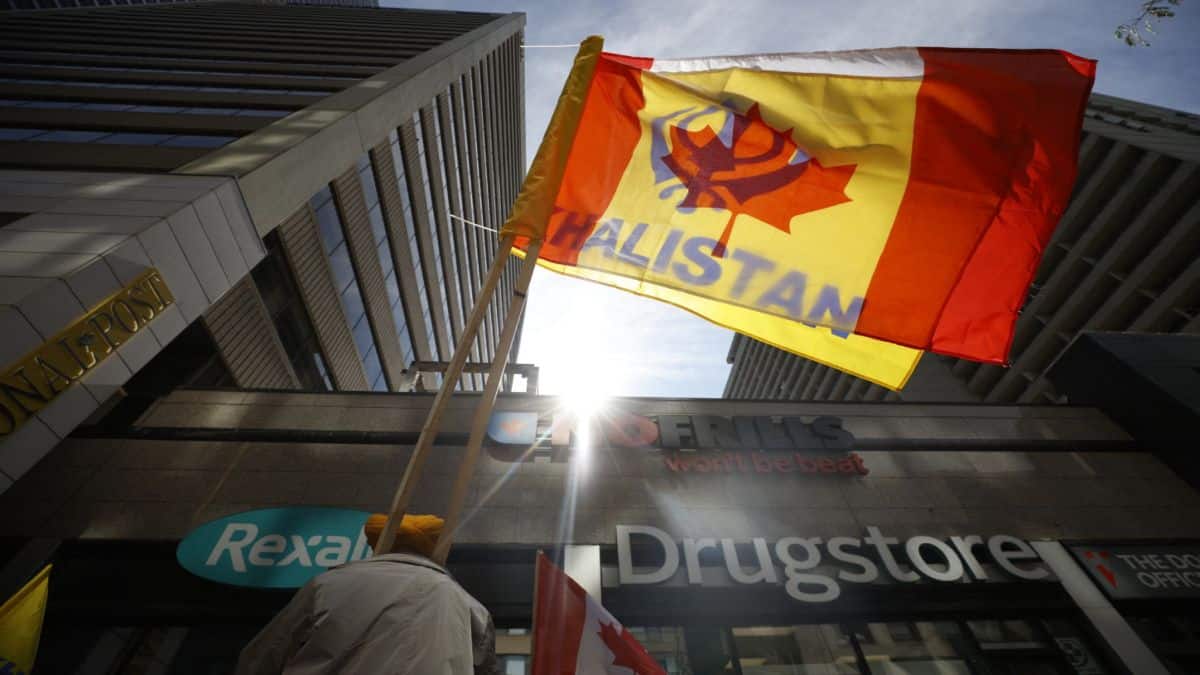
Canada’s support for Khalistanis has also been a thorn in bilateral ties. In fact, in 2023, relations nosedived when former Prime Minister Justin Trudeau alleged an Indian link to the killing of Khalistani terrorist Hardeep Singh Nijjar.
It is against this backdrop that the CSIS admission has come, which many note is a turning point. The post shows that Canada, under the Mark Carney dispensation, is no longer willing to treat Khalistanis with kid gloves.
In fact, in its 2025 public report published in March, the CSIS, for the first time ever, flagged the existence of “Canada-based Khalistani extremist (CBKE) groups” as a national security threat. The report noted that the “ongoing involvement in violent extremist activities by CBKEs continues to pose a national security threat to Canada and to Canadian interests”.
With this post, the Canadian administration is sending out a message that Khalistan members will no longer receive the patronage they enjoyed earlier.
As Ravinder Singh Robin, a journalist, wrote on X, “CSIS clearly distinguishes them from peaceful supporters, saying lawful, non-violent advocacy is not extremism.”
Richa Dwivedi, another journalist, also noted in an X post that the post by the CSIS marks “a long-overdue acceptance of a reality that much of Canada’s political establishment avoided confronting for years.”
The CSIS admission is also a vindication of New Delhi’s years-long position that Khalistan is a threat not only to India but also to Canada.
All in all, it seems that the post is a way for Canada to mend broken ties with India at a time when it is trying to sign big deals with New Delhi.
With inputs from agencies

Military drones & police check-ups: How Sri Lanka is fighting against worst dengue outbreak in a decade
How Facebook job ad lured 2 Karnataka men into Myanmar cyber scam camp
Why is India seeing 95% cloud cover despite a Super El Niño?
What is CJP’s fourth demand to the government as protests in Delhi intensify?
The new geography of war: Why the Houthis can no longer be ignored