
Advertisement


Sections
The journalist who broke Mahsa Amini’s story and the price she is paying for it
A champion of women’s rights, Niloofar Hamedi broke the heartwrenching story of Mahsa Amini, which has led to unprecedented protests. Now the journalist has been jailed and held in solitary confinement

It’s not easy being a woman in Iran. It’s even more difficult if you have anything to do with Mahsa Amini, the 21-year-old who died after being detained by Iran’s morality police for “inappropriate” dressing, triggering intense protests across the country and the world. So you can imagine the plight of Niloofar Hamedi who broke the news of Amini’s death.Niloofar Hamedi, the ‘voice of the voiceless’ Hamedi is an Iranian journalist who works for the reformist daily newspaper Shargh and writes extensively on women’s rights. Her investigative reports address issues like self-immolation among women and domestic abuse.She has written about the Gasht-e Ershad, the country’s “morality police” and how they enforced the mandatory headscarf laws. Before the death of Amini, she reported on the shooting of a former member of Iran’s national boxing team by the “morality police”. She also interviewed the family of Sepideh Rashno, an Iranian writer and artist, who was arrested in July for defying the Islamic dress code, reports the news agency Reuters.“She (Hamedi) always went beyond her limit to be the voice of voiceless women who were deprived from their rights, whether by their fathers, husbands or by social limitations,” one friend of hers told Reuters, for fear of reprisals.Breaking the news of AminiOn 16 September, Hamedi got access to the hospital in Tehran where Amini was receiving treatment after being detained by Gasht-e Ershad. The authorities said that the Kurdish woman suffered a sudden heart attack, a claim disputed by her parents.[caption id="attachment_11434941" align="alignnone" width="640"]![]() Hamedi posted a picture of Mahsa Amini's parents from a hospital in Tehran. Now the journalist's Twitter account has been suspended. Image courtesy: Niloofar Hamedi/Twitter[/caption]Hamedi tweeted a picture of the parents weeping in the hospital, where Amini was lying in a coma. This was proof that not all was well with the young woman. Later that day, Amini breathed her last and her death led to mass demonstrations across Iran, which continue until today.The story of Amini was one of the last ones that Hamedi reported. Then, the harassment began.Also read: Explained: Who is 16-yr-old Nika Shakarami, the latest symbol of Iran protests?Hamedi’s arrestIt started with the suspension of Hamedi’s Twitter account, where she posted the photo of Amini’s parents. Then security forces raided the journalist’s house, searched her belongings and arrested her on 22 September.“This morning, security agents raided the house of my client Niloofar Hamedi, journalist of Shargh newspaper, arrested her, searched her house and confiscated her belongings,” wrote her lawyer Mohammad Ali Kamfirouzi on Twitter.According to him, the journalist has been kept in solitary confinement in Iran’s Evin prison, where she was interrogated. No charges have been filed against her or she has not been informed about them yet.Hamedi not alone The Committee to Protect Journalists (CPJ) has called on Iranian authorities to“immediately and unconditionally release ... all journalists arrested because of their coverage of Mahsa Amini’s death and the protests that have followed”. It said last month that at least 28 journalists had been detained by the security forces.It’s a tough job to be a scribe in Iran, especially if you are working with a reformist newspaper.“Journalism in Iran is not a job. It is a potential crime from the point of view of security institutions,” Hamidi’s colleague Sima told Middle East Eye.”As a result, as I am talking to you right now, I am worried that these conversations will be overheard.”“We hope Hamedi returns to the office. Put her bag on the table, … write about the deprived and anonymous women who are victims of prejudice in Iran,” wrote her editor Shahrzad Hemmati on 11 October, according to Reuters.[caption id="attachment_11434981" align="alignnone" width="640"]
Hamedi posted a picture of Mahsa Amini's parents from a hospital in Tehran. Now the journalist's Twitter account has been suspended. Image courtesy: Niloofar Hamedi/Twitter[/caption]Hamedi tweeted a picture of the parents weeping in the hospital, where Amini was lying in a coma. This was proof that not all was well with the young woman. Later that day, Amini breathed her last and her death led to mass demonstrations across Iran, which continue until today.The story of Amini was one of the last ones that Hamedi reported. Then, the harassment began.Also read: Explained: Who is 16-yr-old Nika Shakarami, the latest symbol of Iran protests?Hamedi’s arrestIt started with the suspension of Hamedi’s Twitter account, where she posted the photo of Amini’s parents. Then security forces raided the journalist’s house, searched her belongings and arrested her on 22 September.“This morning, security agents raided the house of my client Niloofar Hamedi, journalist of Shargh newspaper, arrested her, searched her house and confiscated her belongings,” wrote her lawyer Mohammad Ali Kamfirouzi on Twitter.According to him, the journalist has been kept in solitary confinement in Iran’s Evin prison, where she was interrogated. No charges have been filed against her or she has not been informed about them yet.Hamedi not alone The Committee to Protect Journalists (CPJ) has called on Iranian authorities to“immediately and unconditionally release ... all journalists arrested because of their coverage of Mahsa Amini’s death and the protests that have followed”. It said last month that at least 28 journalists had been detained by the security forces.It’s a tough job to be a scribe in Iran, especially if you are working with a reformist newspaper.“Journalism in Iran is not a job. It is a potential crime from the point of view of security institutions,” Hamidi’s colleague Sima told Middle East Eye.”As a result, as I am talking to you right now, I am worried that these conversations will be overheard.”“We hope Hamedi returns to the office. Put her bag on the table, … write about the deprived and anonymous women who are victims of prejudice in Iran,” wrote her editor Shahrzad Hemmati on 11 October, according to Reuters.[caption id="attachment_11434981" align="alignnone" width="640"]![]() Demonstrators hold placards outside the Iranian Embassy in London. As anti-government protests roil cities and towns in Iran for a fourth week, sparked by the death of Mahsa Amini, tens of thousands of Iranians living abroad have marched on the streets of Europe, North America and beyond. AP[/caption]Press freedom in IranIran is one of the world’s ten worst countries for press freedom, according to Reporters Without Borders’ World Press Freedom Index, and it remains one of the most repressive ones for journalists.Also read: Hijab must in Iran, burqa banned in France: Countries that dictate what women should wearArticle 24 of the constitution guarantees press freedom, but the 1986 press law (amended in 2000 and 2009 to take account of online publications) allows the authorities to ensure that journalists do not “endanger the Islamic Republic”, “do not offend the clergy and the Supreme Leader” and do not “spread false information”.CPJ senior researcher Yeganeh Rezaian told the Middle East Eye that Iran is “the world’s biggest jailer” of women reporters.She was jailed with her husband and Washington Post reporter Jason Rezaian, in Iran in 2014. Although she was released after 72 days, Jason would remain in prison until January 2016.With inputs from agenciesRead all the Latest News, Trending News, Cricket News, Bollywood News,India News and Entertainment News here. Follow us on Facebook, Twitter and Instagram.
Demonstrators hold placards outside the Iranian Embassy in London. As anti-government protests roil cities and towns in Iran for a fourth week, sparked by the death of Mahsa Amini, tens of thousands of Iranians living abroad have marched on the streets of Europe, North America and beyond. AP[/caption]Press freedom in IranIran is one of the world’s ten worst countries for press freedom, according to Reporters Without Borders’ World Press Freedom Index, and it remains one of the most repressive ones for journalists.Also read: Hijab must in Iran, burqa banned in France: Countries that dictate what women should wearArticle 24 of the constitution guarantees press freedom, but the 1986 press law (amended in 2000 and 2009 to take account of online publications) allows the authorities to ensure that journalists do not “endanger the Islamic Republic”, “do not offend the clergy and the Supreme Leader” and do not “spread false information”.CPJ senior researcher Yeganeh Rezaian told the Middle East Eye that Iran is “the world’s biggest jailer” of women reporters.She was jailed with her husband and Washington Post reporter Jason Rezaian, in Iran in 2014. Although she was released after 72 days, Jason would remain in prison until January 2016.With inputs from agenciesRead all the Latest News, Trending News, Cricket News, Bollywood News,India News and Entertainment News here. Follow us on Facebook, Twitter and Instagram.
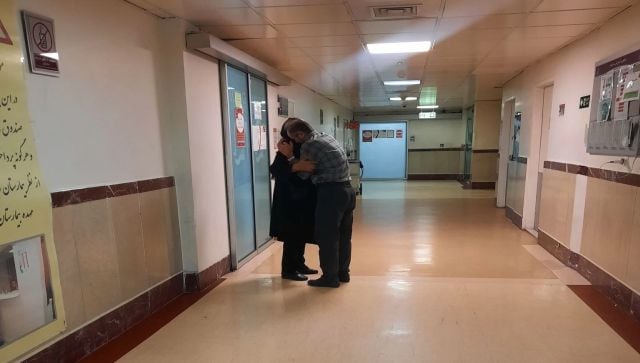 Hamedi posted a picture of Mahsa Amini's parents from a hospital in Tehran. Now the journalist's Twitter account has been suspended. Image courtesy: Niloofar Hamedi/Twitter[/caption]Hamedi tweeted a picture of the parents weeping in the hospital, where Amini was lying in a coma. This was proof that not all was well with the young woman. Later that day, Amini breathed her last and her death led to mass demonstrations across Iran, which continue until today.The story of Amini was one of the last ones that Hamedi reported. Then, the harassment began.Also read: Explained: Who is 16-yr-old Nika Shakarami, the latest symbol of Iran protests?Hamedi’s arrestIt started with the suspension of Hamedi’s Twitter account, where she posted the photo of Amini’s parents. Then security forces raided the journalist’s house, searched her belongings and arrested her on 22 September.“This morning, security agents raided the house of my client Niloofar Hamedi, journalist of Shargh newspaper, arrested her, searched her house and confiscated her belongings,” wrote her lawyer Mohammad Ali Kamfirouzi on Twitter.According to him, the journalist has been kept in solitary confinement in Iran’s Evin prison, where she was interrogated. No charges have been filed against her or she has not been informed about them yet.Hamedi not alone The Committee to Protect Journalists (CPJ) has called on Iranian authorities to“immediately and unconditionally release ... all journalists arrested because of their coverage of Mahsa Amini’s death and the protests that have followed”. It said last month that at least 28 journalists had been detained by the security forces.It’s a tough job to be a scribe in Iran, especially if you are working with a reformist newspaper.“Journalism in Iran is not a job. It is a potential crime from the point of view of security institutions,” Hamidi’s colleague Sima told Middle East Eye.”As a result, as I am talking to you right now, I am worried that these conversations will be overheard.”“We hope Hamedi returns to the office. Put her bag on the table, … write about the deprived and anonymous women who are victims of prejudice in Iran,” wrote her editor Shahrzad Hemmati on 11 October, according to Reuters.[caption id="attachment_11434981" align="alignnone" width="640"]
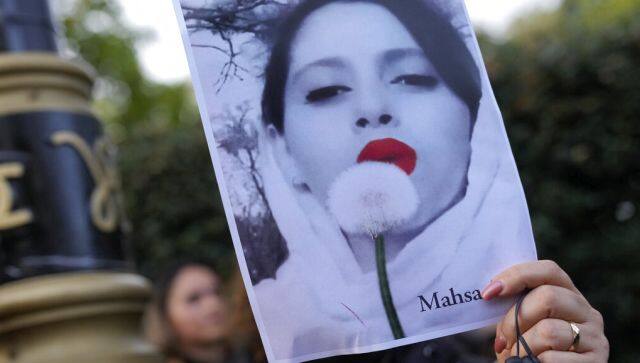 Demonstrators hold placards outside the Iranian Embassy in London. As anti-government protests roil cities and towns in Iran for a fourth week, sparked by the death of Mahsa Amini, tens of thousands of Iranians living abroad have marched on the streets of Europe, North America and beyond. AP[/caption]Press freedom in IranIran is one of the world’s ten worst countries for press freedom, according to Reporters Without Borders’ World Press Freedom Index, and it remains one of the most repressive ones for journalists.Also read: Hijab must in Iran, burqa banned in France: Countries that dictate what women should wearArticle 24 of the constitution guarantees press freedom, but the 1986 press law (amended in 2000 and 2009 to take account of online publications) allows the authorities to ensure that journalists do not “endanger the Islamic Republic”, “do not offend the clergy and the Supreme Leader” and do not “spread false information”.CPJ senior researcher Yeganeh Rezaian told the Middle East Eye that Iran is “the world’s biggest jailer” of women reporters.She was jailed with her husband and Washington Post reporter Jason Rezaian, in Iran in 2014. Although she was released after 72 days, Jason would remain in prison until January 2016.With inputs from agenciesRead all the Latest News, Trending News, Cricket News, Bollywood News,India News and Entertainment News here. Follow us on Facebook, Twitter and Instagram.
First Published:Oct 12, 2022, 15:43:21 IST
Advertisement
Advertisement

Military drones & police check-ups: How Sri Lanka is fighting against worst dengue outbreak in a decade
Sri Lanka is fighting its most severe dengue outbreak in nearly a decade, with infections rising sharply across the nation. Military drones have been deployed to tackle the outbreak, which has claimed 56 lives. Health officials said the outbreak is being driven primarily by the DENV-2 variant of the virus
3 min read
How Facebook job ad lured 2 Karnataka men into Myanmar cyber scam camp
The Karnataka Cyber Command has rescued two youths from a scam compound in Myanmar operated by Chinese fraudsters. The duo from Karnataka were lured on the pretext of data-entry jobs. They were asked to work for 16 hours a day and were expected to sleep for six hours daily
4 min read
Why is India seeing 95% cloud cover despite a Super El Niño?
India is witnessing nearly 95 per cent cloud cover despite a Super El Niño, a climate event usually linked to weaker monsoons. Regional weather systems, cyclonic circulations, the monsoon trough and moisture from two seas are temporarily overpowering one of the world's strongest climate phenomena
5 min read
What is CJP’s fourth demand to the government as protests in Delhi intensify?
The protest by the Cockroach Janta Party at Delhi’s Jantar Mantar refuses to die down. The group have made a fourth demand to the Centre, asking that no FIRs are filed against the agitators and that no legal action be taken. The government has expressed willingness to speak to the protesters, but refused to accede on the resignation of Education Minister Dharmandra Pradhan
5 min read
The new geography of war: Why the Houthis can no longer be ignored
The rise of the Houthis marks the emergence of a new geography of war — one in which influence flows not only from capitals and conventional armies, but also from rugged mountains overlooking vital sea lanes
6 min read
Advertisement
Advertisement