
Advertisement


Sections
ISRO’s SSLV-D2 successfully launched: Why this new rocket is significant
Months after hitting partial failure in its maiden launch, the second developmental flight of the Indian Space Research Organisation's (ISRO) Small Satellite Launch Vehicle (SSLV-D2) successfully placed three satellites into the intended 450-km circular orbit around the Earth today

In its first launch this year, Indian Space Research Organisation (ISRO) successfully instituted the second edition of the Small Satellite Launch Vehicle (SSLV-D2) from Satish Dhawan Space Centre, Sriharikota, Andhra Pradesh today (10 February).The rocket lifted off at the end of a six-and-a-half-hour countdown at around 9:18 am. During its flight that lasted for 15 minutes, the launch vehicle accomplished its mission and put earth observation satellite EOS-07, along with two co-passenger satellites — Janus-1 and AzaadiSat2, in a 450-km circular orbit around the Earth.“The SSLV-D2-EOS-07 mission is successfully accomplished,” ISRO announced on Twitter.What are the features of the SSLV and its payloads? What was the aim of the mission and why does the successful launch matter? Let’s take a closer look.SSLV and its payloads![sslv launch]() Graphic: Pranay Bhardwaj[/caption]Technology demonstrator satellite, Janus-1, is developed by United States-based Antaris and its Indian partners XDLinks and Ananth Technologies.ALSO READ: With Vikram-S, India joins the ‘private rocket’ club: Which other countries have achieved this feat?Weighing 10.2 kg, Janus-1 is a six-unit satellite carrying five payloads, as per Indian Express.The payloads of AzaadiSAT-2 have been built by 750 girl students from across India under the guidance of Chennai-based space start-up Space Kidz.According to ISRO, the satellite aims to demonstrate LoRa and amateur radio communication capabilities, assess radiation levels in space, and exhibit an expandable satellite structure.Space Kidz India has made the 8-unit satellite expandable, with a spring mechanism-based external frame that is supposed to open up once the satellite is placed in orbit, as per Indian Express.“This external frame will host a new cheaper type of solar panels to provide energy to the satellite. Energy for sustaining longer durations in space is one of the challenges of small satellites, which is why we have made the structure expandable. This is the first time such a thing is being tried out,” Srimathy Kesan, founder and CEO of the 7-year-old aerospace startup told Indian Express.Earlier, Space Kidz India had said that AzaadiSAT-2 satellite would carry the G20 logo in space, as well as play the National Cadet Corps (NCC) song to mark the 75 years of the organisation.Composed by Devi Sri Prasad or DSP, the "space song" is a "hope for girls and students of rural India to dream and inspire them to become a space scientist", the startup had said.ALSO READ: What is NISAR, the NASA-ISRO satellite that will help scientists better understand climate change?Aim of the launch and why it is a big dealThe objective of launching SSLV was to showcase the “in-flight performance” of its vehicle systems.The SSLV was built to meet the needs of the emerging small and microsatellite commercial market and offer launches on demand.[caption id="attachment_12134382" align="alignnone" width="640"]
Graphic: Pranay Bhardwaj[/caption]Technology demonstrator satellite, Janus-1, is developed by United States-based Antaris and its Indian partners XDLinks and Ananth Technologies.ALSO READ: With Vikram-S, India joins the ‘private rocket’ club: Which other countries have achieved this feat?Weighing 10.2 kg, Janus-1 is a six-unit satellite carrying five payloads, as per Indian Express.The payloads of AzaadiSAT-2 have been built by 750 girl students from across India under the guidance of Chennai-based space start-up Space Kidz.According to ISRO, the satellite aims to demonstrate LoRa and amateur radio communication capabilities, assess radiation levels in space, and exhibit an expandable satellite structure.Space Kidz India has made the 8-unit satellite expandable, with a spring mechanism-based external frame that is supposed to open up once the satellite is placed in orbit, as per Indian Express.“This external frame will host a new cheaper type of solar panels to provide energy to the satellite. Energy for sustaining longer durations in space is one of the challenges of small satellites, which is why we have made the structure expandable. This is the first time such a thing is being tried out,” Srimathy Kesan, founder and CEO of the 7-year-old aerospace startup told Indian Express.Earlier, Space Kidz India had said that AzaadiSAT-2 satellite would carry the G20 logo in space, as well as play the National Cadet Corps (NCC) song to mark the 75 years of the organisation.Composed by Devi Sri Prasad or DSP, the "space song" is a "hope for girls and students of rural India to dream and inspire them to become a space scientist", the startup had said.ALSO READ: What is NISAR, the NASA-ISRO satellite that will help scientists better understand climate change?Aim of the launch and why it is a big dealThe objective of launching SSLV was to showcase the “in-flight performance” of its vehicle systems.The SSLV was built to meet the needs of the emerging small and microsatellite commercial market and offer launches on demand.[caption id="attachment_12134382" align="alignnone" width="640"]![sslv-d2 launch]() With the successful launch of SSLV-D2, ISRO can now cater to emerging small and microsatellite commercial markets. Image Courtesy: Twitter/@isro[/caption]This rocket can be assembled and shifted to the launch pad in just over 72 hours, compared to ISRO’s Polar Satellite Launch Vehicle (PSLV) which takes six months and around 600 people, as per Indian Express.
With the successful launch of SSLV-D2, ISRO can now cater to emerging small and microsatellite commercial markets. Image Courtesy: Twitter/@isro[/caption]This rocket can be assembled and shifted to the launch pad in just over 72 hours, compared to ISRO’s Polar Satellite Launch Vehicle (PSLV) which takes six months and around 600 people, as per Indian Express.
With a height of 34 metres, SSLV can lift off a mass of 120 tonnes.Configured with three solid propulsion stages and a velocity terminal module, the rocket “caters to the launch of up to 500 kg satellites to low Earth orbits on a launch-on-demand basis”, according to ISRO.“It provides low-cost access to space, offers low turn-around time and flexibility in accommodating multiple satellites, and demands minimal launch infrastructure,” India’s space agency said in a statement.Built and realised by ISRO, the primary satellite earth observation satellite (EOS-07) weighs 156.3 kg.As per The Times of India report, EOS-07 – which has a mission life of one year – was designed so that its “payload instruments are compatible with microsatellite buses and new technologies that are required for future operational satellites”.[caption id="attachment_12134372" align="alignnone" width="640"]
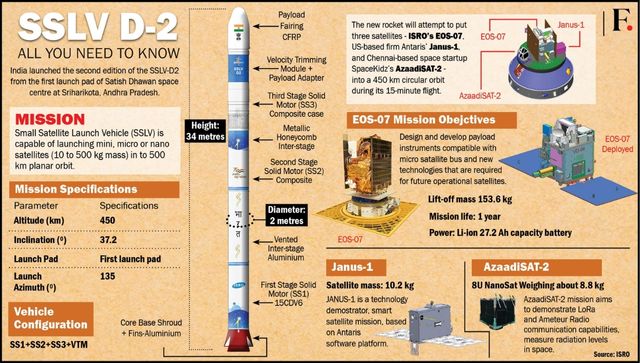 Graphic: Pranay Bhardwaj[/caption]Technology demonstrator satellite, Janus-1, is developed by United States-based Antaris and its Indian partners XDLinks and Ananth Technologies.ALSO READ: With Vikram-S, India joins the ‘private rocket’ club: Which other countries have achieved this feat?Weighing 10.2 kg, Janus-1 is a six-unit satellite carrying five payloads, as per Indian Express.The payloads of AzaadiSAT-2 have been built by 750 girl students from across India under the guidance of Chennai-based space start-up Space Kidz.According to ISRO, the satellite aims to demonstrate LoRa and amateur radio communication capabilities, assess radiation levels in space, and exhibit an expandable satellite structure.Space Kidz India has made the 8-unit satellite expandable, with a spring mechanism-based external frame that is supposed to open up once the satellite is placed in orbit, as per Indian Express.“This external frame will host a new cheaper type of solar panels to provide energy to the satellite. Energy for sustaining longer durations in space is one of the challenges of small satellites, which is why we have made the structure expandable. This is the first time such a thing is being tried out,” Srimathy Kesan, founder and CEO of the 7-year-old aerospace startup told Indian Express.Earlier, Space Kidz India had said that AzaadiSAT-2 satellite would carry the G20 logo in space, as well as play the National Cadet Corps (NCC) song to mark the 75 years of the organisation.Composed by Devi Sri Prasad or DSP, the "space song" is a "hope for girls and students of rural India to dream and inspire them to become a space scientist", the startup had said.ALSO READ: What is NISAR, the NASA-ISRO satellite that will help scientists better understand climate change?Aim of the launch and why it is a big dealThe objective of launching SSLV was to showcase the “in-flight performance” of its vehicle systems.The SSLV was built to meet the needs of the emerging small and microsatellite commercial market and offer launches on demand.[caption id="attachment_12134382" align="alignnone" width="640"]
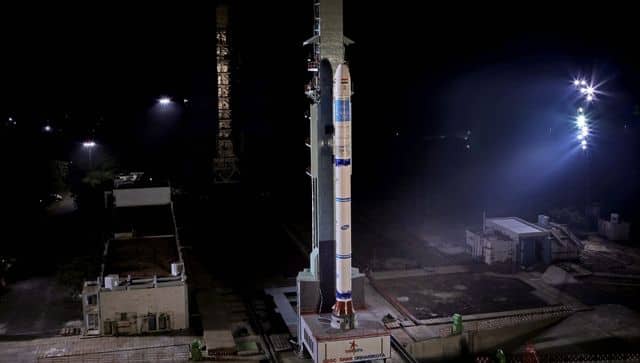 With the successful launch of SSLV-D2, ISRO can now cater to emerging small and microsatellite commercial markets. Image Courtesy: Twitter/@isro[/caption]This rocket can be assembled and shifted to the launch pad in just over 72 hours, compared to ISRO’s Polar Satellite Launch Vehicle (PSLV) which takes six months and around 600 people, as per Indian Express.
The successful launch comes months after the maiden flight of SSLV had partially failed.The vehicle’s first lift-off that took place last August was unsuccessful in injecting the satellite payloads into the intended orbit.According to the ISRO, the rocket was placed in a "highly elliptical unstable orbit" due to a deficiency in velocity, reported The Hindu.Speaking after the successful launch today, the ISRO chairman said the problems with SSLV-D1 were identified and resolved in the second developmental flight.“Congratulations to all three satellite teams for making the satellites as well as placing them in the right orbit. We analysed the problems faced in SSLV-D1, identified corrective actions and implemented them at a very fast pace to ensure the vehicle becomes successful this time,” ISRO chairman S Somanath was quoted as saying by ANI.As per The Hindu, SS Vinod, mission director of SSLV, said, “We had the maiden flight in August 2022 and we could not place the satellite in the intended orbit. Post that detailed analysis with a number of teams was carried out and we were able to pinpoint the problem in the system. We overcame that.”“And in a period of five months, we have come back. And we will be coming back soon with the next launch of SSLV," he announced.With inputs from agenciesRead all the Latest News, Trending News, Cricket News, Bollywood News,India News and Entertainment News here. Follow us on Facebook, Twitter and Instagram.
First Published:Feb 10, 2023, 12:50:50 IST
Advertisement
Advertisement

Military drones & police check-ups: How Sri Lanka is fighting against worst dengue outbreak in a decade
Sri Lanka is fighting its most severe dengue outbreak in nearly a decade, with infections rising sharply across the nation. Military drones have been deployed to tackle the outbreak, which has claimed 56 lives. Health officials said the outbreak is being driven primarily by the DENV-2 variant of the virus
3 min read
How Facebook job ad lured 2 Karnataka men into Myanmar cyber scam camp
The Karnataka Cyber Command has rescued two youths from a scam compound in Myanmar operated by Chinese fraudsters. The duo from Karnataka were lured on the pretext of data-entry jobs. They were asked to work for 16 hours a day and were expected to sleep for six hours daily
4 min read
Why is India seeing 95% cloud cover despite a Super El Niño?
India is witnessing nearly 95 per cent cloud cover despite a Super El Niño, a climate event usually linked to weaker monsoons. Regional weather systems, cyclonic circulations, the monsoon trough and moisture from two seas are temporarily overpowering one of the world's strongest climate phenomena
5 min read
What is CJP’s fourth demand to the government as protests in Delhi intensify?
The protest by the Cockroach Janta Party at Delhi’s Jantar Mantar refuses to die down. The group have made a fourth demand to the Centre, asking that no FIRs are filed against the agitators and that no legal action be taken. The government has expressed willingness to speak to the protesters, but refused to accede on the resignation of Education Minister Dharmandra Pradhan
5 min read
The new geography of war: Why the Houthis can no longer be ignored
The rise of the Houthis marks the emergence of a new geography of war — one in which influence flows not only from capitals and conventional armies, but also from rugged mountains overlooking vital sea lanes
6 min read
Advertisement
Advertisement