


Is China using foreign influencers to push propaganda?
An Australian think tank has found that Beijing has 'cultivated' foreign influencers from several countries, including the US, the UK, and New Zealand, to endorse pro-Chinese Communist Party (CCP) narratives as well as defend its position on sensitive issues

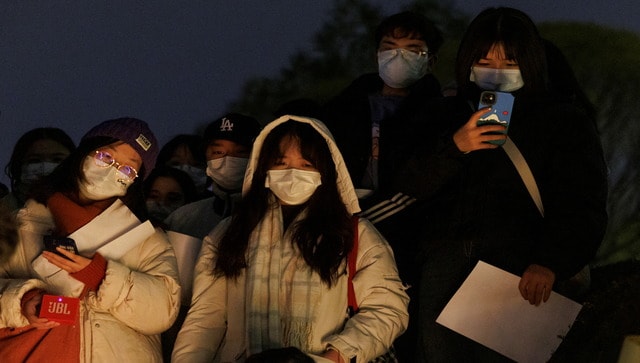
Influencers played a major role in controlling the global narratives about COVID-19 in China. Reuters File Photo[/caption]In 2021, over 200 international students from 16 countries, including the US and Ireland, had taken part in related video shoots.The think tank observed that the CCP is using Russian influencers in China to bolster its goal of strengthening bilateral ties with Moscow to counter Western countries.How influencers have helped ChinaForeign influencers have had a major role in controlling the global narratives about COVID-19 in China, as per ASPI’s report. They have also tried to advance CCP’s account abroad.These influencers are being “guided” to defend or push China’s perspective on sensitive political subjects, such as human rights concerns or territorial disputes, the think tank noted.The CCP-aligned content produced by influencers has helped in ramping up the prevalence of party-approved narratives on YouTube on various topics, including Xinjiang.These influencers have been able to sneak into even mainstream foreign outlets, including major US cable TV outlets, to push Chinese propaganda.
What is in it for them?The ASPI report mentioned that foreign influencers have discovered that “appealing to Chinese audiences' sense of nationalism can provide a fast track to gain popularity, increase their online presence and, ultimately, generate more revenue."China’s internet regulations restrict “negative” content and promote "(Chinese president) Xi Jinping thought" and "core socialist values" and posts that "increase the global influence of Chinese culture"."Indeed, China's internet regulations encourage users to actively promote party propaganda – so many influencers have adapted to thrive in that system," the ASPI added.For instance, US vlogger Jerry Kowal had made several videos lauding China’s response to COVID-19 and criticised his home country’s. This helped him gain the approval of China Central Television (CCTV), a key state television broadcaster in the Asian country.In 2016, Australian swimmer Mack Horton after winning the Olympic Gold in Rio de Janeiro attacked silver medalist Sun Yang, a Chinese swimmer, who had earlier been suspended for violating a drug test. Soon after, David Gulasi, an Australian digital influencer living in China, was advised by a Chinese influencer management agency to pick a public fight with Horton. He hit out at the Australian swimmer and invoked Chinese nationalism.ASPI’s warningThe defence and strategic policy think tank has cautioned that Beijing’s strategy is "likely to have significant implications for the global information landscape.""The growing use of foreign influencers will make it increasingly difficult for social-media platforms, foreign governments and individuals to distinguish between genuine and/or factual content and propaganda," the think tank warned, saying it would become harder to counter disinformation "and protect the integrity of public discourse."Eventually, "the line between independent voices and those influenced by the Party's narratives may become increasingly blurred, further challenging the ability of audiences to discern reportage from manipulation," ASPI said.With inputs from agencies
Military drones & police check-ups: How Sri Lanka is fighting against worst dengue outbreak in a decade
How Facebook job ad lured 2 Karnataka men into Myanmar cyber scam camp
Why is India seeing 95% cloud cover despite a Super El Niño?
What is CJP’s fourth demand to the government as protests in Delhi intensify?
The new geography of war: Why the Houthis can no longer be ignored