


Iran-US deal: How the next 60 days will decide the fate of Tehran’s nuclear programme
The US-Iran peace framework has ended months of conflict, but Tehran’s nuclear programme remains unresolved. With a 60-day negotiation window ahead, talks will focus on enriched uranium stockpiles, nuclear facilities, sanctions relief and international inspections that could determine whether peace endures

The United States and Iran may have agreed to stop fighting, but the issue that helped trigger the conflict in the first place remains unresolved.
The peace framework announced on June 14, has created a pathway towards ending one of the most dangerous confrontations in West Asia in recent years.
The agreement has halted military operations, paved the way for the lifting of the US naval blockade and opened the door for the restoration of shipping through the Strait of Hormuz.
Yet the arrangement deliberately postpones a final decision on Tehran's nuclear programme.
Instead of settling the nuclear dispute immediately, Washington and Tehran have agreed to push the matter into a separate negotiating track that will unfold over the next 60 days following the formal signing of the agreement in Geneva on June 19.
 More from Explainers
Why is Iran's nuclear programme still unresolved?
The current peace framework is designed primarily to stop an active war rather than settle every dispute between the two sides. One of the most important compromises embedded within the arrangement is the separation of military de-escalation from the broader nuclear issue.
Rather than requiring an immediate settlement on enrichment activities, uranium stockpiles and inspections, negotiators created a dedicated period for technical discussions after the ceasefire takes effect.
That approach allowed both sides to claim progress.
Iran secured an end to military operations without first accepting restrictions on every aspect of its nuclear infrastructure. The United States, meanwhile, obtained a commitment to continue negotiations on the programme that Washington and its allies regard as the central security concern.
The agreement establishes a 60-day window in which negotiators are expected to work towards a comprehensive accord.
Iranian Foreign Minister Abbas Araghchi has stated that arrangements concerning Tehran's nuclear activities would be determined during the negotiating period after the initial accord is signed. He also noted that the parties could choose to extend the talks beyond the 60-day deadline.
The framework therefore does not answer the most important nuclear questions. It merely creates a mechanism through which those questions may eventually be addressed.
The stakes are particularly high because US President Donald Trump has linked the survival of the peace process to progress on the nuclear file. According to the framework, the ceasefire ends military operations across the region, including fighting involving Israel and Hezbollah in Lebanon.
However, Trump has also warned that military action could resume if the parties fail to reach a final nuclear understanding within the designated timeframe.
What exactly is contained in Iran's uranium stockpile?
According to figures cited from the International Atomic Energy Agency (IAEA), Iran currently possesses approximately 440.9 kilogrammes, or about 972 pounds, of uranium enriched to 60 per cent purity.
Other assessments have referred to the stockpile as nearly 1,000 pounds of uranium enriched to that level. To understand why this material is attracting such attention, it is important to understand how uranium enrichment works.
Uranium exists naturally in the earth's crust. However, the isotope required for both civilian nuclear fuel and nuclear weapons, uranium-235, represents less than one per cent of natural uranium ore.
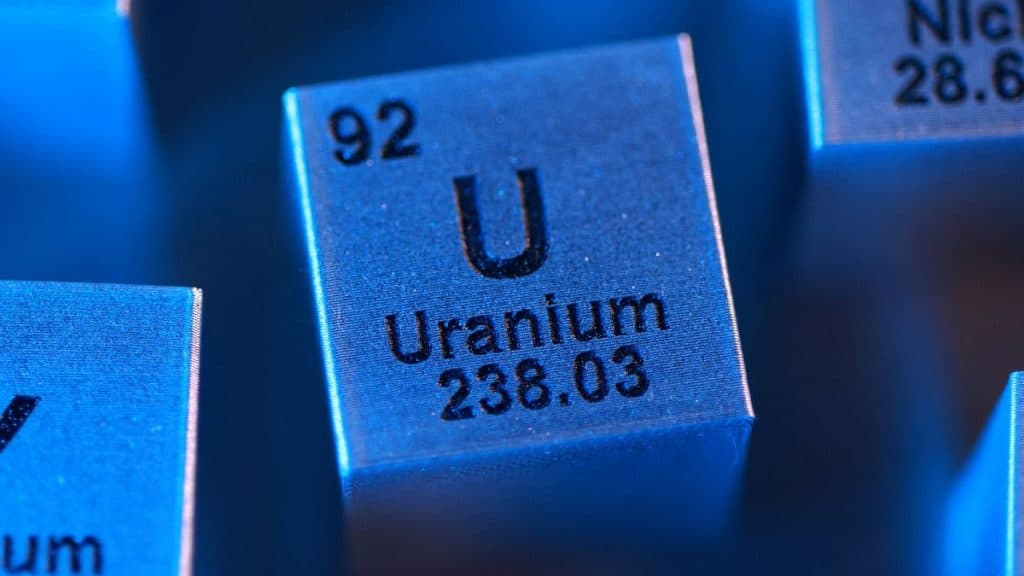
The enrichment process increases the concentration of uranium-235. Iran has historically carried out this process by converting uranium into uranium hexafluoride gas and feeding that gas through networks of centrifuges located at underground nuclear facilities.
Those facilities have primarily been concentrated at Natanz, Fordow and Isfahan.
Low-enriched uranium, typically enriched to between three and five per cent purity, can be used as fuel for nuclear power plants. The 2015 nuclear agreement limited Iran's enrichment activities to 3.67 per cent.
Weapons-grade uranium, by contrast, is generally considered to be uranium enriched to around 90 per cent purity. Iran's stockpile sits in the middle of those two benchmarks.
Although 60 per cent uranium is not weapons-grade material, nuclear experts regard it as alarmingly close. Once uranium reaches that level, the remaining enrichment process becomes considerably shorter.
International inspectors have assessed that Iran's current stockpile contains enough fissile material to potentially support around 10 nuclear weapons if it were further enriched and weaponised.
The existence of that stockpile is one of the primary reasons the upcoming negotiations are expected to focus heavily on uranium disposal, dilution or removal.
What happened to Iran's nuclear facilities during the war?
Throughout the conflict, the United States and Israel conducted strikes against several of Iran's most important nuclear installations. Among the facilities targeted were Natanz, Fordow and Isfahan, sites that have long served as key components of Iran's enrichment programme.
The attacks caused extensive damage. However, available assessments indicate that the strikes did not eliminate Iran's nuclear capabilities.
Many of Iran's enrichment facilities were deliberately built underground and reinforced against attack. As a result, significant portions of the programme appear to have survived despite repeated military operations.
The Pentagon's June 2025 campaign, referred to as Operation Midnight Hammer, targeted Iran's nuclear infrastructure and reportedly buried substantial quantities of enriched uranium beneath damaged facilities. Yet intelligence assessments concluded that much of the stockpile was not destroyed.
US intelligence assessed that large quantities of highly enriched uranium remained buried at Isfahan despite the extensive damage inflicted during the operation.
Iran's stockpile of 60 per cent enriched uranium and its estimated inventory of 20 per cent enriched material were believed to remain in gaseous form at the time of the IAEA's last verification activities in June 2025.
A month later, Iran halted cooperation with international inspectors following the joint US-Israeli attacks. That decision created uncertainty regarding the precise condition and location of the stockpile.
The survival of core enrichment capabilities has provided Tehran with leverage in the current negotiations.
What does Washington want from the upcoming negotiations?
American officials have repeatedly signalled that any lasting agreement must involve major restrictions on Iran's nuclear activities.
A senior US administration official told Reuters that the emerging agreement would begin a process aimed at either destroying or removing Tehran's enriched uranium. The official stated that the 60-day negotiating period would be used to determine the technical details of how that process would be carried out.
One proposal under discussion reportedly involves transferring the material to a third country. Russia has previously been mentioned as a possible destination for Iranian nuclear material under earlier diplomatic arrangements.
Another possibility involves chemically reducing the enrichment level of the uranium so that it can be used only for civilian energy purposes.
Washington is also expected to pursue restrictions on Iran's enrichment infrastructure. The US position seeks the dismantling of advanced centrifuge cascades and the reduction of Iran's nuclear programme to a much smaller civilian operation subject to continuous monitoring.
Verification is likely to become another major point of discussion. The United States is expected to insist on expanded inspection powers for the IAEA through the Additional Protocol. Such measures would permit broader access to declared facilities and potentially allow inspectors to seek access to suspected undeclared locations.
Washington is also expected to push for a mechanism that would allow sanctions or other economic penalties to be rapidly reinstated if violations are detected. The broader objective is to create a system capable of preventing Iran from rebuilding a large-scale enrichment programme in secret.
What is Iran willing to accept and where does it draw the line?
Iran has consistently maintained that its nuclear programme is intended for peaceful purposes and has rejected accusations that it seeks to build nuclear weapons. Nevertheless, Tehran's position differs significantly from that of Washington on several key issues.
One of the clearest disagreements concerns enrichment itself. Iranian officials have repeatedly argued that "zero enrichment" is unacceptable and inconsistent with the country's rights.
The dispute over enrichment predates the current conflict and has been one of the most contentious issues in every major round of nuclear diplomacy involving Iran. Iran has also challenged suggestions that all of its enriched uranium would be removed from the country.
While American officials have discussed destruction or removal of the stockpile, Iranian officials have indicated that dilution inside Iran could be a more acceptable alternative.
How does Trump view the future of Iran's nuclear programme?
Trump has repeatedly made clear that he wants Iran's enriched uranium removed or destroyed. As the war unfolded, he publicly argued that Tehran should surrender its stockpile.
"They're going to give us the nuclear dust", he said on March 29. He later expanded on that position during an interview with NBC on June 7. "If we make a deal now we're friendly, we'll all go together. It'll be our equipment. We'll take it out and destroy it, whether it's onsite or whether we take it offsite."
Trump has also contrasted his preferred approach with the 2015 nuclear agreement negotiated under former US president Barack Obama.
In a Truth Social post last month, Trump said his envisioned arrangement would be "far better" than the JCPOA. His administration has argued that the future agreement should produce stronger restrictions and more robust safeguards than those established under the earlier accord.
Why was the 2015 nuclear deal?
The Joint Comprehensive Plan of Action (JCPOA) was negotiated during the Obama administration and involved the United States, Iran and several other world powers. Under its terms, Iran accepted strict limits on enrichment activities and agreed to extensive monitoring arrangements.
Tehran reduced its uranium stockpile by roughly 98 per cent and was permitted to retain only 300 kilograms of low-enriched uranium. The deal also capped enrichment at 3.67 per cent purity and imposed restrictions on centrifuge operations.
In return, sanctions affecting banking, oil exports and trade were eased.
At the time, the Obama administration argued that the agreement would block Iran's ability to secretly pursue a weapons programme by establishing what it described as extraordinary monitoring and verification arrangements.
Trump withdrew the United States from the agreement during his first term. Following the American withdrawal, Iran expanded its enrichment activities and gradually accumulated a much larger stockpile of enriched uranium.
What about sanctions relief for Iran?
According to Iranian state media, approximately $24 billion in frozen Iranian assets could be released in stages during the negotiation period. The reported structure would involve an initial release of $12 billion before technical discussions begin.
The remaining amount would depend on progress achieved during the 60-day process. Longer-term sanctions relief would likely require verification that Iran had fulfilled whatever commitments are ultimately agreed upon.
European governments have also signalled support for linking sanctions relief to nuclear restrictions.
In a joint statement, Britain, Germany, France and Italy said they were prepared to lift sanctions in response to "clear, verifiable steps" limiting Iran's nuclear programme.
British Prime Minister Keir Starmer also highlighted the importance of restoring maritime security. "We are clear that toll-free freedom of navigation must now be restored in the Strait of Hormuz," British Prime Minister Keir Starmer said. "Iran must never have a nuclear weapon."
What next?
The future of Iran's nearly half-ton stockpile of 60 per cent enriched uranium remains uncertain and the condition of its underground facilities remains a subject of interest.
The scope of future inspections has yet to be negotiated. Sanctions relief remains contingent on progress. Critics have questioned whether the talks will ultimately address the nuclear issue at all.
Former Biden administration State Department spokesperson Matthew Miller voiced that concern after the agreement was announced. "We have no assurances the nuclear program will ever be addressed, but Iran has shown the world it can take the global economy hostage and get something from the U.S. in return," said Miller.
Meanwhile, Republican Senator Lindsey Graham praised the agreement but stressed that scrutiny would now focus on the details of any nuclear settlement. "Under our law, any nuclear deal with Iran will be sent to Congress for review and a vote," he said. "Congratulations to all in getting us to this point."
With inputs from agencies
Inhaling global affairs daily, Anmol covers foreign policy & defence with the occasional piece in lifestyle and the thrilling sport of polo, to keep things light when they get too tense. He has far too many disparate interests with a constant itch for travel. You can follow him on X (AnmolSingla001); and please feel free to reach out to him at anmol.singla@nw18.com for interviews, tips, feedback or travel recommendations.

Military drones & police check-ups: How Sri Lanka is fighting against worst dengue outbreak in a decade
How Facebook job ad lured 2 Karnataka men into Myanmar cyber scam camp
Why is India seeing 95% cloud cover despite a Super El Niño?
What is CJP’s fourth demand to the government as protests in Delhi intensify?
The new geography of war: Why the Houthis can no longer be ignored