


Interpol issues Red Notice against Karanvir Singh: Who is the Khalistani terrorist?
As per Interpol, Babbar Khalsa International (BKI) member Karanvir Singh, who hails from Punjab, is wanted by India on several charges, including criminal conspiracy and murder. The 38-year-old is believed to be hiding in Pakistan

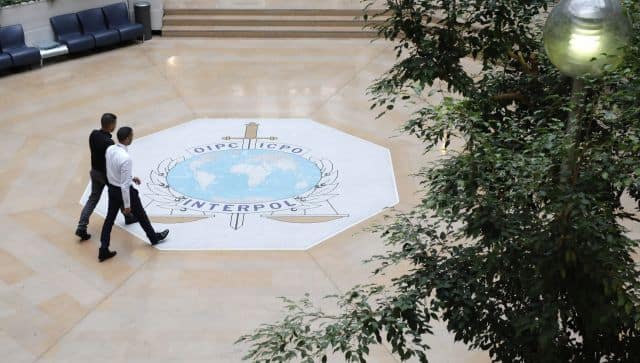
Interpol, an inter-governmental organisation, has headquarters in France's Lyon. AP File Photo[/caption]All member countries have a National Central Bureau (NCB) run by national police officials and observed by the government ministry responsible for policing, as per Interpol’s website.India joined Interpol in October 1949.What is Red Notice?First of all, it is not an international arrest warrant.A Red Notice is a request to “law enforcement worldwide to locate and provisionally arrest a person pending extradition, surrender, or similar legal action”, says Interpol.It is issued at the behest of the concerned member country. However, member nations decide upon themselves whether to arrest the person depending on their laws.Who is Karanvir Singh?Karanvir Singh hails from Kapurthala in Punjab. The 38-year-old is associated with Babbar Khalsa International and is believed to hiding in Pakistan, intelligence sources told news agency ANI.According to the Interpol notice, Singh is wanted by India on the charges of criminal conspiracy, murder, offences related to the Arms Act and the Explosive Substances Act, raising funds for terrorist act, conspiracy, and being a member of a terrorist gang or organisation.
He is the “right-hand man” of BKI’s Wadhwa Singh and Harwinder Singh Sandhu alias Rinda, reported India Today.What is BKI?BKI is headquartered in Pakistan’s Lahore and is believed to have the backing of the country’s intelligence agency Inter-Services Intelligence (ISI), as per The Hindu.BKI’s origins can be traced back to the Babbar Akali Movement of 1920. However, its current form came into existence following the April 1978 clashes between the Akhand Kirtani Jatha and Nirankaris.It gained limelight after some leaflets were distributed after the killing of Nirankari chief Gurbachan Singh in April 1980, as per ANI. One of the oldest pro-Khalistan outfits, BKI was founded by Sukhdev Singh Babbar and Talwinder Singh Parmar, both from Punjab.Parmar, who shifted to Canada in May 1970, is considered to be the mastermind of the 1985 bombing of Air India Flight 182 that killed 331 civilians, including 80 children.The outfit was also behind the assassination of the then Punjab chief minister Beant Singh in 1995.As per The Hindu report, the BKI has spread its presence outside India, including in countries such as Pakistan, Canada, the United States and Europe.Wadhwa Singh, the current leader of the terror group, took over after Babbar and Parmar were killed in police encounters in 1992, the report added. He is a designated “individual terrorist”, with several cases registered against him in India.NIA’s chargesheet filed in March this year revealed that BKI has created a network between gangsters and Pro-Khalistan Elements (PKEs) residing in different countries across the world.“Mehal Singh is the deputy chief of BKI. Both, Mehal Singh and Wadhwa Singh are amongst the 20 terrorists whom India wants Pakistan to extradite”, ANI quoted the chargesheet as saying.Recently, the NIA announced a cash reward of Rs 10 lakh each for information on ‘listed terrorists’ Rinda and Lakhbir Singh Sandhu, alias Landa.“Harwinder Singh alias Rinda, a gangster turned terrorist has been involved in murders, attempt to murder, contract killing, robberies and extortions and is presently based in Pakistan, has been actively operating for BKI since 2020”, the NIA had said in its March chargesheet.With inputs from agencies
Military drones & police check-ups: How Sri Lanka is fighting against worst dengue outbreak in a decade
How Facebook job ad lured 2 Karnataka men into Myanmar cyber scam camp
Why is India seeing 95% cloud cover despite a Super El Niño?
What is CJP’s fourth demand to the government as protests in Delhi intensify?
The new geography of war: Why the Houthis can no longer be ignored