


Why Indian Navy wants indigenous 80-mm aero rockets for its MiG-29K fighters
The Indian Navy has called on defence firms to participate in designing and manufacturing 80-mm aero rockets for MiG-29K and MiG-29KUB carrier-based fighter jets. The move is part of India’s broader goal of becoming self-reliant in defence

In a boost to self-reliance, the Indian Navy has invited domestic companies to design and develop 80-mm aero rockets for its MiG-29K fighter fleet. This comes as India seeks to reduce reliance on imported munitions.
It is part of New Delhi's broader goal of becoming self-reliant or ‘atmanirbhar’ in the defence sector. The Navy’s move will also help strengthen India's wartime readiness.
We take a closer look.
Navy’s call for indigenous firepower for MiG-29K
The Naval Armament Inspectorate (NAI) in Goa issued an Expression of Intent (EoI) on May 26, seeking participation from Indian defence firms to design and manufacture 80-mm aero rockets for MiG-29K and MiG-29KUB carrier-based fighter jets.
The 80-mm aero rocket is an unguided air-to-ground weapon with a dual-purpose. It is used to target armoured targets such as tanks and armoured personnel carriers, along with unarmoured targets like radar installations, parked aircraft and troop concentrations.
 More from Explainers
These rockets, carried by helicopters, aircraft or other launch platforms, depend on the pilot’s aim and firing solution. Launched from B8M-1 pod launchers, the 80-mm aero rockets are cheaper and can be carried in large numbers.
MiG-29K/KUB is the Russian-origin twin-engine aircraft that is currently deployed as a strike force on aircraft carriers INS Vikramaditya and INS Vikrant. The aircraft is capable of carrying out a range of missions, including air defence, maritime strike, anti-ship operations and ground attack.
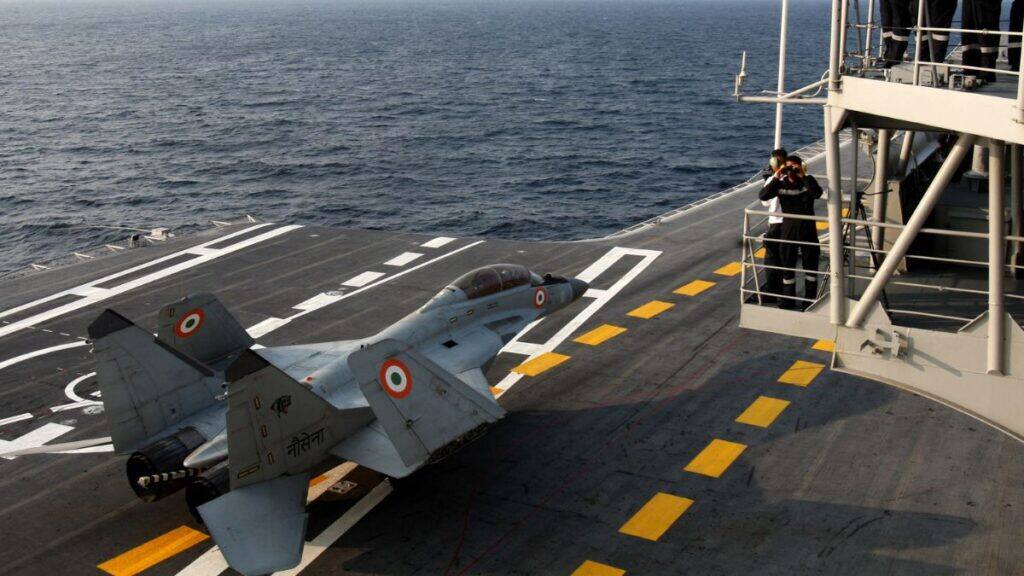
As of now, the Indian Navy operates around 42 MiG-29K fighter jets aboard INS Vikramaditya and INS Vikrant.
A MiG-29K can carry multiple rocket pods, which enables it to launch several rockets in a single sortie. During wartime, such weapons offer a cost-effective way to neutralise enemy positions without expending costly precision-guided munitions.
What requirements does Navy want in rockets?
The Indian Navy plans to buy 273 homegrown live rockets and 2,400 practice rounds after a prototype is successful in completing development and testing. It has set a tentative timeline for the induction of these rockets in 2026-27, reported India Today.
As per the Navy's EoI, the weapon must be able to operate in temperatures ranging from -60 degrees Celsius to +60 degrees Celsius, allowing its deployment in conditions spanning from high-altitude cold environments to tropical maritime regions.
These rockets should also have a service life of at least 15 years.
Navy's existing inventory of 80-mm rockets has been purchased from foreign original equipment manufacturers (OEMs).
The Navy’s EoI has clarified to Indian domestic firms that all sub-assemblies must be developed indigenously, with no reliance on foreign OEMs.
Weighing 11.3 kg, the rocket should be approximately 1.54 metres in length and reach a speed of 600 metres per second.
It must have an effective firing range of 1.3 km to 4 km, with a 0.9-kg explosive warhead that can penetrate 400 mm of armour at a direct angle. The rocket should generate at least 400 metal fragments weighing around 3 grams each upon detonation, as per the required specifications.
It is mandatory for the 80-mm rocket to be fully sealed for operations at altitudes of up to 20,000 metres. It should also be certified for use from aircraft flying at heights of up to 17,500 metres.
Interested defence firms must possess the research and development capability, testing and proof facilities and financial capacity required for the design and development of military-grade aero rockets and ground-based rockets.
Push for self-reliance
Currently, as per the Indian Navy's EoI, no indigenous source exists for the 80-mm rockets.
The Navy's move aligns with its goals to become 100 per cent indigenous by 2047. It aims to cut its dependence on foreign suppliers for ammunition and critical defence equipment.
The Navy has already been working with Indian industry to develop homegrown alternatives for myriad systems used on the MiG-29K fleet.
With inputs from agencies
Tags

Military drones & police check-ups: How Sri Lanka is fighting against worst dengue outbreak in a decade
How Facebook job ad lured 2 Karnataka men into Myanmar cyber scam camp
Why is India seeing 95% cloud cover despite a Super El Niño?
What is CJP’s fourth demand to the government as protests in Delhi intensify?
The new geography of war: Why the Houthis can no longer be ignored