


What’s the row between India-Thailand at WTO talks over rice exports?
Tensions arose after Thailand's ambassador to the World Trade Organization reportedly accused India of using 'subsidised' rice exports to dominate the global market. New Delhi has decried the allegations. Here’s what’s going on

Diplomatic tensions have risen between India and Thailand at the latest rounds of World Trade Organization (WTO) talks. A row erupted on Tuesday (27 February) after Thailand's ambassador to the WTO reportedly accused India of using 'subsidised' rice exports to dominate the global market.
The remarks triggered strong protests with Indian negotiators boycotting talks in groups where a Thailand representative was present, according to a Times of India (TOI) report.
What happened? Will the India-Thailand rift affect global trade relations? Let’s take a closer look.
Thailand’s allegation against India
Thailand has alleged that India’s rice is heavily “subsidised” which gives it an upper hand in the international export market, reported BNN Breaking.
The comments made by the Thai ambassador to the WTO Pimchanok Vonkorpon Pitfield during a consultation meeting were backed by some representatives of rich countries, further irking New Delhi.
 More from Explainers
As per TOI, Indian officials lodged a strong protest with the Thai government over the remarks. Union minister of commerce and industry Piyush Goyal also raised the issue with United States Trade Representative (USTR) Katherine Tai and EU executive vice-president Valdis Dombrovskis against the “unacceptable” language and behaviour, the newspaper reported.
Speaking to TOI, Indian government officials said that the Thai ambassador's facts were "wrong". They said just around 40 per cent of the rice produced in the country is acquired by the government for food security purposes.
A portion of the remaining produce not obtained by government agencies is exported by India at market price, officials added.
India, the world’s biggest rice exporter, accounted for about 40 per cent of the global rice trade in 2022. The South Asian country continued to hold the title of the world’s top rice exporter last year despite banning the shipments of non-basmati white rice and implementing a 20 per cent duty on parboiled rice, BusinessLine reported citing Thailand Rice Exporters Association (TREA).
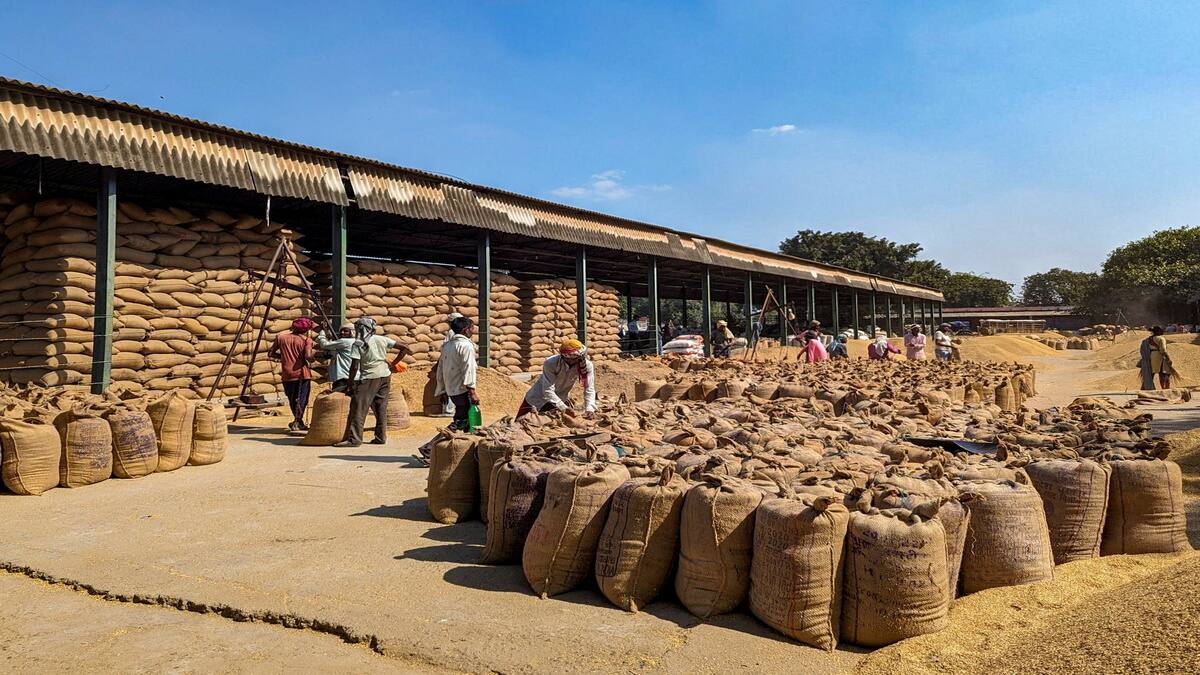
However, India’s share in the global market plunged by 27 per cent due to the rice export bans. According to TREA honorary president Chukiat Opaswong, the South Asian nation exported 16.5 million tonnes (mt) of rice in 2023 compared to 22.3 mt in 2022.
Will the row affect global trade relations?
The Thailand ambassador’s remarks came on the day India called for a permanent solution for public stockholding for food security at the 13th ministerial conference of the WTO.
The organisation defines public food stockholding (PSH) as the “procurement, storage and release of food stocks by governments through state-owned enterprises or other public agencies”.
The India-Thailand row has brought the complications around public stockholding and agricultural subsidies in global trade discussions to the fore, noted BNN Breaking.
According to TOI, Western nations, which are irked by India’s rice export bans, are trying to portray that the South Asian country was manipulating international trade by selling subsidised cereal grain in the global markets.
However, officials told the newspaper that the current trade terms favoured wealthier countries as the reference price for calculating subsidy was fixed at the 1986-88 level.
Due to the “flawed formula”, India ends up breaking the recommended cap of 10 per cent of the value of production for rice. But the country cannot be taken to WTO over the breach as the member states had decided over a decade back to work out a new formula and avoid rifts till then, reported TOI.
The dispute over rice exports and subsidies is linked to the broader debate on ensuring fair trade practices as well as addressing global food security concerns.
Rich nations have been hesitant to slash import duties due to which the issue of public stockholding for the food security needs of developing countries has been put off for two years.
“Post-COVID, countries have realised that food security is akin to national security. It needs to be addressed before anything else. The kind of language coming from some countries here is unacceptable,” an Indian negotiator told TOI.
According to BNN Breaking, the outcome of the dispute between India and Thailand could have wide-ranging effects on global trade relations, especially regarding future discussions on agricultural subsidies at WTO.
With inputs from agencies

Military drones & police check-ups: How Sri Lanka is fighting against worst dengue outbreak in a decade
How Facebook job ad lured 2 Karnataka men into Myanmar cyber scam camp
Why is India seeing 95% cloud cover despite a Super El Niño?
What is CJP’s fourth demand to the government as protests in Delhi intensify?
The new geography of war: Why the Houthis can no longer be ignored