
Advertisement


Sections
Why India will export rice to Singapore despite ban. The answer could be China
India has granted Singapore an exemption on rice exports, stating that the island country is its close strategic partner. The move comes after authorities urged New Delhi for an exception as it is largely dependent on the country for the food staple. Some experts think there’s a China factor at play

Last month, India imposed a ban on the export of non-basmati white rice, following up on the curb of export of broken rice that was announced in September last year. Then three days ago (27 August), India decided not to allow the exports of basmati rice below $1,200 per tonne.The move caused a ripple across the world – there were reports and videos of panic buying and empty rice shelves at Indian grocery stores in the US and Canada – and some experts believe India’s move could trigger a global food crisis. After all, India is the world’s top rice exporter, accounting for some 40 per cent of the global trade in the cereal.However, amid this rice ban, the Ministry of External Affairs on Tuesday said that it was making an exemption for Singapore.What’s the reasoning behind the exemption? Is China one of the reasons for it? We spill the tea on the matter.An exception for an exceptional partnerLate on Tuesday night (29 August), Ministry of External Affairs spokesperson Arindam Bagchi in a statement said that India has officially declared its decision to permit rice exports to Singapore. “India and Singapore enjoy a very close strategic partnership, characterised by shared interests, close economic ties and strong people to people connect,” he said, adding, “Formal orders in this regard will be issued shortly.”There is no official confirmation yet on the amount of rice that will be supplied to Singapore as of now.For the unaware, India and Singapore share close diplomatic and trade ties, boasting trade ties exceeding $30 billion. The island-country is considered as one of India’s closest allies in the Southeast Asian region.This is first such exemption to the rice export ban announced by the MEA.The move isn’t altogether surprising as rice importers and the Singapore authorities have been urging India to provide an exemption to them since the ban was first announced. Singapore is largely dependent on India for its rice needs – in 2022, India accounted for about 40 per cent of Singapore’s imported rice. Moreover, non-basmati rice from India makes up about 17 per cent of Singapore’s imported rice.Earlier, Singapore Food Agency (SFA) had said that it was in close contact with the Indian authorities to seek exemption from the ban. Also, it was working closely with importers to increase the import of different varieties of rice from various sources.Presently, SFA has said that their “overall supply of rice is currently stable and there is enough rice for everyone if everyone buys what we need”. They are also working on different strategies to manage their stockpile and are looking at almost 30 different countries to help them with their rice imports.[caption id="attachment_13057152" align="alignnone" width="640"]![]() Singapore is a big rice-eating nation and is largely dependent on India for its rice needs. In 2022, India accounted for about 40 per cent of Singapore’s imported rice. Moreover, non-basmati rice from India makes up about 17 per cent of Singapore’s imported rice. File image/Reuters[/caption]The China factorSome experts believe that there’s also a geopolitical reason to India’s exemption for Singapore. They note that it may be an attempt to counter China’s growing relationship with the island-country.China already shares robust ties with Singapore – Beijing is the city-state’s largest investor and trade partner. Also, China is one of Singapore’s main suppliers of rice. In 2020, China was Singapore’s fourth-largest supplier of the food staple; it imported $11.5 million (Rs 95 crore) worth of rice from Beijing. In the same year, Singapore imported $59.8 million (Rs 494 crore) worth of rice from India.Interestingly, earlier in April, Singapore and China formally upgraded their relationship. From ‘All-Round Cooperative Partnership Progressing with the Times’ in 2015, the ties have now upgraded to ‘All-Round High-Quality Future-Oriented Partnership’.At the meeting, the two sides had also agreed to exchange information to better understand the food safety regulatory frameworks and policies in both countries, and strengthen cooperation in food trade.India’s rice ban hurting nationsIndia’s rice ban, which is an attempt to calm rising prices at home and ensure food security, has triggered fears of global food inflation, with many countries other than Singapore also seeking urgent exemptions.Indonesia and the Philippines have also issued urgent pleas to India, urging the nation to resume rice exports to alleviate mounting supply concerns.More than three billion people worldwide rely on rice as a staple food. As Arif Husain, chief economist at the United Nations World Food Programme (WFP) told CNN, “Rice, wheat and corn crops make up bulk of the food which poor people around the world consume.”[caption id="attachment_13057132" align="alignnone" width="640"]
Singapore is a big rice-eating nation and is largely dependent on India for its rice needs. In 2022, India accounted for about 40 per cent of Singapore’s imported rice. Moreover, non-basmati rice from India makes up about 17 per cent of Singapore’s imported rice. File image/Reuters[/caption]The China factorSome experts believe that there’s also a geopolitical reason to India’s exemption for Singapore. They note that it may be an attempt to counter China’s growing relationship with the island-country.China already shares robust ties with Singapore – Beijing is the city-state’s largest investor and trade partner. Also, China is one of Singapore’s main suppliers of rice. In 2020, China was Singapore’s fourth-largest supplier of the food staple; it imported $11.5 million (Rs 95 crore) worth of rice from Beijing. In the same year, Singapore imported $59.8 million (Rs 494 crore) worth of rice from India.Interestingly, earlier in April, Singapore and China formally upgraded their relationship. From ‘All-Round Cooperative Partnership Progressing with the Times’ in 2015, the ties have now upgraded to ‘All-Round High-Quality Future-Oriented Partnership’.At the meeting, the two sides had also agreed to exchange information to better understand the food safety regulatory frameworks and policies in both countries, and strengthen cooperation in food trade.India’s rice ban hurting nationsIndia’s rice ban, which is an attempt to calm rising prices at home and ensure food security, has triggered fears of global food inflation, with many countries other than Singapore also seeking urgent exemptions.Indonesia and the Philippines have also issued urgent pleas to India, urging the nation to resume rice exports to alleviate mounting supply concerns.More than three billion people worldwide rely on rice as a staple food. As Arif Husain, chief economist at the United Nations World Food Programme (WFP) told CNN, “Rice, wheat and corn crops make up bulk of the food which poor people around the world consume.”[caption id="attachment_13057132" align="alignnone" width="640"]![]() More than three billion people worldwide rely on rice as a staple food. Experts believe that a ban on rice exports will affect the vulnerable the most across the world. File image/Reuters[/caption]International Monetary Fund (IMF) chief economist Pierre-Olivier Gourinchas reckoned the ban would drive up prices and that global grain prices could rise up to 15 per cent this year.Experts believe that this ban would further exacerbate the situation for the poor across Asia. Shirley Mustafa, a rice market analyst at the UN’s Food and Agriculture Organisation (FAO) explaining how, told BBC, “Such a ban hurts the vulnerable people most because they dedicate a larger share of their incomes to buying food. Rising prices could compel them to reduce the quantity of food they consume or switch to alternatives that are not nutritionally good or cut expenses in other basic necessities like housing and food.”And while Singapore is the first country that India has exempted, LiveMint has reported that India will also supply 14,000 tonnes of non-basmati rice this year to Mauritius and 79,000 tonnes to Bhutan under humanitarian operations, making an exception for two key diplomatic partners.With inputs from agencies
More than three billion people worldwide rely on rice as a staple food. Experts believe that a ban on rice exports will affect the vulnerable the most across the world. File image/Reuters[/caption]International Monetary Fund (IMF) chief economist Pierre-Olivier Gourinchas reckoned the ban would drive up prices and that global grain prices could rise up to 15 per cent this year.Experts believe that this ban would further exacerbate the situation for the poor across Asia. Shirley Mustafa, a rice market analyst at the UN’s Food and Agriculture Organisation (FAO) explaining how, told BBC, “Such a ban hurts the vulnerable people most because they dedicate a larger share of their incomes to buying food. Rising prices could compel them to reduce the quantity of food they consume or switch to alternatives that are not nutritionally good or cut expenses in other basic necessities like housing and food.”And while Singapore is the first country that India has exempted, LiveMint has reported that India will also supply 14,000 tonnes of non-basmati rice this year to Mauritius and 79,000 tonnes to Bhutan under humanitarian operations, making an exception for two key diplomatic partners.With inputs from agencies
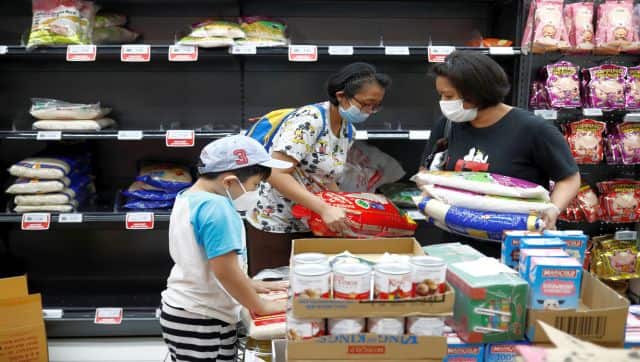 Singapore is a big rice-eating nation and is largely dependent on India for its rice needs. In 2022, India accounted for about 40 per cent of Singapore’s imported rice. Moreover, non-basmati rice from India makes up about 17 per cent of Singapore’s imported rice. File image/Reuters[/caption]The China factorSome experts believe that there’s also a geopolitical reason to India’s exemption for Singapore. They note that it may be an attempt to counter China’s growing relationship with the island-country.China already shares robust ties with Singapore – Beijing is the city-state’s largest investor and trade partner. Also, China is one of Singapore’s main suppliers of rice. In 2020, China was Singapore’s fourth-largest supplier of the food staple; it imported $11.5 million (Rs 95 crore) worth of rice from Beijing. In the same year, Singapore imported $59.8 million (Rs 494 crore) worth of rice from India.Interestingly, earlier in April, Singapore and China formally upgraded their relationship. From ‘All-Round Cooperative Partnership Progressing with the Times’ in 2015, the ties have now upgraded to ‘All-Round High-Quality Future-Oriented Partnership’.At the meeting, the two sides had also agreed to exchange information to better understand the food safety regulatory frameworks and policies in both countries, and strengthen cooperation in food trade.India’s rice ban hurting nationsIndia’s rice ban, which is an attempt to calm rising prices at home and ensure food security, has triggered fears of global food inflation, with many countries other than Singapore also seeking urgent exemptions.Indonesia and the Philippines have also issued urgent pleas to India, urging the nation to resume rice exports to alleviate mounting supply concerns.More than three billion people worldwide rely on rice as a staple food. As Arif Husain, chief economist at the United Nations World Food Programme (WFP) told CNN, “Rice, wheat and corn crops make up bulk of the food which poor people around the world consume.”[caption id="attachment_13057132" align="alignnone" width="640"]
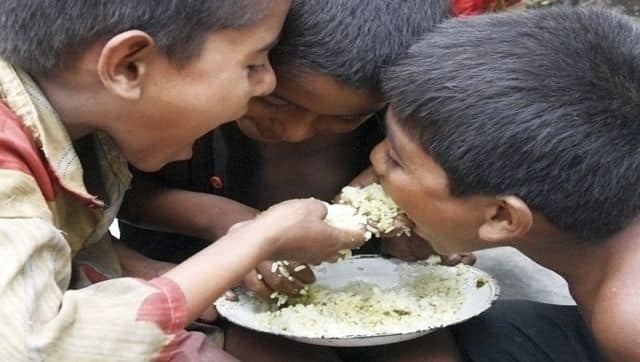 More than three billion people worldwide rely on rice as a staple food. Experts believe that a ban on rice exports will affect the vulnerable the most across the world. File image/Reuters[/caption]International Monetary Fund (IMF) chief economist Pierre-Olivier Gourinchas reckoned the ban would drive up prices and that global grain prices could rise up to 15 per cent this year.Experts believe that this ban would further exacerbate the situation for the poor across Asia. Shirley Mustafa, a rice market analyst at the UN’s Food and Agriculture Organisation (FAO) explaining how, told BBC, “Such a ban hurts the vulnerable people most because they dedicate a larger share of their incomes to buying food. Rising prices could compel them to reduce the quantity of food they consume or switch to alternatives that are not nutritionally good or cut expenses in other basic necessities like housing and food.”And while Singapore is the first country that India has exempted, LiveMint has reported that India will also supply 14,000 tonnes of non-basmati rice this year to Mauritius and 79,000 tonnes to Bhutan under humanitarian operations, making an exception for two key diplomatic partners.With inputs from agencies
First Published:Aug 30, 2023, 13:20:59 IST
Advertisement
Advertisement

Who is Sandeep Lamba, the Delhi cop removed from protest site duty after slapping female protester?
Sandeep Lamba, an Additional Deputy Commissioner of Police (DCP) (North East District), was seen slapping a female CJP protester in a video on July 20. Lamba has now been removed from the protest site and sent back to his original station. In 2021, Lamba was awarded the Union Home Minister’s medal for excellent investigation
4 min read
Explorers discover wreckage of plane 72 years later. Will this help in finding MH370?
On April 11, 1952, a Pan Am Flight 526A, crashed into the Atlantic Ocean, killing 52 of the 69 people on board. After decades of effort, explorers have found the wreck of the plane at the bottom of the seabed near Puerto Rico. The discovery offers new hope to families who lost loved ones in the Malaysia Airlines Flight 370 crash in 2014
5 min read
Cruise missiles, drones and more... The deadly arsenal of the Houthis
The Houthis have evolved into one of the world's most formidable non-state military forces, deploying anti-ship ballistic missiles, cruise missiles, drones and explosive boats to threaten Red Sea shipping. Their latest attacks on Saudi oil tankers have raised concerns over shipping through the Bab el-Mandeb Strait amid the Strait of Hormuz crisis
10 min read
Why India may not witness a medal rush at 2026 Commonwealth Games
A 125-strong Indian contingent is in Glasgow for the 2026 Commonwealth Games, starting today (July 23), chasing international glory. However, with a roster of sports such as badminton and wrestling being cut from the event, the country’s medal chances have been drastically reduced
4 min read
Delhi Police asks personnel to wear uniform: What the law says on cops in plainclothes during protests
The Delhi Police has instructed all its personnel to wear uniforms when they report for duty at Jantar Mantar for crowd control. This comes after outrage grew over videos of men in civilian clothes or without name tags hitting protesters in the Capital. Is it legal for the police to ditch uniforms during protests?
4 min read
Advertisement
Advertisement