


India commissions INS Malvan: How this ‘submarine hunter’ will be a game-changer
The Indian Navy has commissioned INS Malvan, the second indigenous Mahe-class Anti-Submarine Warfare Shallow Water Craft, strengthening India's coastal defences against growing Chinese and Pakistani submarine activity. With advanced sonar, waterjet propulsion and over 80 per cent indigenous content, the warship marks another milestone in India's maritime modernisation

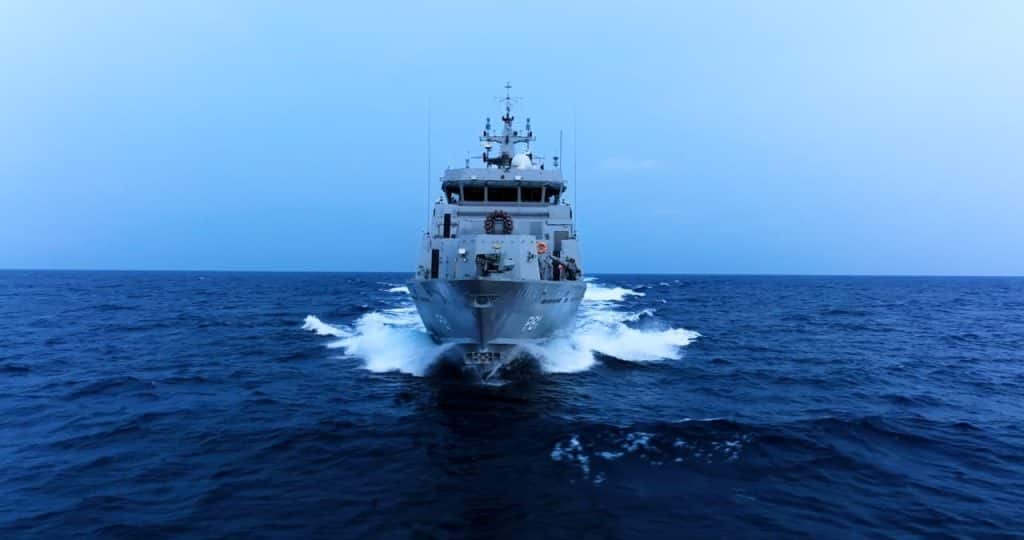
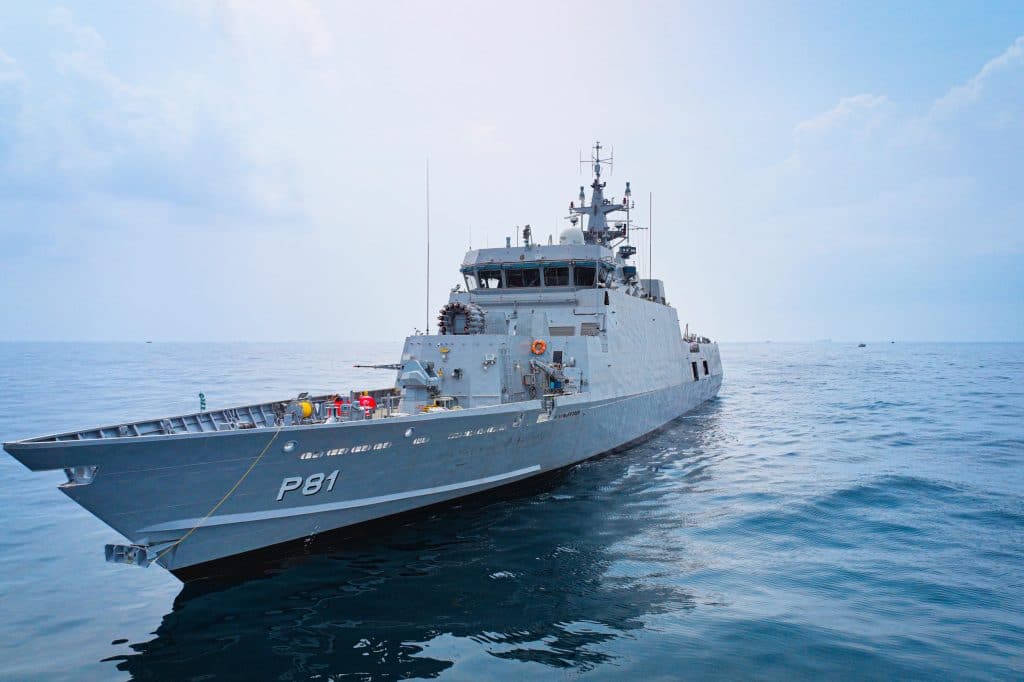
India’s coastal defence architecture and sub-surface warfare capabilities received a major boost on Wednesday as the Indian Navy officially commissioned INS Malvan — the second of eight indigenously designed Mahe-class Anti-Submarine Warfare Shallow Water Craft (ASW-SWC).
Built by Cochin Shipyard Limited (CSL) with over 80 per cent indigenous content, the warship was formally inducted into active service during a ceremony at the Karwar Naval Base in Karnataka.
The commissioning ceremony was presided over by Chief of the Air Staff, Air Chief Marshal AP Singh, alongside Vice Admiral Sanjay Vatsayan, Flag Officer Commanding-in-Chief, Western Naval Command, senior naval officers, veterans, and defence industry executives.
INS Malvan is the first Indian naval warship ever to be commissioned at Karwar Naval Base and marks the seventh warship inducted into the Indian Navy this year.
 More from Explainers
Designed specifically to detect, track, and neutralise silent enemy conventional and air-independent propulsion (AIP) submarines operating in littoral, shallow-water zones, the warship addresses a critical strategic vulnerability in the Indian Ocean Region (IOR) amid expanding sub-surface deployments by China’s People’s Liberation Army Navy (PLAN) and the Pakistan Navy.
Indian Navy is playing a big role: AP Singh
Presiding over the commissioning ceremony, Air Chief Marshal Amar Preet Singh pointed out the pivotal link between maritime security, global trade, and national prosperity.
"We all understand how maritime security is important for any nation, as maritime routes decide trade and trade decides its destiny. The Indian Ocean region is vital to us, and the Indian Navy is playing a crucial role in ensuring secure sea lines of communication and unhindered trade. With 80 per cent indigenous content in this warship, we are realising the vision of Aatmanirbhar Bharat."
Highlighting the lessons in indigenisation, AP Singh praised the Navy’s long-standing push for domestic manufacturing, stating that "the Indian Navy, right from the beginning, adopted this mantra, even though we [the Indian Air Force] started later on this track. I hope the other services learn from how the Navy has gotten this concept right."
Vice Admiral Sanjay Vatsayan noted that the induction of INS Malvan accelerates the Indian Navy's modernisation tempo, which is currently adding a new vessel or platform approximately every 40 days.
"Today marks another significant milestone in India’s maritime journey," Vatsayan remarked. "INS Malvan becomes the first Indian naval ship to be commissioned at Karwar and the seventh warship inducted this year, with another 12 vessels set to follow."
Anatomy of a littoral hunter
INS Malvan is purpose-built to operate where larger surface combatants — such as guided-missile destroyers or frigates — face tactical limitations due to draft restrictions and acoustic reflections off shallow seafloors.
| Specification | Details |
|---|---|
| Ship | INS Malvan (ASW-SWC) |
| Displacement | 896 to 1,100 tonnes |
| Length | 78–80 m |
| Beam | 11.36 m |
| Draft | 2.7 m (shallow draught) |
| Propulsion | 3 × Marine Diesel Engines (6 MW) with waterjet propulsion |
| Top Speed | 25 knots (approximately 45 km/h) |
| Operational Range | 1,800 nautical miles at 14 knots |
| Endurance | 14 days |
| Crew Complement | 57 personnel (including 7 officers) |
| Main ASW Ordnance | RBU-6000 rocket launcher, 324 mm Advanced Light Weight Torpedoes (ALWT), mines |
| Surface Weapons | 1 × 30 mm naval gun; 2 × 12.7 mm stabilised Remote-Controlled Weapon Stations (RCWS) |
| Defensive Suite | Integrated ASW suite with Mahindra decoy launchers |
| Indigenous Content | More than 80 per cent (CSL, BEL, L&T, Mahindra Defence) |
Advanced waterjet propulsion
Unlike traditional warships that rely on exposed propellers, INS Malvan is propelled by three marine diesel engines generating 6 MW of power coupled directly to a waterjet propulsion system.
This makes the Mahe-class the largest warships in the Indian Navy to utilise pump-jet/waterjet propulsion.
Waterjet technology delivers four crucial operational benefits in shallow waters:
- Low acoustic signature: Eliminates propeller cavitation—the formation and explosion of vapor bubbles that generate underwater noise—allowing the ship to approach target submarines stealthily while improving the sensitivity of its own sonar.
- Exceptional manoeuvrability: Enables rapid acceleration, tight turning radiuses, and high-speed transit (up to 25 knots) in confined coastal waters.
- Shallow draught access: With a draught of just 2.7 meters, Malvan can operate in coastal shelves, river mouths, and island archipelagos without risk of grounding.
- Obstacle clearance: Reduces the risk of fouling or damage from underwater debris, discarded fishing gear, or shallow reefs.
Integrated weapons & sensor suite
Despite its compact displacement (~1,100 tonnes), INS Malvan packs a heavy anti-submarine and surface offensive punch:
- Forward-mounted RBU-6000 anti-submarine rocket launcher: Capable of launching salvoes of depth-charge rockets to saturate underwater targets and intercept incoming torpedoes.
- Triple 324 mm lightweight torpedo tubes: Positioned on port and starboard sides, armed with indigenously built Advanced Light-Weight Torpedoes (ALWT Shyena / TAL) for precision anti-submarine strikes.
- Anti-submarine mine-laying rails: Enables the vessel to deploy defensive minefields across maritime choke points, harbour channels, and vital offshore installations.
- Surface warfare & point defence: Armed with a 30 mm naval gun (CRN-91) and two 12.7 mm remote-controlled stabilised machine guns (Indian variant of the Remote Controlled Naval Weapon Station) for engaging asymmetric surface threats, low-flying drones, and coastal craft.
- Defensive countermeasures: Equipped with an Integrated ASW Defence Suite supplied by Mahindra Defence Systems, featuring decoy launching systems to divert incoming acoustic torpedoes.
- Sensor suite: Features advanced hull-mounted sonar (HUMSA-NG derivative) specifically optimised for shallow sound channels, combined with low Radar Cross-Section (RCS) design and thermal/infrared suppression features.
Countering China & Pakistan's undersea ambitions
The induction of INS Malvan comes at a time of unprecedented sub-surface militarisation in the Indian Ocean Region. The warship was engineered to mitigate two converging sub-surface threats:
Disrupting China's shallow-water intrusion
The PLA Navy has systematically expanded its presence in the IOR, using deep-sea deployments, hydrographic survey ships to map thermoclines, and regular patrols by Type 039A/B Yuan-class AIP-equipped diesel-electric submarines and Type 093 nuclear attack submarines.
Chinese submarines frequently monitor critical chokepoints — including the Malacca, Sunda, and Lombok Straits — and track Indian fleet movements near the Andaman & Nicobar Islands and the East Coast of India.
In shallow coastal zones, thermal layers and complex seabed topography create "shadow zones" where deep-water sonar performance drops significantly.
INS Malvan and its sister ships act as dedicated, low-cost "shallow-water hunters" that scan these acoustic shadow zones, preventing enemy submarines from lurking near Indian naval bases, energy terminals, and commercial hubs.
Neutralising Pakistan’s Hangor-class submarines
Pakistan is currently inducting eight Hangor-class (Type 039B derivative) submarines from China — four built in Wuhan and four at Karachi Shipyard & Engineering Works (KSEW).
Fitted with Air-Independent Propulsion (AIP) and capable of launching Babur-3 submarine-launched cruise missiles (SLCMs), these submarines are tailored specifically for silent operations in the shallow littoral waters off the Makran Coast, the Gulf of Kutch, and the Arabian Sea.
INS Malvan, stationed with the Western Naval Command at Karwar, is strategically positioned to patrol the western littoral zone.
Operating alongside naval aircraft, it can form an impenetrable barrier across port approaches, naval bases (such as Karwar and Mumbai), and offshore assets like Bombay High.
India's integrated multi-tier defence
INS Malvan does not operate in isolation, it completes the inner layer of the Indian Navy’s multi-tiered Anti-Submarine Warfare architecture:
| Tier | Platform(s) | Primary role / Area of operations |
|---|---|---|
| Tier 1: Macro / Deep Water | P-8I Neptune maritime patrol aircraft and MQ-9B SeaGuardian drones | Long-range, broad-area surveillance and submarine search across the Indian Ocean |
| Tier 2: Mid-Ocean / Deep Water | Visakhapatnam-class destroyers and Nilgiri-class frigates equipped with MH-60R Seahawk helicopters and active towed-array sonar | Mid-ocean anti-submarine warfare, tracking and engaging submarines in deep waters |
| Tier 3: Littoral / Shallow Coastal Waters | INS Malvan, Mahe-class ASW Shallow Water Craft (ASW-SWC) and Arnala-class ASW-SWC | Specialised shallow-water anti-submarine operations, including port approaches, coastal waters and strategic choke points |
Broad-area detection (Outer tier): Long-range P-8I Neptune aircraft, MQ-9B SeaGuardian uncrewed aerial systems, and deep-sea destroyers detect acoustic contacts across deep ocean basins.
Inner patrol & interception (littoral tier): When hostile submarines attempt to slip into shallow littoral waters to lay mines, intelligence-gather, or target commercial shipping, ASW-SWCs like INS Malvan are dispatched to track, pincer, and destroy them using waterjet maneuverability, RBU-6000 rockets, and lightweight torpedoes.
Secondary missions: In addition to anti-submarine hunting, INS Malvan is built to undertake Low-Intensity Maritime Operations (LIMO), mine warfare, coastal surveillance, search-and-rescue (SAR), and defence of critical offshore infrastructure.
The ASW-SWC programme
The commissioning of INS Malvan is part of a broader 16-vessel ASW-SWC programme cleared by the Defence Acquisition Council (DAC) to replace the Indian Navy’s aging Abhay-class corvettes (which entered service between 1989 and 1991).
To execute the project efficiently, the Ministry of Defence split the order between two premier public-sector shipyards:
| Category | Mahe-class ASW-SWC | Arnala-class ASW-SWC |
|---|---|---|
| Shipyard | Cochin Shipyard Ltd (CSL), Kochi | Garden Reach Shipbuilders & Engineers (GRSE), Kolkata |
| Total Vessels Ordered | 8 vessels | 8 vessels |
| Fleet Assignment | Western Fleet | Eastern Fleet |
| Lead Ship Status | INS Mahe (Commissioned: November 2025) | INS Arnala (Commissioned: Early 2026) |
| Second Ship Status | INS Malvan (Commissioned: July 22, 2026) | INS Agray / INS Anjadip (In service) |
| Target Completion | Mid-2028 | Mid-2028 |
Major domestic industrial partners involved in the programme include:
- Bharat Electronics Limited (BEL): Combat management systems, radars, and communications.
- Larsen & Toubro (L&T): Hull fabrication and mechanical equipment integrations.
- Mahindra Defence Systems: Integrated Anti-Submarine Warfare Defence Suite and acoustic decoy launchers.
- Cochin Shipyard Limited (CSL): Detailed engineering, waterjet integration, and warship construction.
The legacy of Sindhudurg
INS Malvan carries forward a rich maritime heritage. Named after the historic coastal town of Malvan in Maharashtra’s Sindhudurg district, celebrated as the naval stronghold of the 17th-century Maratha king Chhatrapati Shivaji Maharaj, who constructed the iconic Sindhudurg sea fort to resist foreign maritime powers.
The ship inherits the name and battle honours of the former INS Malwan, a Pondicherry-class coastal minesweeper that served the Indian Navy for over two decades before being decommissioned in 2003.
The ship’s official crest features the Bagh Nakha (Tiger Claws) — the iconic weapon associated with Shivaji Maharaj — symbolising agility, precision, and courage.
The vessel operates under the motto "Silent Claws," underlining its ability to strike silently from underwater concealment.
Also Watch:
The commissioning of INS Malvan at Karwar is evidence of the expanding strategic footprint of the Indian Navy.
Karwar’s INS Kadamba, undergoing expansion under Project Seabird Stage II, is set to become one of the largest naval bases in the Eastern Hemisphere, capable of berthing aircraft carriers, nuclear submarines, and major surface combatants away from commercial shipping traffic.
With inputs from agencies
Inhaling global affairs daily, Anmol covers foreign policy & defence with the occasional piece in lifestyle and the thrilling sport of polo, to keep things light when they get too tense. He has far too many disparate interests with a constant itch for travel. You can follow him on X (AnmolSingla001); and please feel free to reach out to him at anmol.singla@nw18.com for interviews, tips, feedback or travel recommendations.

Military drones & police check-ups: How Sri Lanka is fighting against worst dengue outbreak in a decade
How Facebook job ad lured 2 Karnataka men into Myanmar cyber scam camp
Why is India seeing 95% cloud cover despite a Super El Niño?
What is CJP’s fourth demand to the government as protests in Delhi intensify?
The new geography of war: Why the Houthis can no longer be ignored